
It's looking good!Work progressing on the turret.
Drew several templates at slightly different sizes and settled on this one.
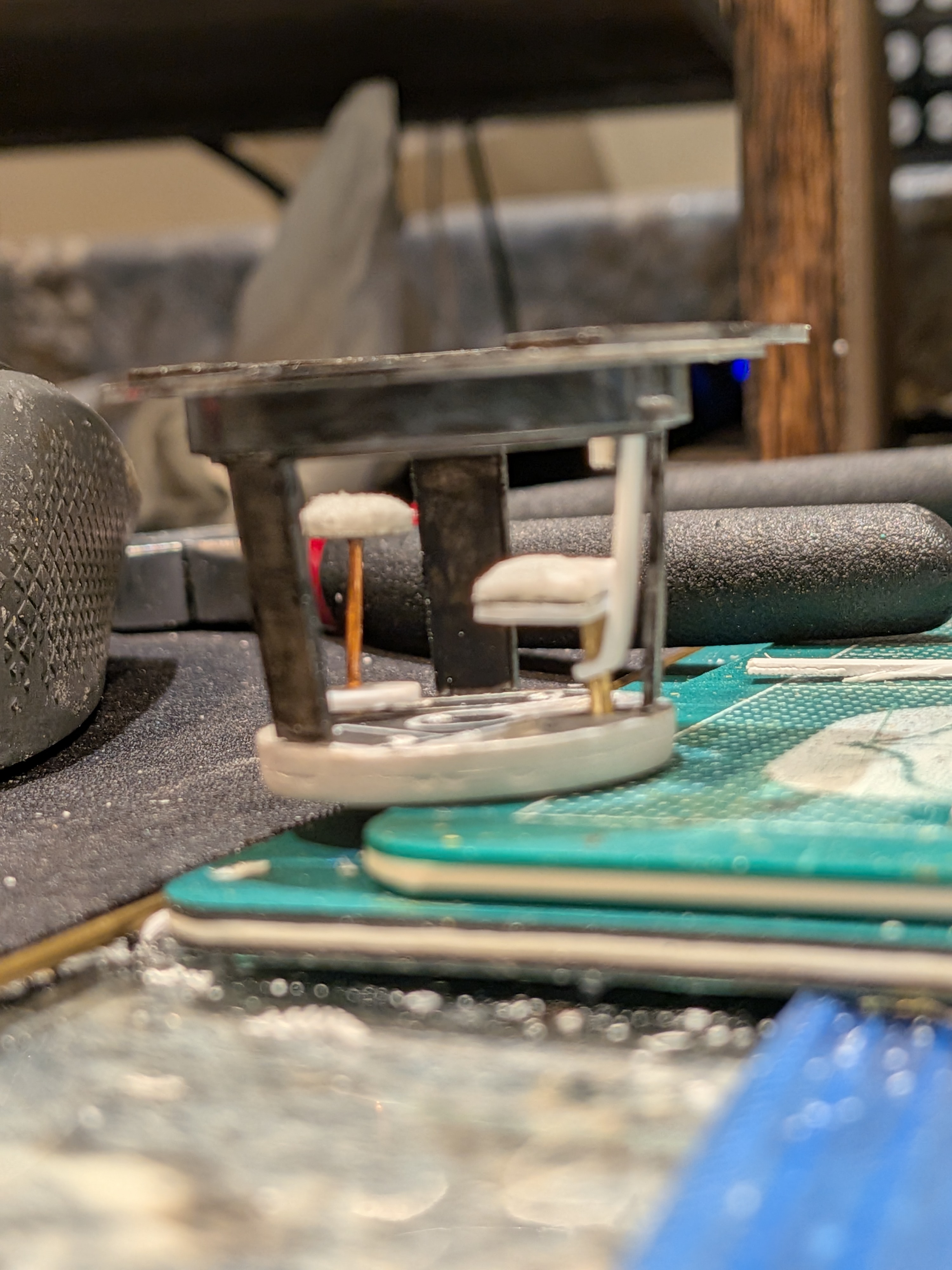
It is for placement of the vertical pillars tying the turret to the floor in the turret base. It seems to line up well with the slots in the floor... Phew!
View attachment 193071
Testing the tenon that slips into the turret floor
View attachment 193072
Then cutting the rim notches, gluing and test fitting for height.
View attachment 193073
At first, the pillars were about 1mm too high, so the deck of the tank body would not sit properly with the turret base ring inserted in the deck.
After adjusting the pillar length, it seems I still need to shave off a hair for a perfect fit.
Job for tomorrow when I'm fresh.

You are using an out of date browser. It may not display this or other websites correctly.
You should upgrade or use an alternative browser.
You should upgrade or use an alternative browser.
British Vickers Light Tank Mk VI C 2026-04
- Thread starter BarleyBop
- Start date

Jakko
Well-Known Member
You're doing a really good job here 

Thanks for the nod guys, it certainly is quite the detour from a straightforward build.
Like @Jakko said earlier, not much of the internal detail will be visible, but there is some satisfaction in seeing all the pieces actually come together, and it was a good opportunity for learning new skills and techniques.
Like @Jakko said earlier, not much of the internal detail will be visible, but there is some satisfaction in seeing all the pieces actually come together, and it was a good opportunity for learning new skills and techniques.
...the motto of this build has gotta be:
"Test fit, then test fit again. And again. And again."
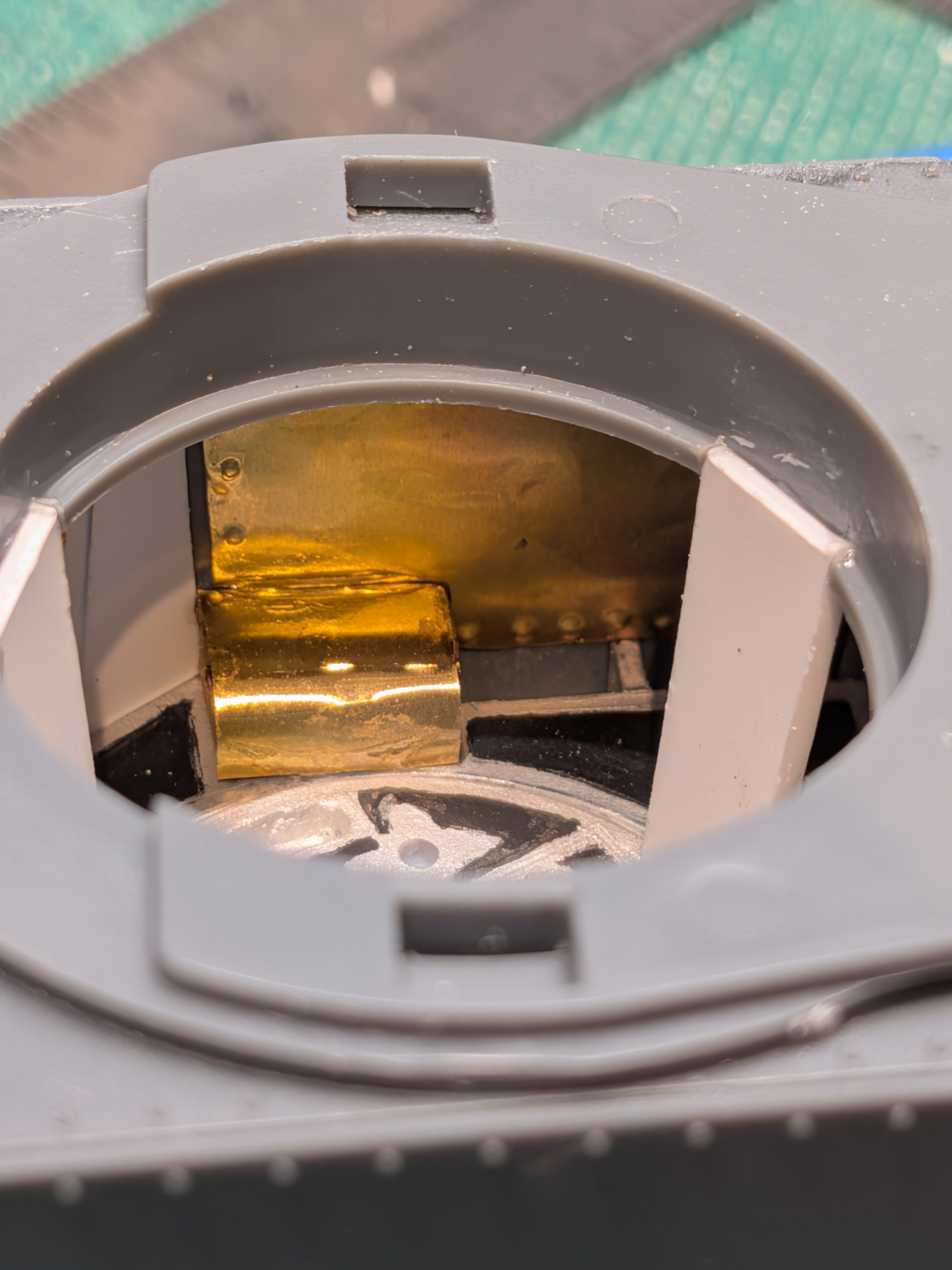
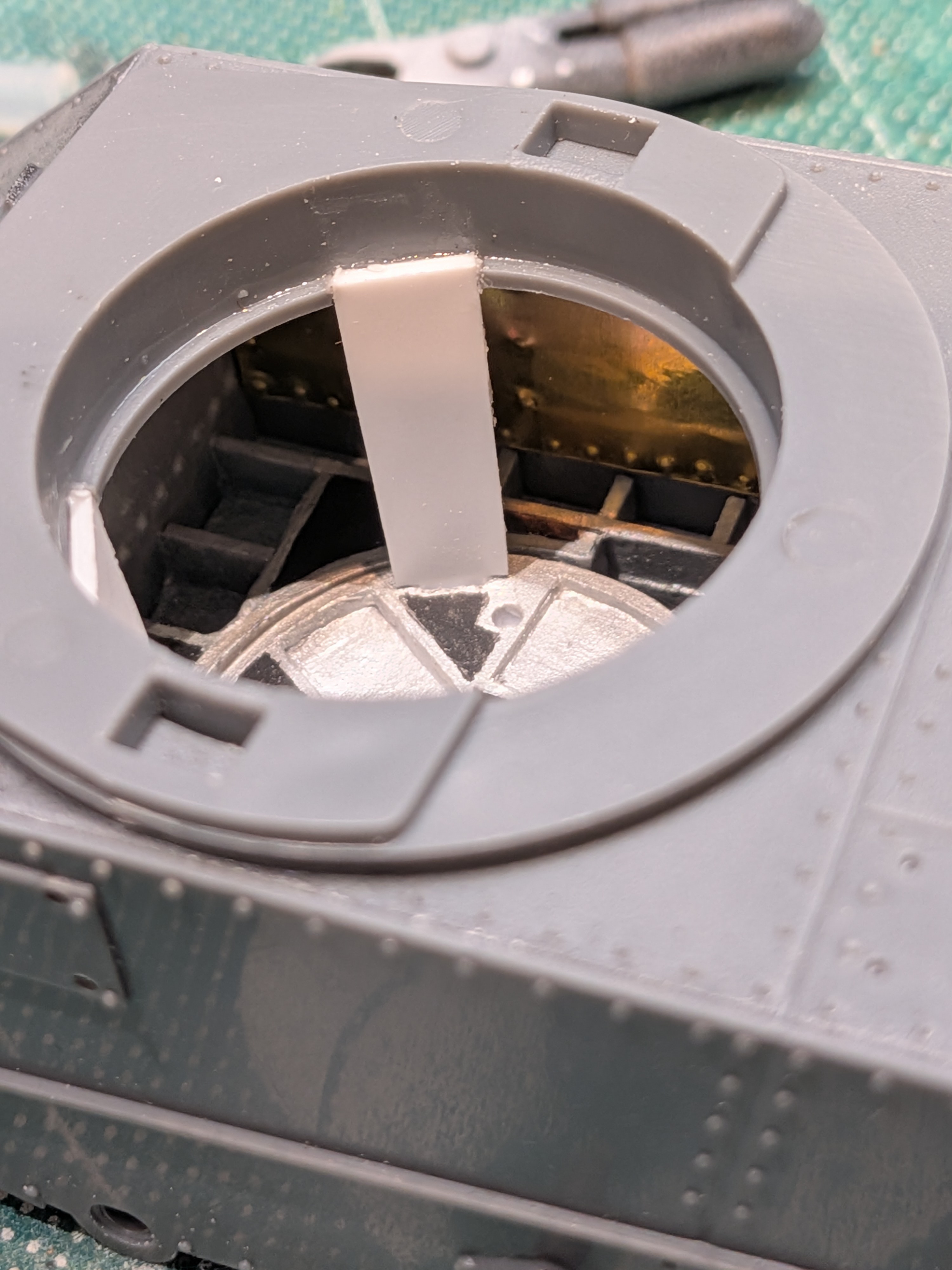
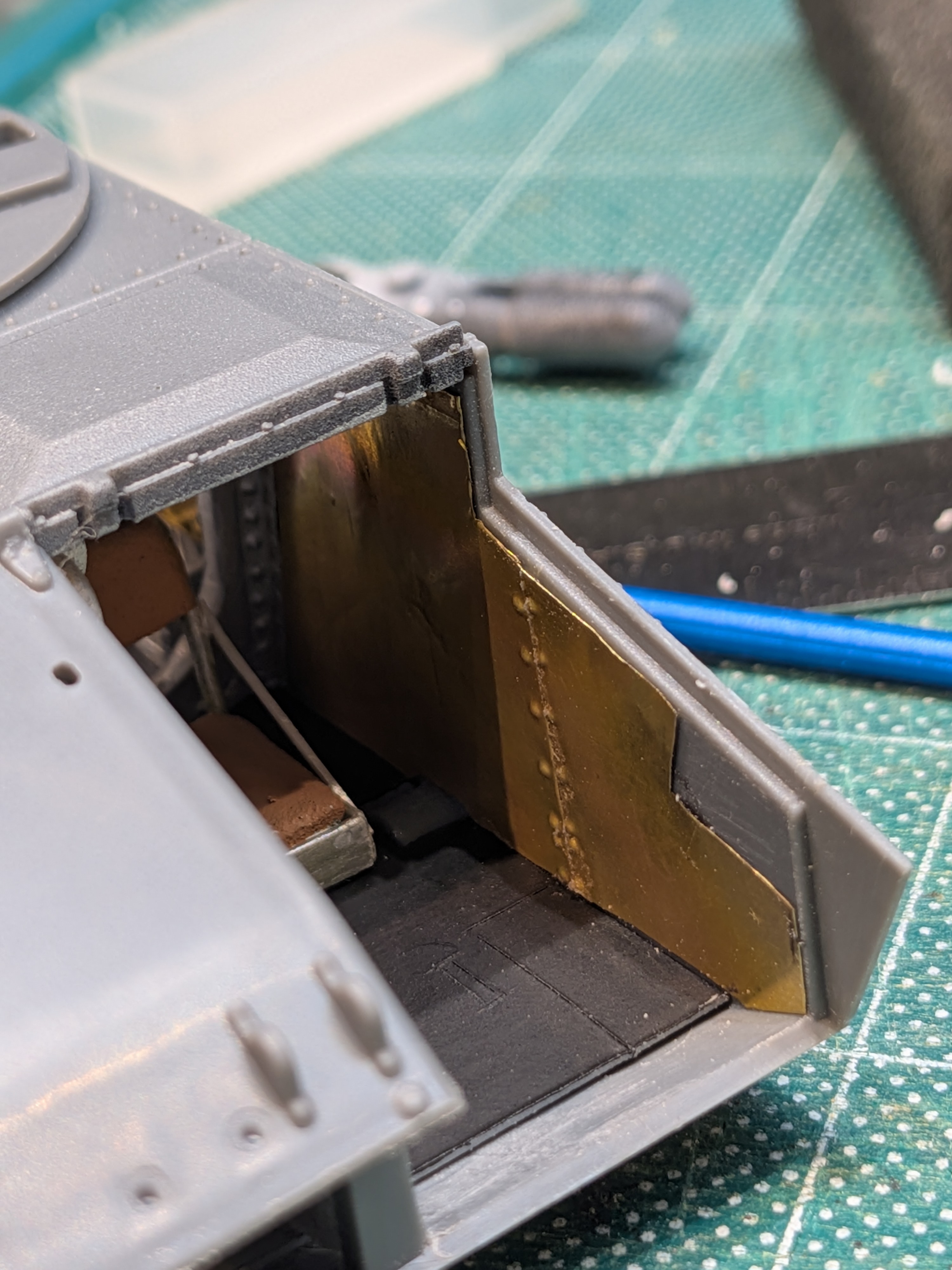
...so yup, all the walls are 'riveted' brass panels, which went much more smoothly after @urumomo reminded me about annealing them first! D'uh!
Now to prime and paint.
Too tired to tackle the turret seats for gunner and commander tonight, but will get there!
Guitar lesson in the morning, wanna be rested!
And resting much easier knowing that the whole turret mechanism aligns and spins!
"Test fit, then test fit again. And again. And again."
...so yup, all the walls are 'riveted' brass panels, which went much more smoothly after @urumomo reminded me about annealing them first! D'uh!
Now to prime and paint.
Too tired to tackle the turret seats for gunner and commander tonight, but will get there!
Guitar lesson in the morning, wanna be rested!
And resting much easier knowing that the whole turret mechanism aligns and spins!
That is very impressive! Some blood, sweat and tears went into that! So what made you decide to do this project?...the motto of this build has gotta be:
"Test fit, then test fit again. And again. And again."
View attachment 193196
View attachment 193197
View attachment 193199View attachment 193198
...so yup, all the walls are 'riveted' brass panels, which went much more smoothly after @urumomo reminded me about annealing them first! D'uh!
Now to prime and paint.
Too tired to tackle the turret seats for gunner and commander tonight, but will get there!
Guitar lesson in the morning, wanna be rested!
And resting much easier knowing that the whole turret mechanism aligns and spins!
Thanks. It's when I realized from the comments that this kit was something of a rarity, and that an interior kit was no longer to be had... I thought: "gotta do something!"That is very impressive! Some blood, sweat and tears went into that! So what made you decide to do this project?


![Pampers Sensitive Baby Wipes, Clinically Proven, Fragrance Free, Unscented, Water Based, Hypoallergenic, Multi-Use, Hand Wipes 336 Wipes Total (6X Flip-Top Packs) [Packaging May Vary]](https://m.media-amazon.com/images/I/41KLBHu9CAL._SL500_.jpg)





As an Amazon Associate we earn from qualifying purchases. Product prices and availability are accurate as of the date/time indicated and are subject to change.
If this model thing doesn't work out, I hear there are opportunities in the bar stool business...
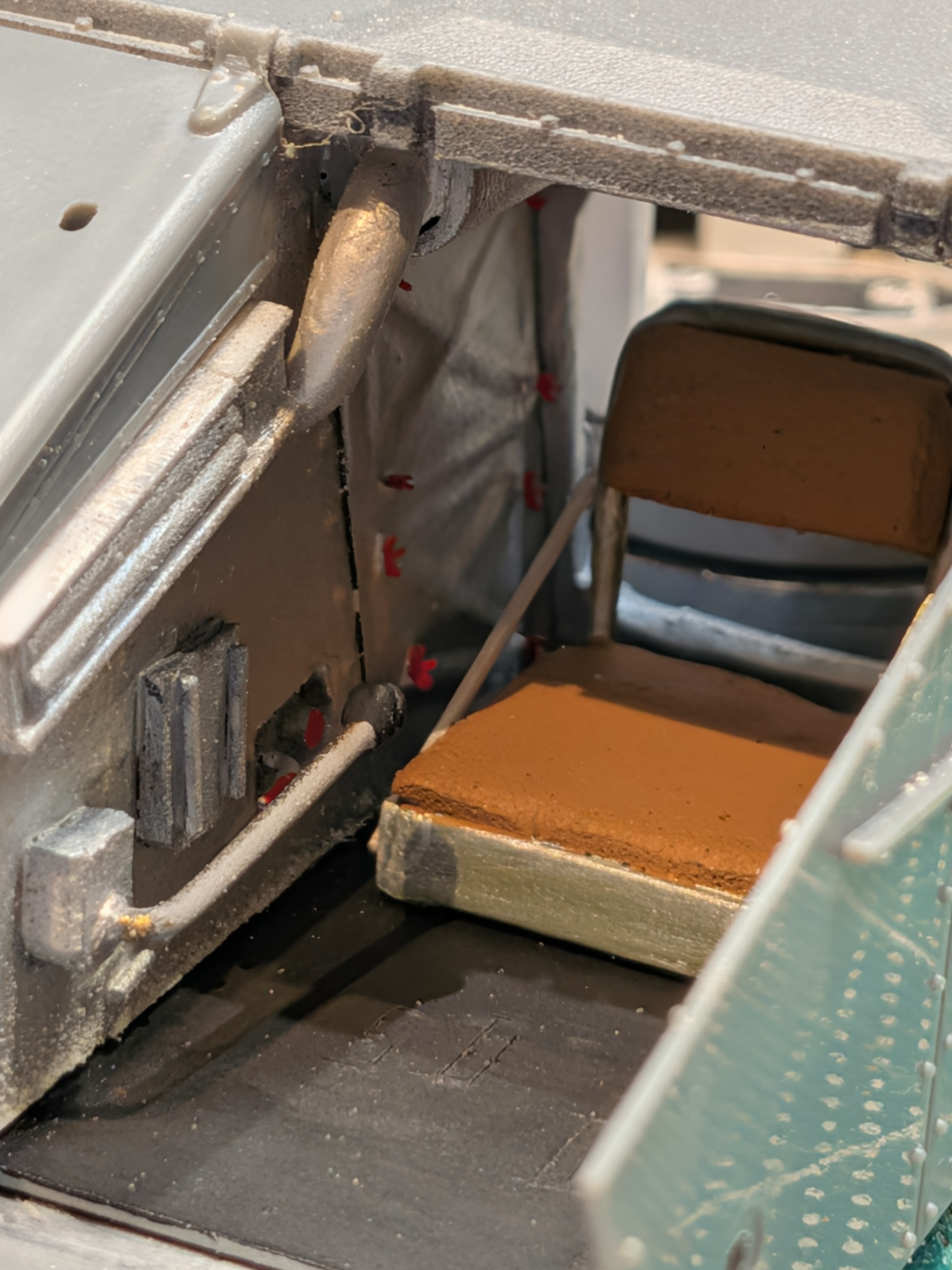
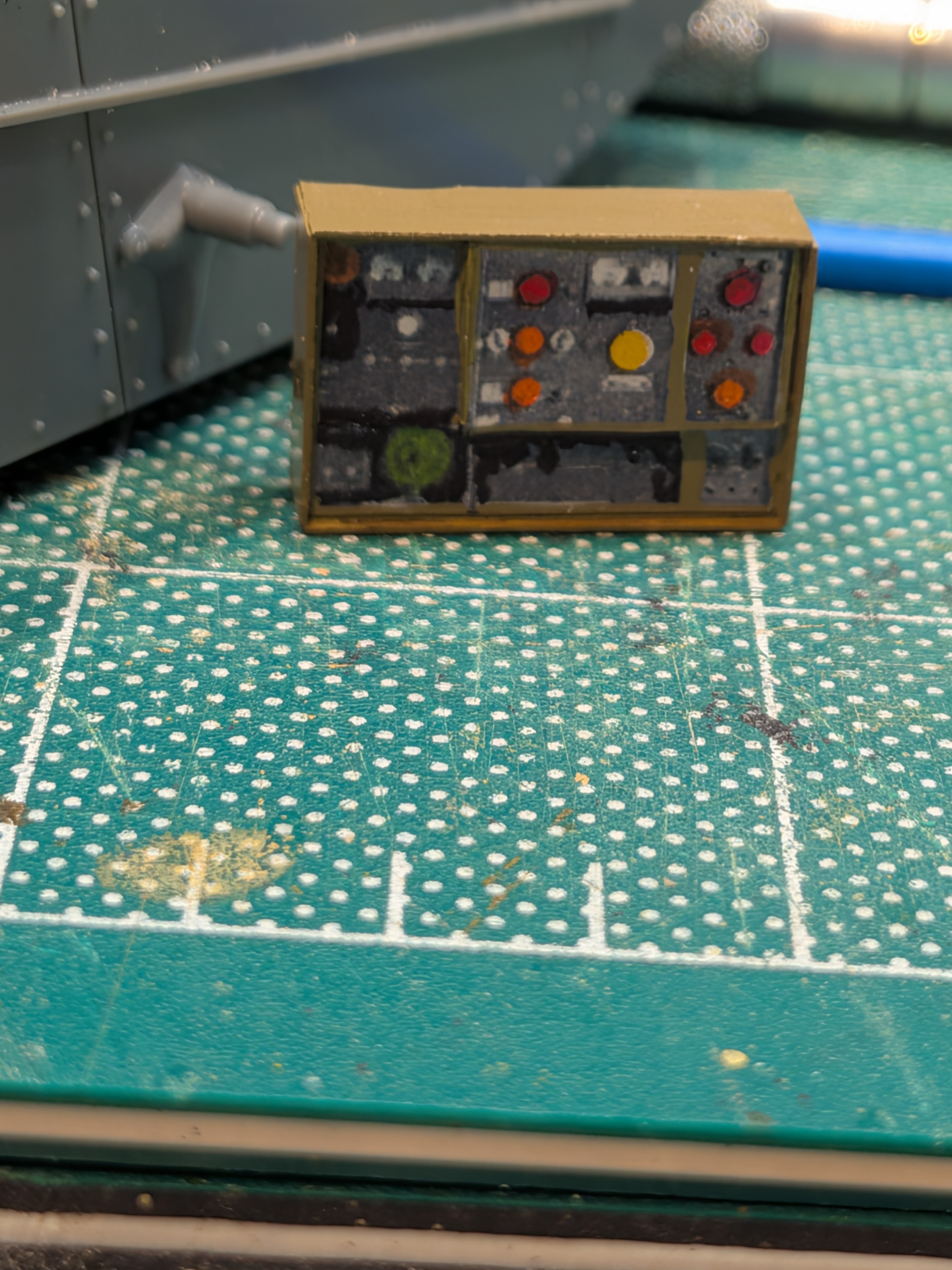
Attempt at what I could find of a No 9 radio... Paper print and card stock. Paint pen.
Turret seats done.
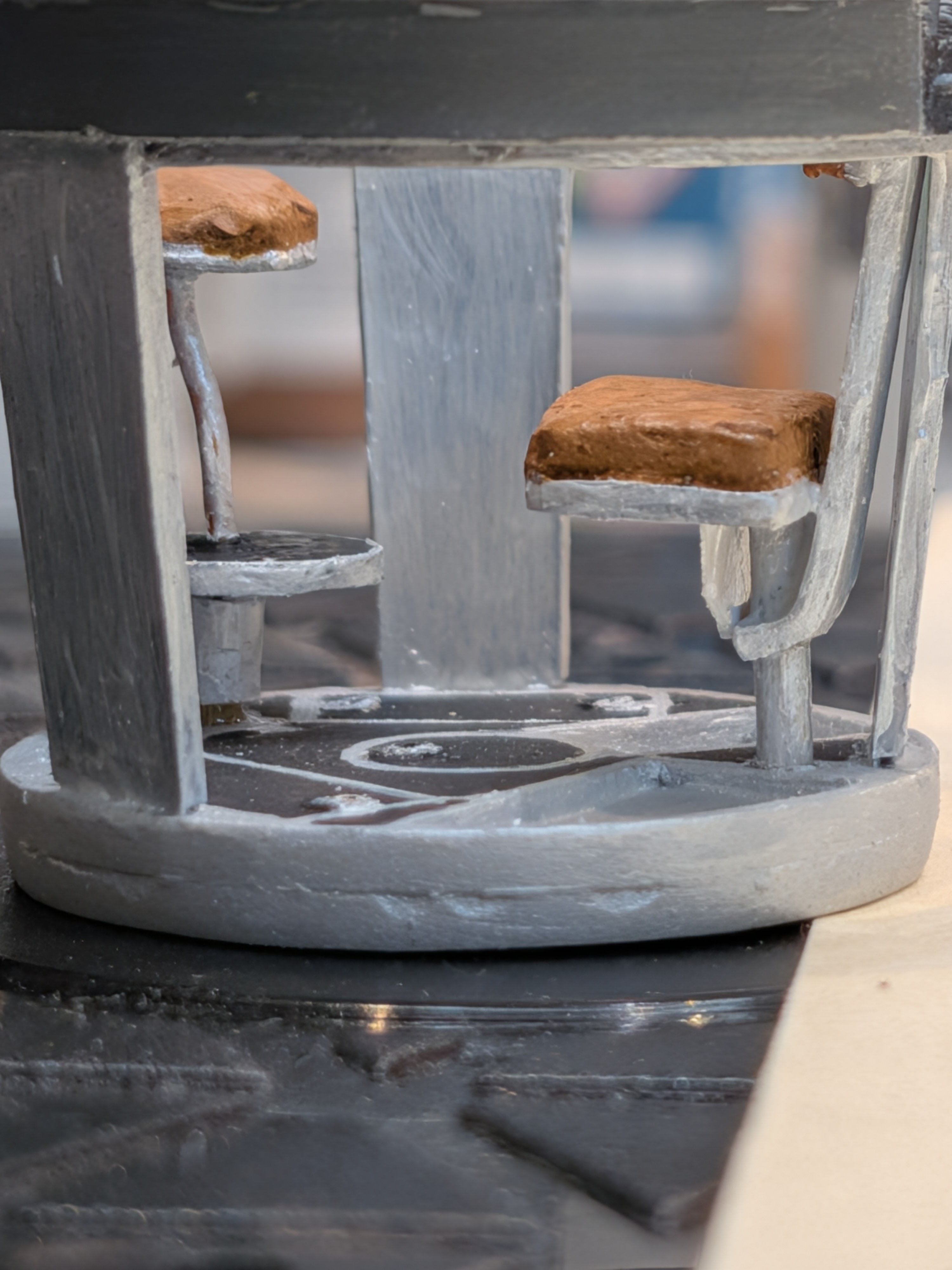
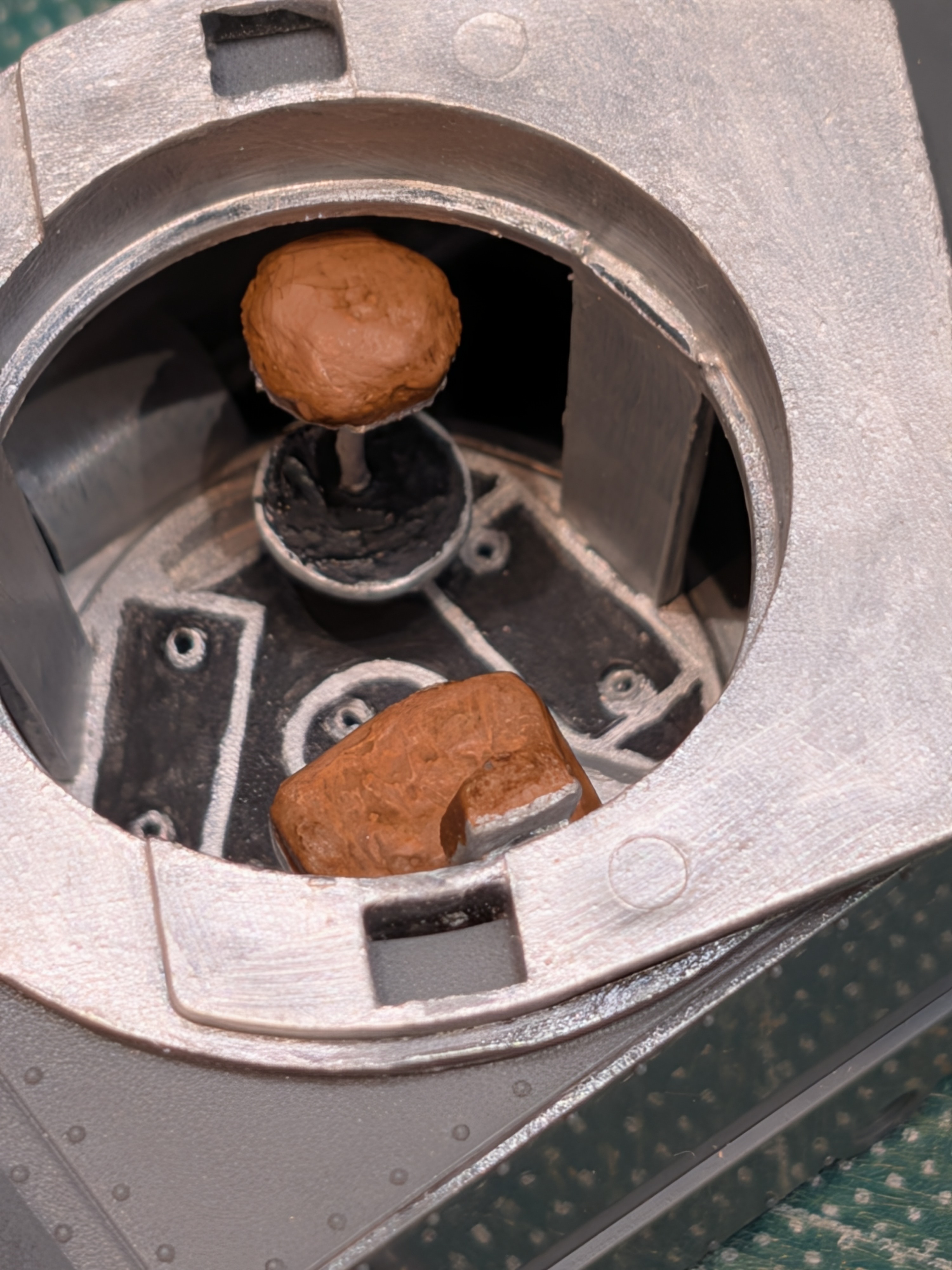
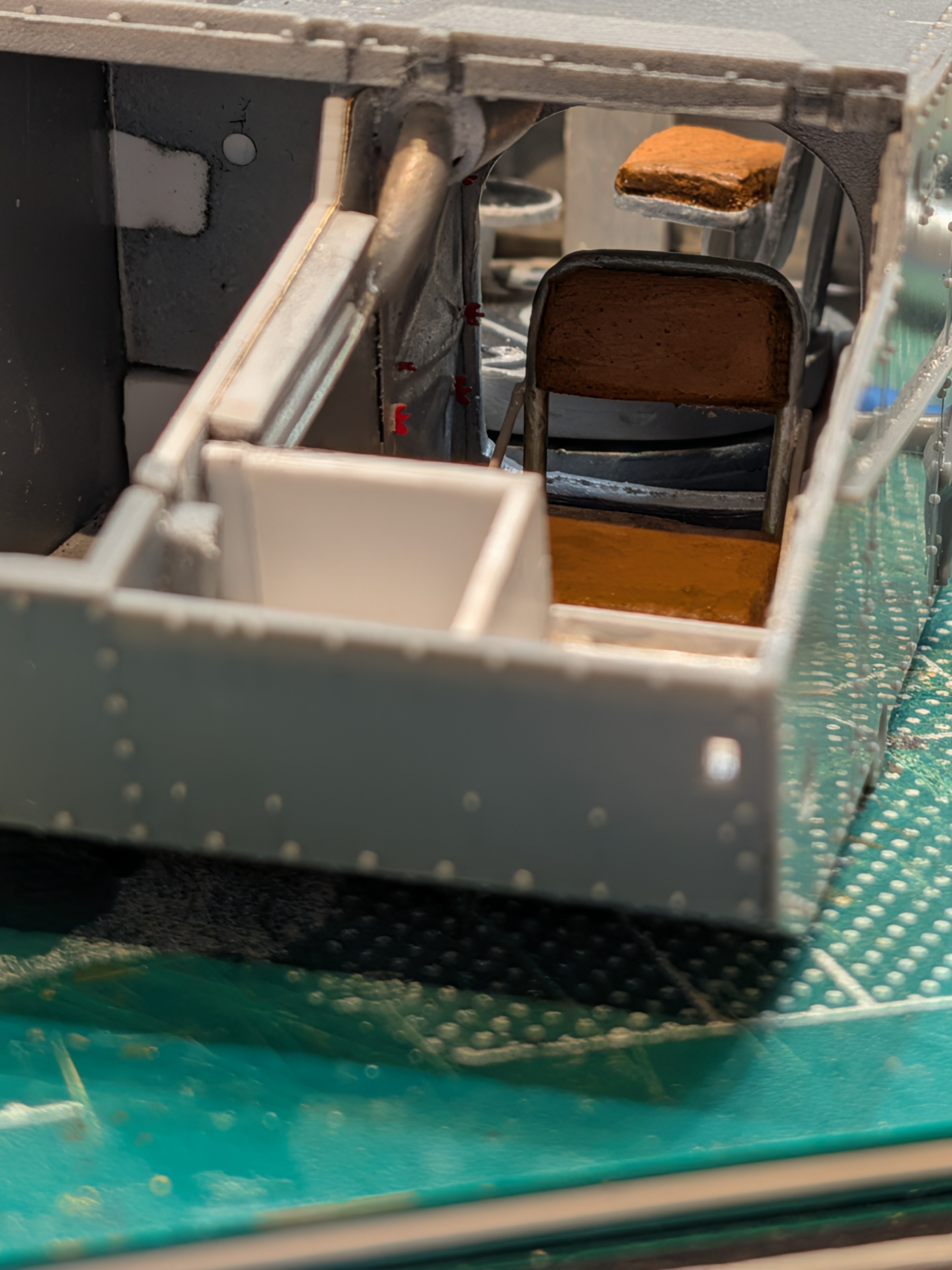
Have to redo globby black paint.
Turret seats done.
Have to redo globby black paint.
Interior coming together, at last!
Some batteries still to come at driver's feet, but I think I'll leave it at that.
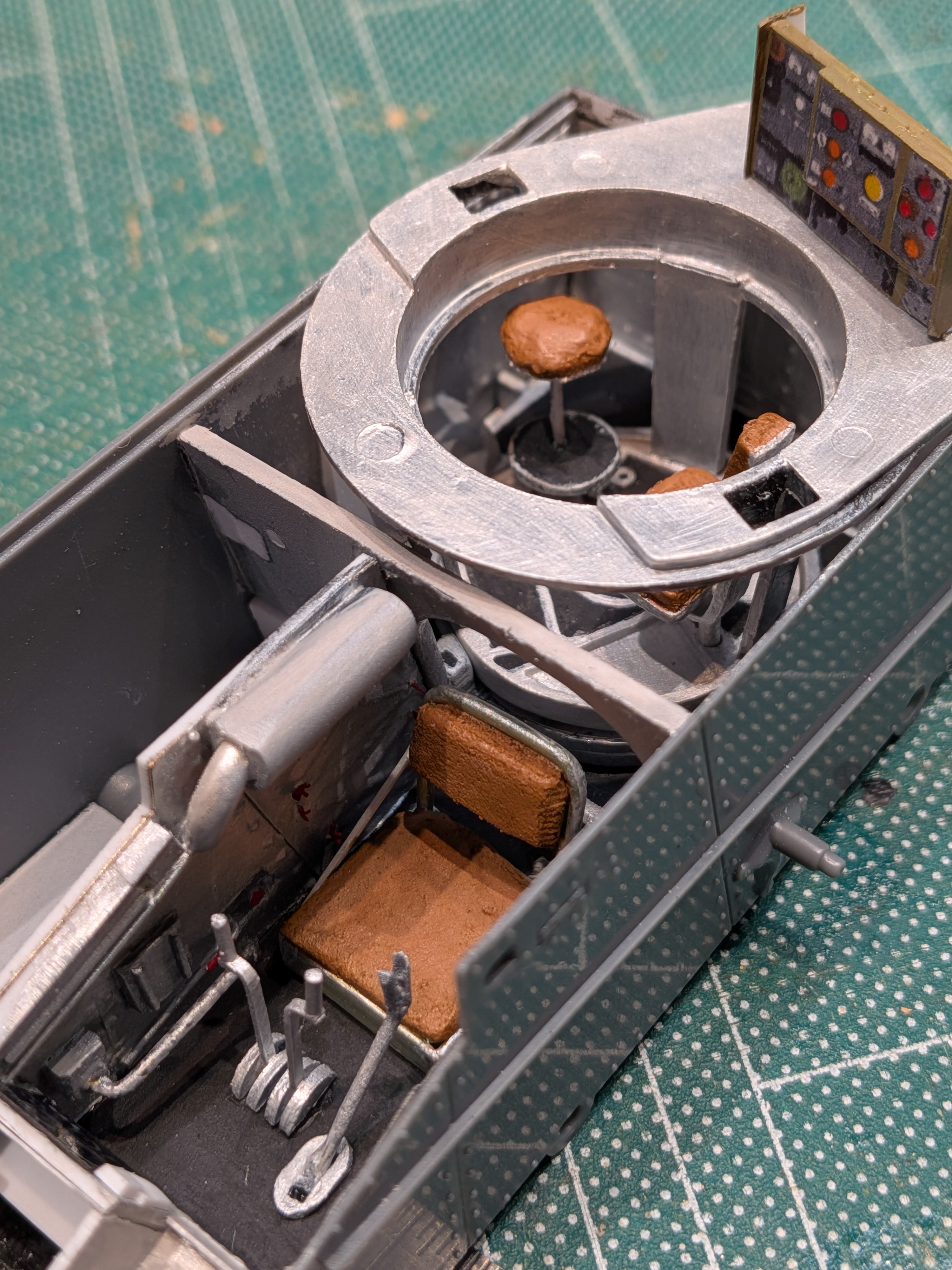
Everything, including the dividing walls and floor; excluding the kit turret ring and body shell... Built from scratch.
...a few more bits and bobs to paint.
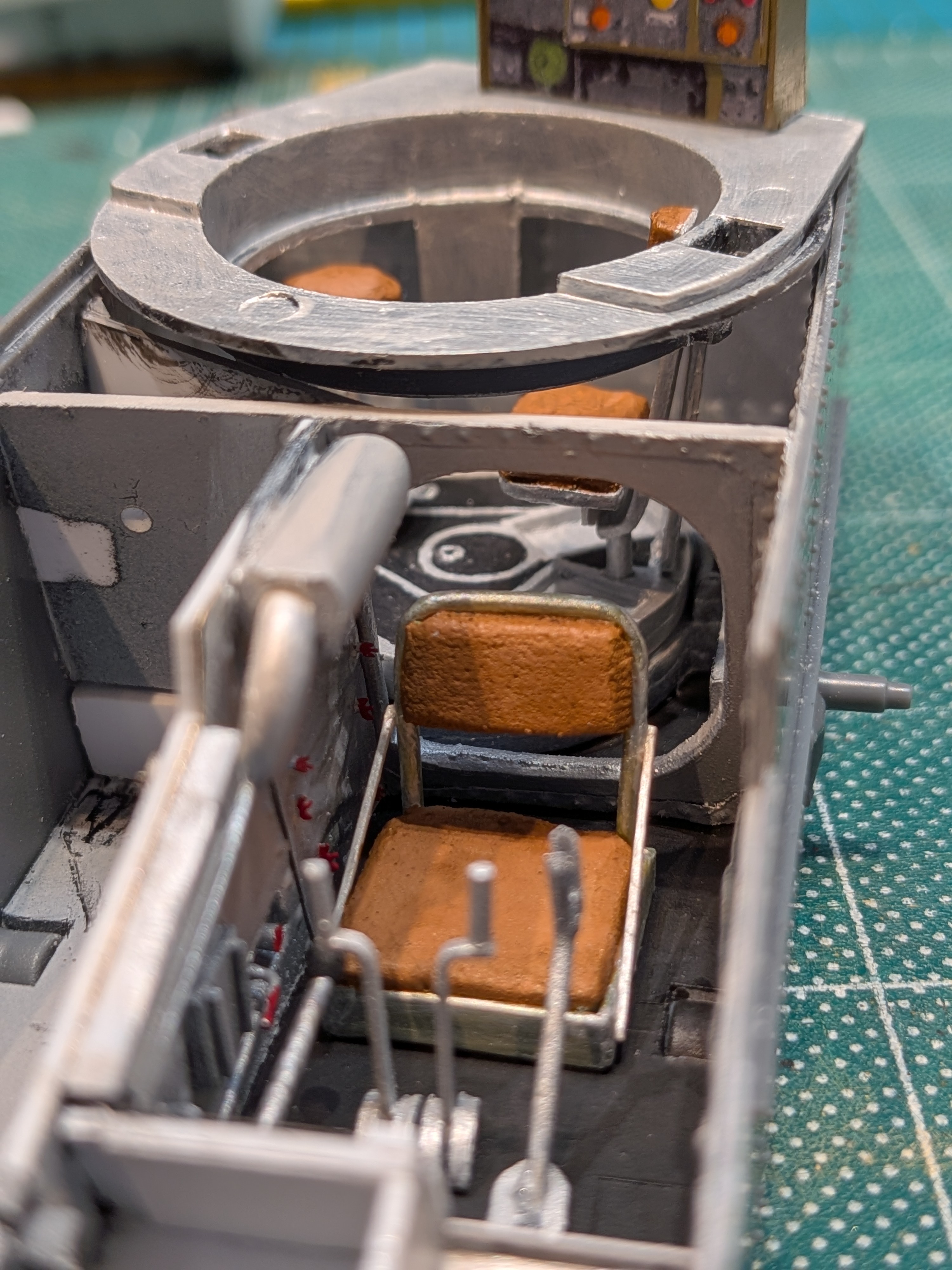
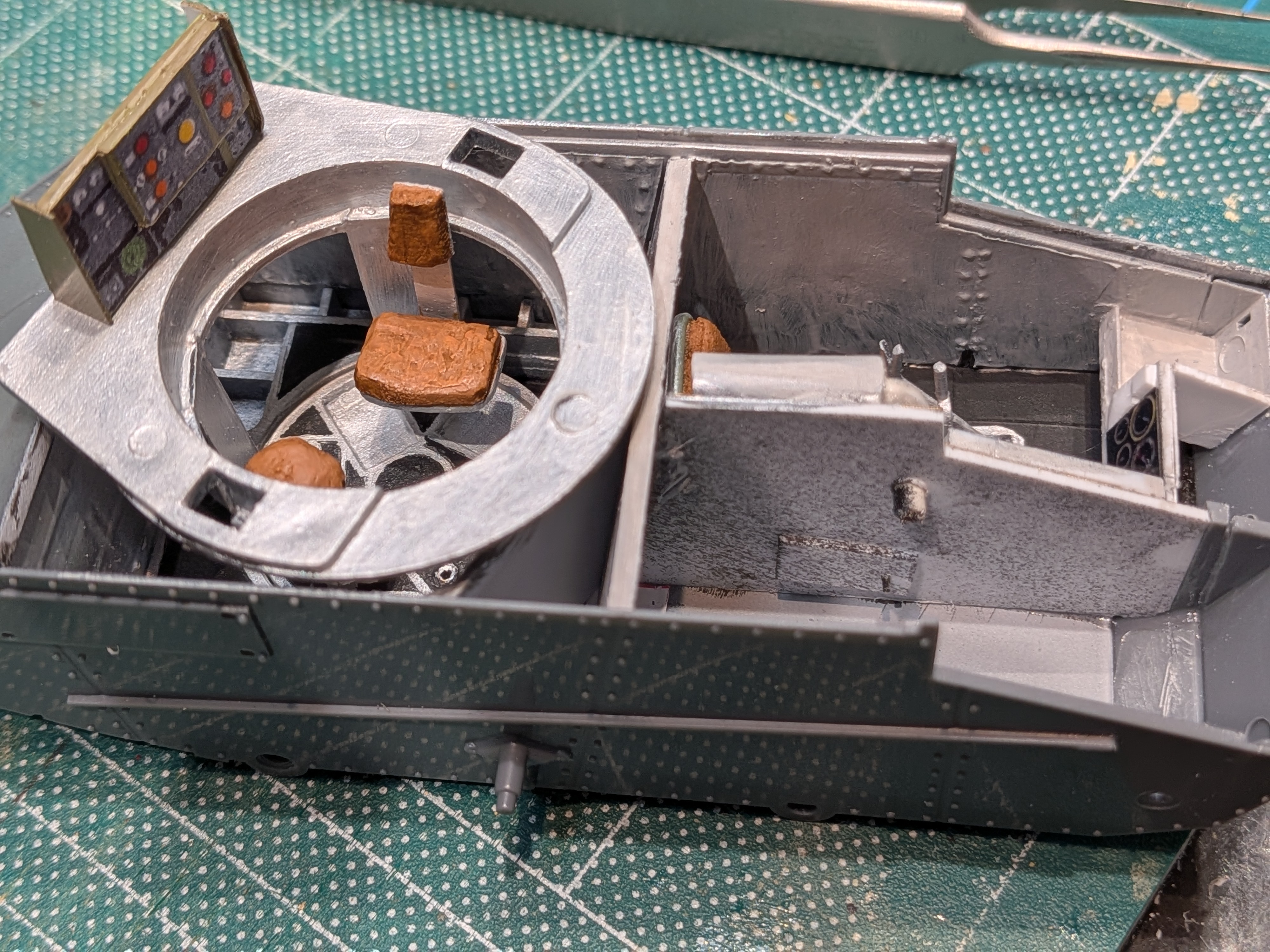
Some batteries still to come at driver's feet, but I think I'll leave it at that.
Everything, including the dividing walls and floor; excluding the kit turret ring and body shell... Built from scratch.
...a few more bits and bobs to paint.
Very impressive I'm not sure I have the patience to attempt something like this.Interior coming together, at last!
Some batteries still to come at driver's feet, but I think I'll leave it at that.
View attachment 193555
Everything, including the dividing walls and floor; excluding the kit turret ring and body shell... Built from scratch.
...a few more bits and bobs to paint.
View attachment 193556
View attachment 193557
Same here. Impressive.Very impressive I'm not sure I have the patience to attempt something like this.
@Ron2 @wjbrandel
Thanks guys...
In some ways it is much more forgiving: you do what you can do, not like there are sprues of parts and endless instructions that you might feel bad about omitting or messing up!
Thanks guys...
In some ways it is much more forgiving: you do what you can do, not like there are sprues of parts and endless instructions that you might feel bad about omitting or messing up!
Calling all Armour heads... calling all Armour heads!

I want to mount an early war British Essex fire extinguisher inside the Fighting compartment, only I would like to know:
1. would this be the right type?
2. if yes, which way round it was oriented if mounted vertically.
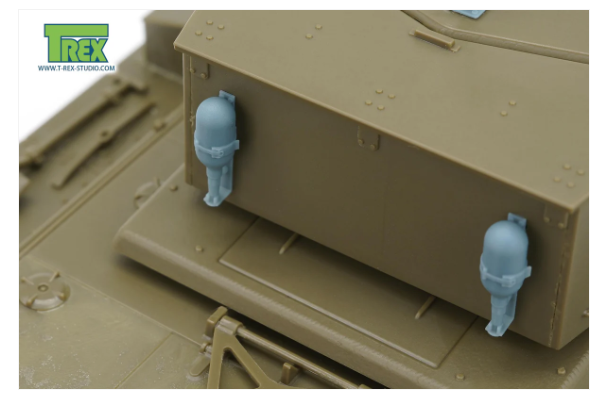
This accessory manufacturer shows them like this:
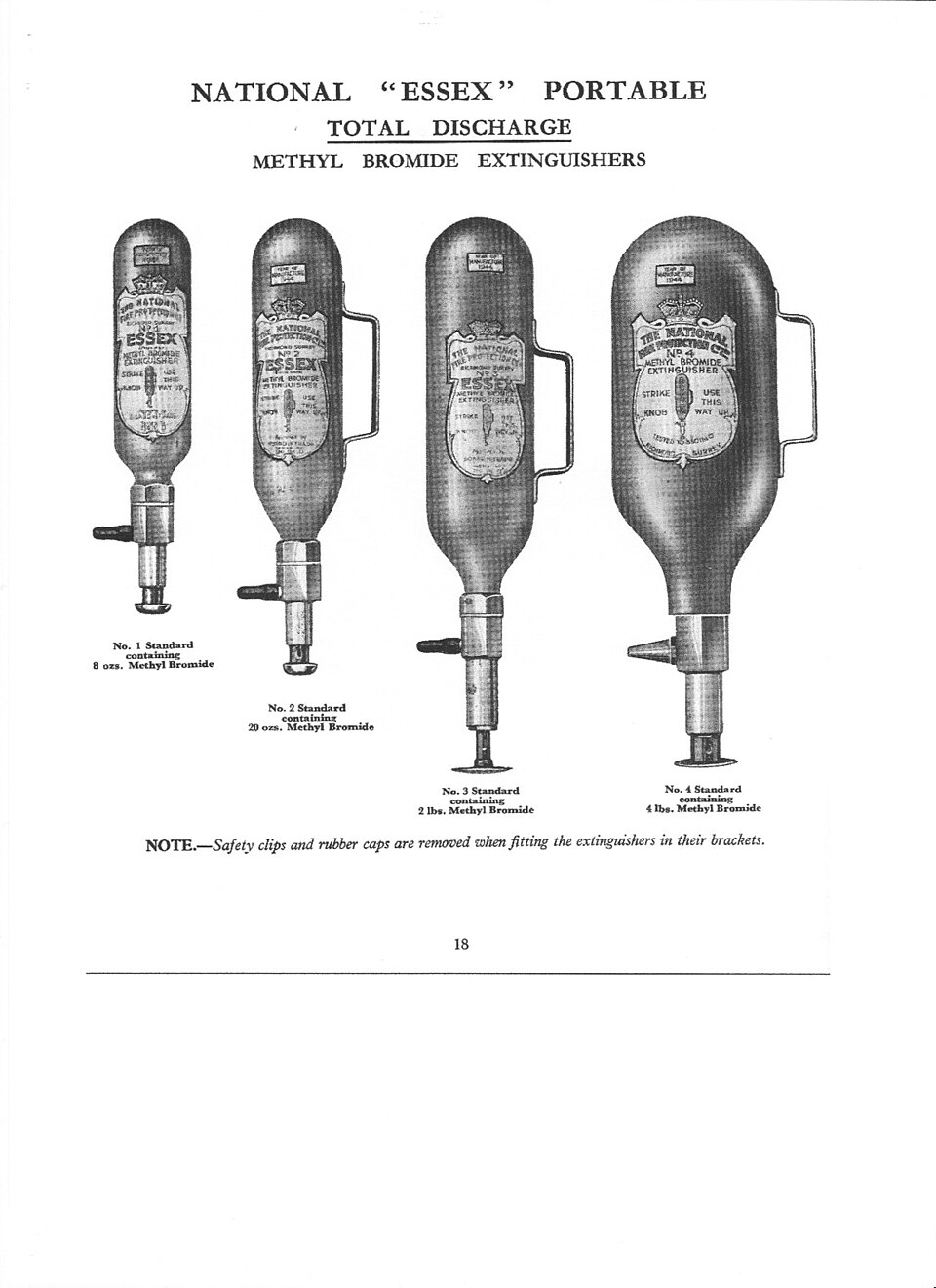
... and vintage civilian units looked like this: (the label instructions say to use nozzle down)
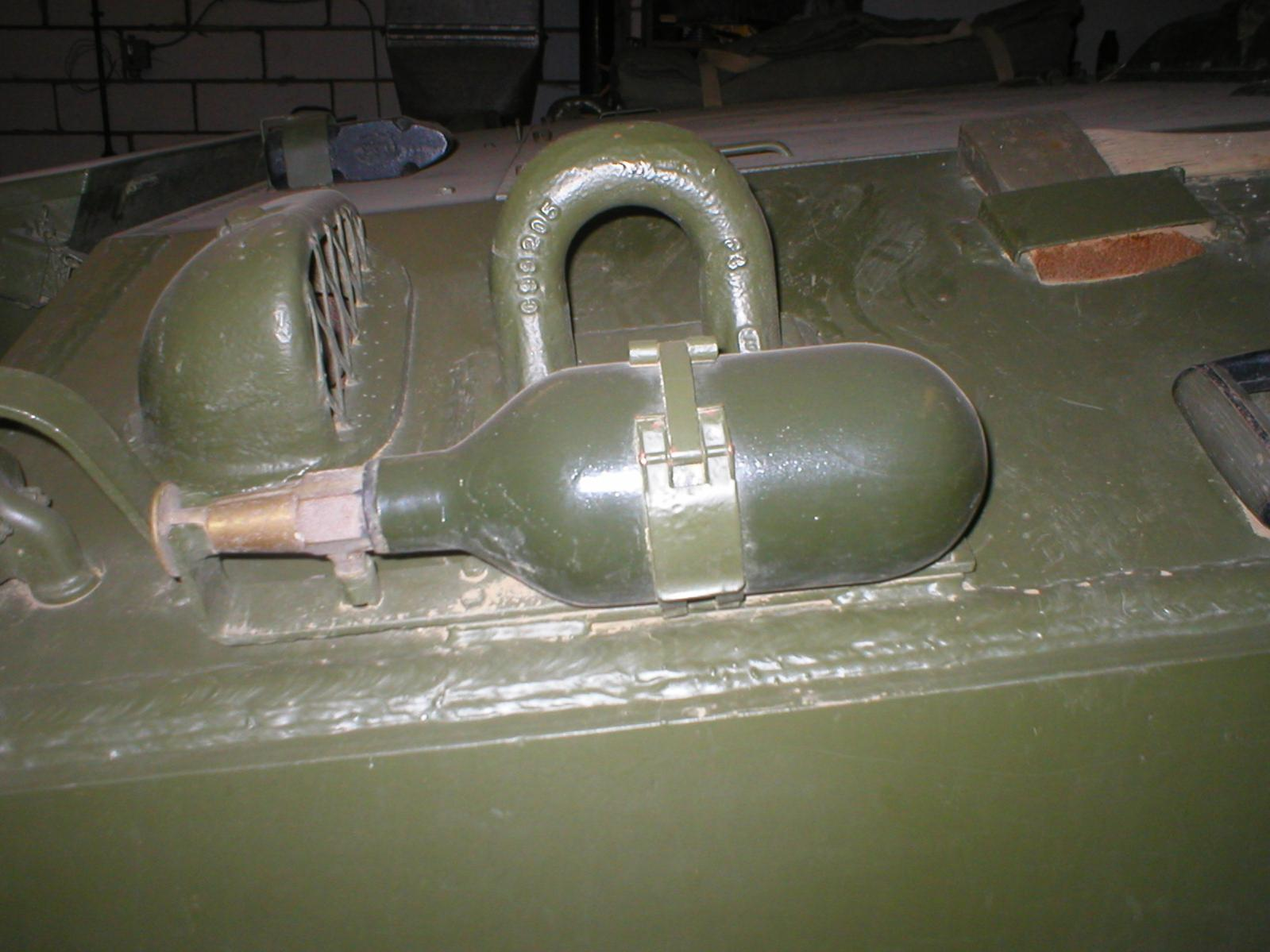
Mounted on outside of vehicles, invariably laying horizontally:
I want to mount an early war British Essex fire extinguisher inside the Fighting compartment, only I would like to know:
1. would this be the right type?
2. if yes, which way round it was oriented if mounted vertically.
This accessory manufacturer shows them like this:
... and vintage civilian units looked like this: (the label instructions say to use nozzle down)
Mounted on outside of vehicles, invariably laying horizontally:
Jakko
Well-Known Member
Those are a later type, suitable for things like Shermans, Cromwells, later Churchills, Comets, etc. Early in the war, British tanks had pyrene fire extinguishers that look like a tube with a T-handle on one end.
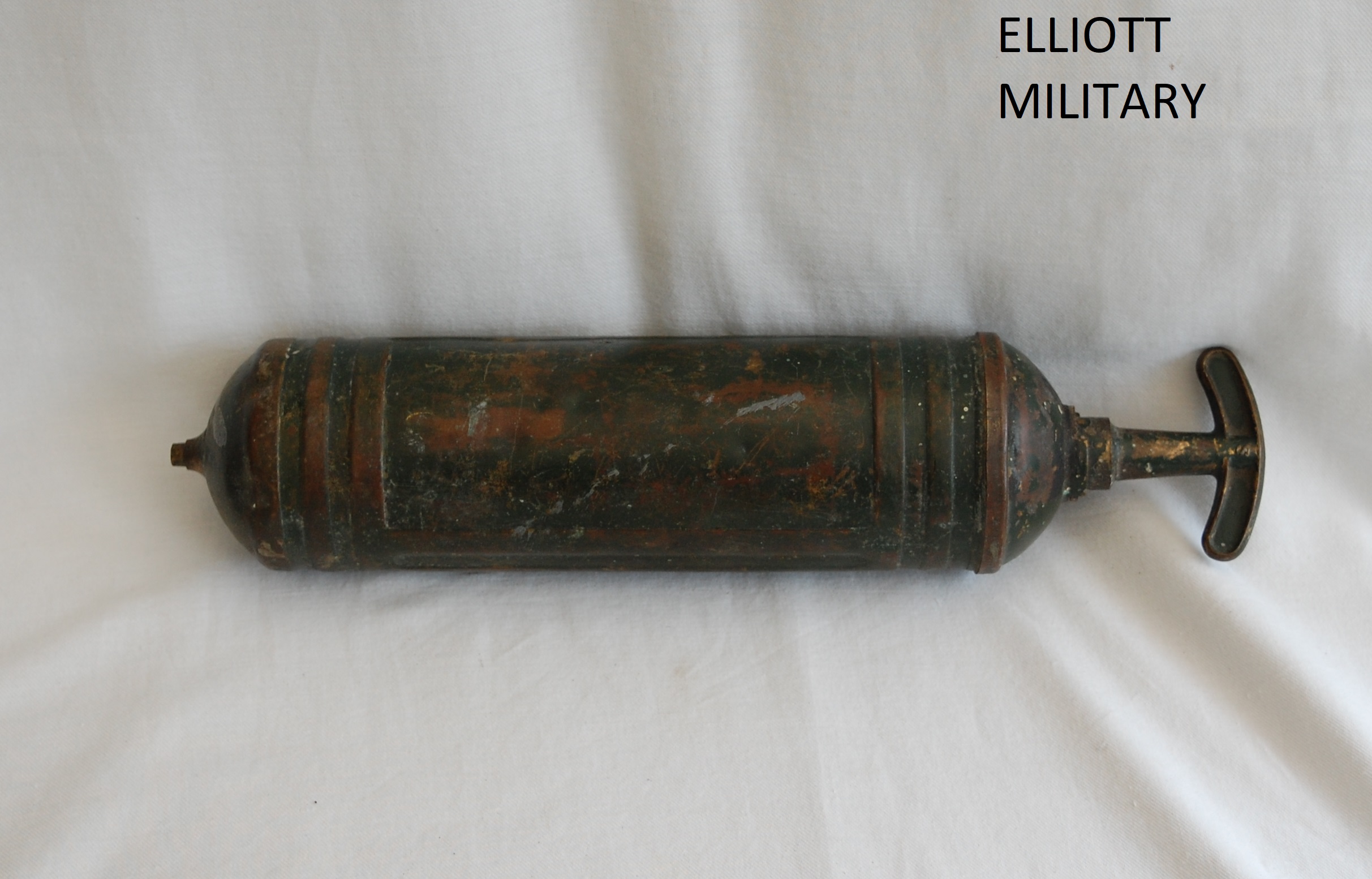
(source)
If you don't care about the fluting they typically have, you can scratchbuild one fairly easily. If you do care about the fluting, there are some options. I have some 3D-printed ones I got from Eelke Warrink, the chap behind Zavod3D, but I notice he doesn't have the files for them for sale there.
(source)
If you don't care about the fluting they typically have, you can scratchbuild one fairly easily. If you do care about the fluting, there are some options. I have some 3D-printed ones I got from Eelke Warrink, the chap behind Zavod3D, but I notice he doesn't have the files for them for sale there.
Ah, these I'm familiar with... And have used in previous builds. Including some really nice turned brass ones from Aber.pyrene fire extinguishers
Back to my original questions though, do you think the later type would've been mounted upside down when vertical?

John Waller
Active Member
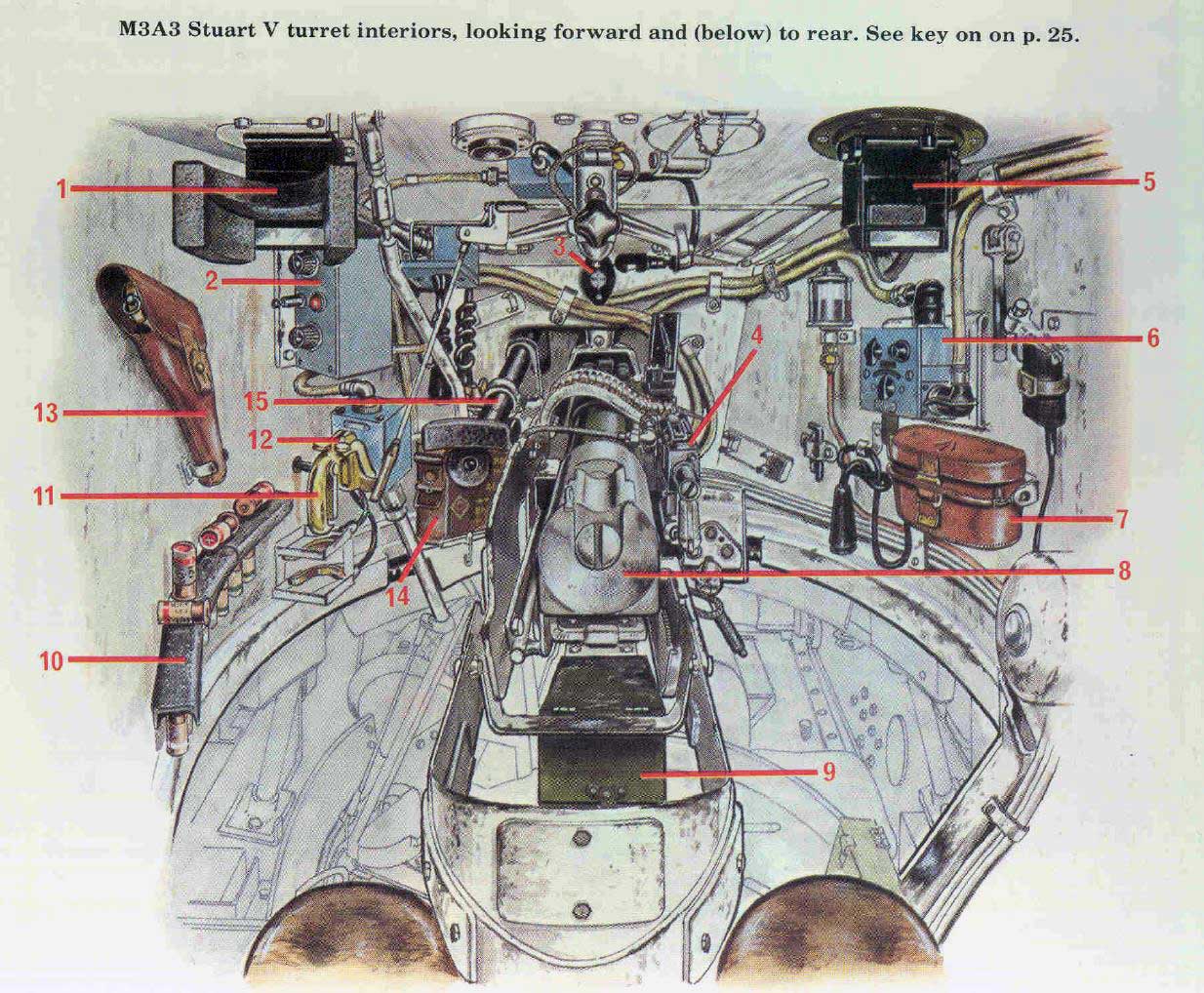
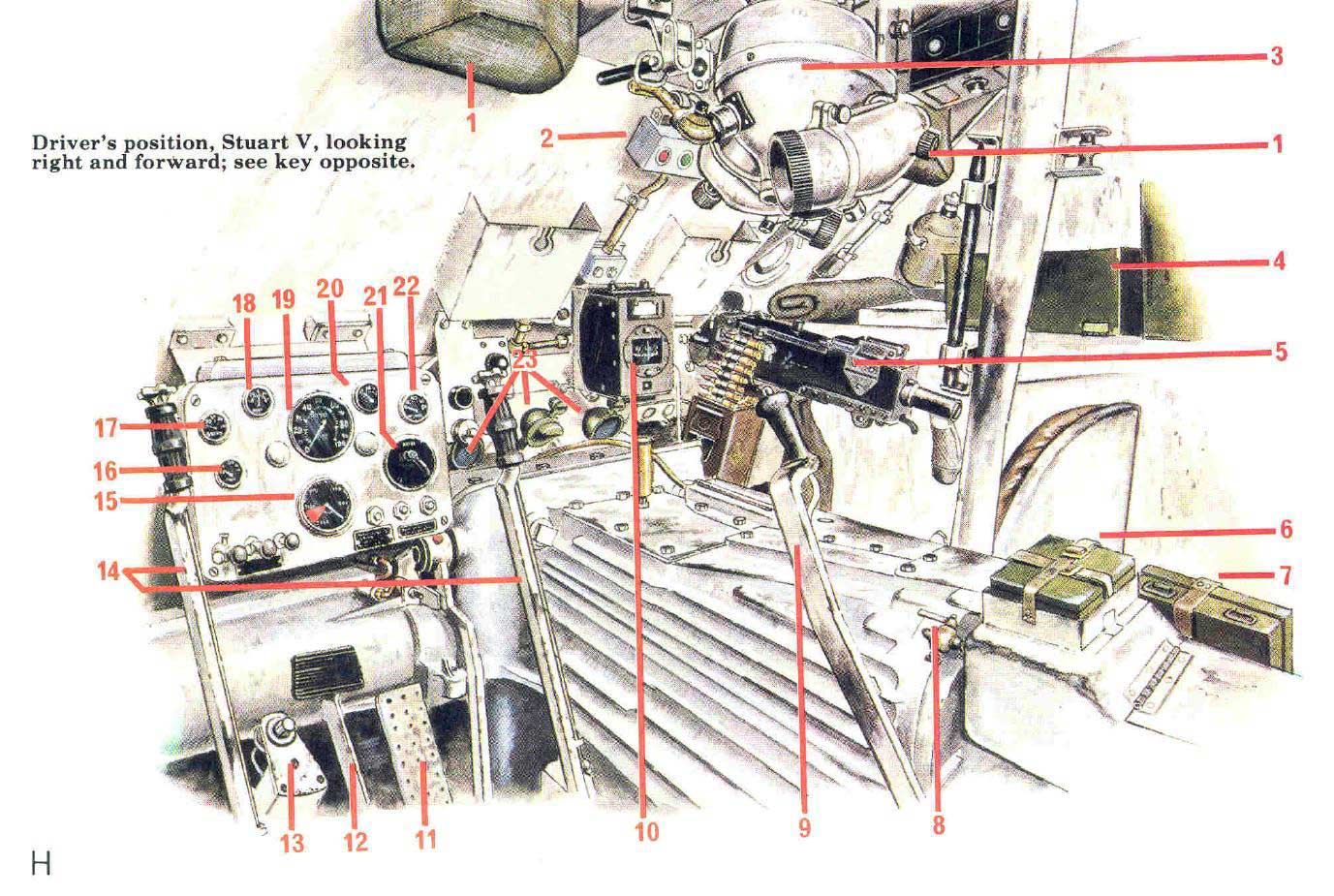
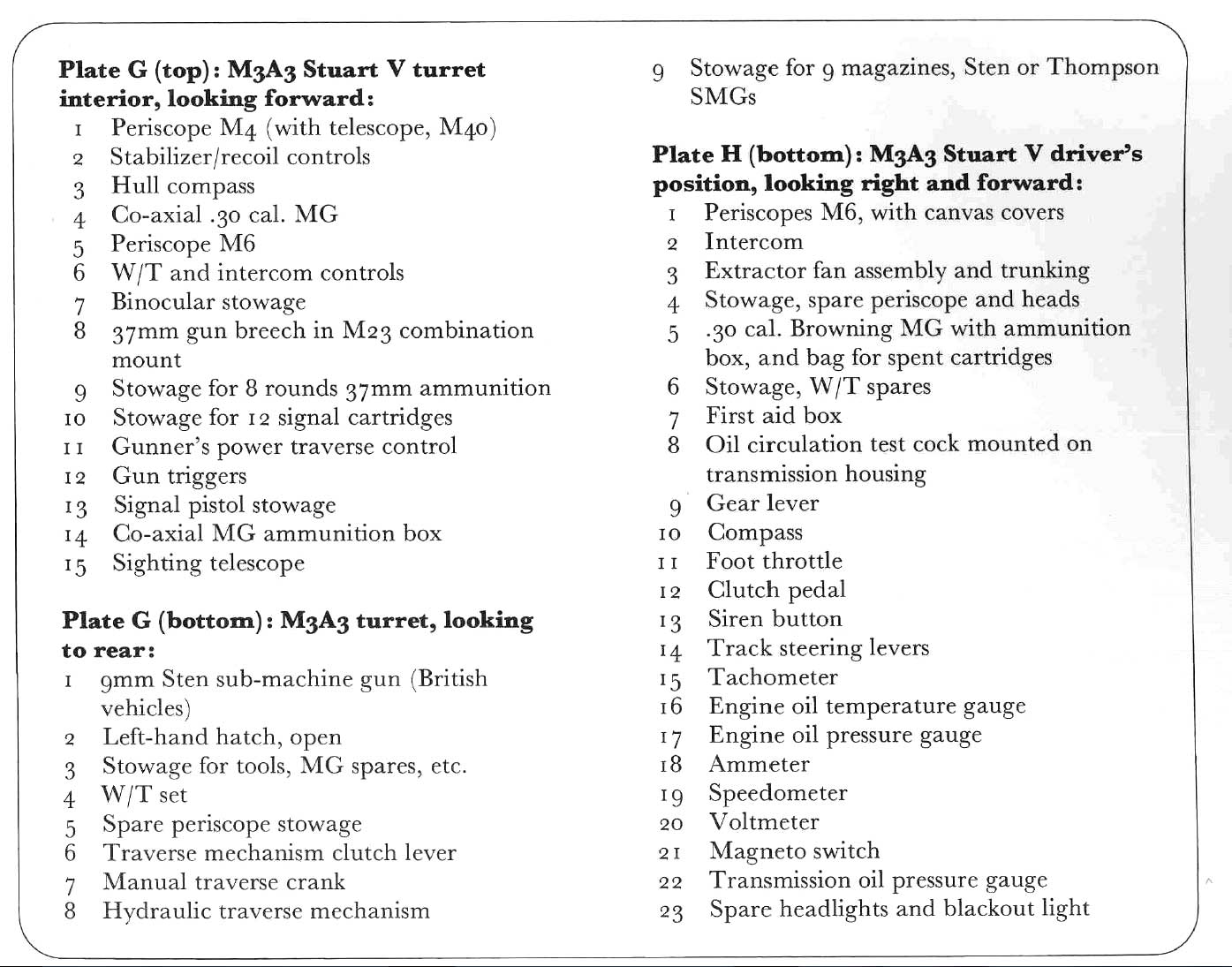
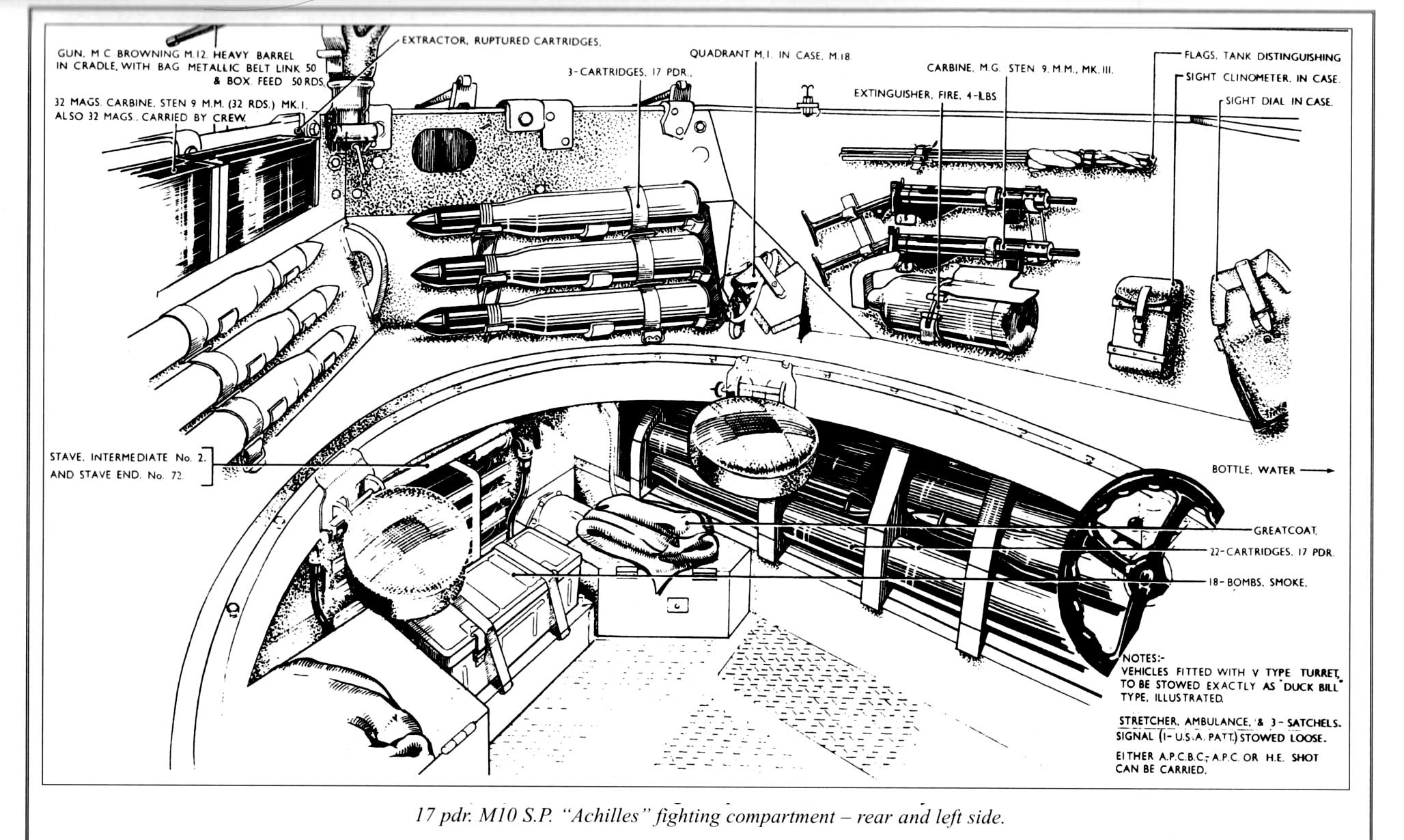
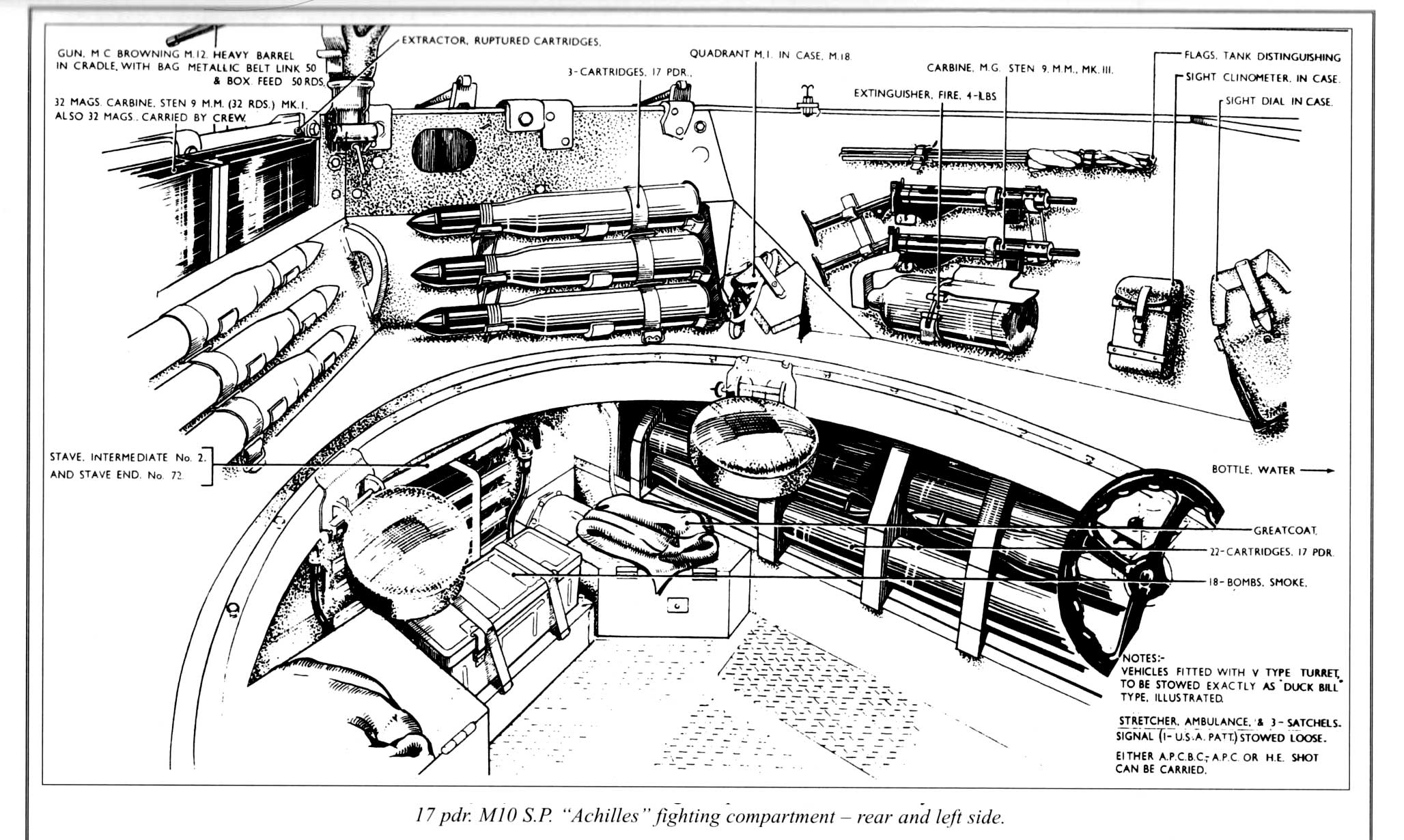
Jakko
Well-Known Member
They usually were, AFAIK — or horizontal, like on the back deck of Shermans, as in your photo. Ones installed on a turret usually had the spout pointing down, though.do you think the later type would've been mounted upside down when vertical?
BTW, the way to use these was to strike the end of the spout on a hard surface, which would push it in and start the extinguisher, and then you just pointed it at the fire. There was no way to turn them off, unlike with more modern extinguishers.
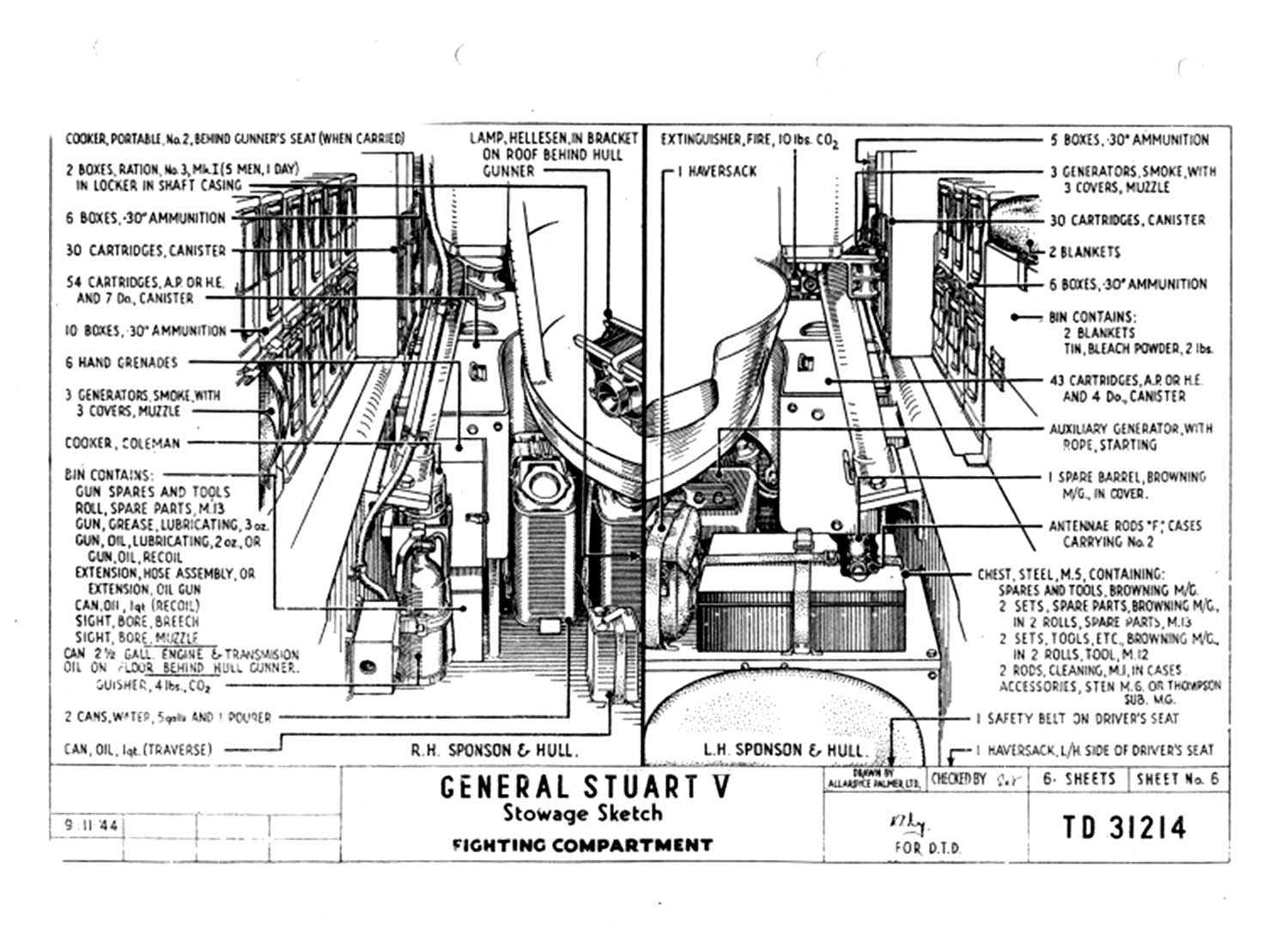
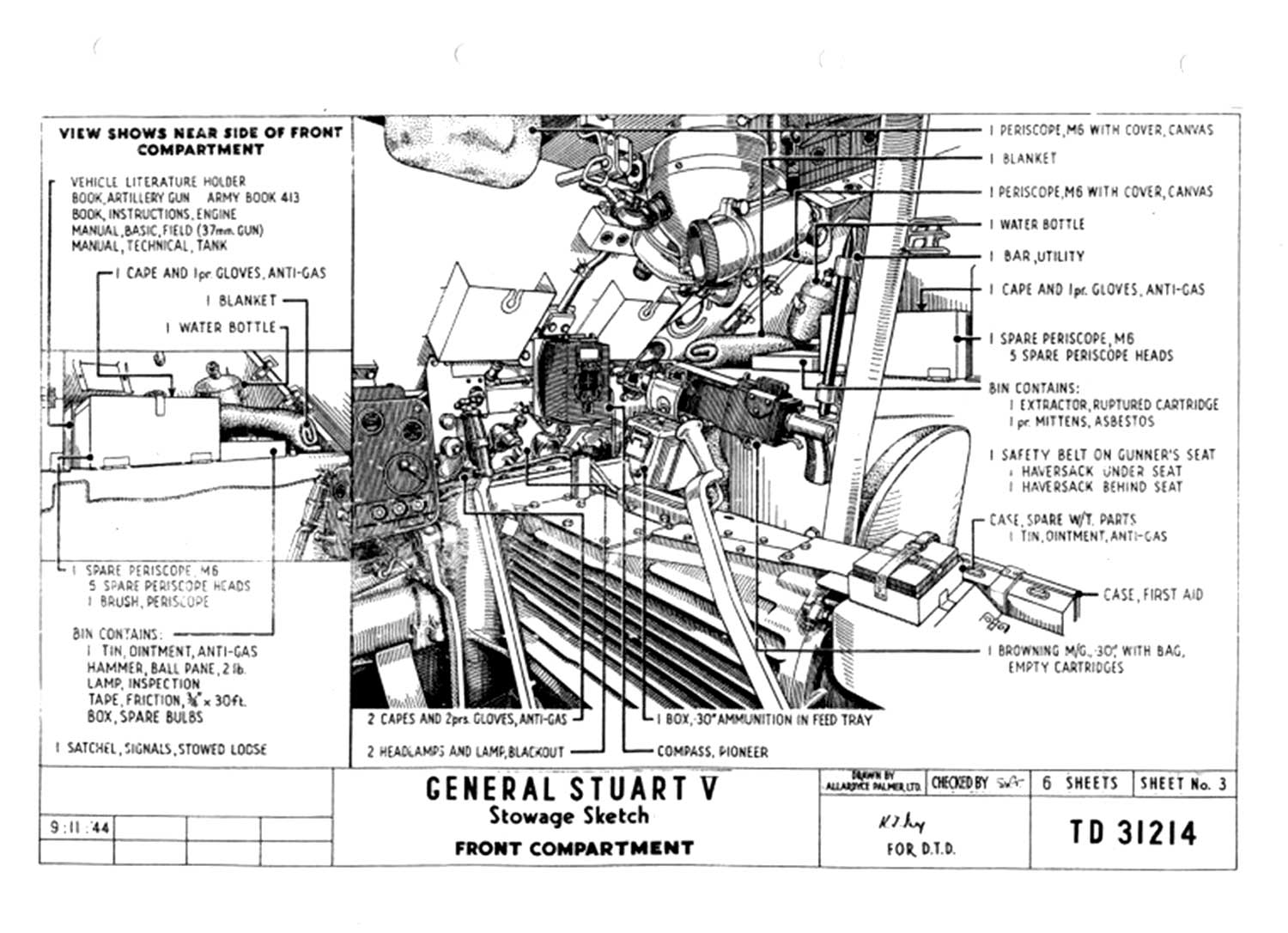
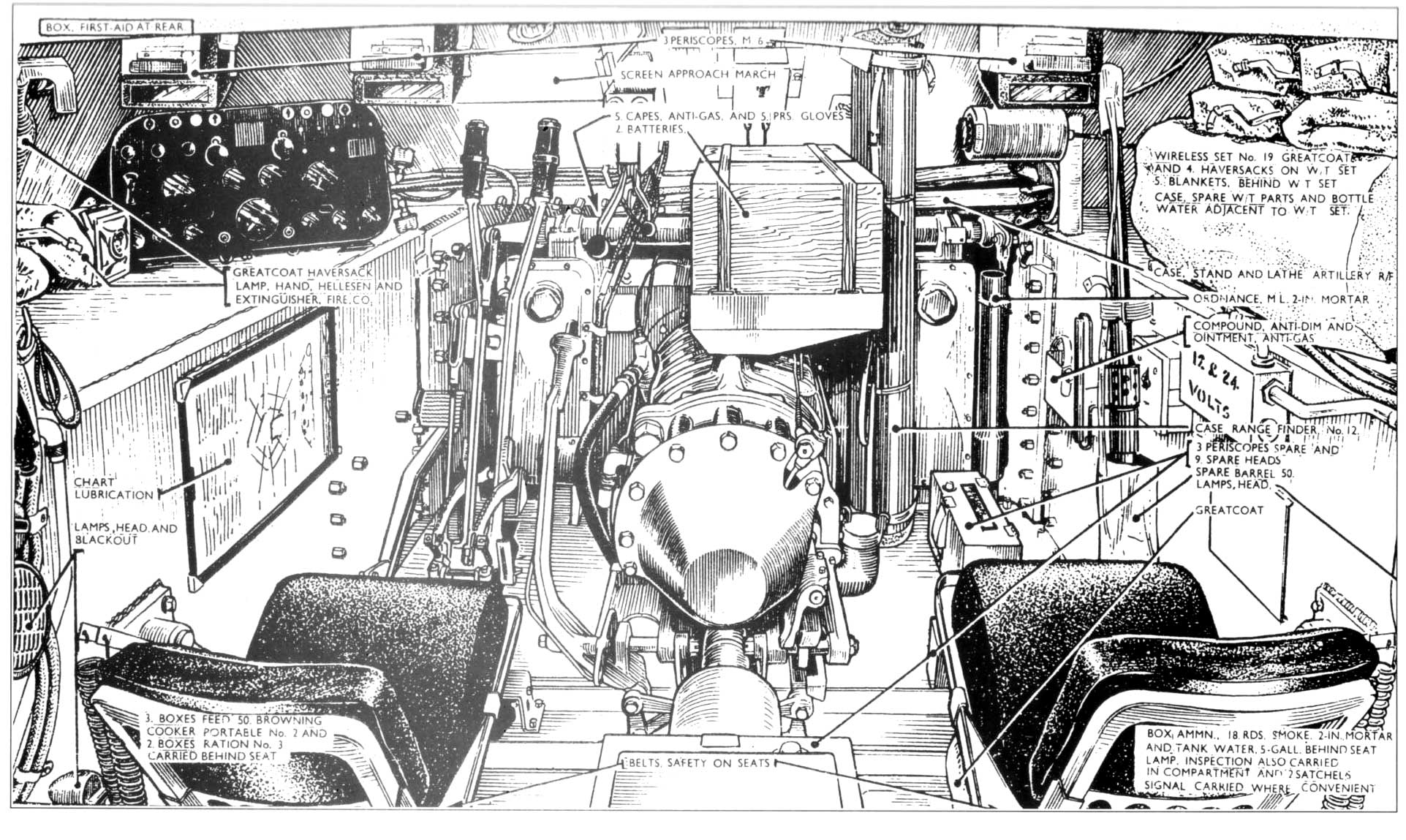
Almost certainly, but you would have to find the ones for the Light Tank Mk. VI to be sure. I've got a folder with 125 of them (in all, not 125 vehicles) from the Second World War until the 1960s, but it doesn't include any light tanks other than the Stuart Mk. V and VI.Surely it must show up in some of those great British TD stowage drawings for AFV interiors?
Last edited:
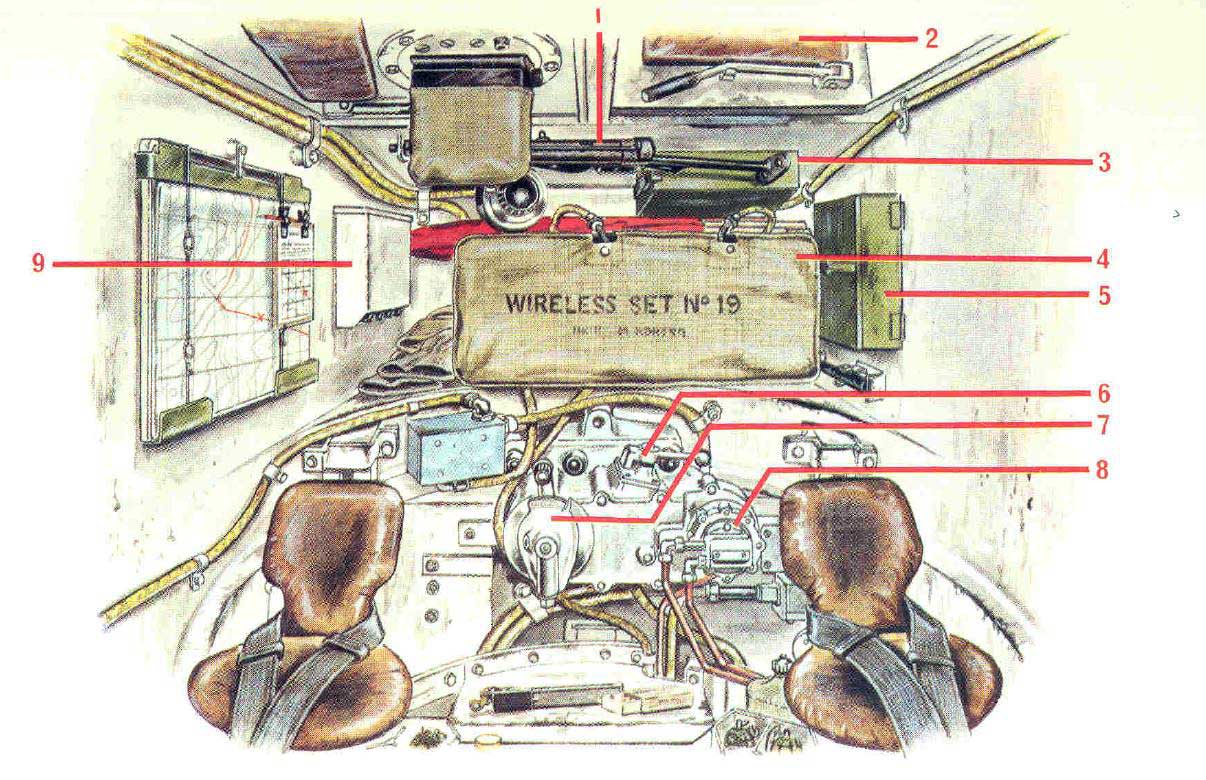
Those are amazing. I haven't come across anything like these in my own rummaging. Makes me wonder how they fit people in there!stowage drawings
I especially like the colour Stuart illustrations... Reminiscent of my dad's Boys' Annuals from the '40s. I have vague memories of reading through a few when I was a kid, along with his 'Dave Dawson and Freddy Farmer' books. Don't know what happened to those, though the annuals were yellowed and brittle even in the '60s.
Pretty basic equipment, but better than nothing I'm sure.strike the end of the spout
Jakko
Well-Known Member
Note that the colour in the drawings John posted, is because those are from Osprey Vanguard-series books. It look like those paintings were based on the stowage diagrams, but original ones had no colour. Here's the same ones but as originally done:
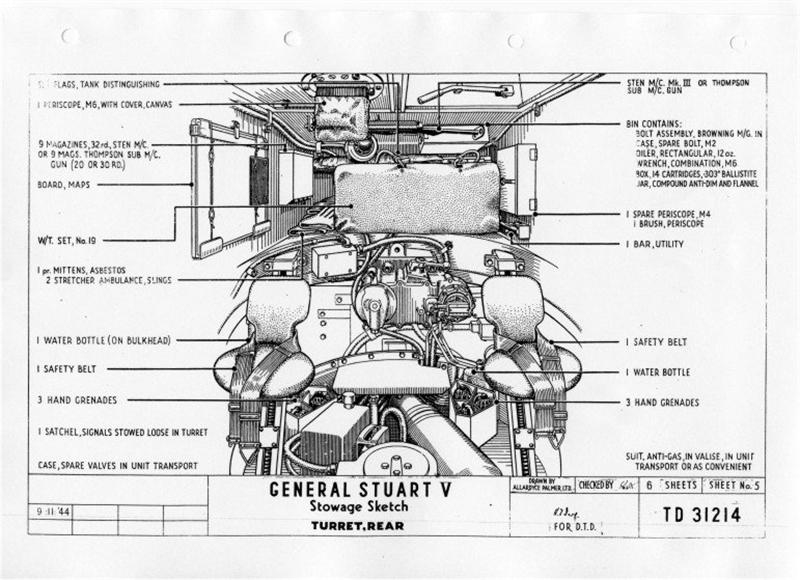
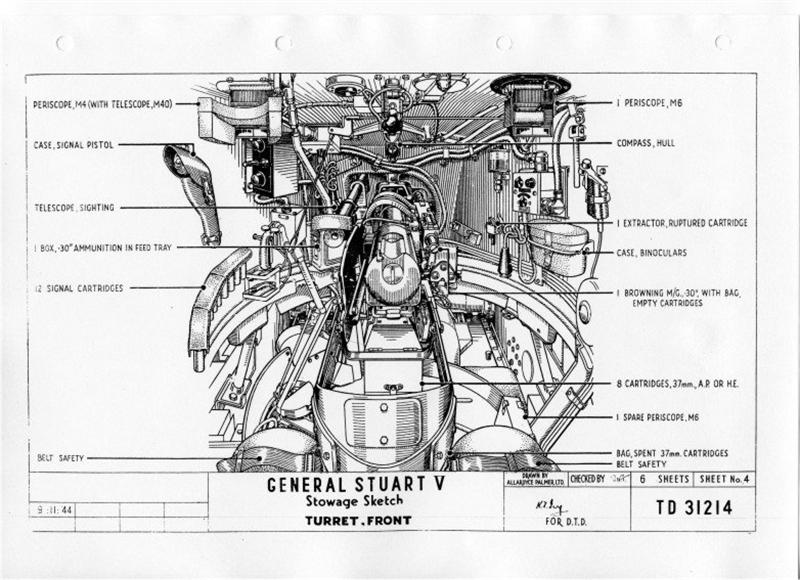
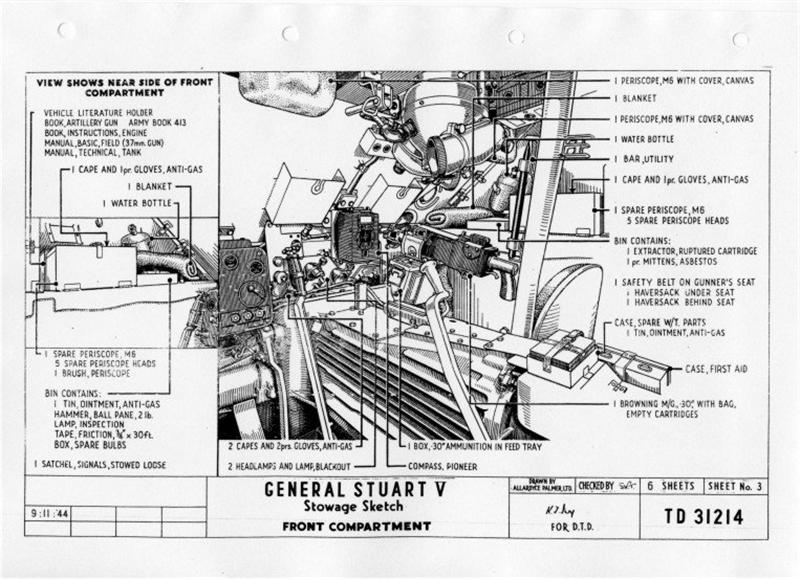
There was an art to those technical drawings before CAD.
In the early 80s, I used Rapidograph pens at a drafting table, some cross hatched pen and ink drawings in the 70s, but never such complex freehand illustrations as these.
Yup, the end of every workday saw the technical pens disassembled and nibs left overnight in the ultrasonic bath; if the drawings were complete, the Borco and Maylines were cleaned, along with scale rulers and triangles; the copy proof blue pencils, erasers and rule guides put away.
As a junior designer, I also got to tidy up the repro camera room and sometimes the blueprint machine (I can still smell it).
Then there were the Pantone pens, colour swatches and typesetting books to be returned to their places in the studio, along with any loose Letraset sheets, and reference drawings back into the flat map drawer cabinets!
In the early 80s, I used Rapidograph pens at a drafting table, some cross hatched pen and ink drawings in the 70s, but never such complex freehand illustrations as these.
Yup, the end of every workday saw the technical pens disassembled and nibs left overnight in the ultrasonic bath; if the drawings were complete, the Borco and Maylines were cleaned, along with scale rulers and triangles; the copy proof blue pencils, erasers and rule guides put away.
As a junior designer, I also got to tidy up the repro camera room and sometimes the blueprint machine (I can still smell it).
Then there were the Pantone pens, colour swatches and typesetting books to be returned to their places in the studio, along with any loose Letraset sheets, and reference drawings back into the flat map drawer cabinets!

Bob T
Well-Known Member
Back when I was in the service in the late 70s, we had some multi day war games at Ft. Bragg. 18th Corps and their armor was on the other side, with us being our lightly equipped 82nd battalion. A lot of shooting blanks at each other, and moving, and setting up, and moving, etc. (I was in the artillery, M102 canon crewman.) I remember the M60 tanks found us and we used direct fire on them, (with blanks), but no one on our gun crew removed the muzzle plug, and it binged off the tank. Good fun.Those are amazing. I haven't come across anything like these in my own rummaging. Makes me wonder how they fit people in there!
But the point of my elaborate build up, was that night we got to take a break to hang out. The tank guys came over and checkout our gun emplacements and howitzers. We went and checked their M60 tanks. I was invited to climb in and check one out. I did and oh boy, that was not for me. Not a lot of room. Cramped. Things everywhere to smack your head on. I was glad to get out and glad I decided to go artillery.
I imagine the smaller tanks of earlier times where worse.
Jakko
Well-Known Member
I suspect, but don't know for sure, these were made by taking photographs and tracing over them. Or at least, that's how I would do it, but I'm not a trained artist of any kindIn the early 80s, I used Rapidograph pens at a drafting table, some cross hatched pen and ink drawings in the 70s, but never such complex freehand illustrations as these.
hmmm, a good chance that is how it went. I doubt they sat in there and sketched... though possibly a combination of both - photography having its limitations back then.tracing over them
Yup... the thought of being shoehorned into a can isn't too appealing.Not a lot of room.
Two of my uncles were artillery in the Canadian forces: one a FOO in WW2 Europe, the other went to Korea. I only met them a coupla times when I was a kid, so I don't know much more than that.
Some more scratch... And a collection of items for consideration from the tickle trunk.
Brass, copper tape for leaded glass: transformed into a leather sleeve/pouch in the turret; an elliptical metal container (for field glasses?) on the wall; a bulge at base of the angles wall (from a spare part that is oddly similar to the reference photos); and a bank of batteries next to the driver. More aluminium and leather to paint!
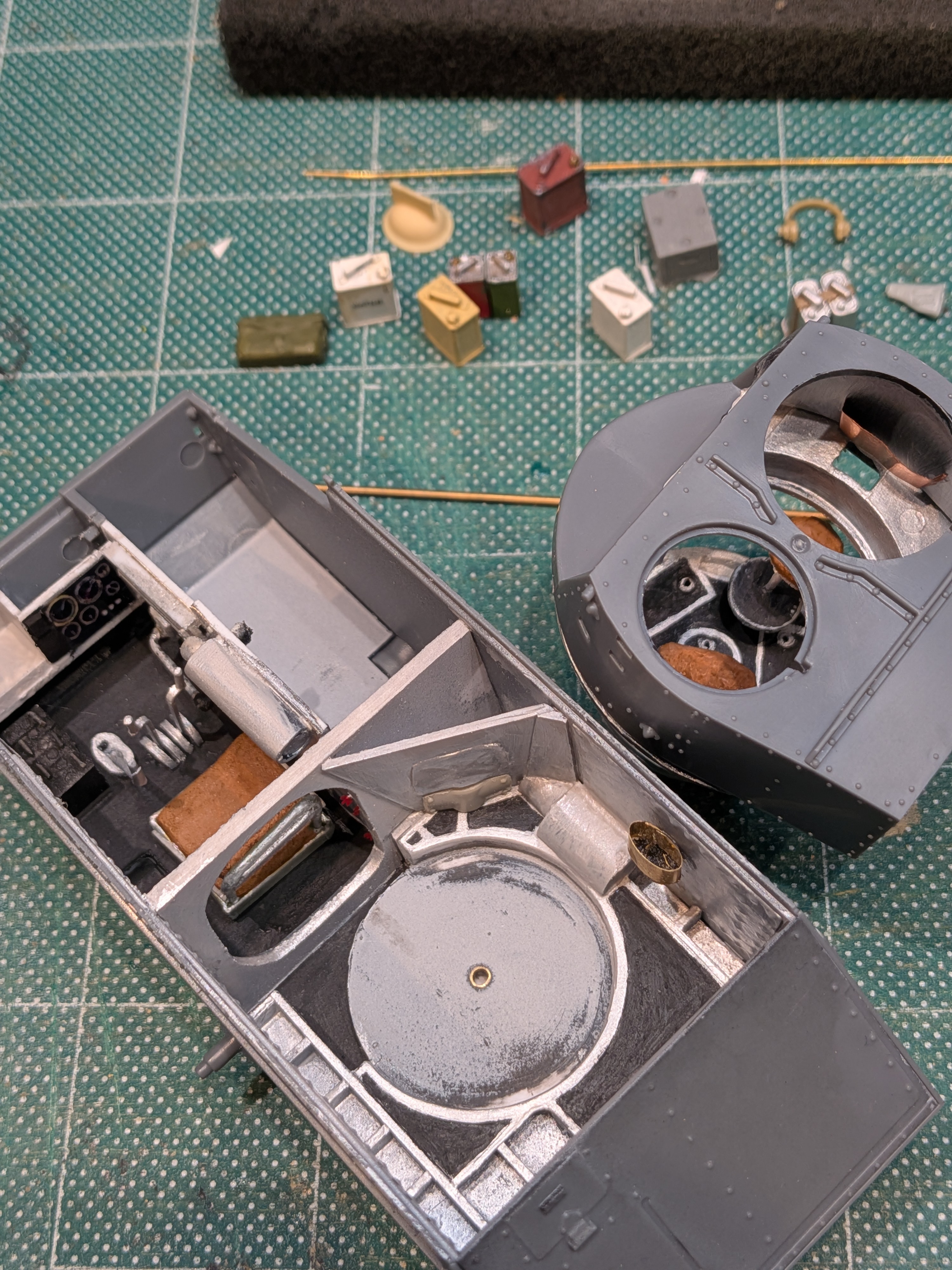
Brass, copper tape for leaded glass: transformed into a leather sleeve/pouch in the turret; an elliptical metal container (for field glasses?) on the wall; a bulge at base of the angles wall (from a spare part that is oddly similar to the reference photos); and a bank of batteries next to the driver. More aluminium and leather to paint!
John Waller
Active Member
The Vickers MG Collection & Research Foundation has a pay-to-view section...Almost certainly, but you would have to find the ones for the Light Tank Mk. VI to be sure. I've got a folder with 125 of them (in all, not 125 vehicles) from the Second World War until the 1960s, but it doesn't include any light tanks other than the Stuart Mk. V and VI...
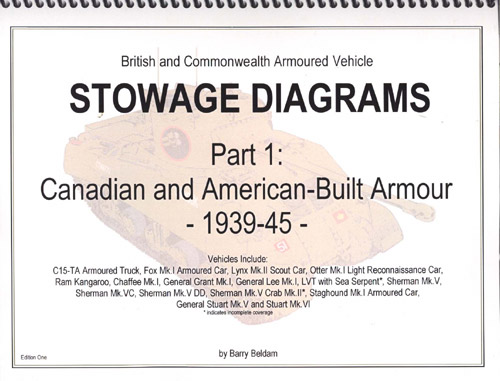
Armoured Fighting Vehicle Stowage Diagrams
which would be interesting to see.
And filing all the drawings in cabinets, current ones with hanging strips on racks or in the metal drawers, dormant ones in rolls. I also had to make film diazo copies of beautiful old linen drawings as well. Ah yes! the smell of ammonia in the morning, and Pantone pens in the afternoon..and then I had the most important job to go and buy the beers from the local pub for the ritual capping off of the day....first architectural office as part-time student 1979. A little different for student architects these daysThere was an art to those technical drawings before CAD.
In the early 80s, I used Rapidograph pens at a drafting table, some cross hatched pen and ink drawings in the 70s, but never such complex freehand illustrations as these.
Yup, the end of every workday saw the technical pens disassembled and nibs left overnight in the ultrasonic bath; if the drawings were complete, the Borco and Maylines were cleaned, along with scale rulers and triangles; the copy proof blue pencils, erasers and rule guides put away.
As a junior designer, I also got to tidy up the repro camera room and sometimes the blueprint machine (I can still smell it).
Then there were the Pantone pens, colour swatches and typesetting books to be returned to their places in the studio, along with any loose Letraset sheets, and reference drawings back into the flat map drawer cabinets!
 .
.
Hahaha! Second to fishing out itty bitty pieces of typesetting rolled back in the waxer!the most important job

I also got to touch up films for silk screening, and cut out way too many coastlines and arctic islands in amberlith.
But hey, working at a museum of natural sciences was way more interesting than a lot of other graphic design gigs... Dinosaurs, minerals, geology, wolves, lichens, monarch butterflies, creepy critters and the sex life of slugs: never a dull moment!
They have a bunch of stuff, many for vehicles in my stash.which would be interesting to see.
None that I can easily find for the Mk VI though.
A range of stowage diagrams for different AFVs of the Second World War. It includes the Churchill Tank, the Chaffee, MMG Carriers and the Loyd Carrier for the 4.2-inch mortar or 6-pdr towing vehicle.
Jakko
Well-Known Member
American technical manuals (and similar books for civilian use, like car workshop handbooks) of the period are all absolutely full of airbrushed photographs. I can't even imagine the amount of work that went into making those, but I know for sure I would pick tracing over photos with an ink pen if given any choice at all in the matterhmmm, a good chance that is how it went.
Jakko
Well-Known Member
There's a blurred preview of that. It has Churchill Tank, Chaffee, MMG Carrier (the Universal Carrier variant, not the original MMG Carrier) and Loyd Carrier. Unfortunately, it doesn't seem to say anywhere how much it costs to get access to the patron-only areas.The Vickers MG Collection & Research Foundation has a pay-to-view section
Armoured Fighting Vehicle Stowage Diagrams
which would be interesting to see.


