


Jakko
Well-Known Member
Though not well-known today, the Fokker G.I (that's the Roman numeral 1) was probably the most capable "heavy fighter" of the immediate pre-War era. It was designed to compete for a French requirement from 1934, for a twin-engined, three-seat aircraft suitable as an interceptor, escort plane and aerial command post, to which was later added that it should also be capable of dropping bombs. The winner of this was not Fokker but Potez with its 630-series. However, Fokker continued working on the design and presented the prototype at the 1936 Salon d'aviation in Paris, where it impressed pretty much everyone who saw it.
The aircraft was a twin-engine design, with a tail boom with vertical stabilizer behind each engine and the horizontal tail surface between the booms. The fuselage really only seated the crew: the pilot up front, a tail gunner in the rear and with a middle compartment for an optional third crew member. For its time, the G.I was very heavily armed, with two 23 mm Madsen cannon and two 7.92 mm Madsen machine guns in the nose, and it promised to be fast, too. Fokker offered it with a choice of engines, but the prototype has Hispano-Suiza 80-02s that gave it a claimed top speed of 450 km/h (for comparison, the Potez 630 was claimed to do 500 km/h at the time, but more like 425 in practice). The aircraft was constructed in Fokker's usual way, with a cockpit frame from steel tubes overlaid with a plywood skin, while the rest of the fuselage and the wings (including the engine nacelles) were entirely made from wood and the tail booms from aluminium.
After the show, work continued, and the first test flight was made on 16 March 1937.
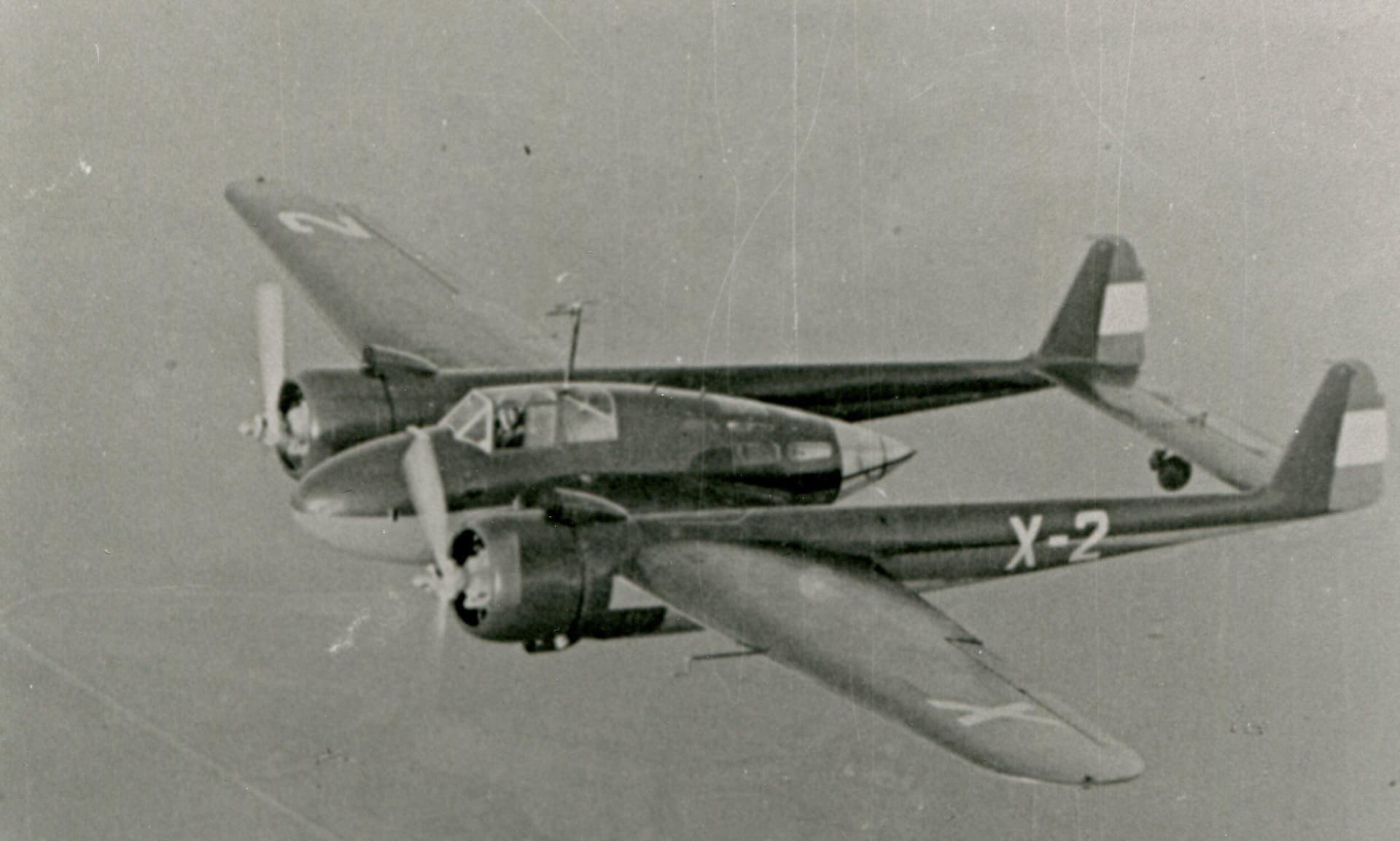
That's the prototype in a slightly later version than in its first tests, painted khaki on top with light blue undersides. In 1938, its engines were replaced by Pratt & Whitney Twin Wasps and the tail booms lengthened by 30 cm to compensate for the change in centre of gravity caused by the new engines.
At this point, the Republican government in Spain became interested in buying G.Is, because the Spanish Civil War had started and they wanted all the weapons they could get their hands on. Unfortunately, the Dutch government would not give an export licence for a country that was at war, so the Spanish enlisted the Estonian government to supposedly be interested in buying G.Is with Wasp engines. Since Estonia was not at war, the Dutch government did not object — but, of course, when actually delivered, the planes would immediately be passed on to Spain, which was actually footing the bill for them. Fokker knew this full well, BTW: Spanish inspectors occasionally visited the factory, but somehow always after working hours. Six planes were completed by mid-1939, all of them given the registration X-2 to further conceal the fact that these were different aircraft, but the Nationalists had won the war by then — which meant Estonia would not be getting the money to pay for the planes, which in turn meant Fokker would not be getting paid for them, either. (The new Spanish government tried to recuperate the money Fokker had been paid in advance, but the Estonia ploy worked against them: Fokker simply claimed, truthfully, that their contract was not with Spain.)
Though the prohibition against exporting weapons to Spain was withdrawn due to the end of the Civil War, Fokker still couldn't sell these planes because a new, more general prohibition was soon introduced due to the gather clouds of the Second World War. After some more attempts to sell them failed for various reasons, they were eventually purchased by the Dutch government in order to bolster the Luchtvaartafdeeling (LVA, lit. "Aviation Division", the Dutch air force at the time).
In the mean time, though, other things had been happening as well. In 1937, the LVA had already expressed an interest in the G.I, but equipped with Bristol Mercury engines, because these were already in wide use in the LVA. After a lot of toing and froing, Fokker ended up redesigning major parts of the G.I to accommodate the larger Mercury, which resulted not only in larger diameter engine nacelles but a greater wingspan and changes to the wing's internal construction. The LVA also wanted a different armament, of all machine guns. The designers eventually managed to cram eight 7.92 mm M. 36 machine guns (a variant of the Browning, built by FN) with 400 rounds of ammunition each. Armament in the rear was an M. 20 machine gun (which was a Lewis gun in 7.92 mm), though the intention was to use an M. 36 there instead. However, the M. 36 No. 2, suitable for firing by hand, was not available yet so the Lewis it had to be for the moment. The plane also had a bomb bay of modest capacity, though if it carried any bombs, it would not be able to carry a third crewman in the middle compartment because the bombs necessitated removal of the floor, leaving not enough room for someone to sit. The purchase, construction and delivery of actual racks to hang bombs on is a story unto itself — suffice to say that no G.I ever flew with them, and during the war, the company that made them got sued for building an unlicenced copy of the German rack …
One notable thing was that Fokker put a great deal of effort and research into designing the G.I Mercury so that it could safely recover from a spin. What they didn't know was that at the time, no authority in Europe or North America required twin-engined aircraft to be "spin-safe" because it was thought this was impossible to achieve. When Fokker couldn't get data on how to do this from anyone, they basically simply persevered and created a twin-engined aircraft that could be put into a spin and recover from it …
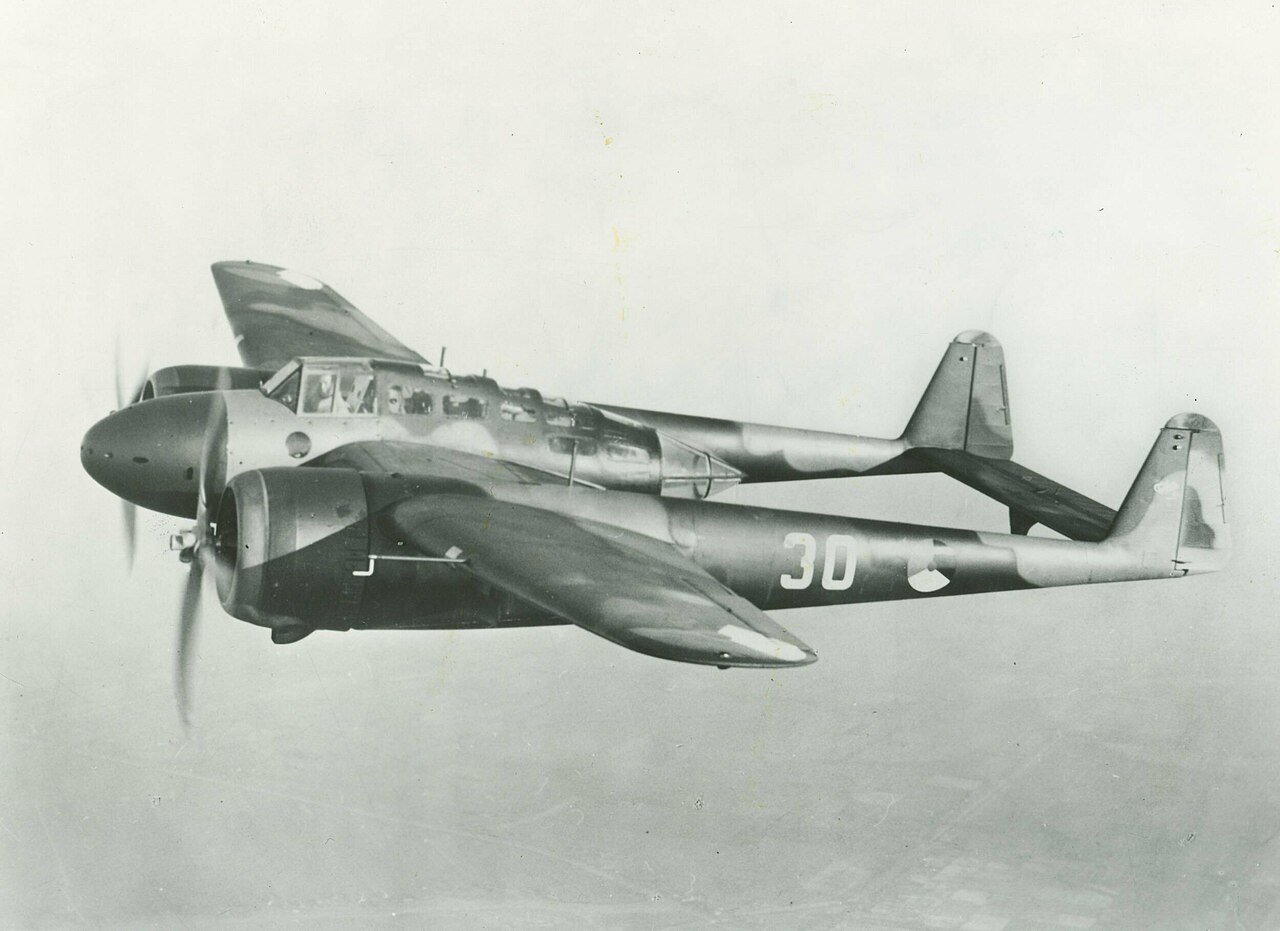
This is the first G.I Mercury, registration number 301, but the 1 is gone because of a repair to to the tail boom (there are also versions of this photo in which a 1 has been airbrushed back in). It's painted in standard three-colour LVA camouflage, with a base brown with sand and grey-green patches over that. The whole underside was brown.
G.I Mercuries were built alongside G.I Wasps. In post-war literature, the names G-1A (or variants on that) are sometimes used for the G.I Mercury, and G-1B for the G.I Wasp, but the contemporary designations were G.I Mercury and G.I Wasp.
In the Netherlands at the time, the G.I was fairly prominent. Here's a Fokker advert, for example, with a row of G.I Mercuries at the bottom:
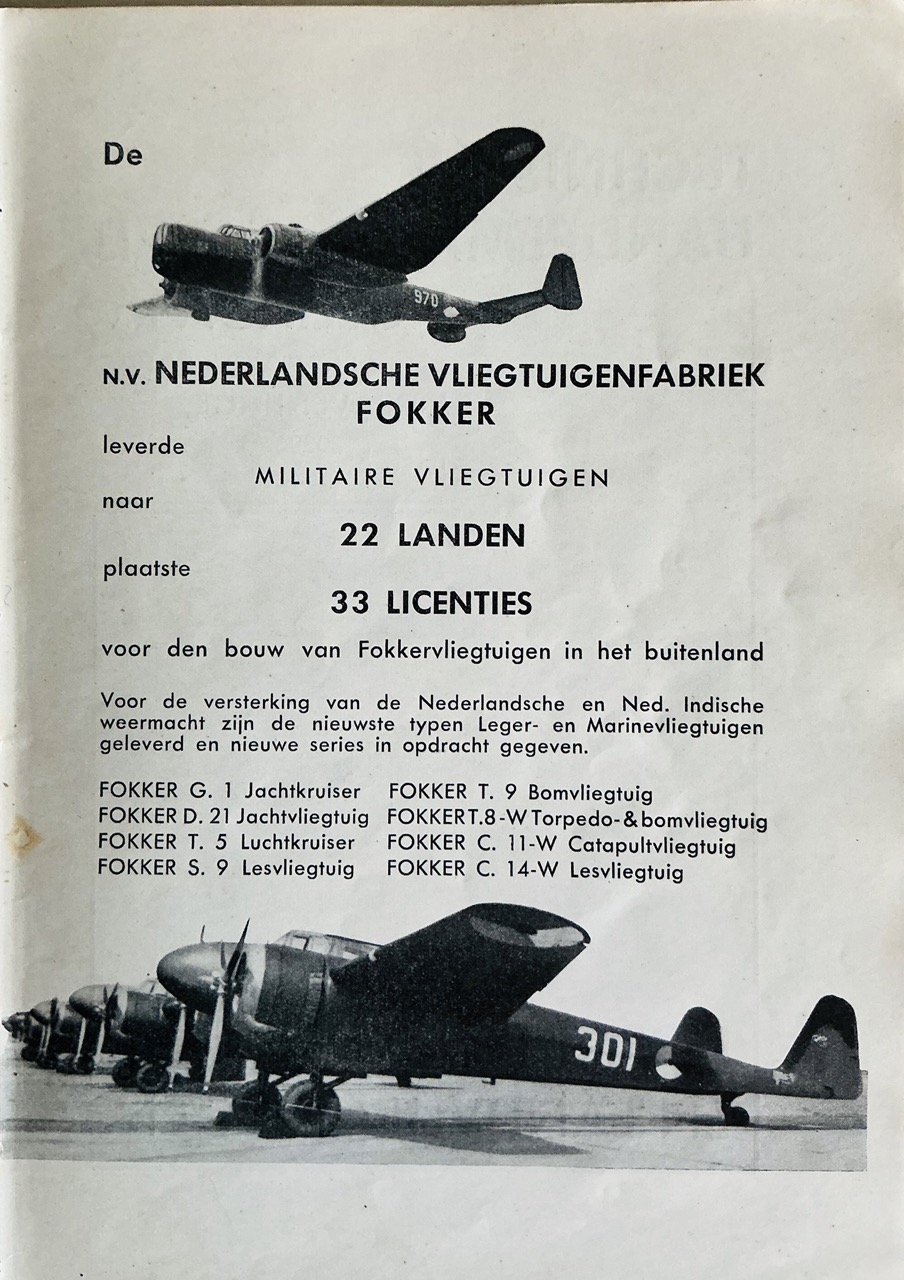
(The plane at the top is a T.IX bomber.) I got the advert from this book:
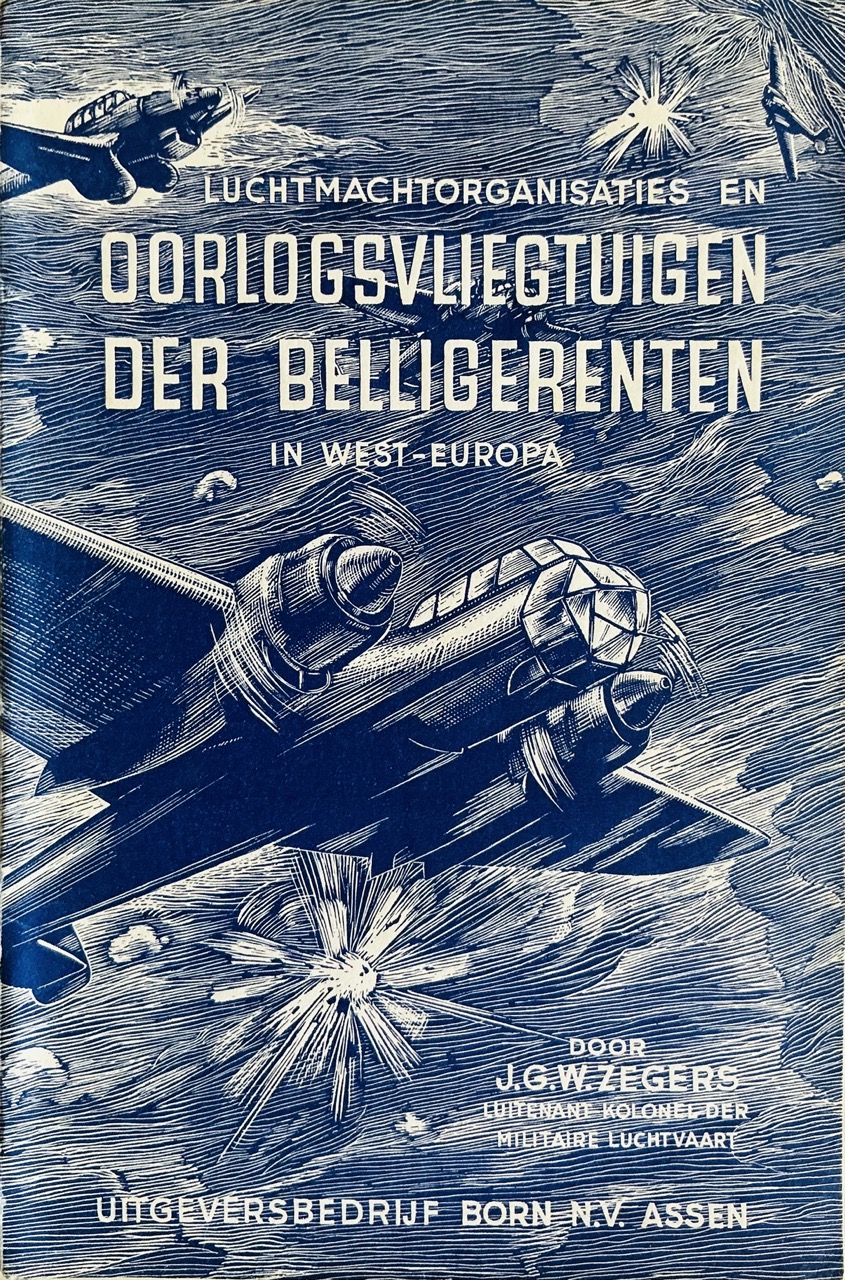
"Air force organisations and Warplanes of the belligerents in Western Europe", published probably in late 1939 or early 1940. It doesn't mention the G.I because it doesn't cover Dutch planes, only British, French and German ones. I also have a later edition that was clearly published after the German occupation of the Netherlands, as it no longer includes France but does add Italy and the USSR, and the adverts are absent (the earlier book had one for British aircraft products, for example).
I also have this:
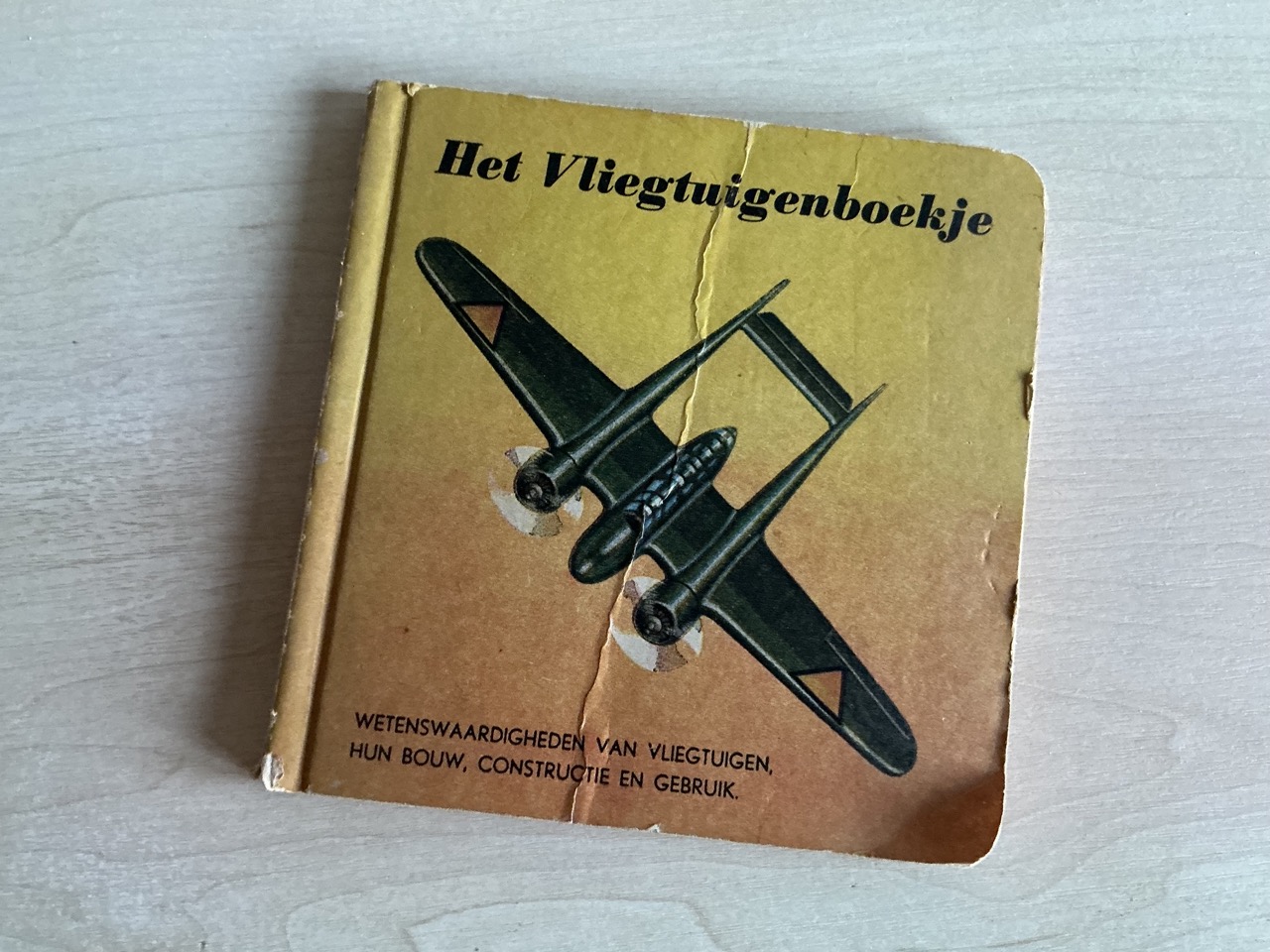
"The Little Book of Aircraft", approximately. This explains the theory behind flight, how aircraft work, and discusses and illustrates a lot of late-1930s ones with colour plates like that of the G.I on the cover.
(More tomorrow )
)
The aircraft was a twin-engine design, with a tail boom with vertical stabilizer behind each engine and the horizontal tail surface between the booms. The fuselage really only seated the crew: the pilot up front, a tail gunner in the rear and with a middle compartment for an optional third crew member. For its time, the G.I was very heavily armed, with two 23 mm Madsen cannon and two 7.92 mm Madsen machine guns in the nose, and it promised to be fast, too. Fokker offered it with a choice of engines, but the prototype has Hispano-Suiza 80-02s that gave it a claimed top speed of 450 km/h (for comparison, the Potez 630 was claimed to do 500 km/h at the time, but more like 425 in practice). The aircraft was constructed in Fokker's usual way, with a cockpit frame from steel tubes overlaid with a plywood skin, while the rest of the fuselage and the wings (including the engine nacelles) were entirely made from wood and the tail booms from aluminium.
After the show, work continued, and the first test flight was made on 16 March 1937.
That's the prototype in a slightly later version than in its first tests, painted khaki on top with light blue undersides. In 1938, its engines were replaced by Pratt & Whitney Twin Wasps and the tail booms lengthened by 30 cm to compensate for the change in centre of gravity caused by the new engines.
At this point, the Republican government in Spain became interested in buying G.Is, because the Spanish Civil War had started and they wanted all the weapons they could get their hands on. Unfortunately, the Dutch government would not give an export licence for a country that was at war, so the Spanish enlisted the Estonian government to supposedly be interested in buying G.Is with Wasp engines. Since Estonia was not at war, the Dutch government did not object — but, of course, when actually delivered, the planes would immediately be passed on to Spain, which was actually footing the bill for them. Fokker knew this full well, BTW: Spanish inspectors occasionally visited the factory, but somehow always after working hours. Six planes were completed by mid-1939, all of them given the registration X-2 to further conceal the fact that these were different aircraft, but the Nationalists had won the war by then — which meant Estonia would not be getting the money to pay for the planes, which in turn meant Fokker would not be getting paid for them, either. (The new Spanish government tried to recuperate the money Fokker had been paid in advance, but the Estonia ploy worked against them: Fokker simply claimed, truthfully, that their contract was not with Spain.)
Though the prohibition against exporting weapons to Spain was withdrawn due to the end of the Civil War, Fokker still couldn't sell these planes because a new, more general prohibition was soon introduced due to the gather clouds of the Second World War. After some more attempts to sell them failed for various reasons, they were eventually purchased by the Dutch government in order to bolster the Luchtvaartafdeeling (LVA, lit. "Aviation Division", the Dutch air force at the time).
In the mean time, though, other things had been happening as well. In 1937, the LVA had already expressed an interest in the G.I, but equipped with Bristol Mercury engines, because these were already in wide use in the LVA. After a lot of toing and froing, Fokker ended up redesigning major parts of the G.I to accommodate the larger Mercury, which resulted not only in larger diameter engine nacelles but a greater wingspan and changes to the wing's internal construction. The LVA also wanted a different armament, of all machine guns. The designers eventually managed to cram eight 7.92 mm M. 36 machine guns (a variant of the Browning, built by FN) with 400 rounds of ammunition each. Armament in the rear was an M. 20 machine gun (which was a Lewis gun in 7.92 mm), though the intention was to use an M. 36 there instead. However, the M. 36 No. 2, suitable for firing by hand, was not available yet so the Lewis it had to be for the moment. The plane also had a bomb bay of modest capacity, though if it carried any bombs, it would not be able to carry a third crewman in the middle compartment because the bombs necessitated removal of the floor, leaving not enough room for someone to sit. The purchase, construction and delivery of actual racks to hang bombs on is a story unto itself — suffice to say that no G.I ever flew with them, and during the war, the company that made them got sued for building an unlicenced copy of the German rack …
One notable thing was that Fokker put a great deal of effort and research into designing the G.I Mercury so that it could safely recover from a spin. What they didn't know was that at the time, no authority in Europe or North America required twin-engined aircraft to be "spin-safe" because it was thought this was impossible to achieve. When Fokker couldn't get data on how to do this from anyone, they basically simply persevered and created a twin-engined aircraft that could be put into a spin and recover from it …
This is the first G.I Mercury, registration number 301, but the 1 is gone because of a repair to to the tail boom (there are also versions of this photo in which a 1 has been airbrushed back in). It's painted in standard three-colour LVA camouflage, with a base brown with sand and grey-green patches over that. The whole underside was brown.
G.I Mercuries were built alongside G.I Wasps. In post-war literature, the names G-1A (or variants on that) are sometimes used for the G.I Mercury, and G-1B for the G.I Wasp, but the contemporary designations were G.I Mercury and G.I Wasp.
In the Netherlands at the time, the G.I was fairly prominent. Here's a Fokker advert, for example, with a row of G.I Mercuries at the bottom:
(The plane at the top is a T.IX bomber.) I got the advert from this book:
"Air force organisations and Warplanes of the belligerents in Western Europe", published probably in late 1939 or early 1940. It doesn't mention the G.I because it doesn't cover Dutch planes, only British, French and German ones. I also have a later edition that was clearly published after the German occupation of the Netherlands, as it no longer includes France but does add Italy and the USSR, and the adverts are absent (the earlier book had one for British aircraft products, for example).
I also have this:
"The Little Book of Aircraft", approximately. This explains the theory behind flight, how aircraft work, and discusses and illustrates a lot of late-1930s ones with colour plates like that of the G.I on the cover.
(More tomorrow
)


