New update if anyone is interested. No further communication thus far. I actually purchased another AT-ST kit and some photo-etch for it as well, the latter arriving today.
I was catching up on some of the threads and I came upon this one.
I am a well practiced "drill and insert metal pin" guy. I now preemptively drill out small parts that will be vulnerable to snapping off (antenna masts, pitot tubes, repairing broken 1/72 scale propellers, etc), and insering a metal pin between the two parts. Then I cement them together with CA glue.
Regarding the drill bits, I found a local specialty electronics parts store that sells the tiny drill bits for the pin vise hand drill. I'm told by the store owner that the tiny drill bits are used for building circuit boards and other tiny objects for robotic clubs and other electronic building projects. The bits come in 10 packs. I have found that the 4 and 5 mm bits are my most used (and most broken). The bits are reasonably strong along their central axis, but easily snap if any lateral pressure is applied to them (like when putting the pin vise back on the bench, and accidently touching the bit against the xacto knife).
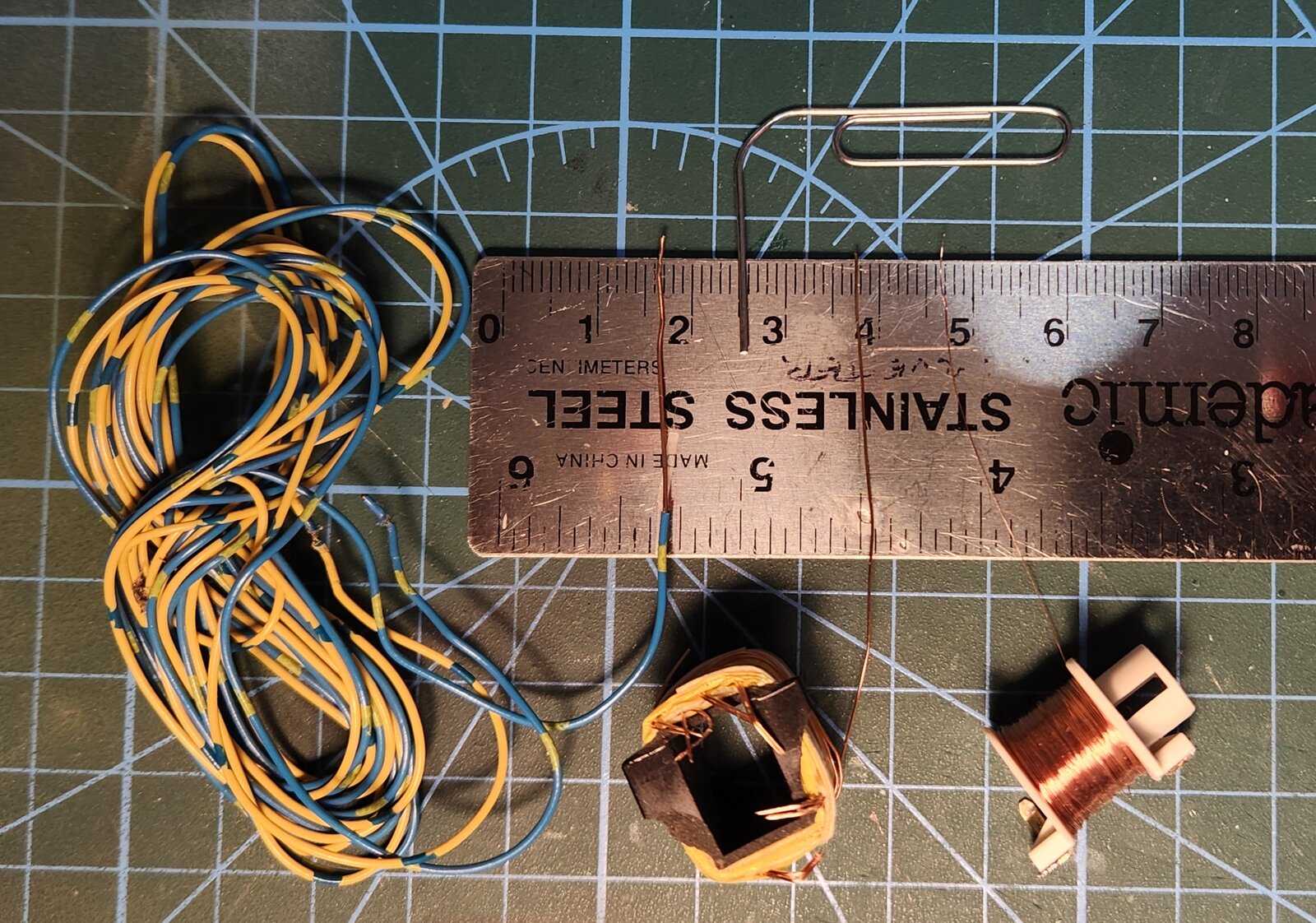
Regarding the wire I use, I find myself always looking at discarded wire. Old phone wiring, blasting wire, wire out if discarded printers (a great source of various diameter wires). My favourite for strength, if the pieces are big enough, is paper clips. They are strong! (See attached photo for salvaged wires sizes)
Also, unrelated to wire for reinforcing purposes, the electronic hobby store is also a great source for very small diameter soldering wire! It is difficult to find small diameter soldering wire in short lengths ( i.e. one or two meters). The owner of my local store will usually cut me a meter length from the 25 m spool of the wire from his work bench. Then he charges me about $3 for it. Thats enough to last years! The lead solder is so much easier to work with when replicating wiring and hydraulic lines.
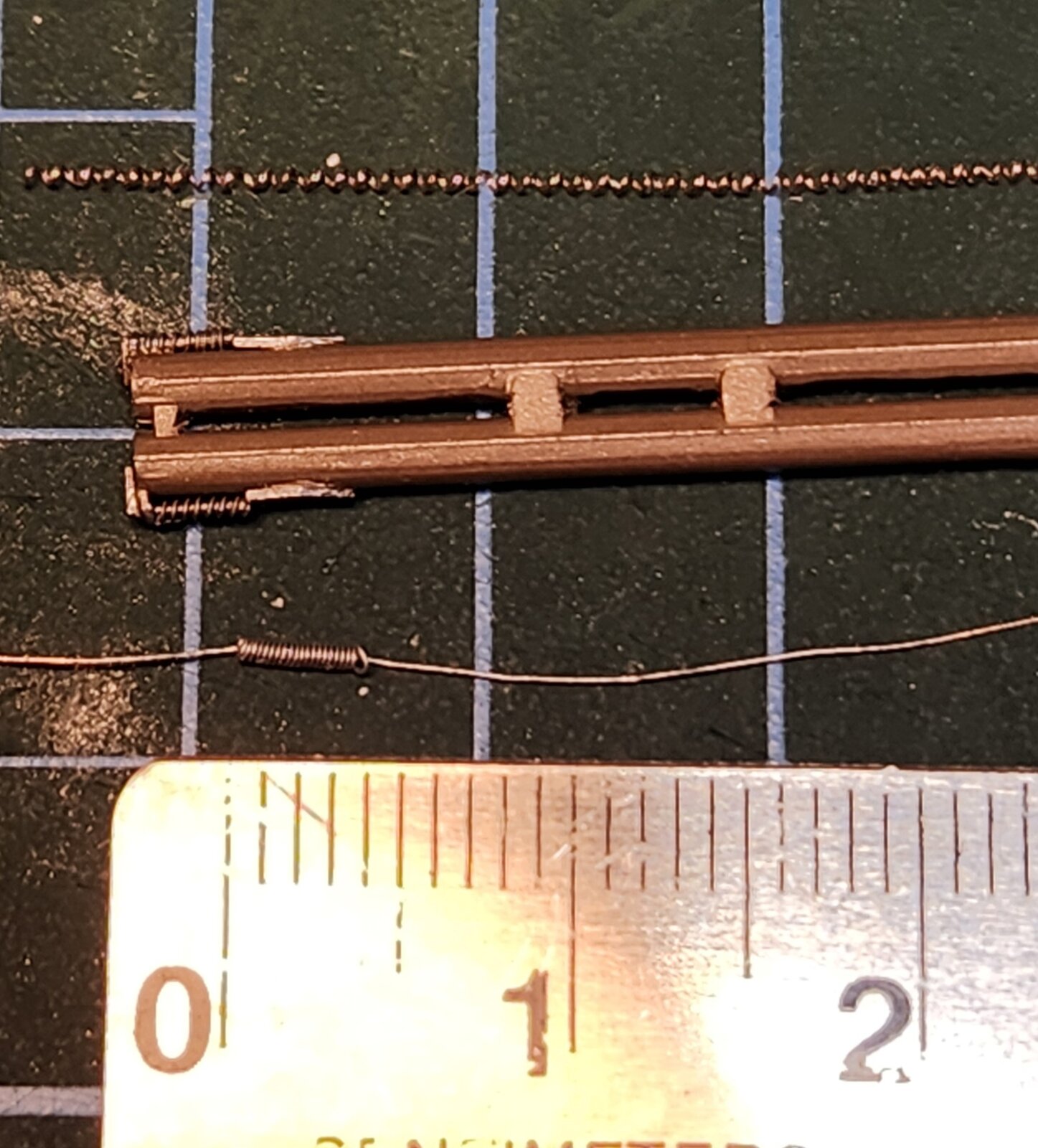
I use the smallest diameter wire to make springs, oxygen tubes and coiled communications cords (i.e. for microphones and helmets/headsets). The attached photo shows a long coiled wire that I have used for various things on a 1/48 Bird Dog I am working on: top of photo is the wiring for the cockpit lights, middle - springs on the rear of the rocket tubes, and bottom - steering linkage spring and cable for the tail wheel.
Hope the above info is useful to someone.


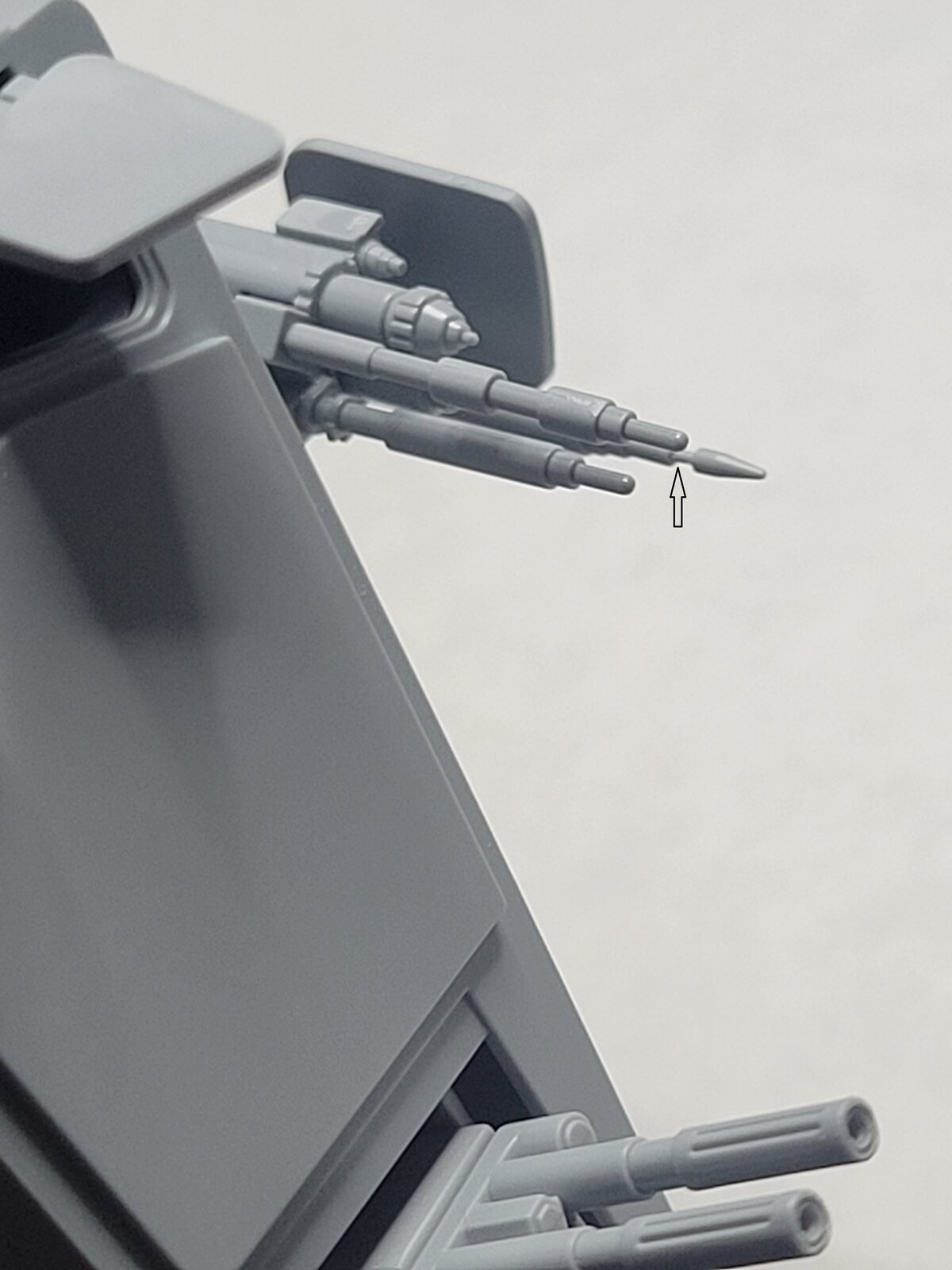


 The part pointed to by the arrow is just asking to break, really — a glued joint is not going to be as strong as before it (partially) broke, so the only real way to make it durable is to cut it off, drill out both ends and replace the thin plastic by metal. You could even get different sizes of tubing that neatly fit inside each other and rebuild the whole thing — I'm betting that's exactly how the original was made, too.

![Pampers Sensitive Baby Wipes, Clinically Proven, Fragrance Free, Unscented, Water Based, Hypoallergenic, Multi-Use, Hand Wipes 336 Wipes Total (6X Flip-Top Packs) [Packaging May Vary]](https://m.media-amazon.com/images/I/41KLBHu9CAL._SL500_.jpg)