Airbrushing low pressure—what am I doing wrong?

Scale Model Addict - Model Tips, Guides, Tools & Tech, Tutorials, and Community

Help Support Scale Model Addict:

VegasAWACER13

Well-Known Member
Joined
Aug 2, 2025
Messages
435
So I've been airbrushing almost a year now and I've come a long way. But I still don't get the "mostly thinner, spraying at very low pressure" thing. I get the application, for gun/exhaust smoke and post shading, but I don't get how it's done.

I was just trying to apply some light streak lines with black paint mixed with 50% thinner and no matter how lightly I pulled the trigger (just barely enough to get paint flow) I still get a watery mess. Tried at pressures ranging from 20 down to barely 10psi. What am I missing?

Or is it a function of the fact I'm using acrylics and you need to use enamels to make this technique work?
 
If your compressor/tank has a gauge, note it will show two pressures, one with valve closed and one with open. Open is the one you care about.

I typically stay between 15 and 20 PSI, closer to 15 with thin solutions, 20-ish is spraying primer or clear coats since they are thicker. If I go below 15 PSI I get a splatter effect with normal (50/50) solutions.

If you are doing post-shading, 50% is not that thin, I have done 70-80% thinner for that and tend to use alcohol (or anything that evaporates quickly) to avoid spidering.

There's also a consideration of nozzle size and distance from the tip to the surface. Small nozzles (under 0.3) allow you to get very close to the surface compared to larger.
 
a watery mess
way too thin
Yes, that's what I would think, so how are these guys spraying paint with 80% thinner at 8psi?
If your compressor/tank has a gauge, note it will show two pressures.

I typically stay between 15 and 20 PSI, closer to 15 with thin solutions…

If you are doing post-shading, 50% is not that thin, I have done 70-80% thinner for that and tend to use alcohol (or anything that evaporates quickly) to avoid spidering.
Yup, I'm tracking on the pressure gauge. I typically spray at 18-20psi and find that's good for almost everything. I'm using a brush with a .2mm needle most of the time.

Can you explain the alcohol thing you reference above?

I'm able to get the results I want 90% of the time, but there's certain instances that I want to be able to lay down very light thin coats so I can control how much shows up on the model, like exhaust staining or accenting panel lines, and I haven't got that figured out yet.

Thanks so much for the help guys!
 
As an Amazon Associate we earn from qualifying purchases. Product prices and availability are accurate as of the date/time indicated and are subject to change.
Can you explain the alcohol thing you reference above?
A lot of thinners have a retarding agent that slows the rate of drying, there are a lot of times you want this, it prevents dusting effects among other things. However there are also times when you want it to dry quickly, for me this is particularly true when spraying hyper thin paint, it prevents the spidering running effect and allow you to put the tip close to the surface. I can say I've had to trouble using 99% Isopropyl from the local grocery store with Tamiya X & XF paints, I have not tried AK/Ammo/Vallejo paints with alcohol before, and can say for certain do NOT put alcohol in Mr. Color :-) If you buy the 70% or lower strength just understand there's water in there that slows the evaporation.
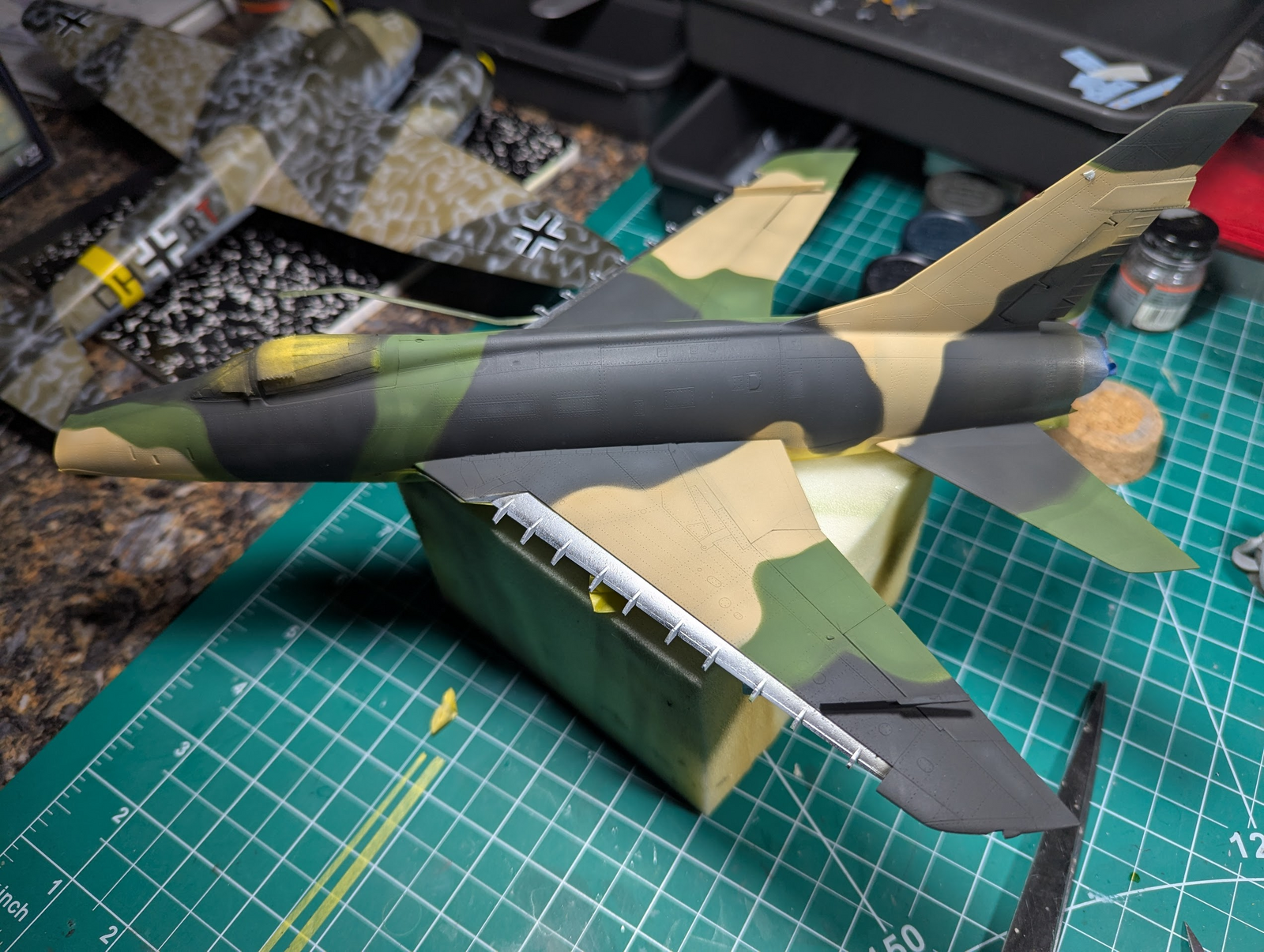
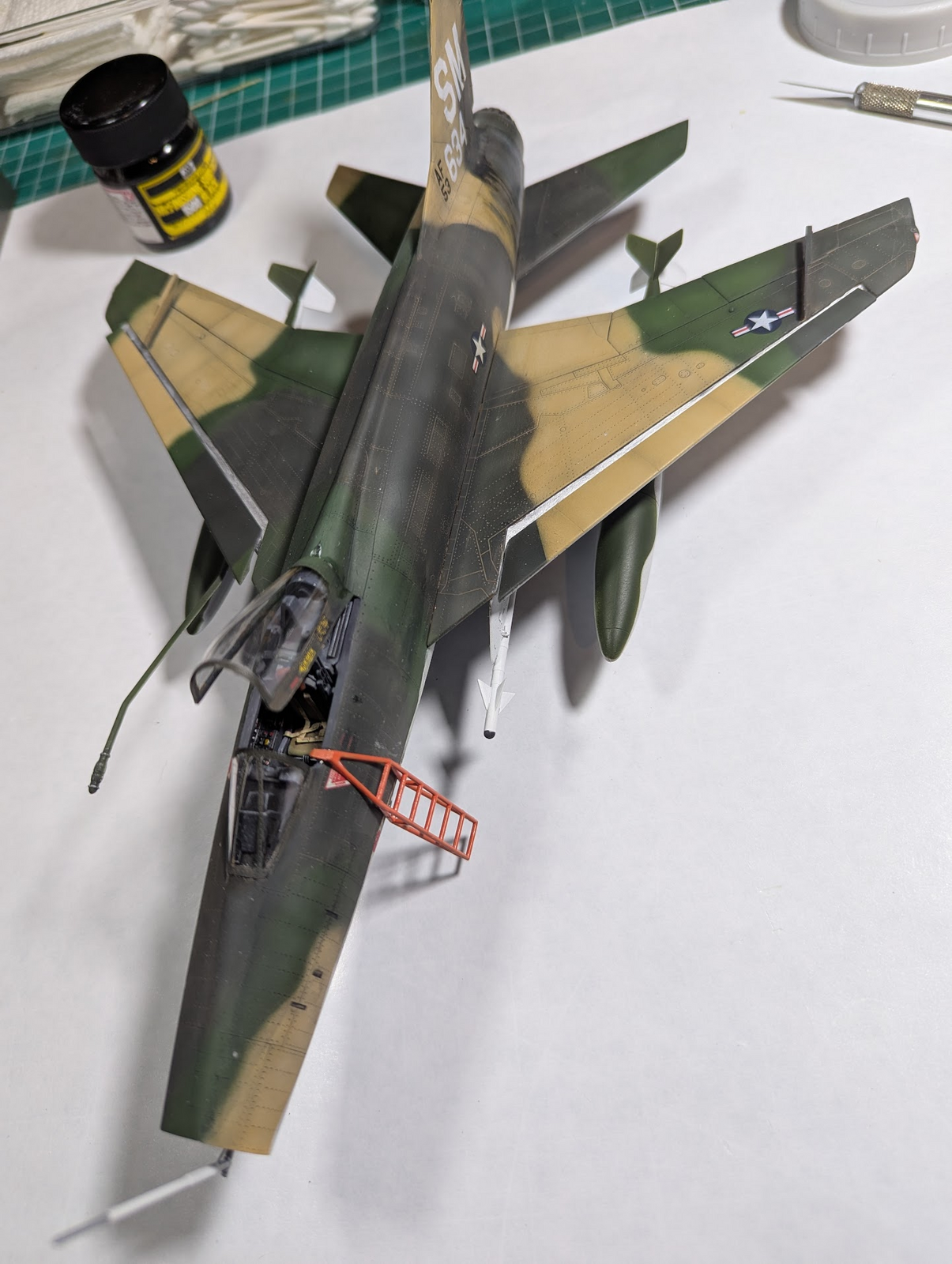
This 70-80% thinned paint is only used (by me) for post shading effects. It is so thin (don't use white or black but light green/tan/yellow or dark blue/gray/green etc.) that sometimes you apply it and can barely tell you did anything. That is what you want though, you can keep putting a tiny bit more, knowing that it dries almost instantly, and slowly make the change. It is almost like a filter, it slowly changes the color underneath. Think of it like exhaust stains or gunpowder residue, but in small doses also highlights panel lines and faded or stained paint.
 
A lot of thinners have a retarding agent that slows the rate of drying, there are a lot of times you want this, it prevents dusting effects among other things. However there are also times when you want it to dry quickly, for me this is particularly true when spraying hyper thin paint, it prevents the spidering running effect and allow you to put the tip close to the surface. I can say I've had to trouble using 99% Isopropyl from the local grocery store with Tamiya X & XF paints, I have not tried AK/Ammo/Vallejo paints with alcohol before, and can say for certain do NOT put alcohol in Mr. Color :-) If you buy the 70% or lower strength just understand there's water in there that slows the evaporation.

This 70-80% thinned paint is only used (by me) for post shading effects. It is so thin (don't use white or black but light green/tan/yellow or dark blue/gray/green etc.) that sometimes you apply it and can barely tell you did anything. That is what you want though, you can keep putting a tiny bit more, knowing that it dries almost instantly, and slowly make the change. It is almost like a filter, it slowly changes the color underneath. Think of it like exhaust stains or gunpowder residue, but in small doses also highlights panel lines and faded or stained paint.
Thanks for the details Edbert! I followed this thread since it's exactly what I'm having difficulty with. I'll try the alcohol with my Tamiya and practice some.
 
I did not talk much about pressure, but I seldom use less that 15PSI and never below 12 or so. For me it leads to splattering and tip-clogging. On the other side I tend to not go over 20PSI and only use 20 for clear coats (which fail if thinned too much, I'm still trying to learn how to do these right) and primers designed with filler like Mr. Surfacer.
 
Do you have any available pictures of your exhaust work?? I also am struggling on color choose...... black? greys? smoke?
 
I intend to use the transparent "smoke" (X-19)on a hellcat build soon, no good pictures, but I've seen great results from other modelers with it.

Here's an example of the post-shading work though, a before and after post shading.

1771694594957.png

1771694688045.png
 
The only factor no one has mentioned is the distance from the nozzle to the surface, which is as critical as everything else, and affected by all the other factors. Airbrushing is about 70 percent technical and 60 percent art (just do the math … 😖 🤣) It pays to learn techniques on paint hulks, where getting it wrong doesn't result in hours spent correcting a mistake on a model you've already spent a lot of time on.
 
The only factor no one has mentioned is the distance from the nozzle to the surface, which is as critical as everything else, and affected by all the other factors. Airbrushing is about 70 percent technical and 60 percent art (just do the math … 😖 🤣) It pays to learn techniques on paint hulks, where getting it wrong doesn't result in hours spent correcting a mistake on a model you've already spent a lot of time on.
 
I can say I've had to trouble using 99% Isopropyl from the local grocery store with Tamiya X & XF paints, I have not tried AK/Ammo/Vallejo paints with alcohol before, and can say for certain do NOT put alcohol in Mr. Color :-) If you buy the 70% or lower strength just understand there's water in there that slows the evaporation.
That's really great information, thanks so much! How much alcohol are you putting into the paint mixture?
Airbrushing is about 70 percent technical and 60 percent art (just do the math … 😖 🤣) It pays to learn techniques on paint hulks, where getting it wrong doesn't result in hours spent correcting a mistake on a model you've already spent a lot of time on.
I've been using a paint mule the last couple of months and it's definitely been a saver. The kit I'm working on now has been a pretty much all out effort and I don't want to ruin it with half-baked technique!
 
On a related problem, I'm also finding that when doing detail work (and getting very close to the model surface) I get an unwanted final blast of paint on releasing the airbrush trigger. It happens no matter how gently I release the trigger and even while using tiny flows of paint. Is this a problem with the airbrush or my technique? It is a double action airbrush.
 
Solution: move off the model before releasing the airbrush trigger. Dry tip, I recently read a statement that suggested the higher the air pressure. The more likely it is the run into this.
Just something to be aware of.

Pep
 
On a related problem, I'm also finding that when doing detail work (and getting very close to the model surface) I get an unwanted final blast of paint on releasing the airbrush trigger. It happens no matter how gently I release the trigger and even while using tiny flows of paint. Is this a problem with the airbrush or my technique? It is a double action airbrush.
What brand of airbrush? While Heavy 7's solution is definitely correct, that could also be a problem with the airbrush or air supply. What I would do is a thorough strip down and cleaning of the airbrush.
 
What brand of airbrush? While Heavy 7's solution is definitely correct, that could also be a problem with the airbrush or air supply. What I would do is a thorough strip down and cleaning of the airbrush.
It's a Gaahleri Mobius. I did recently take it apart and clean it, though I didn't scrub out the interior barrel.
 
How much alcohol are you putting into the paint mixture?
For a "color coat", zero. I use Mr. Color thinner (often the leveling type but that is becoming hard to find) at 40-50% when thinning X & XF paint. If we're talking about the hyper-thin post-shading filters, I use 60-80 alcohol, depending on how strong of an effect I want to the effect. I'm starting to use more since one can always add another spray or two, but removing it is not possible.
 
Solution: move off the model before releasing the airbrush trigger.
This is correct for most cases, sometimes not possible when applying a highlight/lowlight to a panel. In those latter cases pulling back if effective, with hyper thin paint that is enough, release the trigger when you're off the target and no longer applying the effect.
 

Latest posts

Back
Top