
You are using an out of date browser. It may not display this or other websites correctly.
You should upgrade or use an alternative browser.
You should upgrade or use an alternative browser.
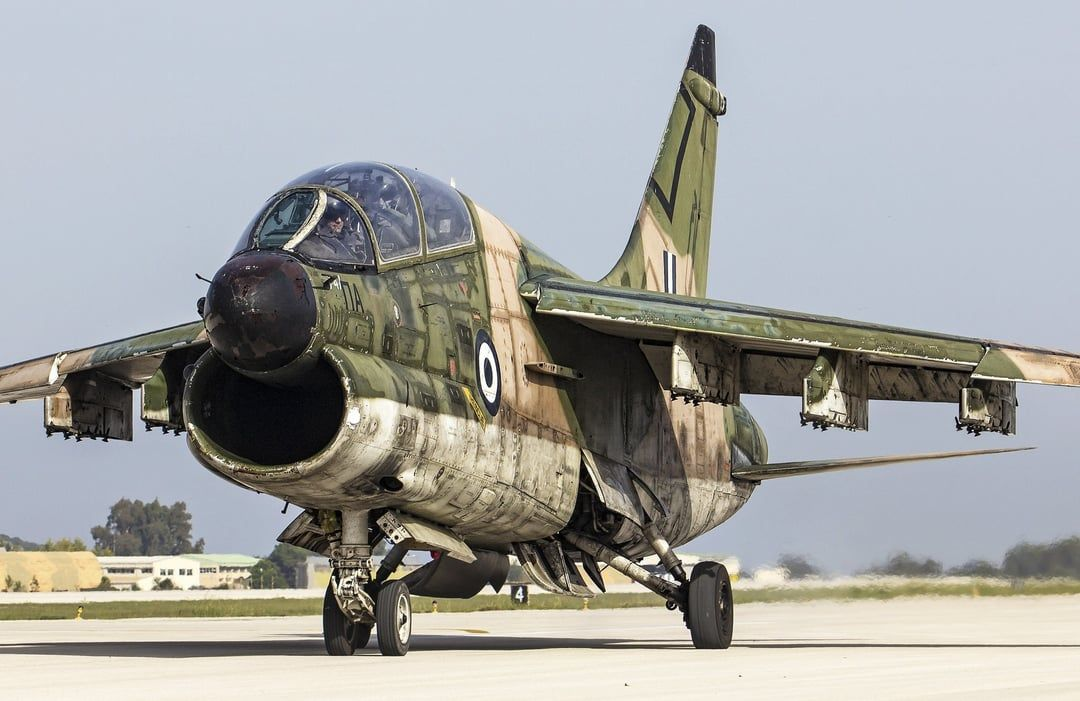
You ruined it with over-weathering!
- Thread starter Edbert
- Start date

- Joined
- Apr 29, 2024
- Messages
- 1,581
Whose **** list are the pilots on? That's got to be the worst looking aircraft on the flight line
lacrosse dad
Well-Known Member
- Joined
- Oct 16, 2024
- Messages
- 165
Greece was the last Air Force to fly the Corsair......going with greek.Don't ask me, I do not even know what Air Force this is. Black roundels?

I just figure mud racing on weekends.


![Pampers Sensitive Baby Wipes, Clinically Proven, Fragrance Free, Unscented, Water Based, Hypoallergenic, Multi-Use, Hand Wipes 336 Wipes Total (6X Flip-Top Packs) [Packaging May Vary]](https://m.media-amazon.com/images/I/41KLBHu9CAL._SL500_.jpg)





As an Amazon Associate we earn from qualifying purchases. Product prices and availability are accurate as of the date/time indicated and are subject to change.


Col.Kilgore
Well-Known Member
- Joined
- May 12, 2023
- Messages
- 104
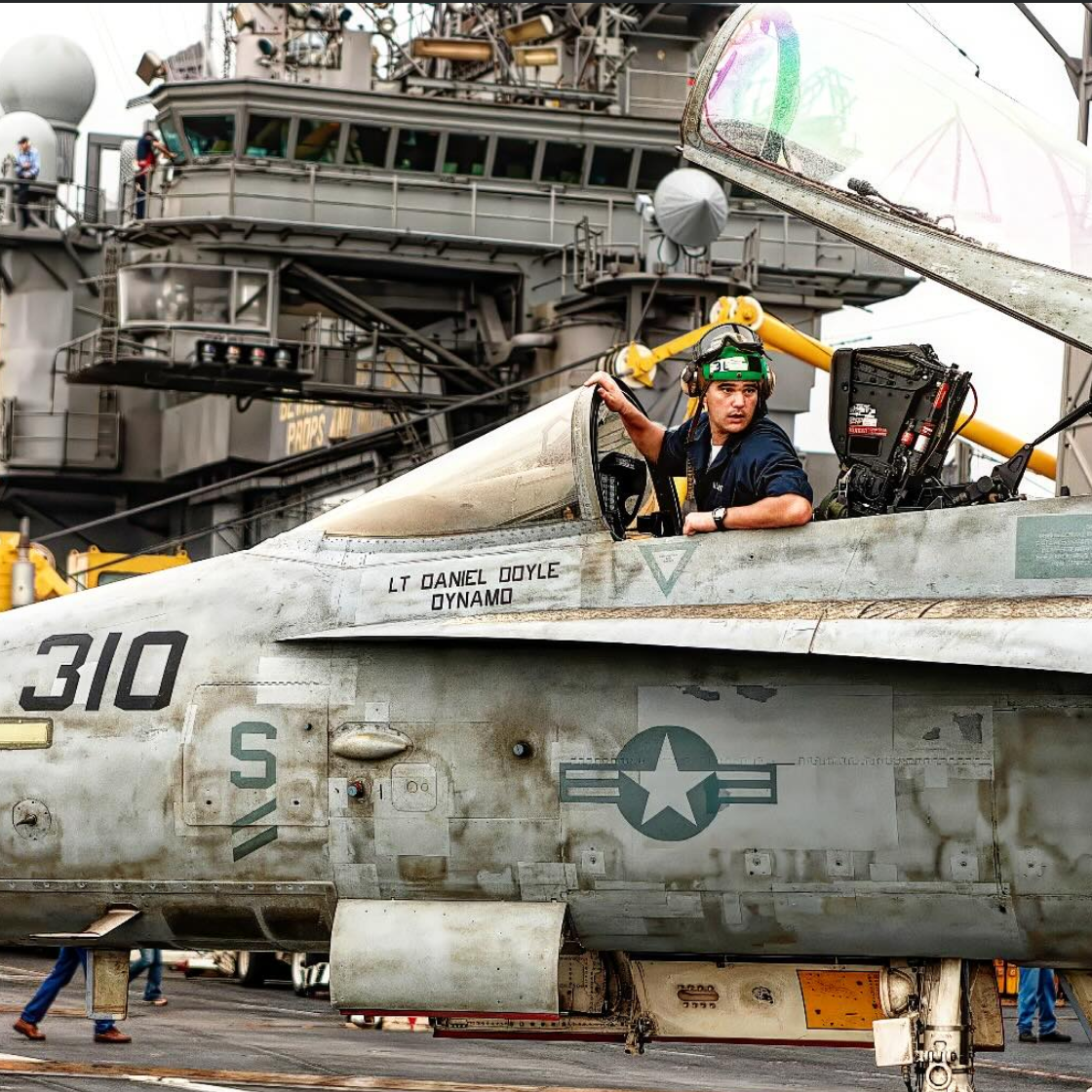
Dirty Bird.

Edbert
Well-Known Member
- Joined
- May 16, 2024
- Messages
- 3,123
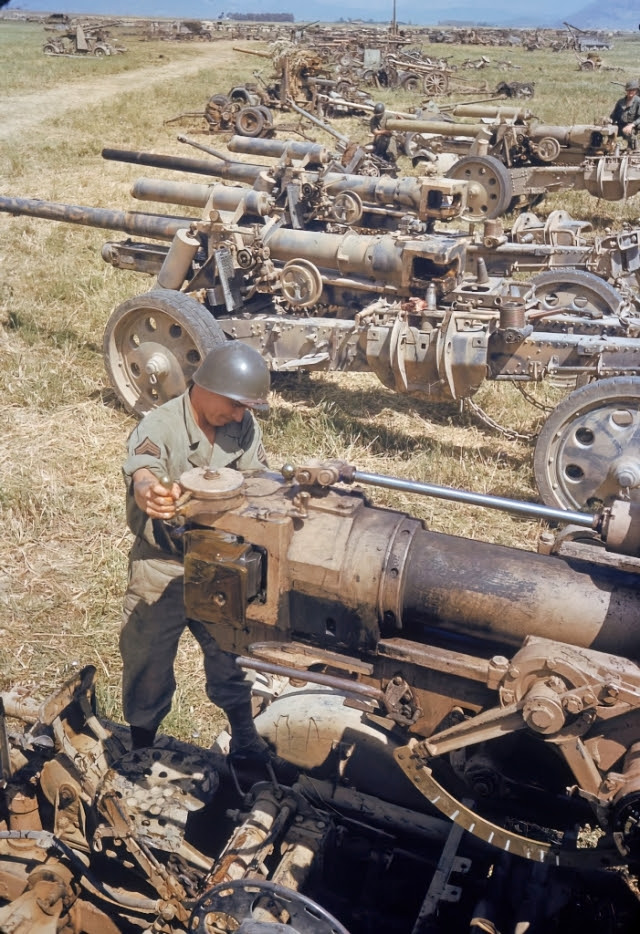
Since I do not want to only focus on aircraft, something for the armor guys.
I hear many of the same comments from armor folks as I do from the plane crowd. You chipped too much paint, rust took years of neglect to appear, no crew chief would ever...
Yeah.
How much panzer gray do you see on these recently captured 10.5cm artillery pieces?
I hear many of the same comments from armor folks as I do from the plane crowd. You chipped too much paint, rust took years of neglect to appear, no crew chief would ever...
Yeah.
How much panzer gray do you see on these recently captured 10.5cm artillery pieces?

airdave
Well-Known Member
- Joined
- Oct 11, 2012
- Messages
- 280
I see a lot of grease, which is commonly used on artillery pieces to keep them protected and working.
Lots of sliding bits spreading that grease around and flinging it everywhere.
Thats not weathering, that well maintained and functional!
Oh, and some camouflage paint.
...................................
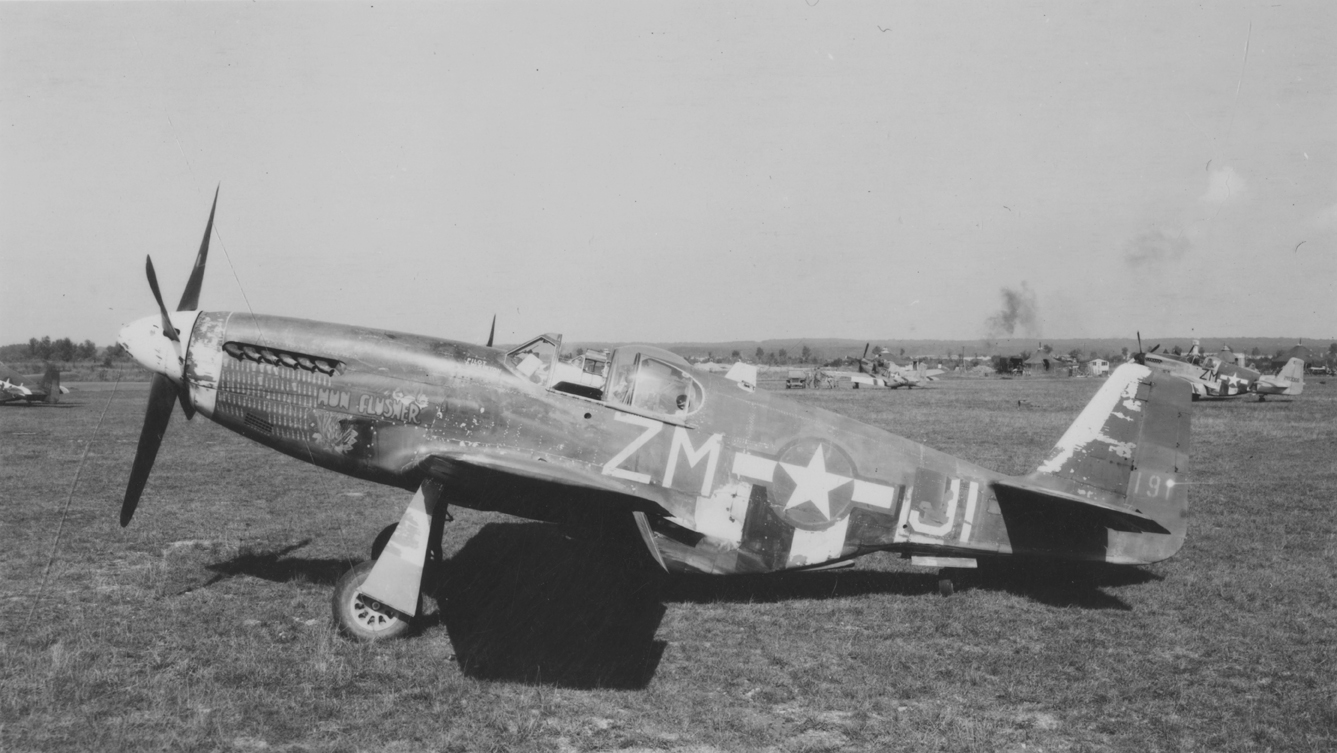
Speaking of real world over weathering, I am planning to add a model of this Mustang to my store catalog.
Referred to as "the most bedraggled Mustang in the squadron".
I think this represents a more realistic "well weathered" look.
Hun Flusher was a recon P-51B Mustang of the 10th Photographic Reconnaissance Group.
Supposedly perfectly well maintained and in perfect mechanical shape. Just a bit rough to look at!
Recon aircraft were true workhorses.
Lots of sliding bits spreading that grease around and flinging it everywhere.
Thats not weathering, that well maintained and functional!
Oh, and some camouflage paint.
...................................
Speaking of real world over weathering, I am planning to add a model of this Mustang to my store catalog.
Referred to as "the most bedraggled Mustang in the squadron".
I think this represents a more realistic "well weathered" look.
Hun Flusher was a recon P-51B Mustang of the 10th Photographic Reconnaissance Group.
Supposedly perfectly well maintained and in perfect mechanical shape. Just a bit rough to look at!
Recon aircraft were true workhorses.

Shiny and clean is for parades. Mud, grime, grease, corrosion, and worn paint are the real world.I hear many of the same comments from armor folks as I do from the plane crowd. You chipped too much paint, rust took years of neglect to appear, no crew chief would ever...
Yeah.
How much panzer gray do you see on these recently captured 10.5cm artillery pieces?
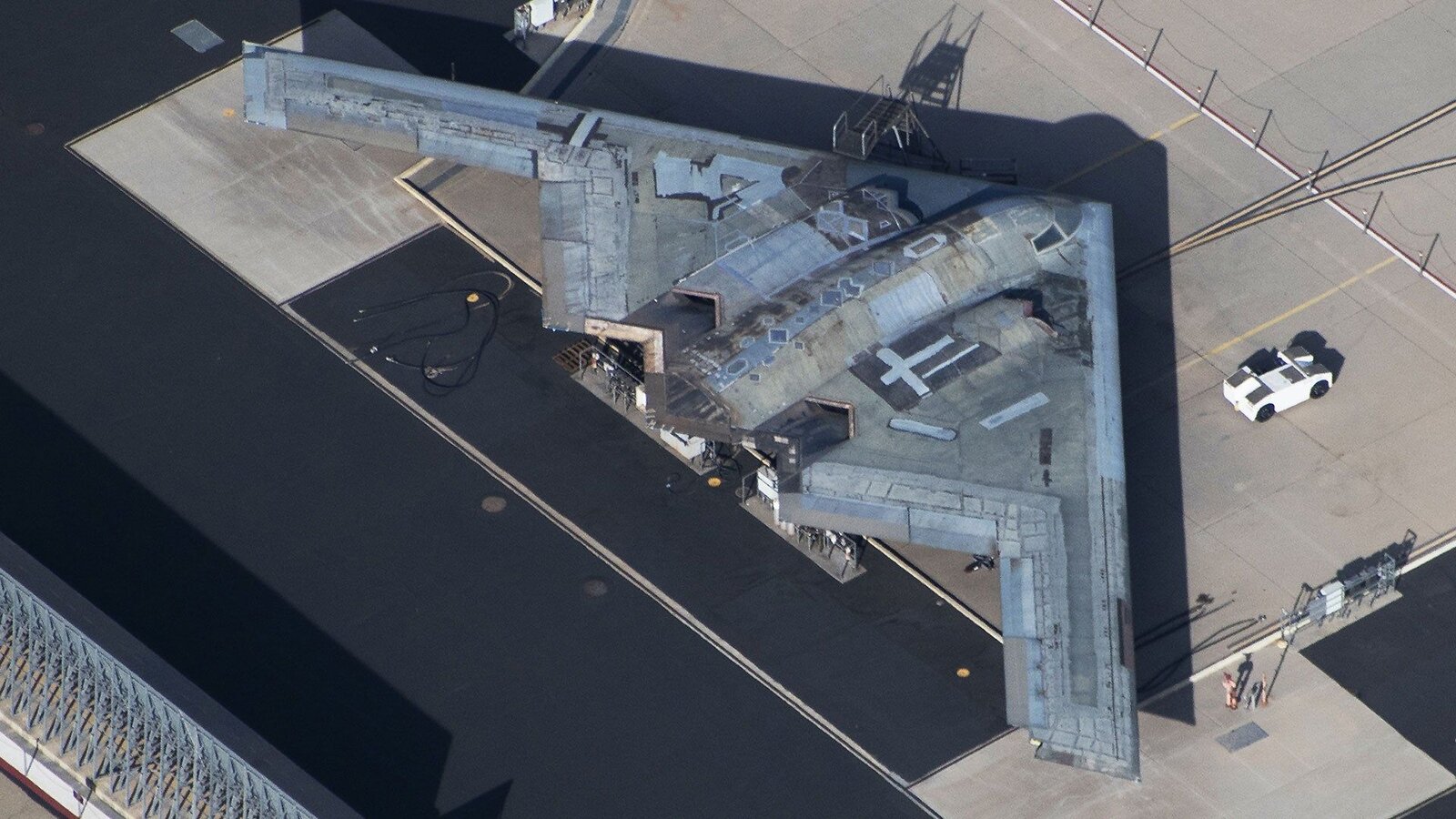

Don't quote me on this, but I'm pretty sure this is not an active aircraft, this one is (was?) used for static and coatings tests. I was on the Maintenance Training Program for 20+ years.
Still cool though.

Always check that all the shadows are going in the same direction. It's amazing how many times they get this wrong.shadows are wack and the chain barrier is shadowless and tall enough to walk under .
poor render . D-
Edbert
Well-Known Member
- Joined
- May 16, 2024
- Messages
- 3,123
Where's the discrepancy? Not saying it is not there but I do not see it.all the shadows are going in the same direction
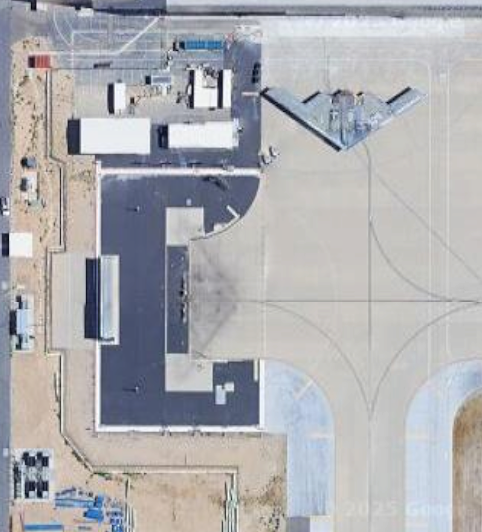
If you look at the Palmdale plant on Google maps you can see the B-2 there sitting at 12 o'clock to the darker tarmac at 9 o'clock where the photo was taken (you can see the outline on the tarmac). The West setting son would cast those shadows.
Looking closely, the shadows of the chain barrier are more prominent than the posts and chain that's making them.Chain barrier is low enough to walk over, but that IS the shadow that you say you could walk under.
I do agree this is the USAF version of a test-mule and not an active aircraft.
Edbert
Well-Known Member
- Joined
- May 16, 2024
- Messages
- 3,123
I believe they are substantially larger due to the low angle of the sun. Like when your shadow walking down the sidewalk is 12 feet tall.shadows of the chain barrier are more prominent than the posts
My observation on the shadow angles is based on the shadows cast by the starboard wing tip, compared to the shadows cast by the barrier posts and the servicing vehicle parked to the front/right of the aircraft. To me, those shadows don't seem parallel.Where's the discrepancy? Not saying it is not there but I do not see it.

Jakko
Well-Known Member
The shadows cast by the posts and by the vehicle are parallel:
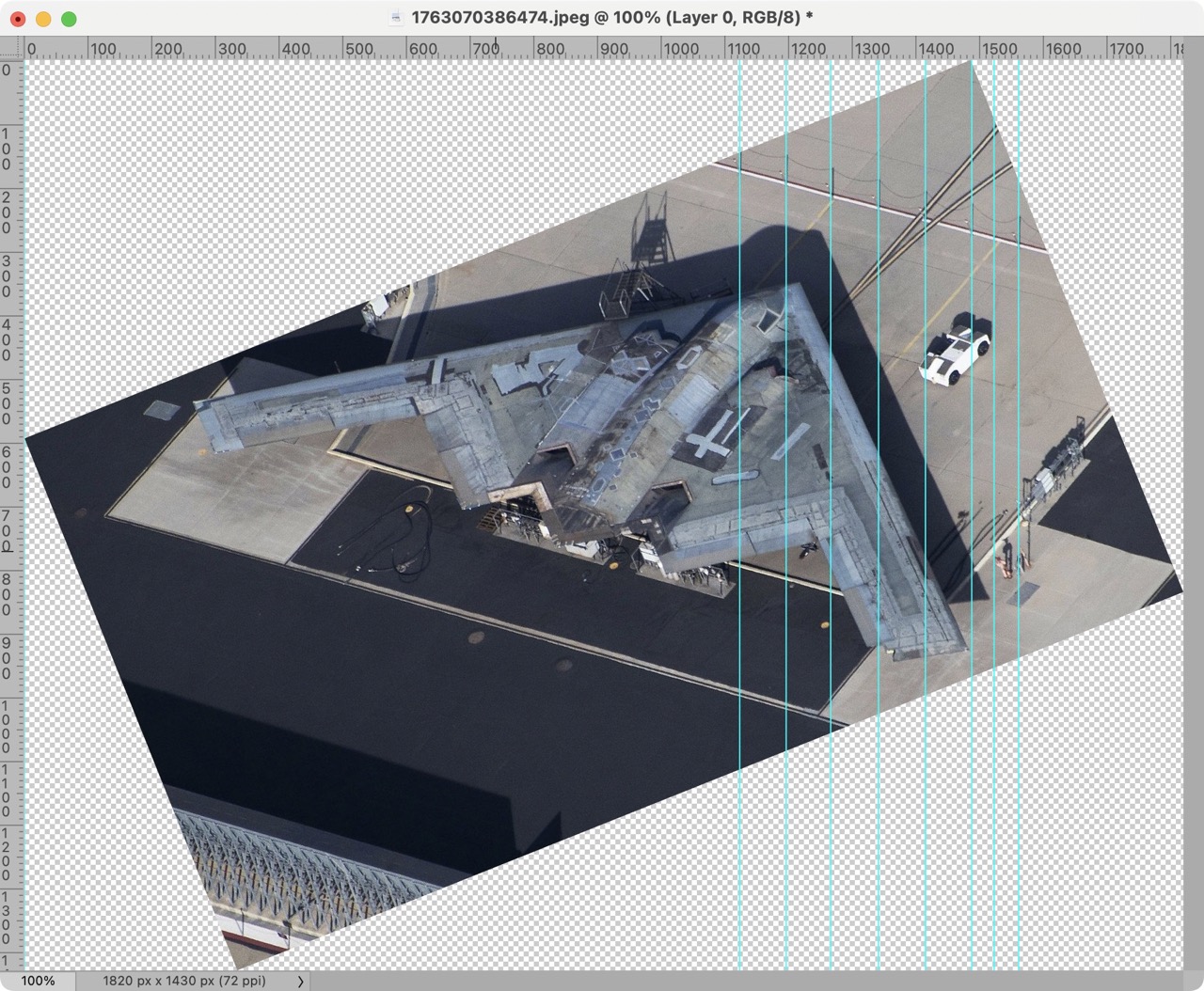
This is the picture in a Photoshop window, in which I've rotated it so the shadow from one of the posts is vertical (by drawing a line from its top to its bottom with the ruler tool and then clicking "Straighten Layer"). After that, I drew vertical guides on each of the posts and one on the edge of the vehicle's shadow, which are the light blue lines. All of these lines are perfectly vertical and therefore parallel.
One of these lines happens to also touch the right wingtip, but the shadow of that same wingtip is clearly to the right of that same line. The reason for that is the height of the aircraft above the ground, which is very difficult to estimate here because you cannot see any part of the shadow cast by its rear edges, as those shadows are underneath it. This red line is my estimation of where a vertical line (relative to the ground) drawn from the wingtip will end up:
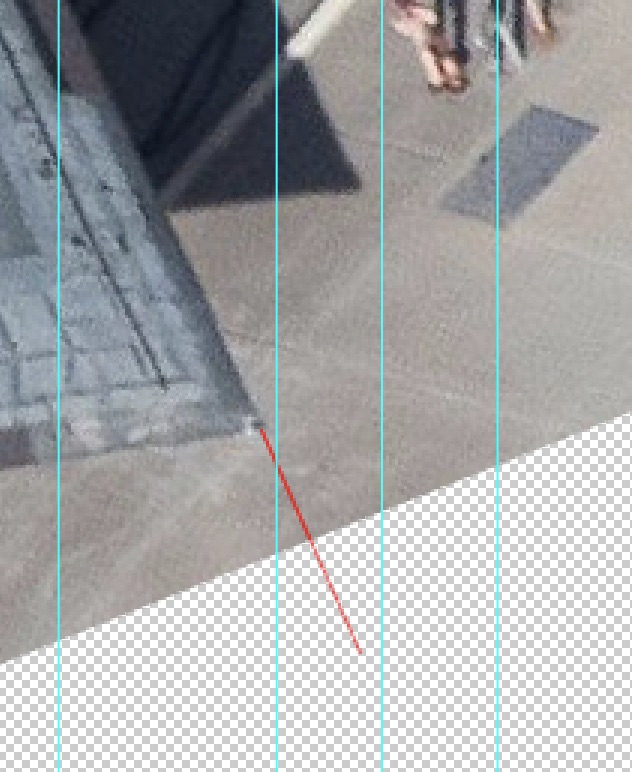
I did not draw this line just randomly, but instead drew a line parallel to one of the vertical bars visible under the rear of the plane. I then moved it to the ladder-affair by the left wing, so that its top touched the upper right corner of that, and extended it down to where I estimate ground level to be. When I then moved that line to touch the wingtip, its other end is very nicely in line with the wingtip's shadow.
And here is that same red line moved to the fenceposts:
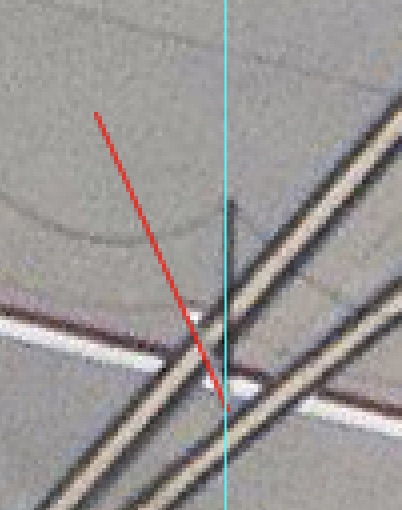
As you can see, it's about three times the height of one of those. That plane is much higher above the ground than it appears at first sight.
This is the picture in a Photoshop window, in which I've rotated it so the shadow from one of the posts is vertical (by drawing a line from its top to its bottom with the ruler tool and then clicking "Straighten Layer"). After that, I drew vertical guides on each of the posts and one on the edge of the vehicle's shadow, which are the light blue lines. All of these lines are perfectly vertical and therefore parallel.
One of these lines happens to also touch the right wingtip, but the shadow of that same wingtip is clearly to the right of that same line. The reason for that is the height of the aircraft above the ground, which is very difficult to estimate here because you cannot see any part of the shadow cast by its rear edges, as those shadows are underneath it. This red line is my estimation of where a vertical line (relative to the ground) drawn from the wingtip will end up:
I did not draw this line just randomly, but instead drew a line parallel to one of the vertical bars visible under the rear of the plane. I then moved it to the ladder-affair by the left wing, so that its top touched the upper right corner of that, and extended it down to where I estimate ground level to be. When I then moved that line to touch the wingtip, its other end is very nicely in line with the wingtip's shadow.
And here is that same red line moved to the fenceposts:
As you can see, it's about three times the height of one of those. That plane is much higher above the ground than it appears at first sight.

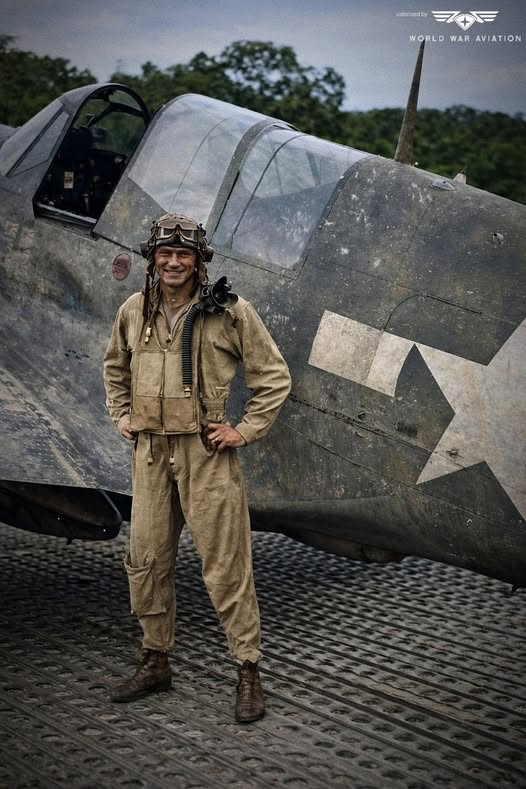
My guess is that the plane picked up most of the dirt from the muddy/dirty water on the ground that would get sprayed around from the propwash of other planes when on the ground. Just a guess.View attachment 176646
(allegedly) USAAF fighter Ace Richard West (14 victories) with his P-40 at Finschhafen Airfield, New Guinea.
Similar threads
- Replies
- 6
- Views
- 161


- Replies
- 13
- Views
- 157

- Replies
- 20
- Views
- 236
- Replies
- 1
- Views
- 138


