WW2 F15A Ford w/Breda in Italian service 2025-03

Scale Model Addict - Model Tips, Guides, Tools & Tech, Tutorials, and Community

Help Support Scale Model Addict:

You can see how poorly it went down, and how much of the Black came back when I cleaned the brush in the thinner.
These bottles of AK paint are lacquers. Try to brush those over anything that's already dried, and you'll be taking it off. AK 3rd Gen paints, that come in eyedropper bottles, are water-based and won't do that.

was shocked AK put what they did on the label
Shocked? How come?
 
Shocked? How come?
Hard to find SDS info online for AK , much less printed on the bottle .
Not shocked that AK no longer puts that info on the packaging .

I could swear that the first bottle of it I had also listed butoxyethanol on the label .
Fortunately , for all of mankind , that naughty data has been removed --- saving ink too . Think of the weight savings to the packaging from less ink on the label .
less weight , less fuel needed for shipping . less greenhouse gasses , more birds and garden gnomes .
 
... been outta town for a bit, back at the bench.
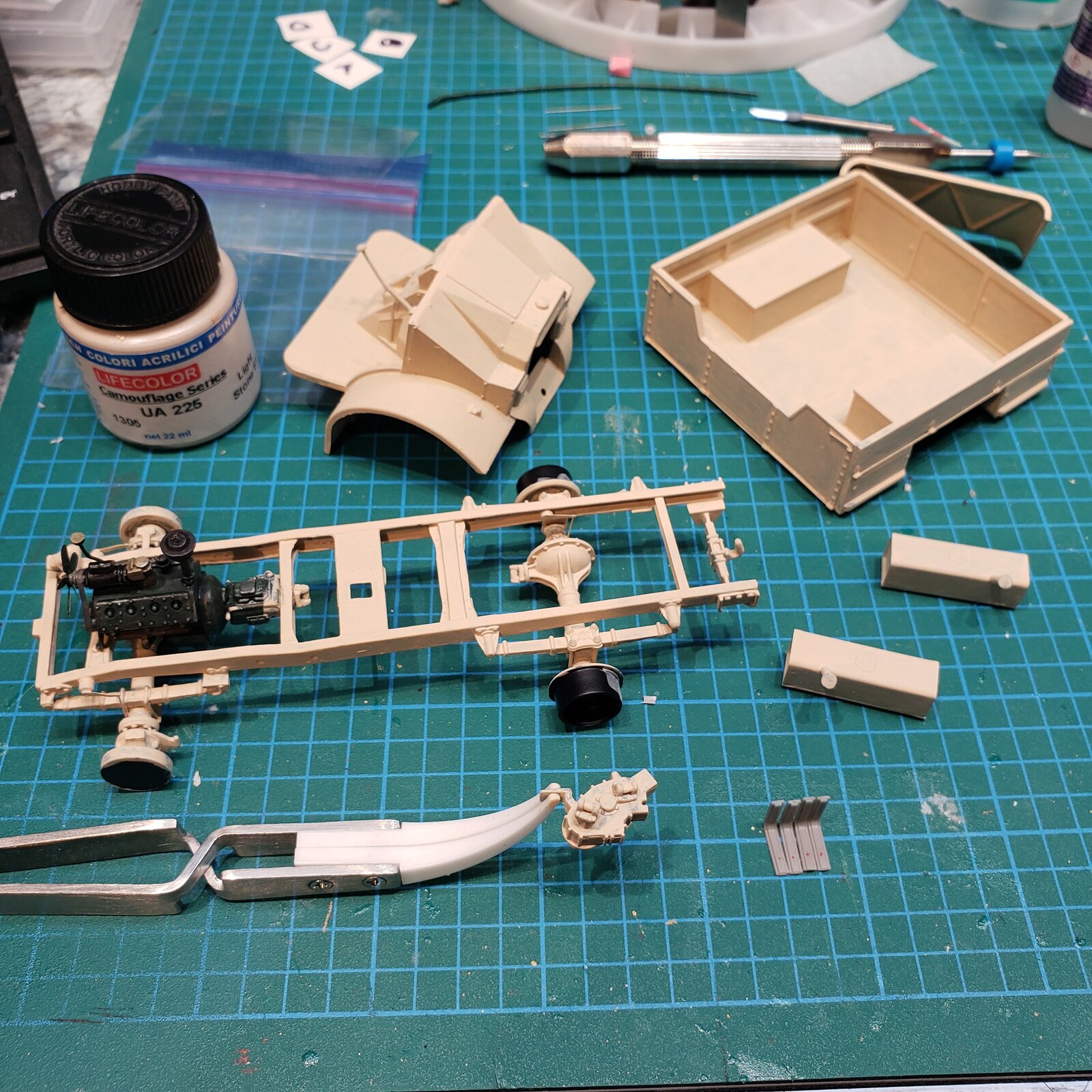
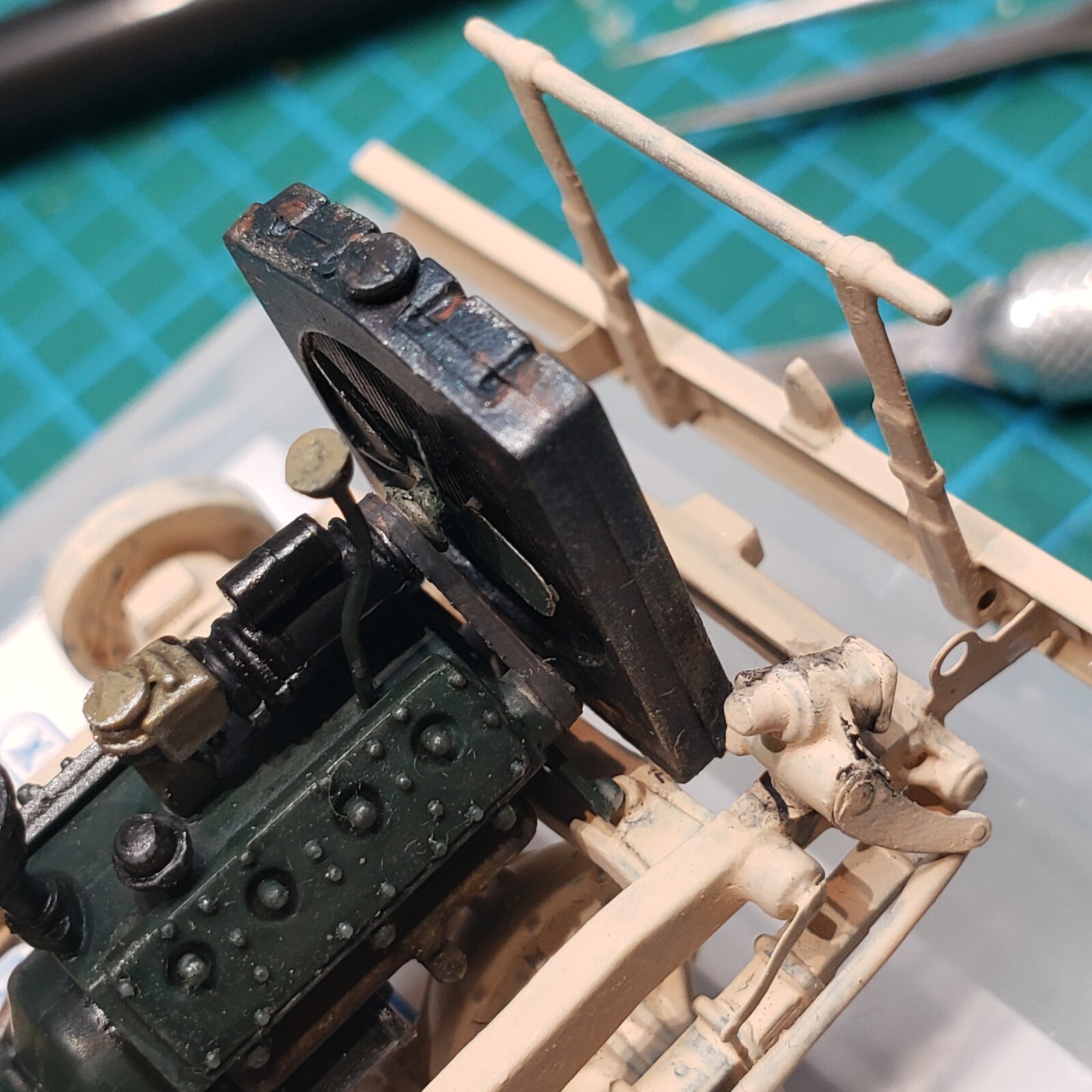
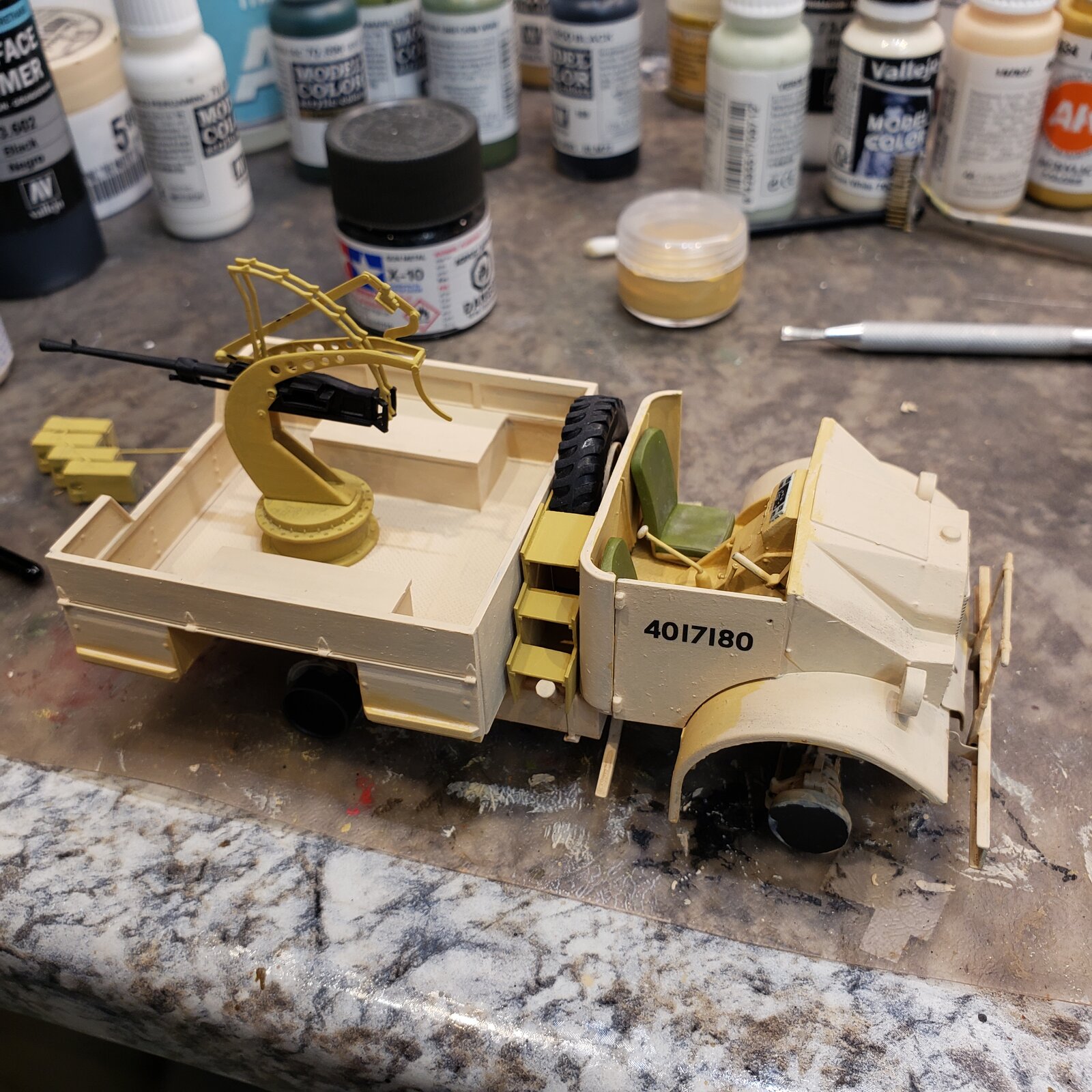
Multiple coats of this Lifecolor light stone (I under estimated how light it would be, especially with the black primer). Got the engine in, and test fitted the cab.

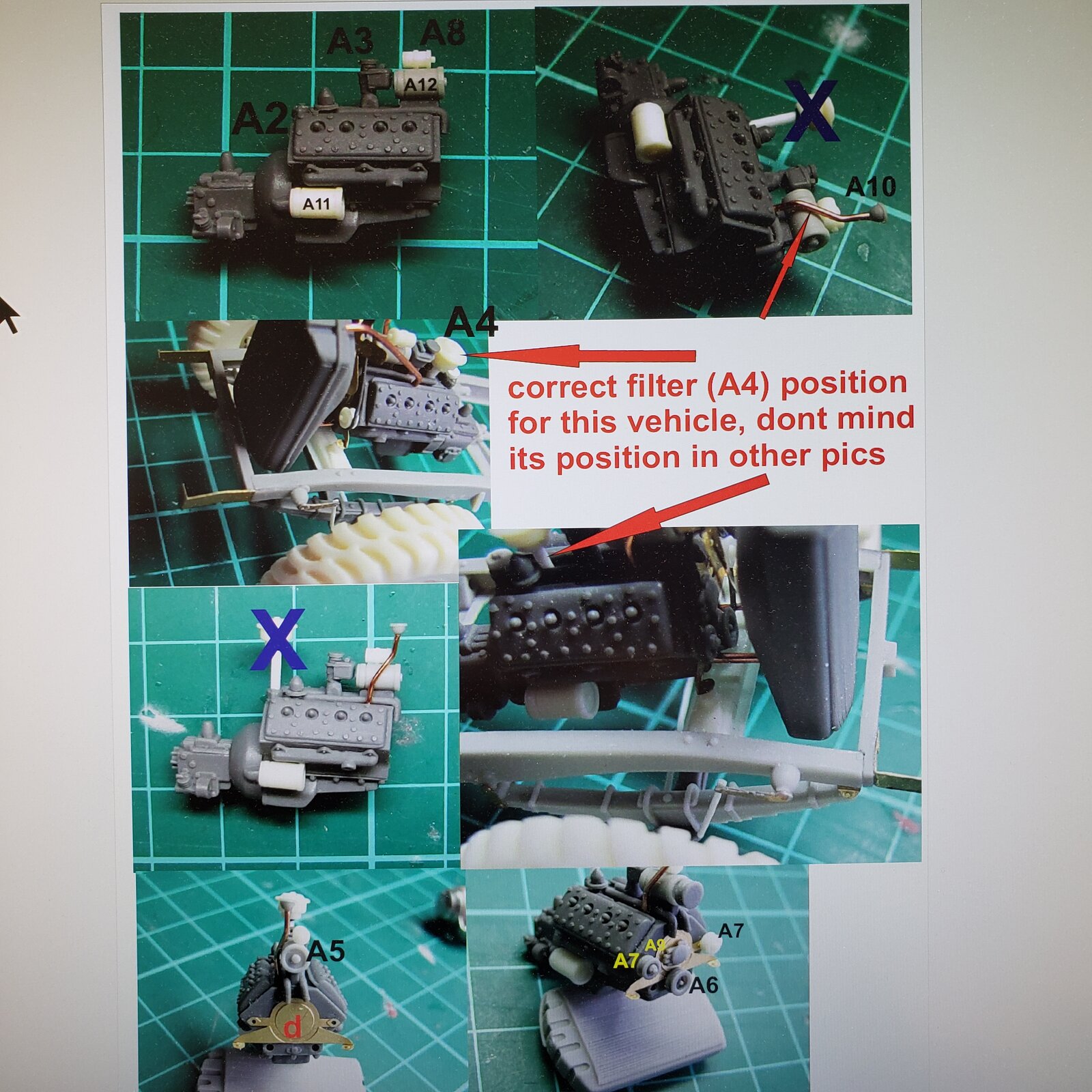
The air filter too high to fit under inside cab cowling... then remembered an early version of the kit with lotsa resin that had instructions to chop it. Found the pdf, and sure enough, chop!

They neglected to tell the plastic kit engineers though...

17456318877511347314507205426595.jpg


... so I'll have to adjust the filter, no biggie.

17456319752698230994786965264389.jpg

... fuel tanks, powertrain, headlamp housing; then dash detailing, grill, seats, wheels and doors to paint.

Assembly still a long way off, need to assemble and paint Breda, and other Italian and gun related mods.

Search as I might, have not found a photo or description of a CMP F15 bed to know if it should have the non-skid plates like on the cab floor. Sure seems like it should!
 
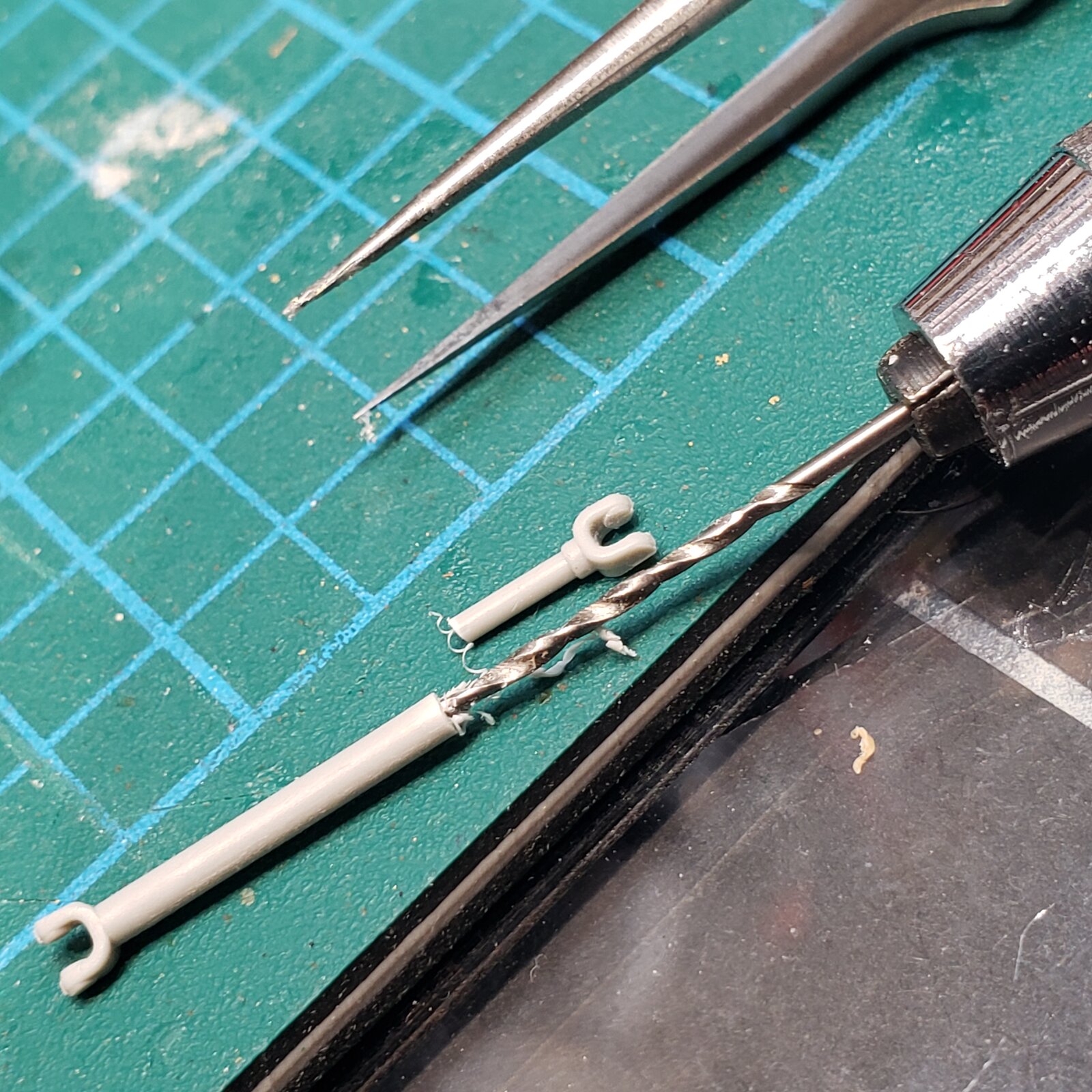
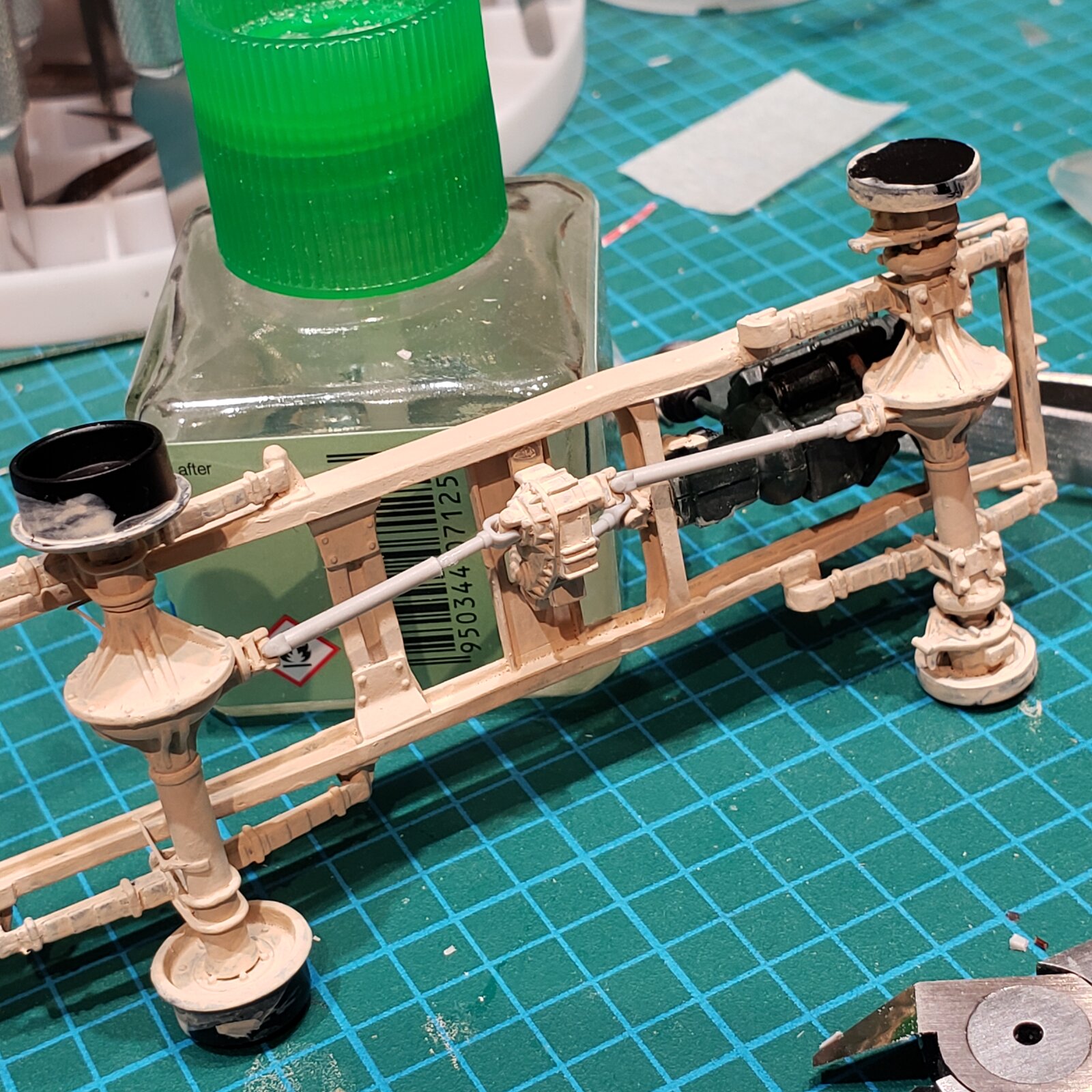
So the drive shafts are not sized to fit, that is left to the modeler to figure out. The instructions say: cut part if needed.
Needed.
But I'm hesitant, because the two ends will have to fit flush, and to their attachments.
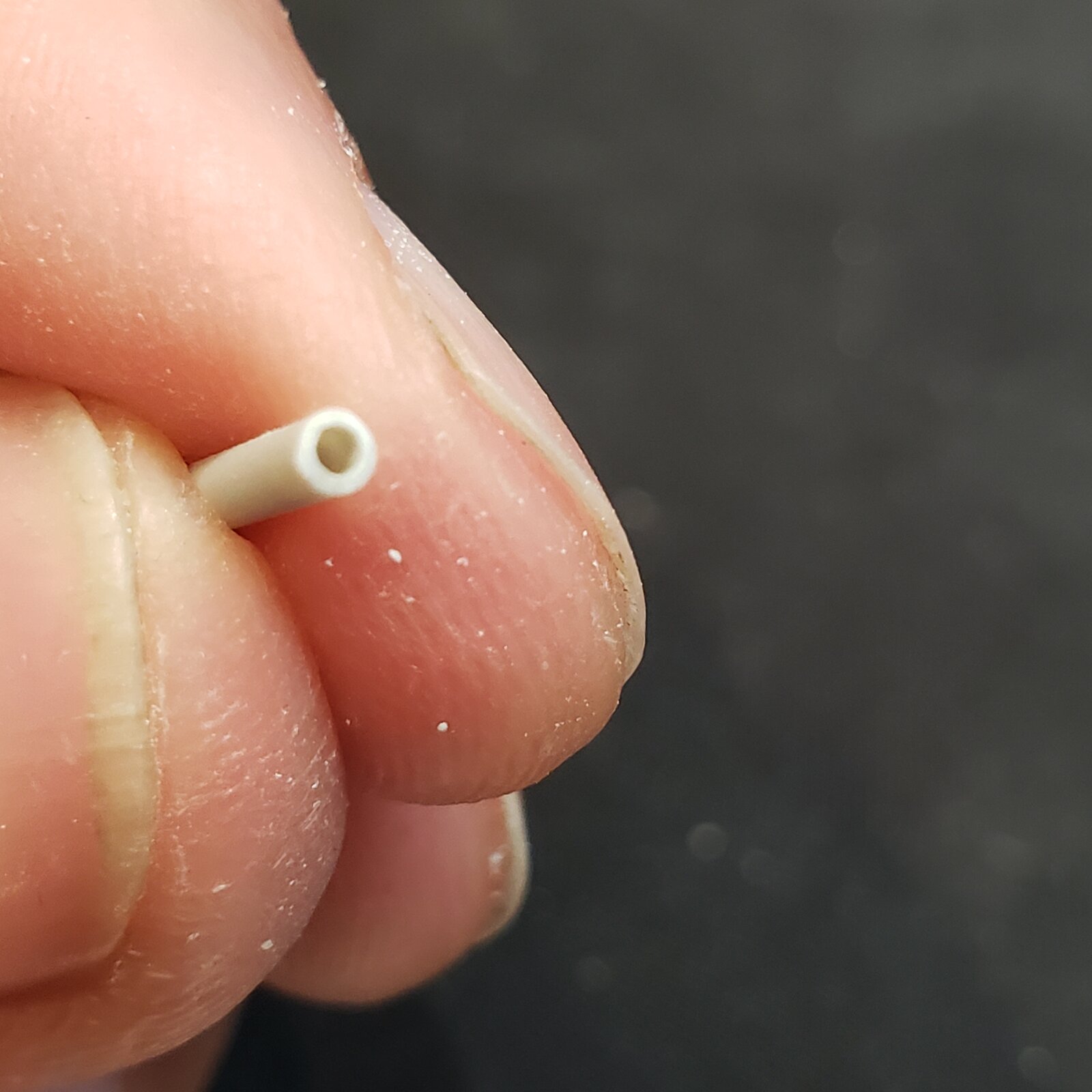
Safer to drill out one end and slide the other in, that way a good fit should be assured.
Should.

Back with the drilling already!

20250426_011226.jpg

20250426_011338.jpg

20250426_012436.jpg

Enough for tonight!
 
As an Amazon Associate we earn from qualifying purchases. Product prices and availability are accurate as of the date/time indicated and are subject to change.
Multiple coats of this Lifecolor light stone
Lifecolor paint is really poor to brush-paint with. I bought some bottles years ago mainly because they had the colours I wanted, and had to brush five coats of RLM 79 Sandgelb (a kind of khaki colour) over light blue Airfix plastic to get rid of the plastic colour shining through.

Every other Lifecolor paint I tried brushing with after that did much the same. However, I later tried spraying a pale sand colour (could be Light Stone, I'm not sure anymore) and it covered quite well in one coat.
 
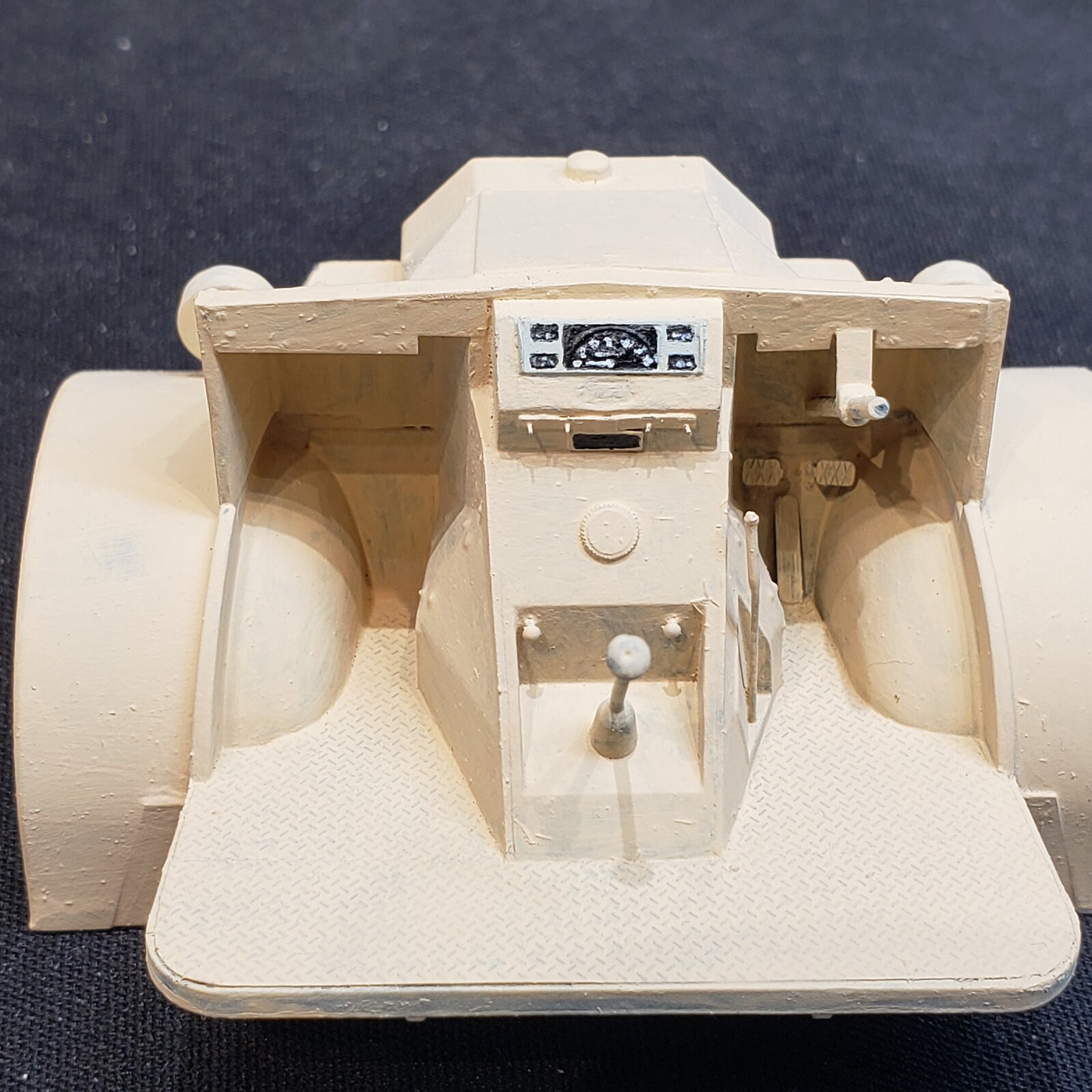
Hand painted dashboard, next to no relief on PE, this will have to do. Doesn't look too bad at normal viewing distance.
Also been working on fuel tanks with PE straps, rad and touch ups.

20250426_223107.jpg

The whole thing is going to be lightly overpainted in a more Italian colour, so not bothering to be super even with these coats, as long as it covers.
 
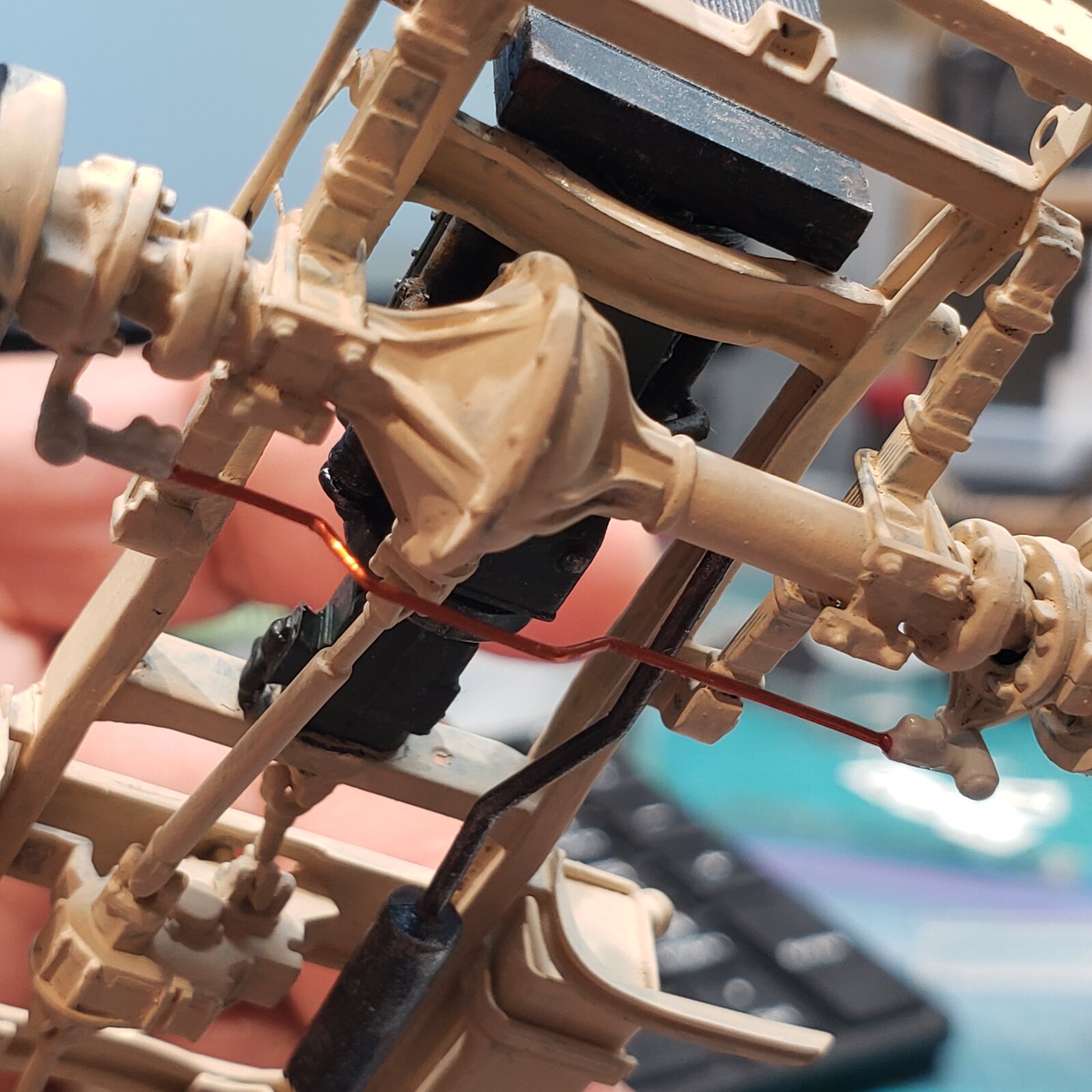
Rad and bumper on. Used Jakko's measure on the screen trick for shaping the tie rod with copper wire, and drilled the attachment points for a positive fit.
Also added fuel tanks and exhaust.

20250428_225114.jpg

20250428_225219.jpg


Paint touch ups required, before light Italian overpainting, only in easily accessible areas, as I'm guessing they wouldn't have stripped it down to bare bones.
 
Paint touch ups required, before light Italian overpainting, only in easily accessible areas, as I'm guessing they wouldn't have stripped it down to bare bones.
You can bet they would only have put paint on where they can easily reach. Why bother painting underneath the chassis if it's not going to make any difference at all in practice? Sure, in peacetime they probably would because the sergeant-major wants to keep the troops busy, but in war?

(For my Cuckoo model, I wanted to paint the lower hull in German dark yellow, then put on all but the outer rows of roadwheels and then spray British olive drab. This would have left everything that's hard to reach with a spray gun IRL, in German colour. However, because the whole underside on the real tank was covered in mud and dirt, I unfortunately couldn't do it like that.)
 
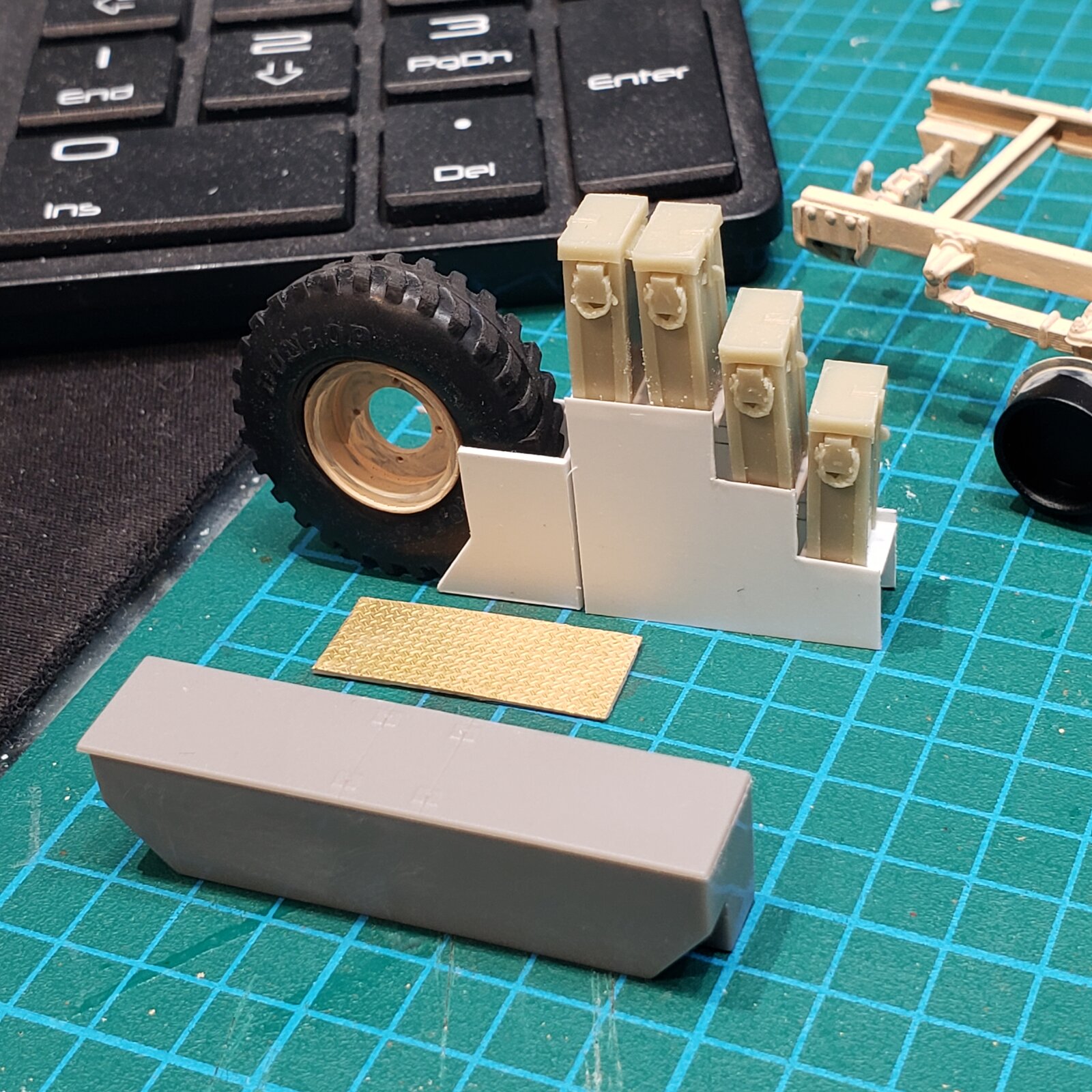
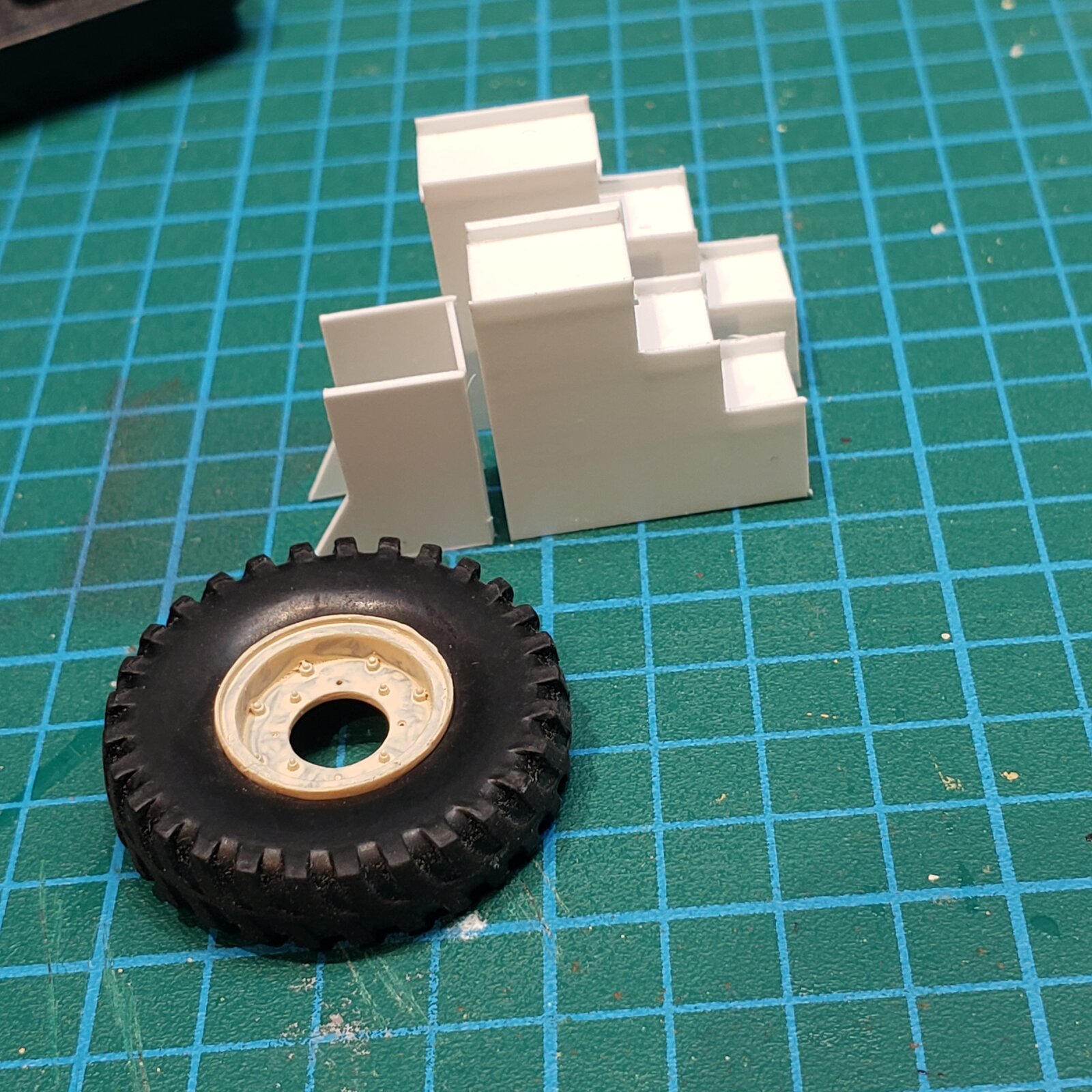
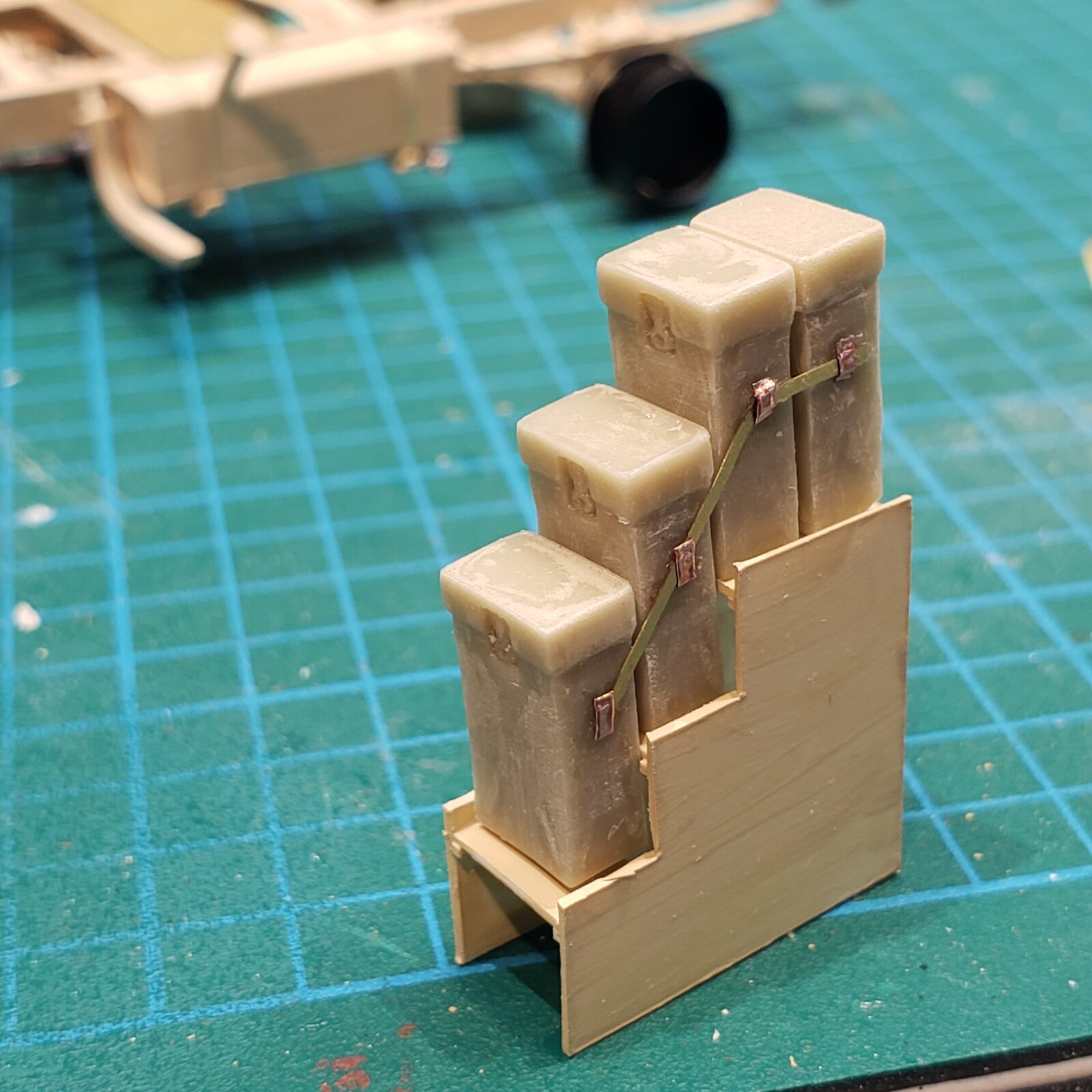
... as I'm converting a kit to include the Italian mods that were offered in a different kit, there is some scratch building. Using Jakko's measuring technique with plans for the Italian kit, I've fabricated a stand to hold the ammo boxes and the spare, along with a base that spans the frame. I won't have to paint these in the British light stone, as they were added by the Italians.

The standard storage box (that I won't be using) is sitting in front, and was meant to separate the cab from the box.

20250429_180832.jpg

The Breda ammo boxes are from Resicast.

I still have to replicate restraints that go between the boxes.
Apparently, there will also be a strap between the cab and the box to keep the spare in place.
 
Ha! Now there's a crocker!
About to build the Breda, opened the kit, and there are extra parts to build the ammo boxes and stand, included!
Oh well, now for the gun.

(Incidentally, the Breda kit has two guns, in a plastic bag, and it was the one of the first things I bought at my favourite LHS, a clearance item, when I got back into the hobby. Originally I thought it might be good for an LRDG truck, but the wrong base)

174615204277271148384820608163.jpg
 
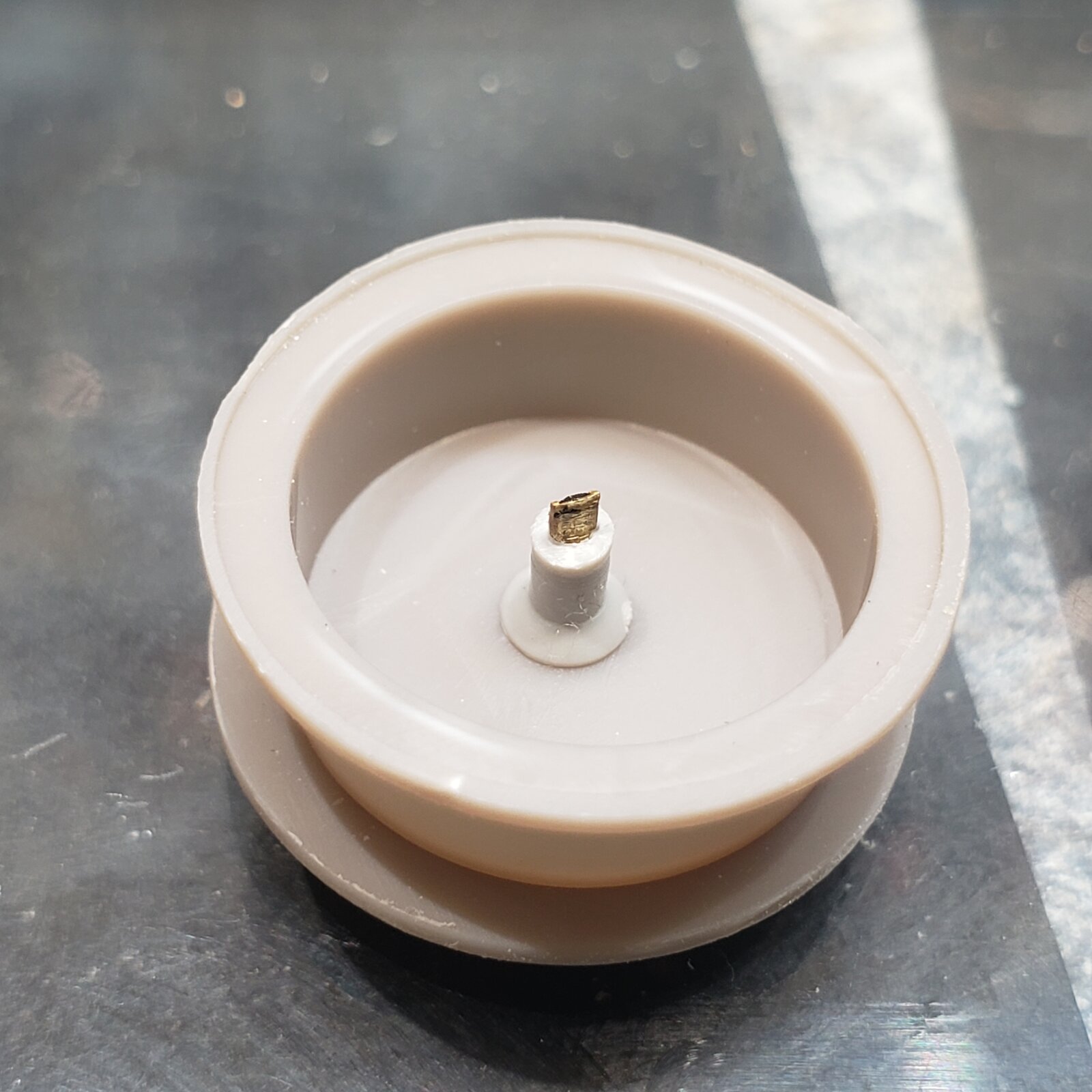
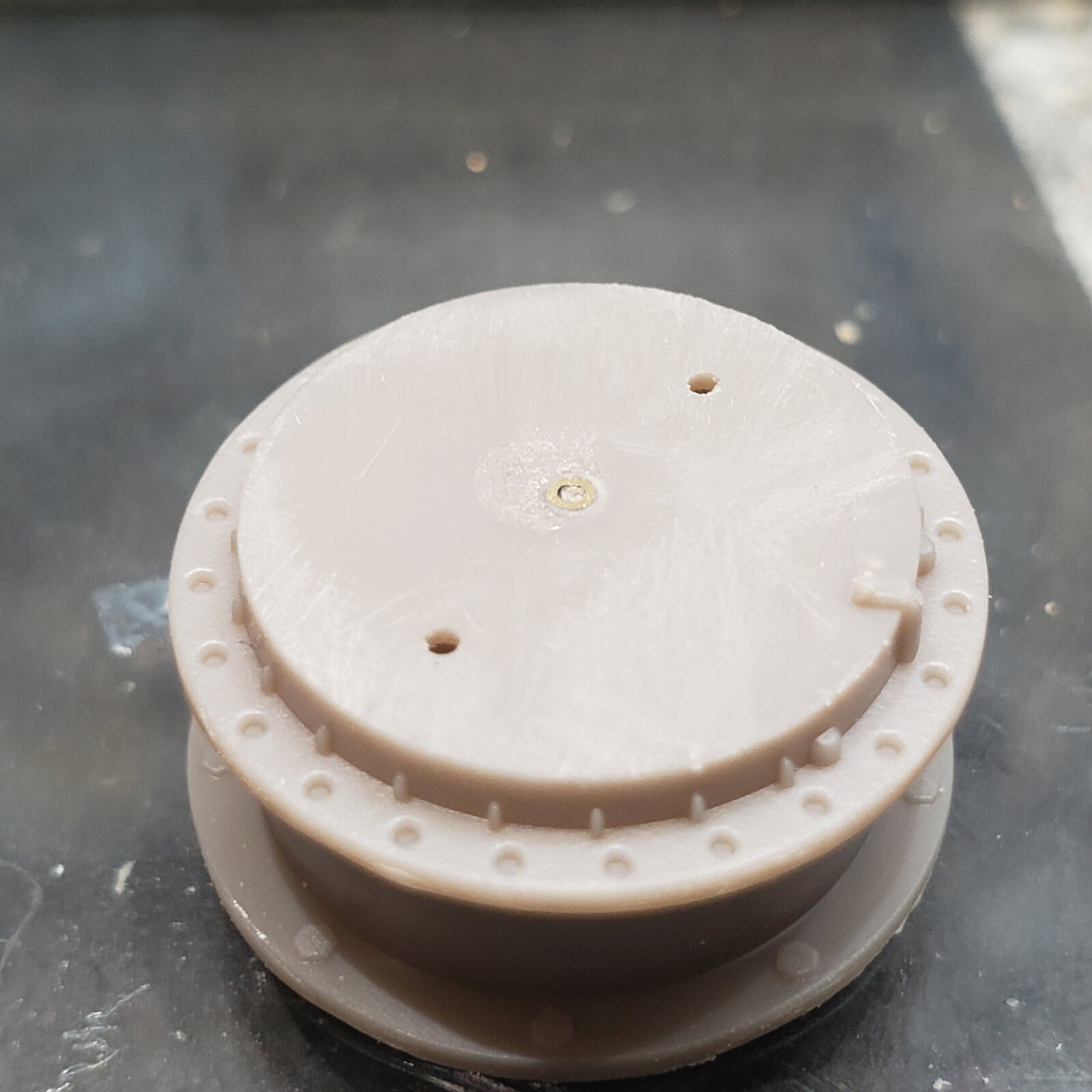
The gun mount is set up to be glued in place... that won't do. So I drilled out the base and mount plate using @GaryG64 's X marks the spot, then inserted brass tube, secured with a spare part that was just right, glued and crimped.

Still more to do, but got to listen to that 'closing time' bell telling me I continue at my own risk! Earlier than usual, guess I had a busy week.

20250502_212801.jpg

20250502_212809.jpg

20250502_222645.jpg


Edit:
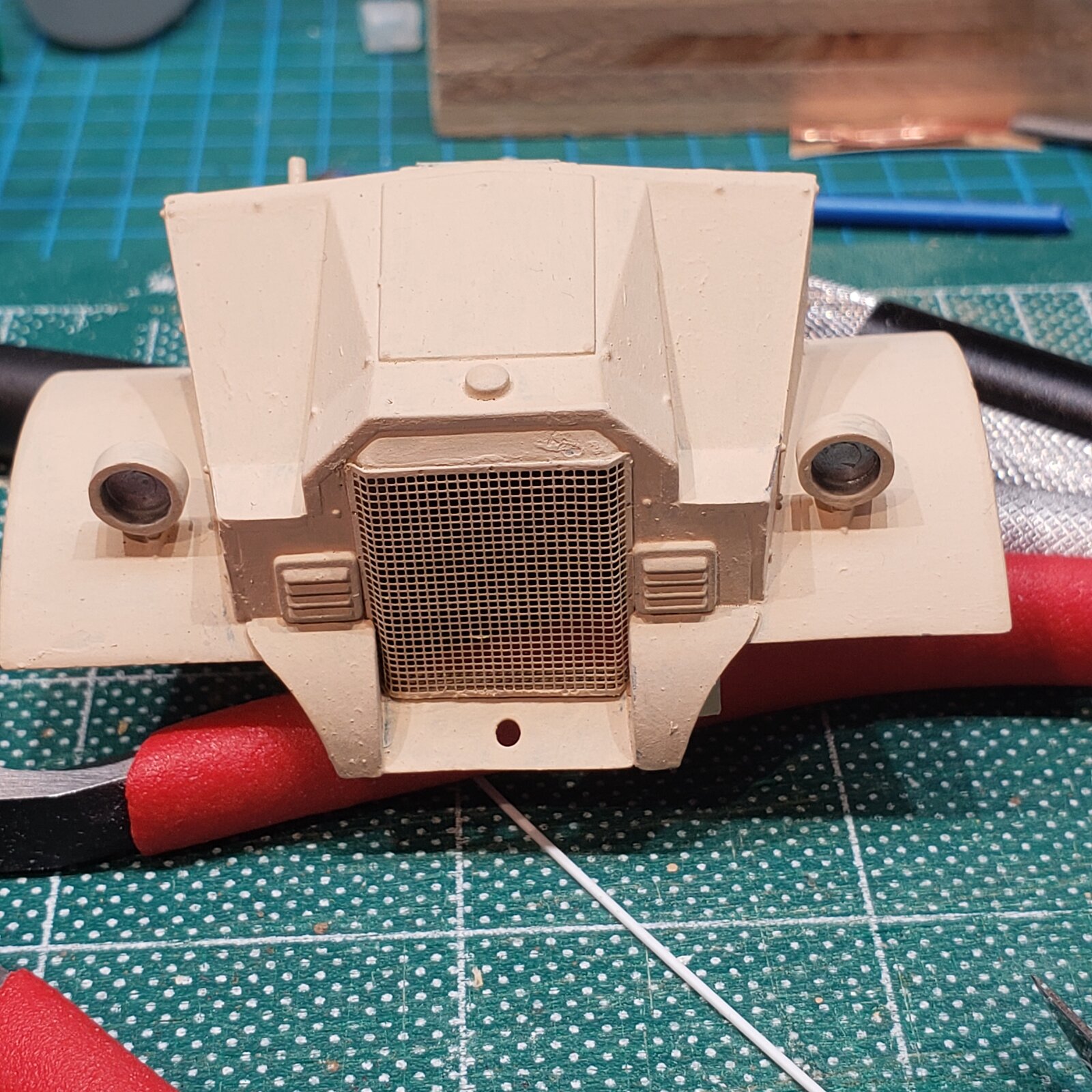
Oh, and I did finally get that grille on, 4 bends, and some tricky cuts to fit.

20250502_224112.jpg

That's gonna need some sanding... :rolleyes:
"Say goodnight, Johnboy."
 
Last edited:
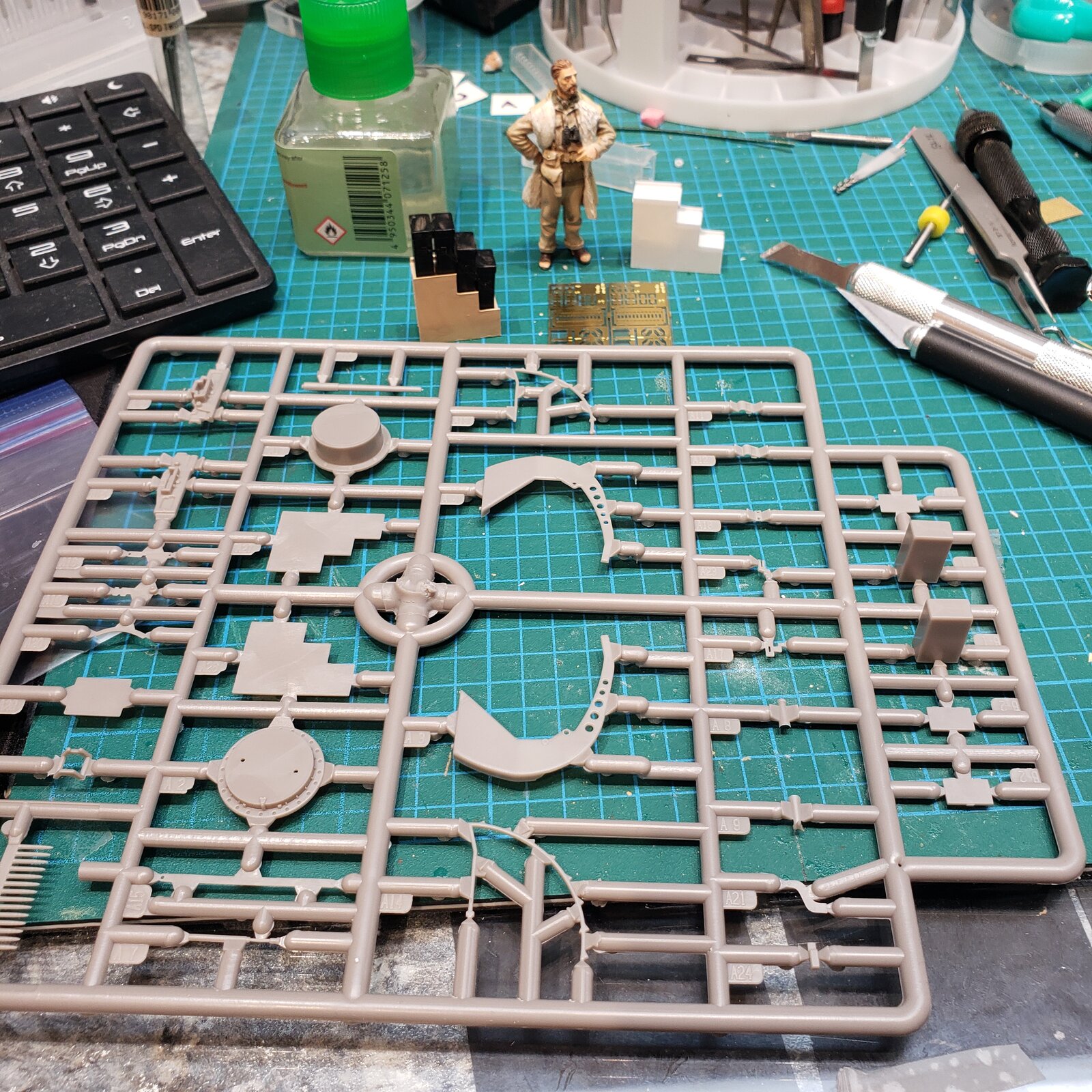
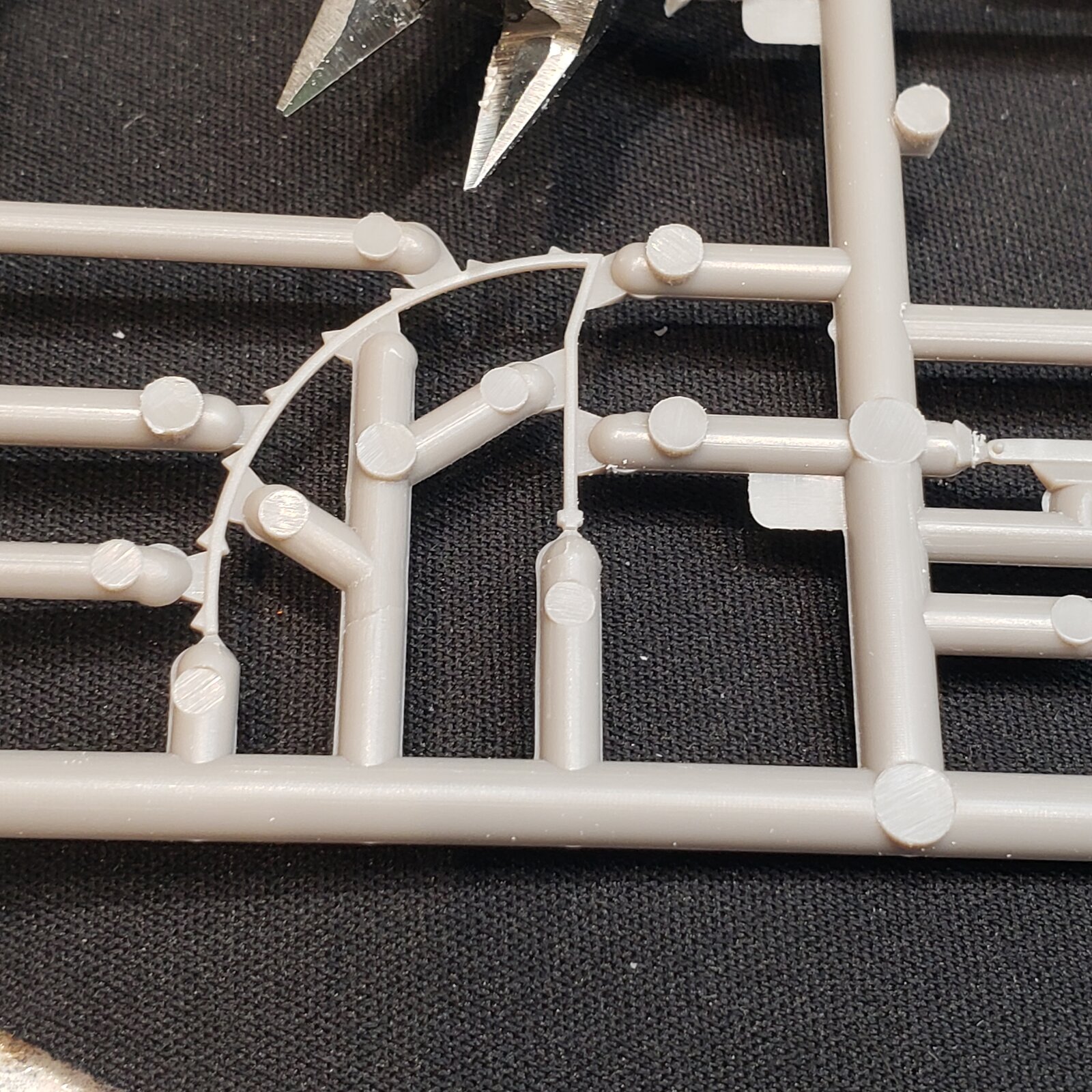
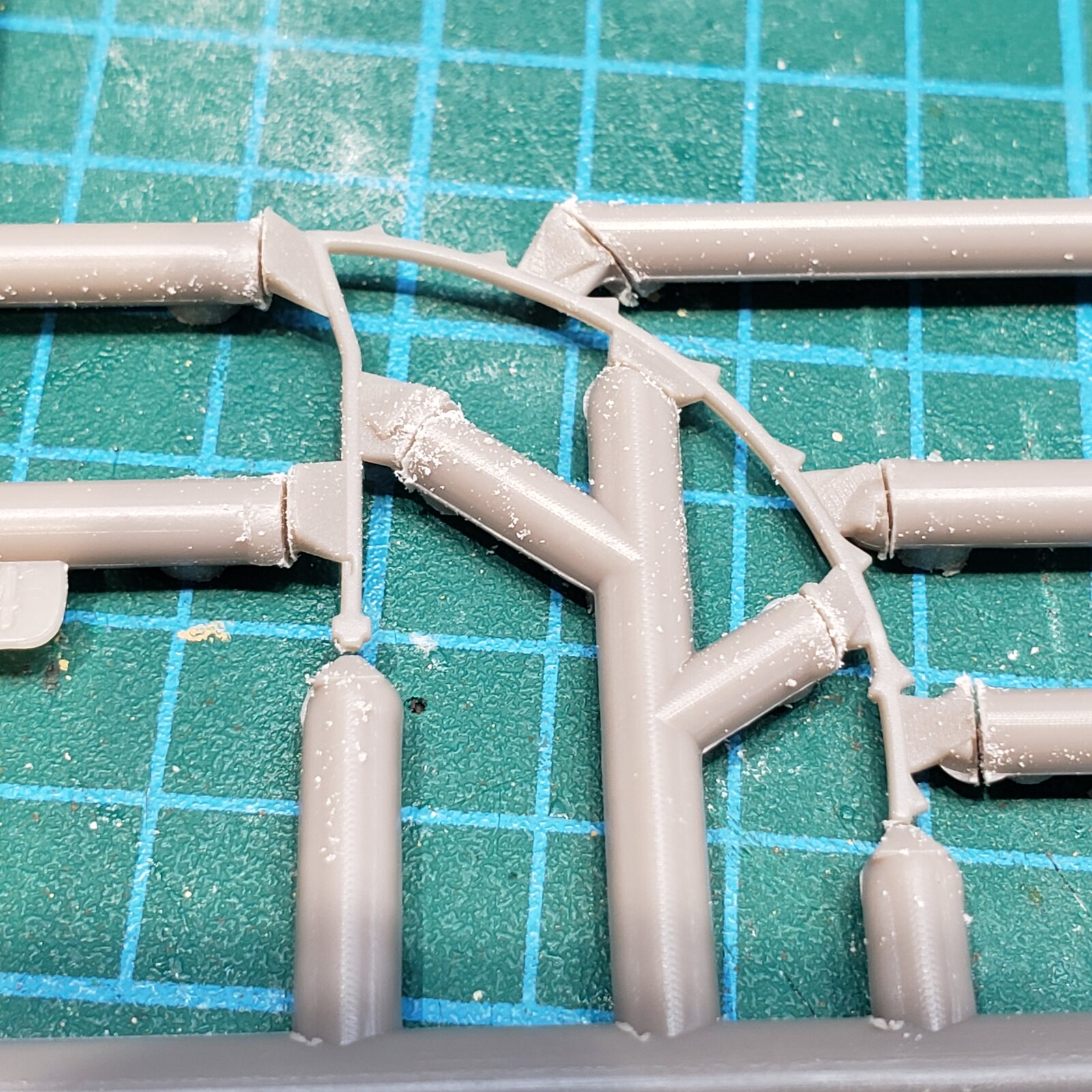
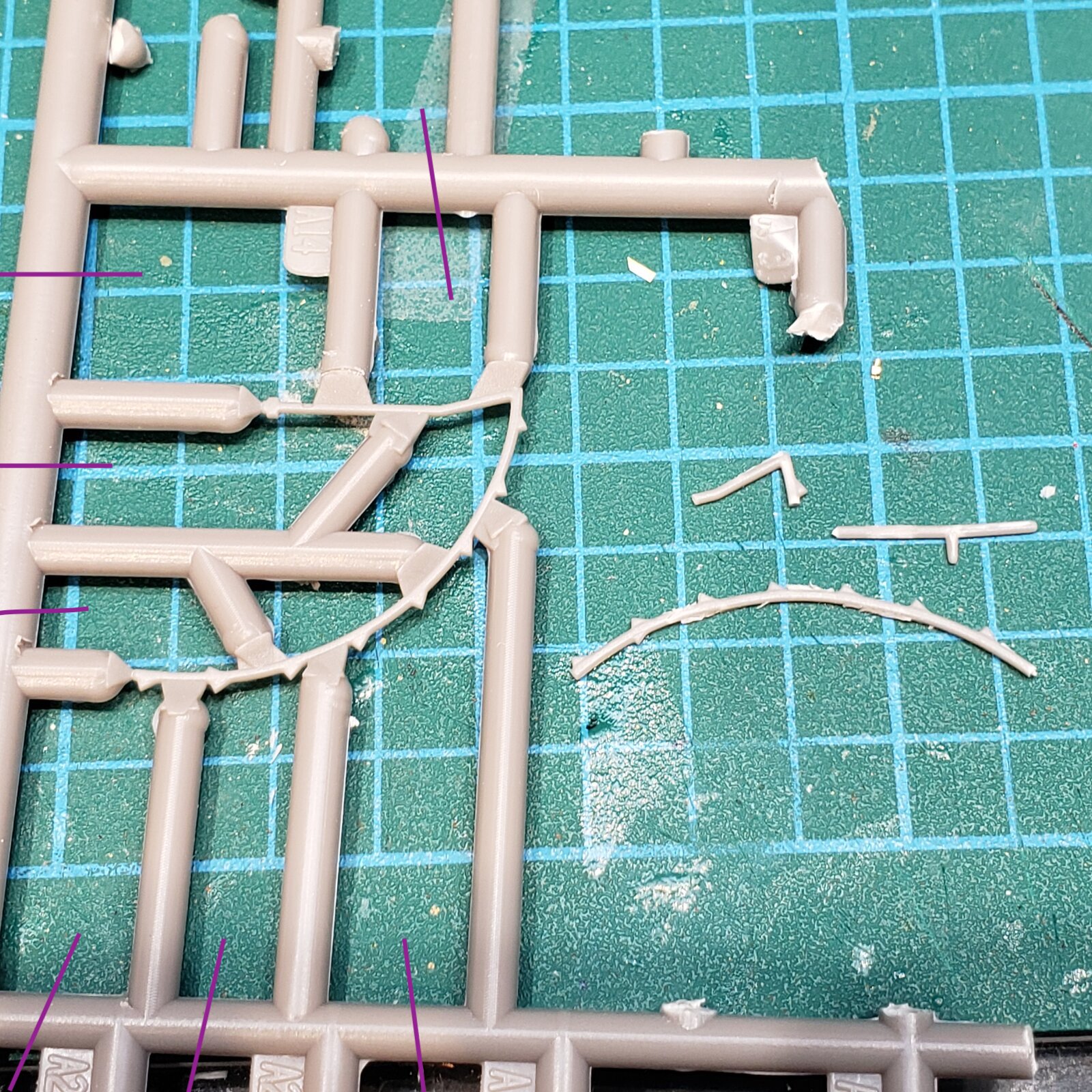
So as mentioned earlier, a lot of sprue work with this manufacturer. Multiple, heavy attachment points to fragile parts. Great for surviving transport and packaging, extra headache for freeing the parts.
For these fragile parts, there is no nipping or cutting with a knife. Just the width of the blade is enough to bend or break the fragile parts as it 'wedges' them away from the sprue.

So I've adopted two strategies:
1. strategically cut away the section of sprue in such away that it doesn't impact the part area, then use nippers for cutting at attachment point and the sprue drops away.
2. carefully microsaw the sprue on or close to the attachment point; the kerf of the saw removes the tension and stress on the part.
Both can require a fair amount of cleanup.

Any other methods that have worked in similar situations?

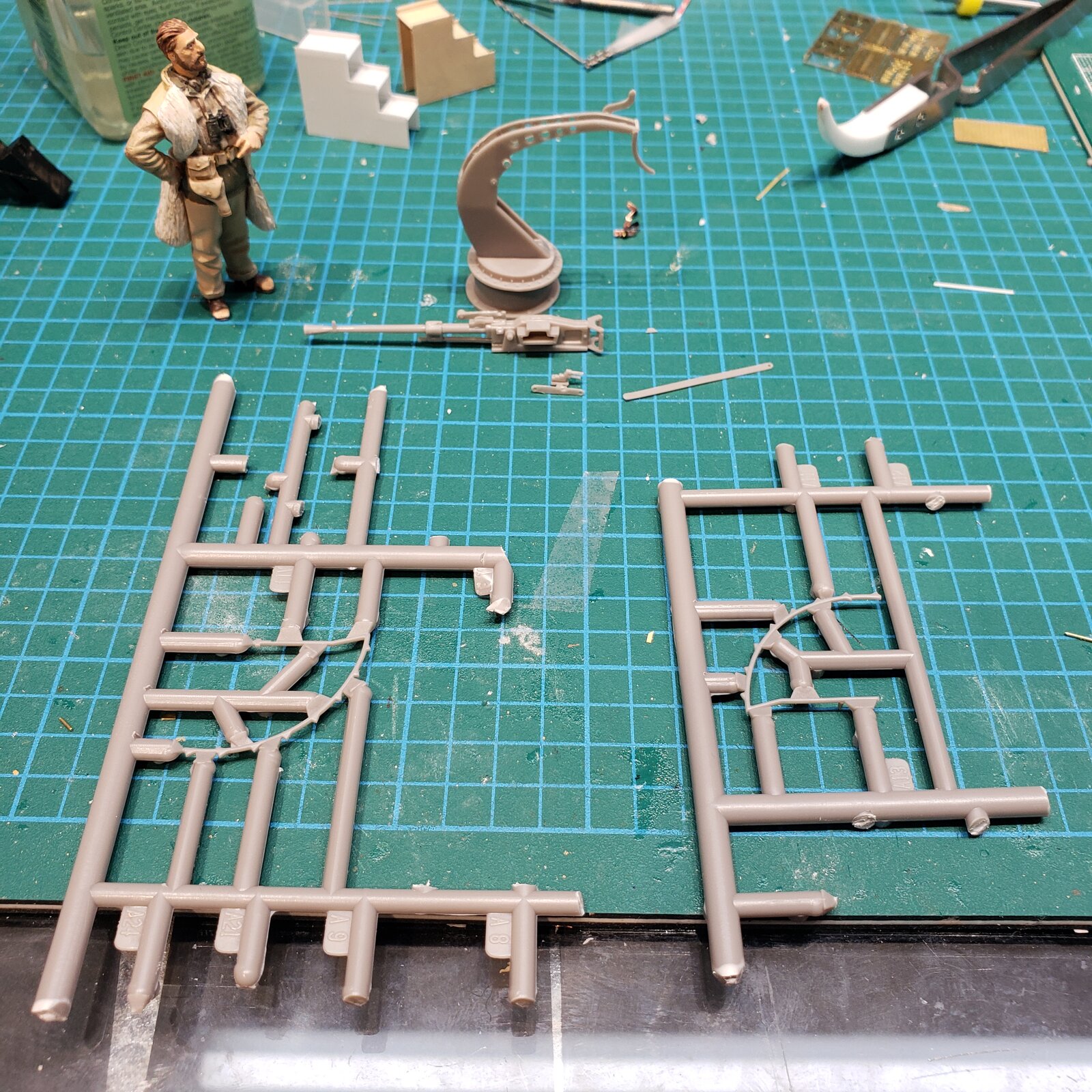
Here is an example: fragile and long part, and multiple thick attachment points.

17463011241044017596403435150559.jpg
 
First, isolate the sprue sections to hopefully reduce tension.

20250505_153802.jpg


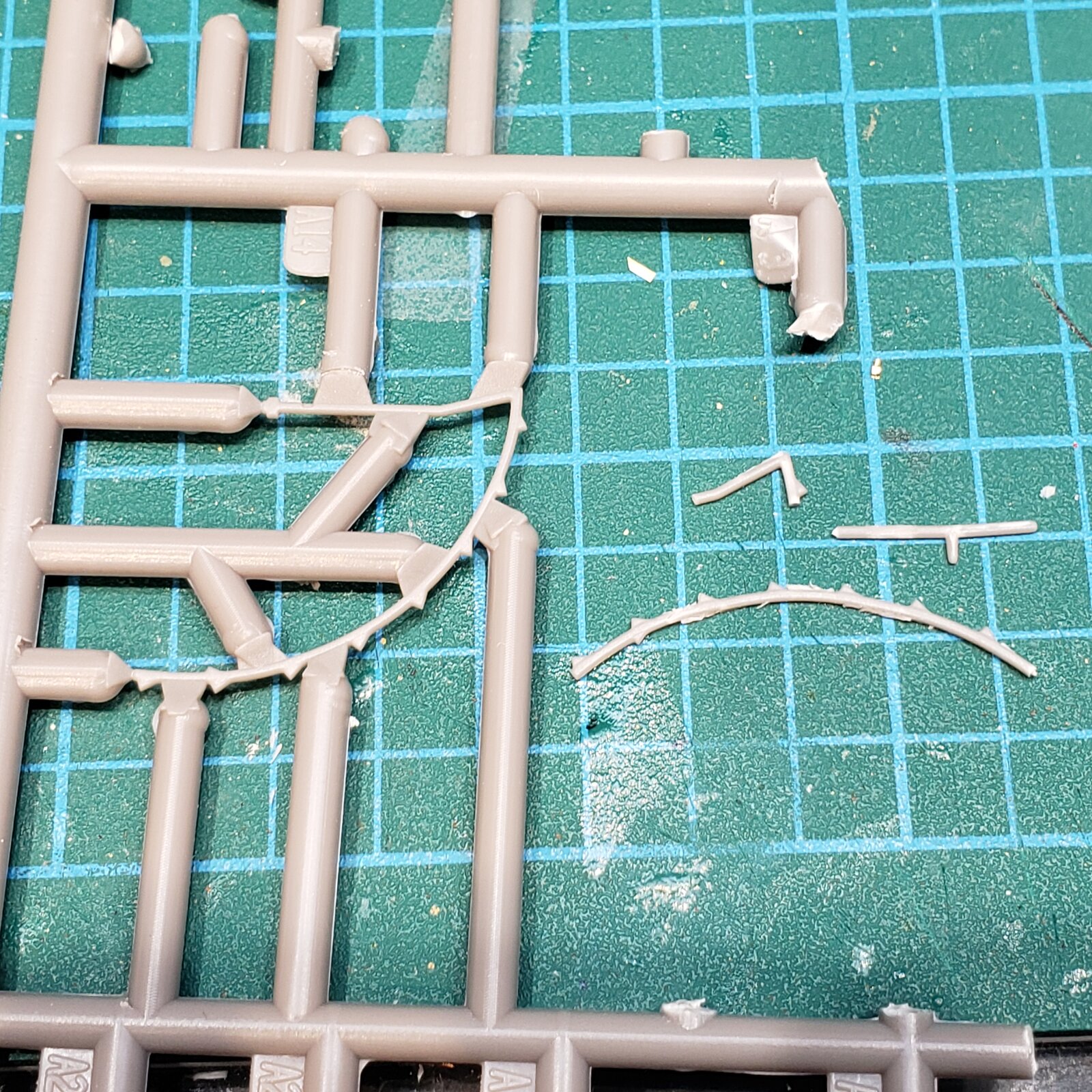
Method 1: fail.
At least I have a second one to base reconstruction on...
20250505_155315.jpg


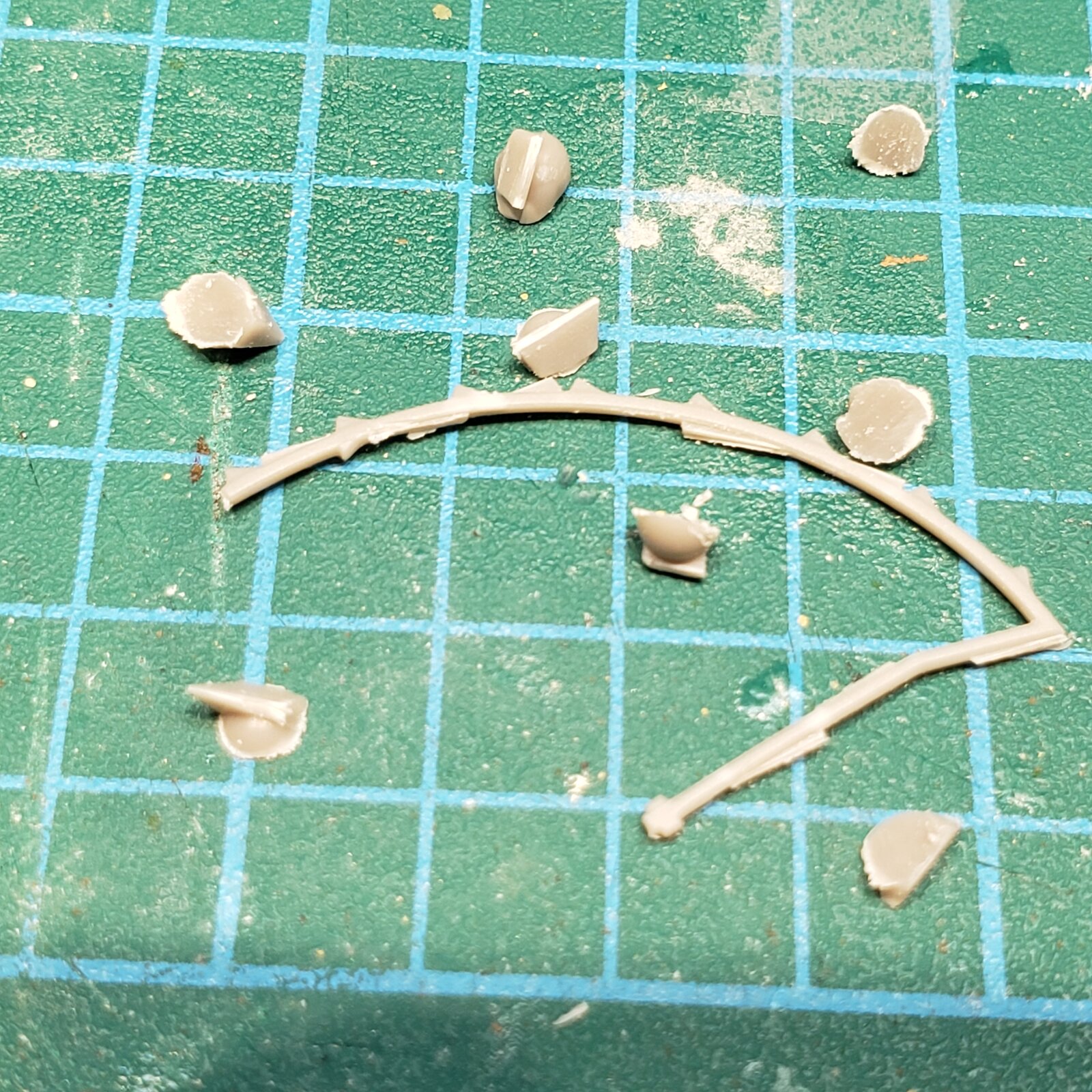
Method 2: success!
20250505_155957.jpg

20250505_160407.jpg


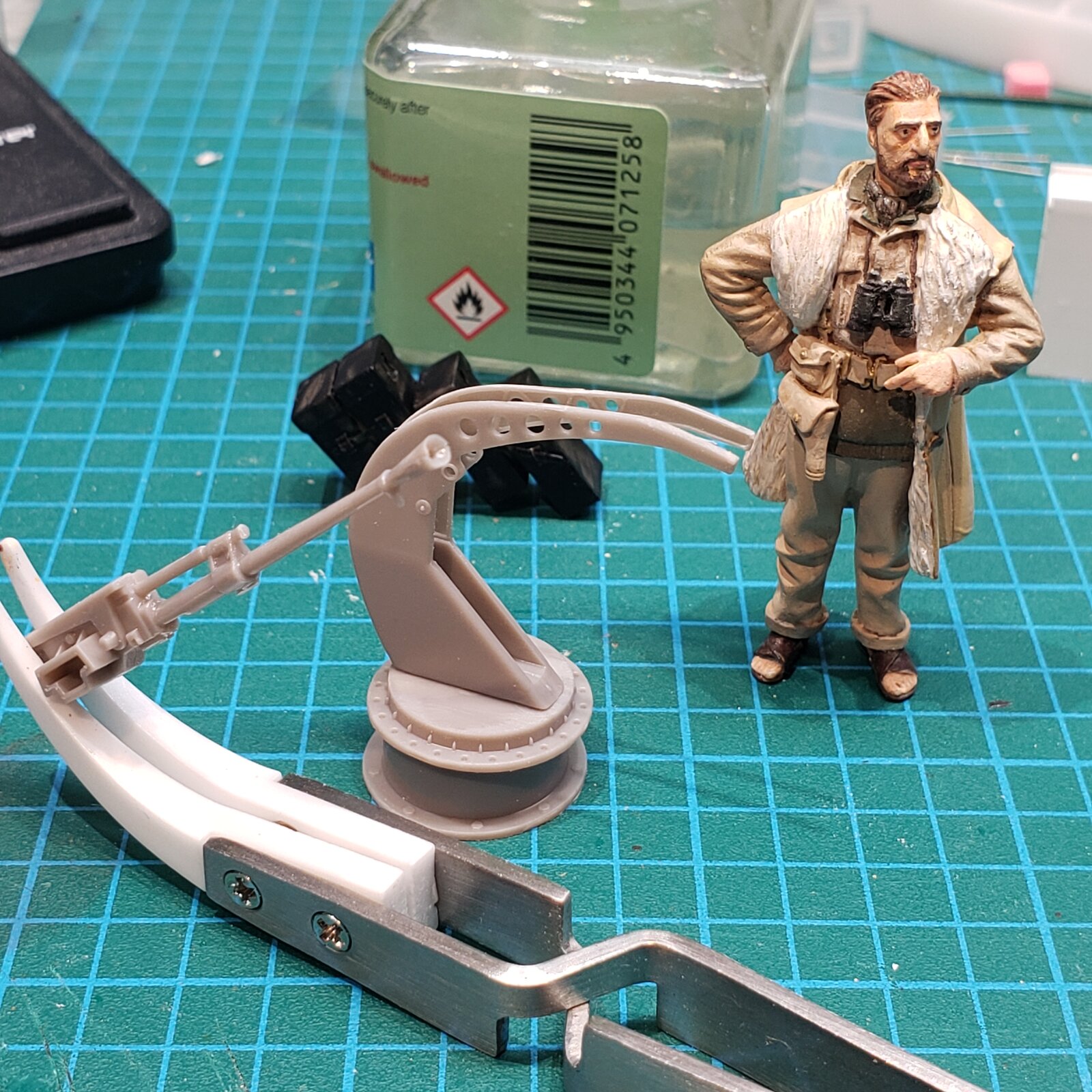
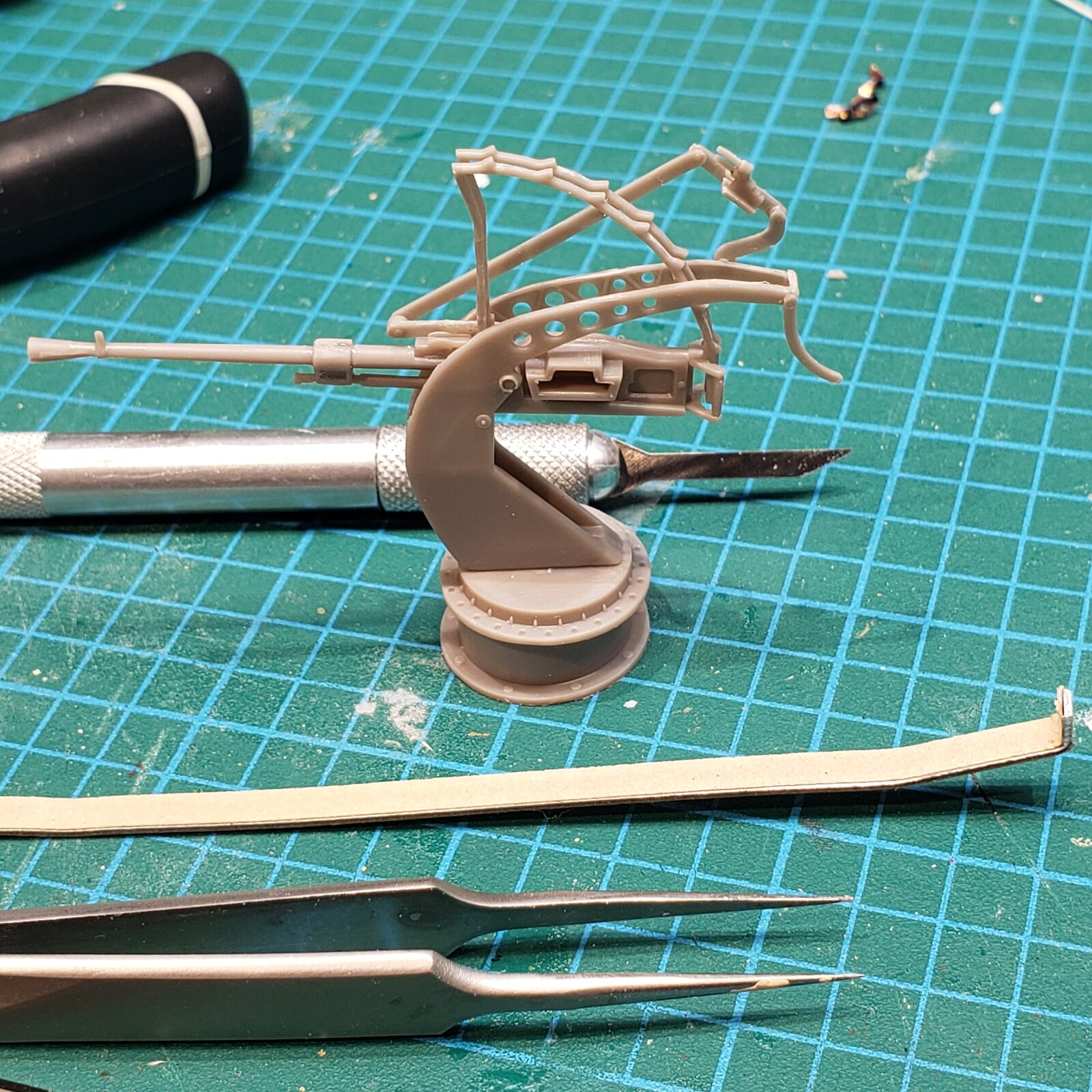
...and with the help of all the King's men:
20250505_170756.jpg

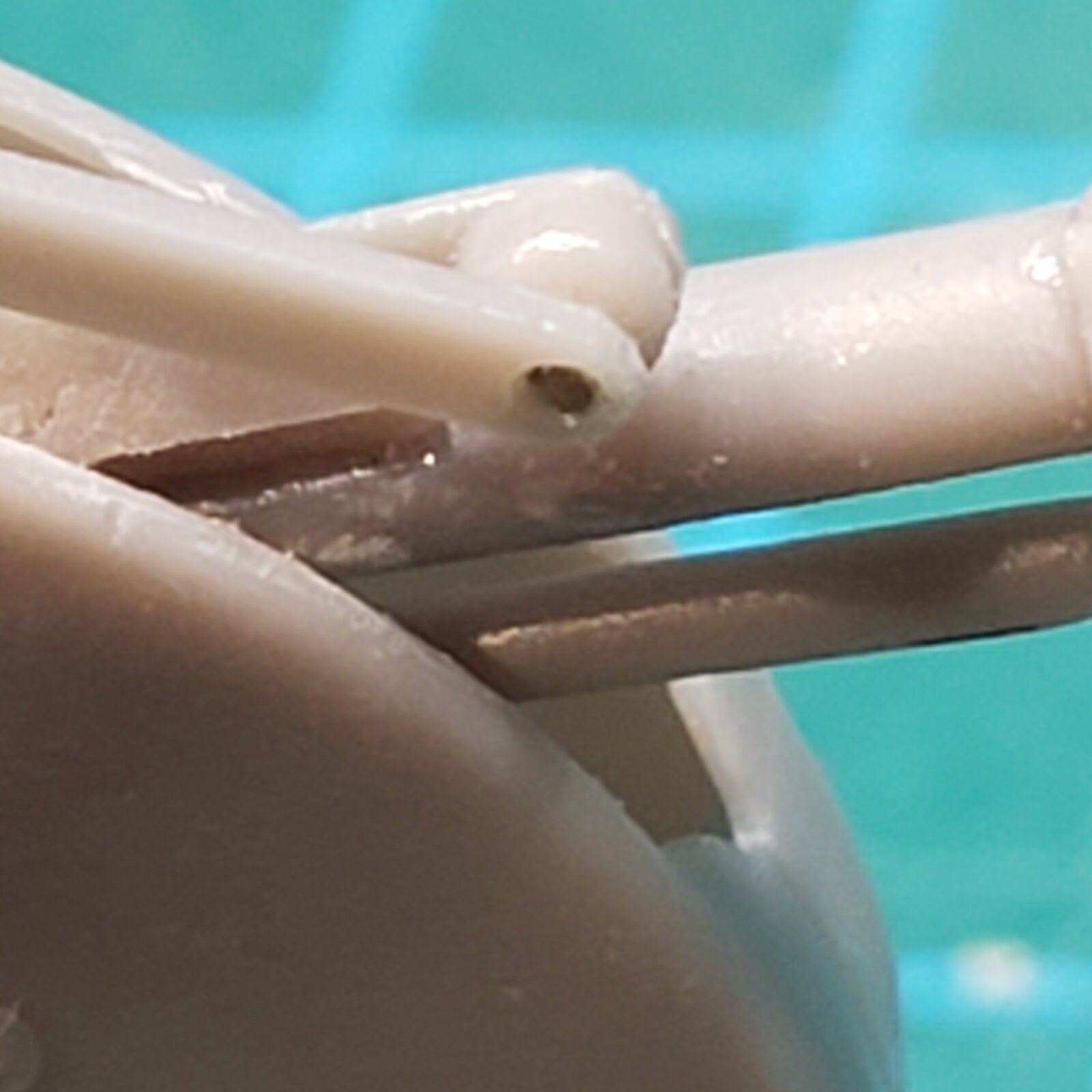
It did require a brass implant, as the main pivot nub was just too small to hold; and I gave up any hope of making it functional, given the fragility of the parts, so glued in place, but the gun can still rotate on the base.
17464800837185950759638595004944.jpg
 
So as mentioned earlier, a lot of sprue work with this manufacturer. Multiple, heavy attachment points to fragile parts. Great for surviving transport and packaging, extra headache for freeing the parts.
For these fragile parts, there is no nipping or cutting with a knife. Just the width of the blade is enough to bend or break the fragile parts as it 'wedges' them away from the sprue.

So I've adopted two strategies:
1. strategically cut away the section of sprue in such away that it doesn't impact the part area, then use nippers for cutting at attachment point and the sprue drops away.
2. carefully microsaw the sprue on or close to the attachment point; the kerf of the saw removes the tension and stress on the part.
Both can require a fair amount of cleanup.

Any other methods that have worked in similar situations?

Here is an example: fragile and long part, and multiple thick attachment points.

View attachment 146544
Yikes....That is some terrible engineering...
 
Oh, those are fun parts to clean up … Sawing through the sprues is really the only realistic way to do it, IMHO.

BTW, you said you cut down the sprues to reduce tension. However, you've still left an "outer ring" uninterrupted around three sides of the part, so I think you didn't achieve that. I would probably have cut it here to begin with:

Cuts.jpeg


That way the act of cutting pushes as little as possible against the part, and separated all of the attachment points from each other.
 
outer ring
Ya, my first pass was with the nippers, and those spots would've snapped the part. I agree though that sawing them would've been the way to go... but once I committed to sawing at the attachment points, tension was less of an issue.

My fine one bladed nippers may have been okay at the attachment point, but access was the issue with all the trees in the way!

Lesson learned: when in doubt, saw! :rolleyes:
 
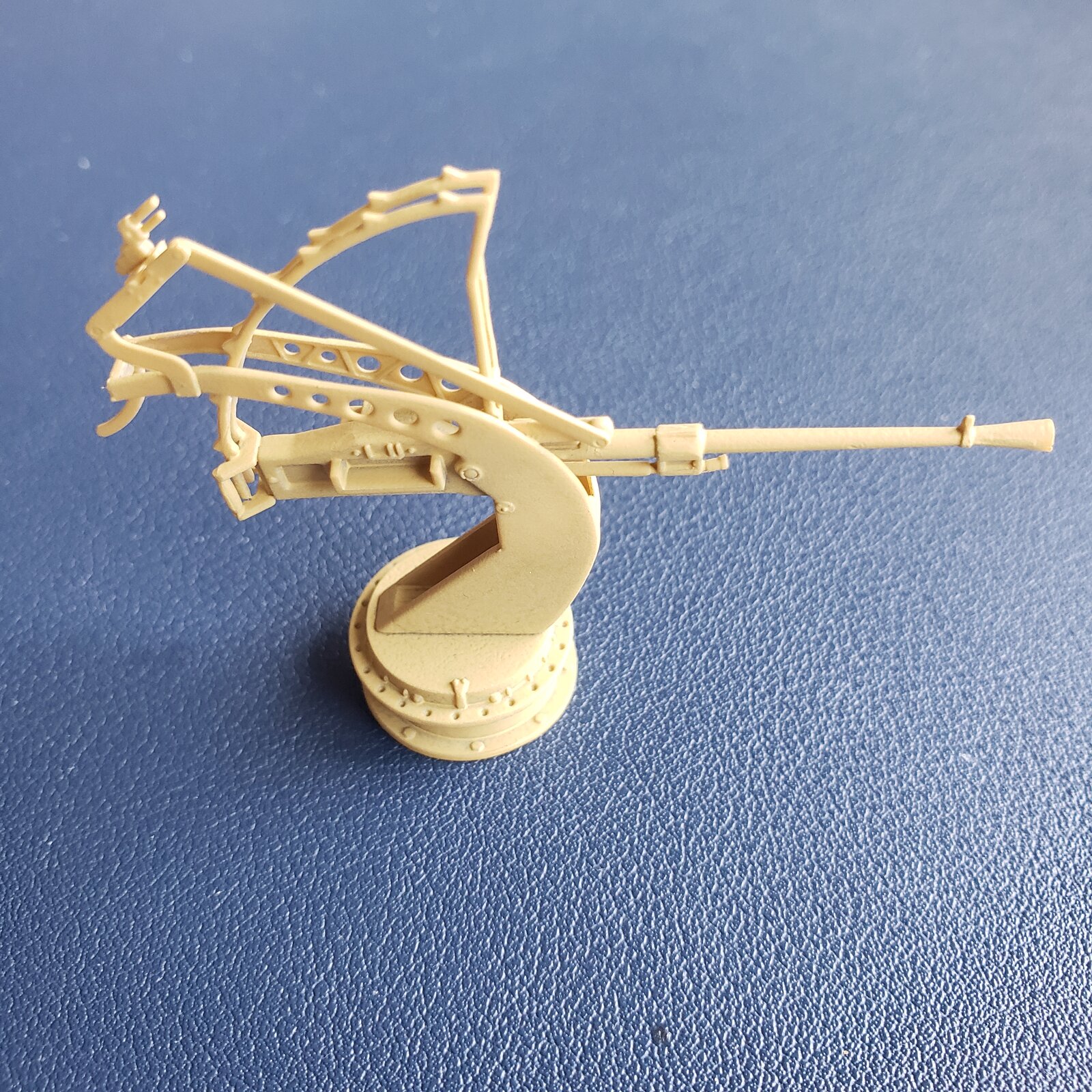
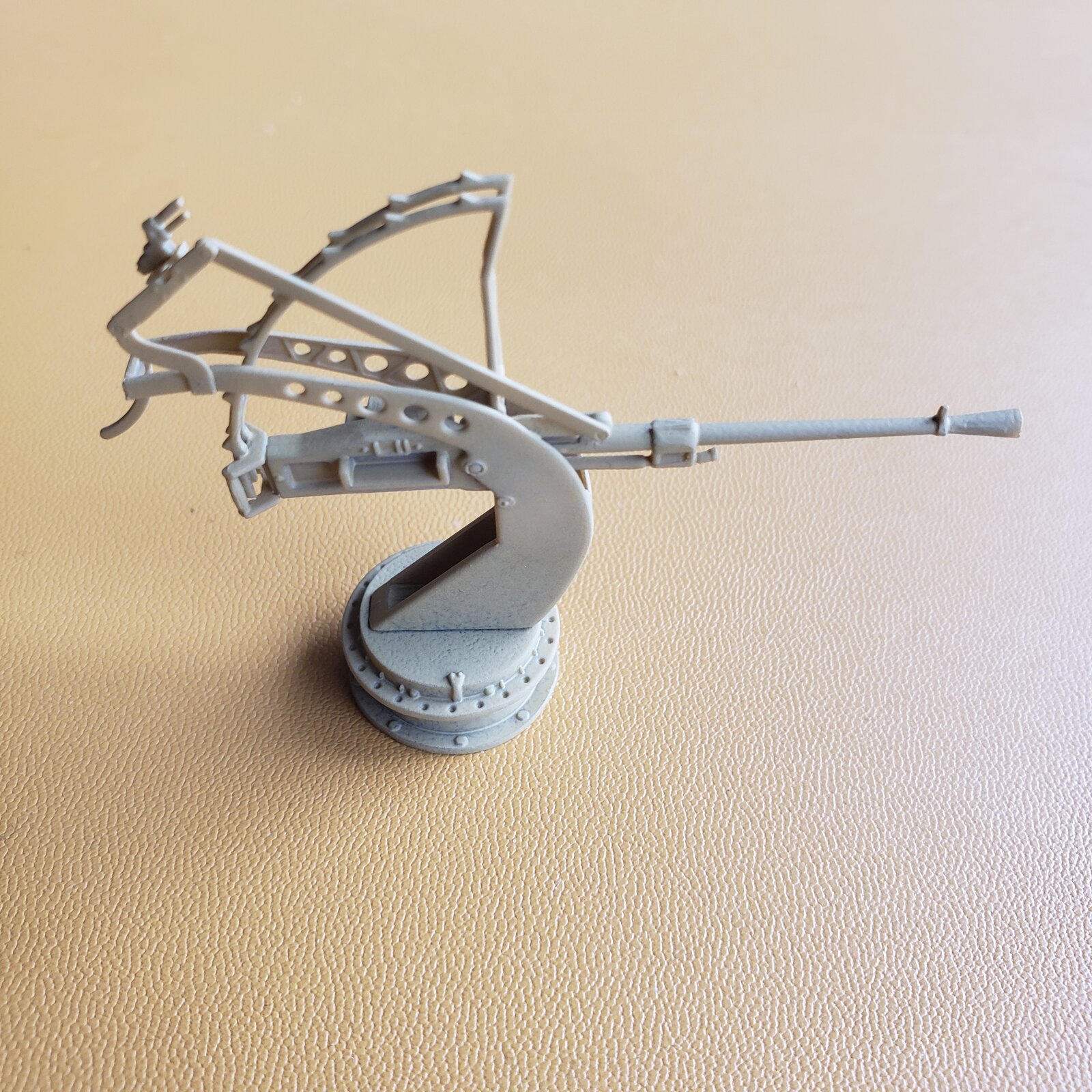
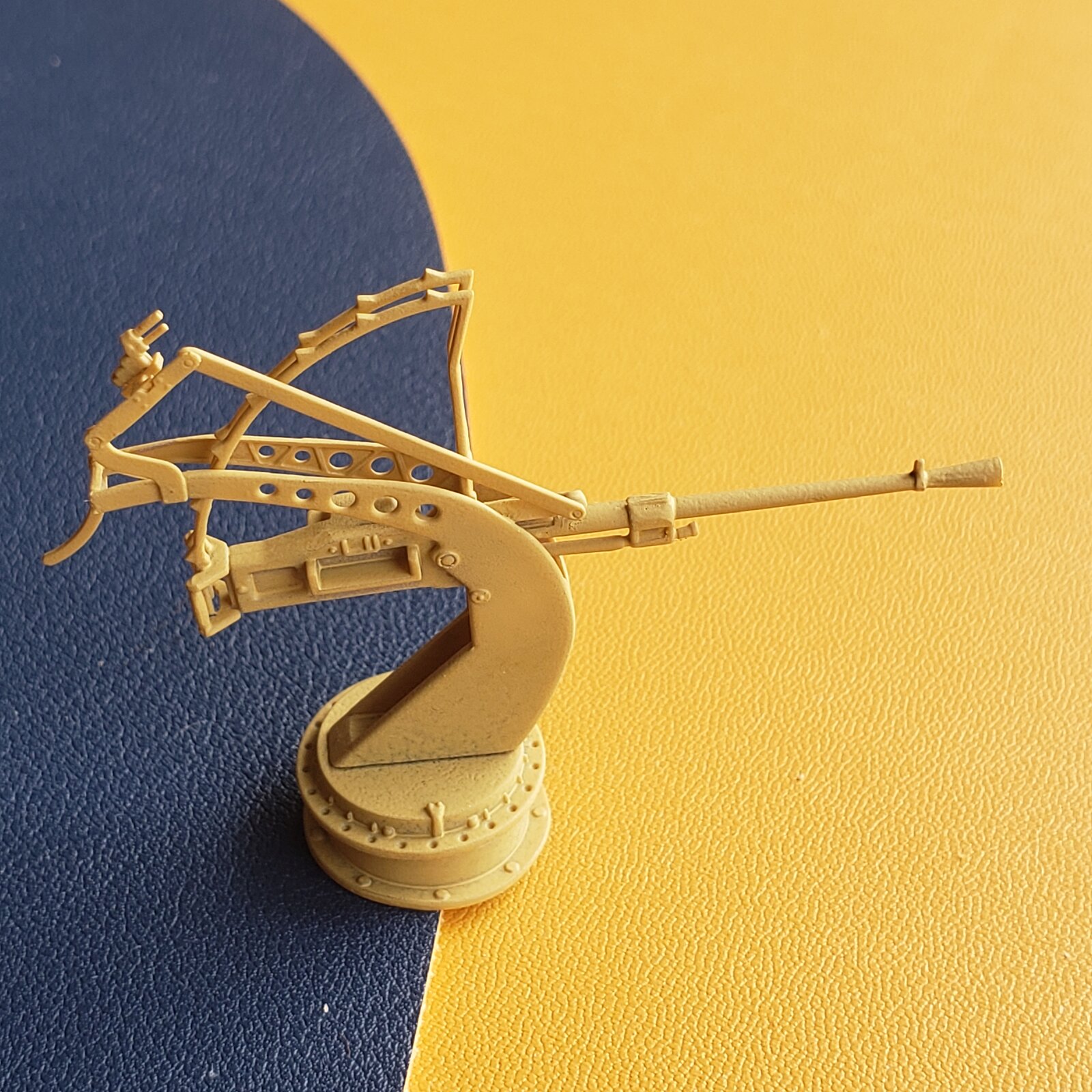
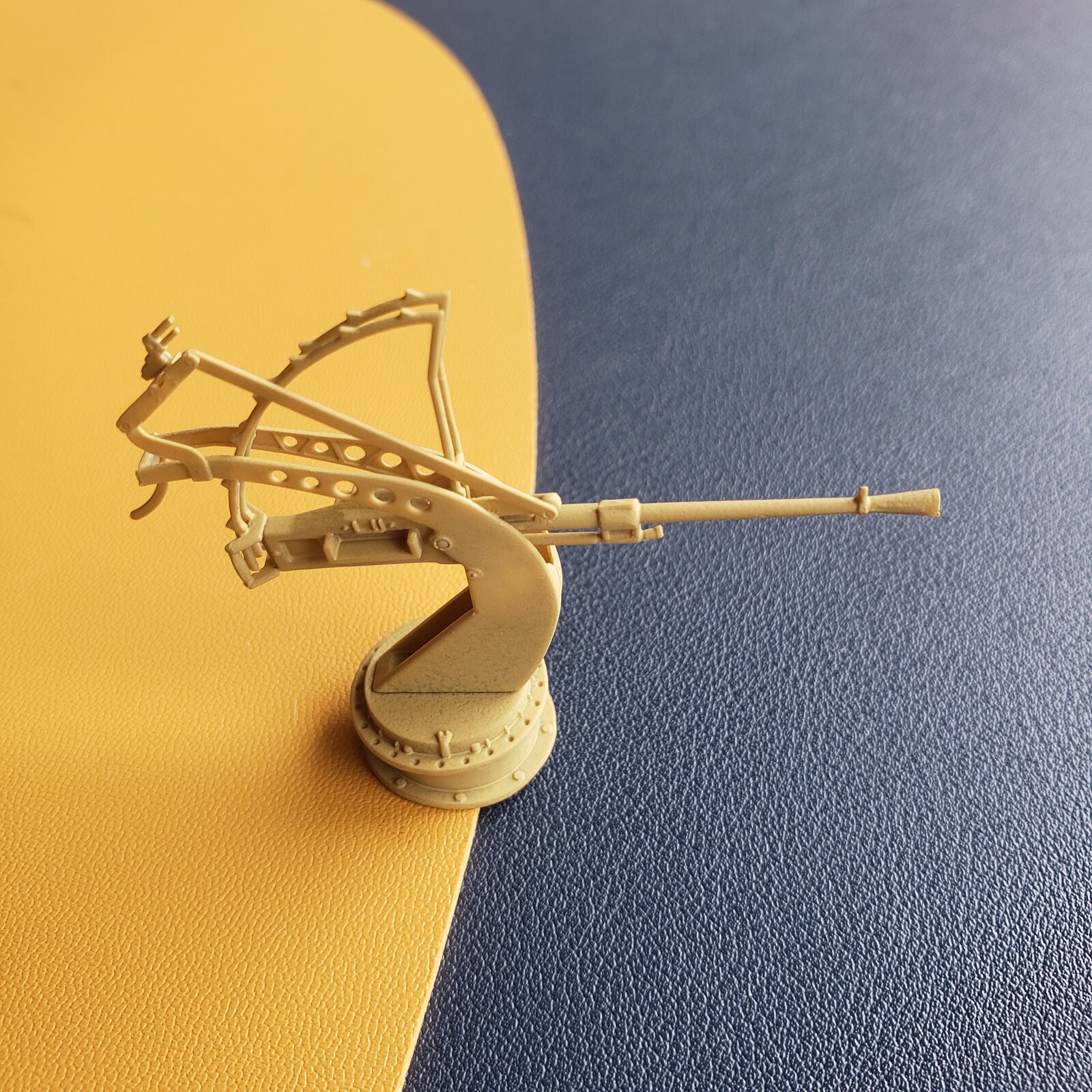
A rattle can 'all Italian' base coat, which I'll also apply to the other Italian 'original' parts.

Here is a good example of how a background can affect the perceived colour of the foreground figure. I also suspect @Jakko 's theory of the phone's camera software also interfering!

Taken within minutes of each other, same position, moderately overcast morning so no strong shadows, next to large west facing window.

See how the background washed out when solid blue or gold, then intense when both in the frame.

20250506_085637.jpg

17465369796196364442902001485358.jpg

17465372881962172535202956906123.jpg

17465374664632524268438911935349.jpg


The gun itself will be painted a different colour.
 
I also suspect @Jakko 's theory of the phone's camera software also interfering!
Not "also" — the whole reason the same photo with a different background has different colours on the model, is because of the camera app's processing. It tries to balance the colours in the image, in various complicated ways intended to make the subject look good, but that's typically tuned for people in human surroundings, not monochrome plastic parts against a contrasting background.

If you were to take the same photos at the same time with an old camera that uses rolls of film, have them developed, and then scan them, you should have photos in which the subject is the same colour regardless of the background used.
 
Haha, I started out wanting to show the effect of simultaneous contrast and of colour fields on a foreground image... and as you stated, phone camera totally stole the show!

Many of us struggle with picts that don't reflect what we have on the bench, so I thought I'd talk about that a bit.
It is quite likely that many camo schemes have been reworked precisely because of these optical effects, intended or not.

In a more controlled setting, simultaneous contrast shifts the perception of relative brightness depending on the background.

wocYuuRoEcGCpAkjQJEGLo-1200-80.jpg

The vertical rectangles on the left and right and the horizontal one in the middle are identical.

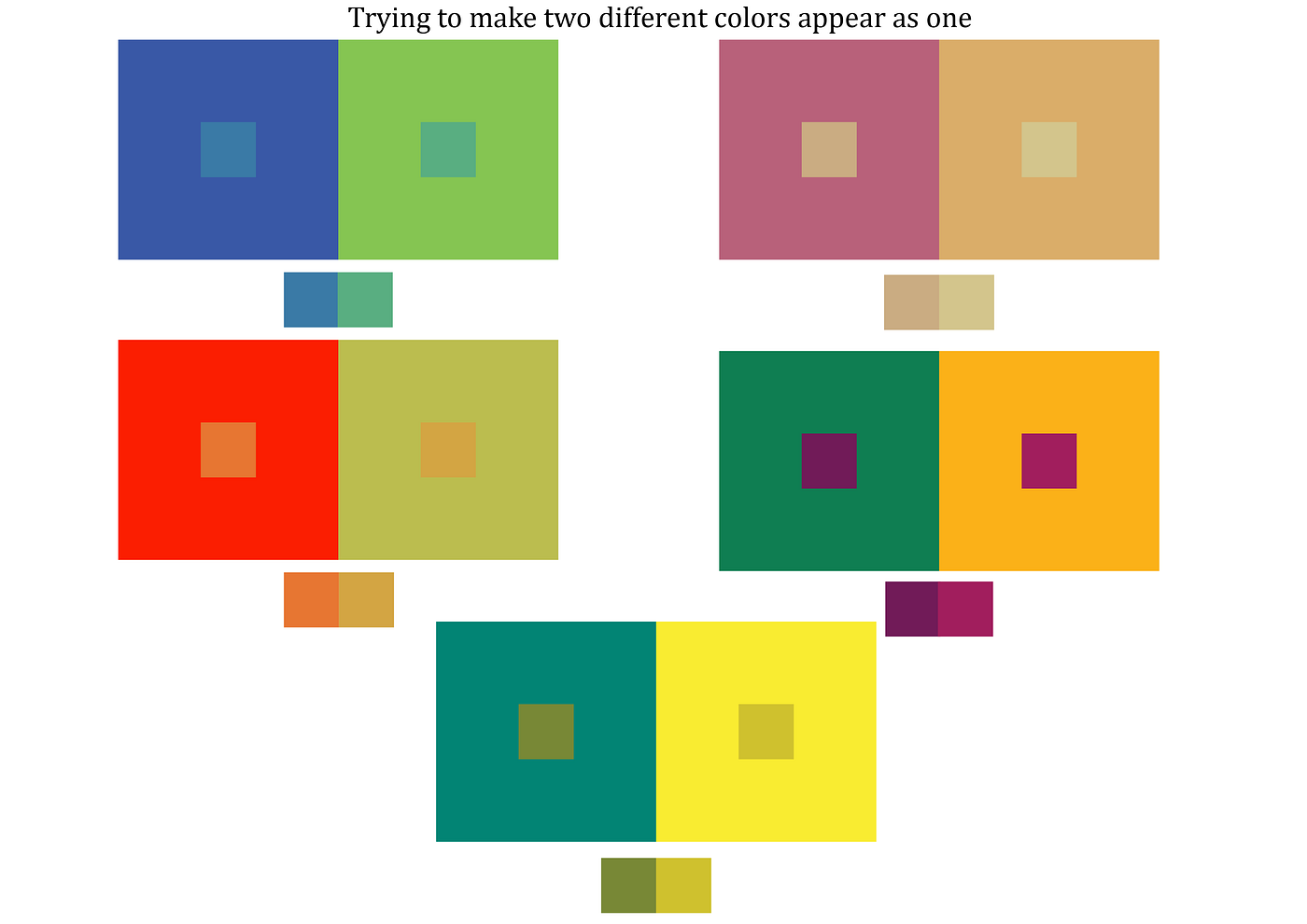
And also how the colour of a background can affect your perception of hue...

Below each pair that appear to have the same colour in the middle are the actual colours used... this is a very real consideration of visual artists when mixing colours on their palettes.

1_9mUlVU7p_e1uyL6nSqwmBQ.png


These examples were pulled from a quick Google search. More information can be found on their respective websites.
 
Enough of that, leap of faith time!

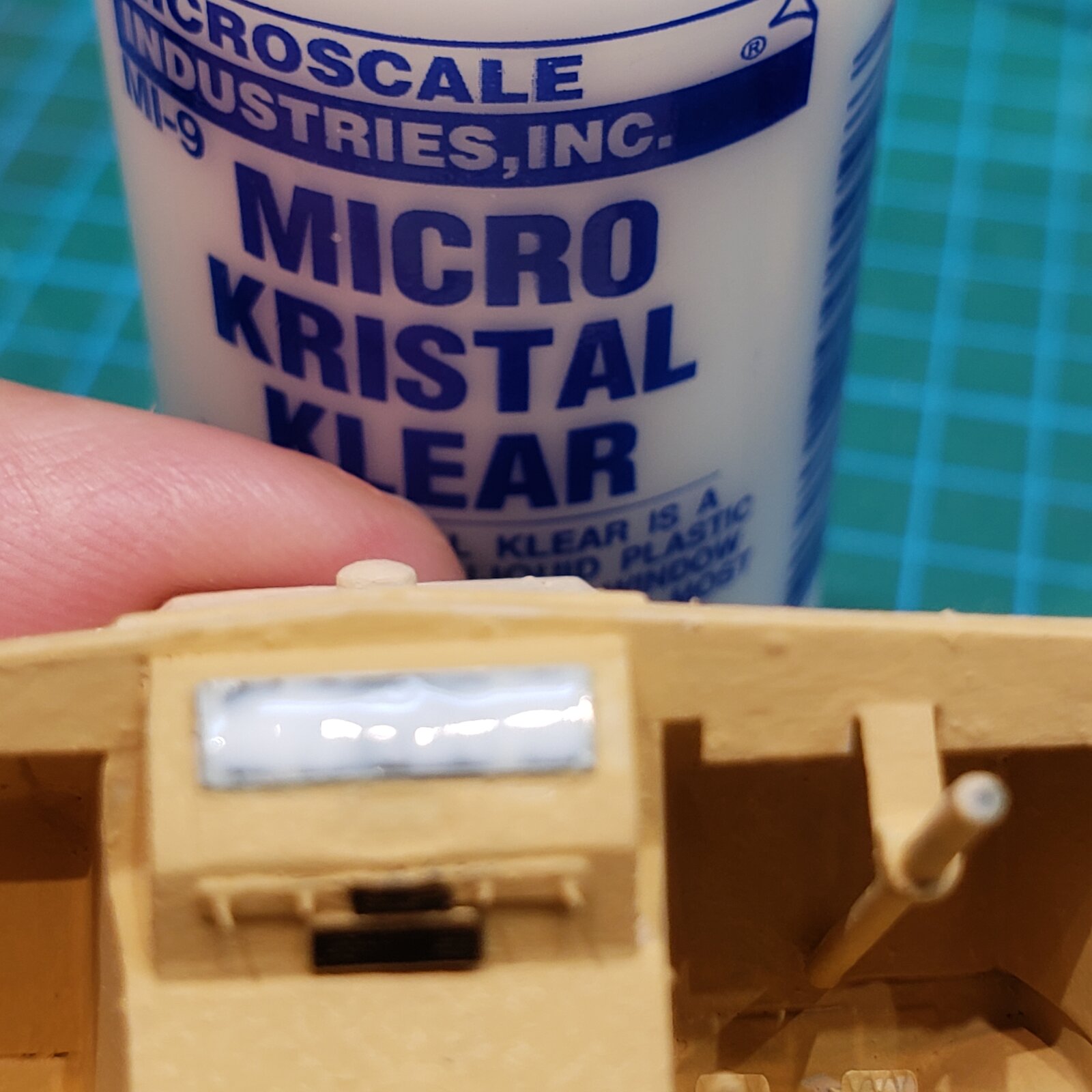
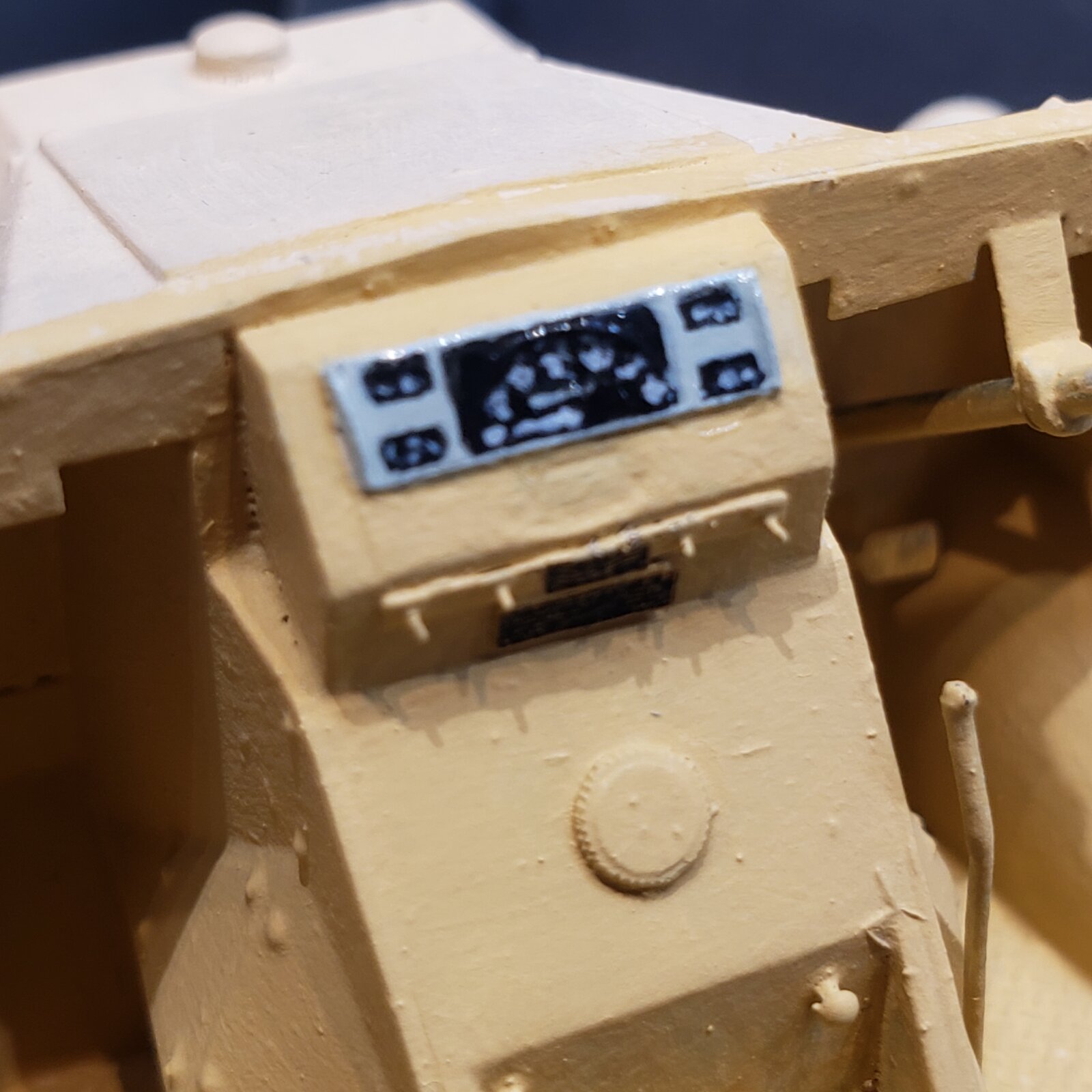
I've been encouraged by others' use of Kristal Klear, so I decided to use it as the 'glass' over the dashboard. After a test, just went for it.

20250506_130916.jpg

17465556753547924009308442150459.jpg
 
Hi Barley.
Cracking on with this little rascal beginning to look very smart. Kudos mate for persevering with those attachment points...like trying to prise Goldleaf off a treetrunk. Earlier when you were fitting the axles you commented on having to fix them in place with wire although it looked quite fiddly, once you drilled out the fixing points I thought it looked like quite a sturdy attachment. All looking very fine sir.
 

Latest posts

Back
Top