

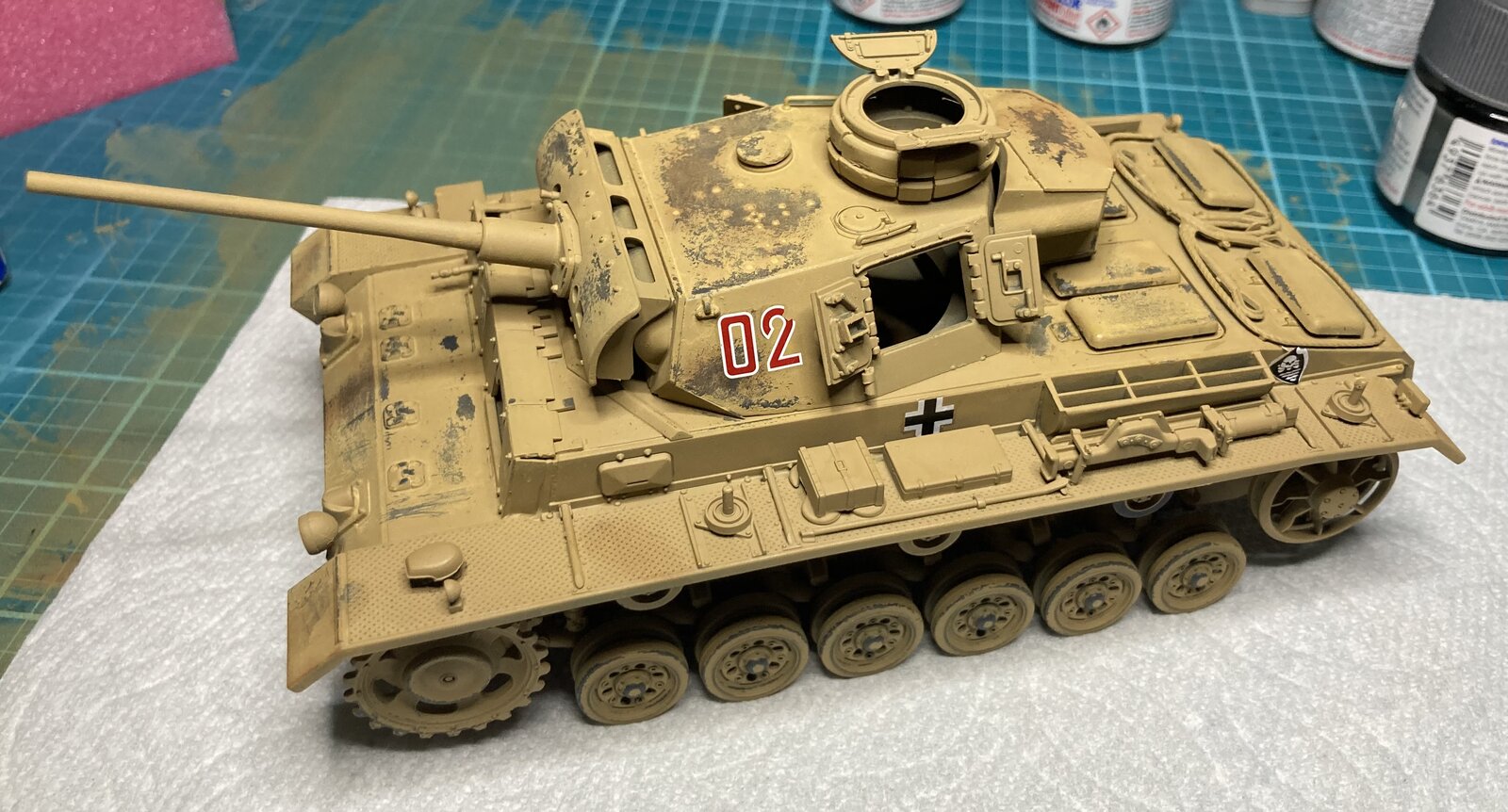
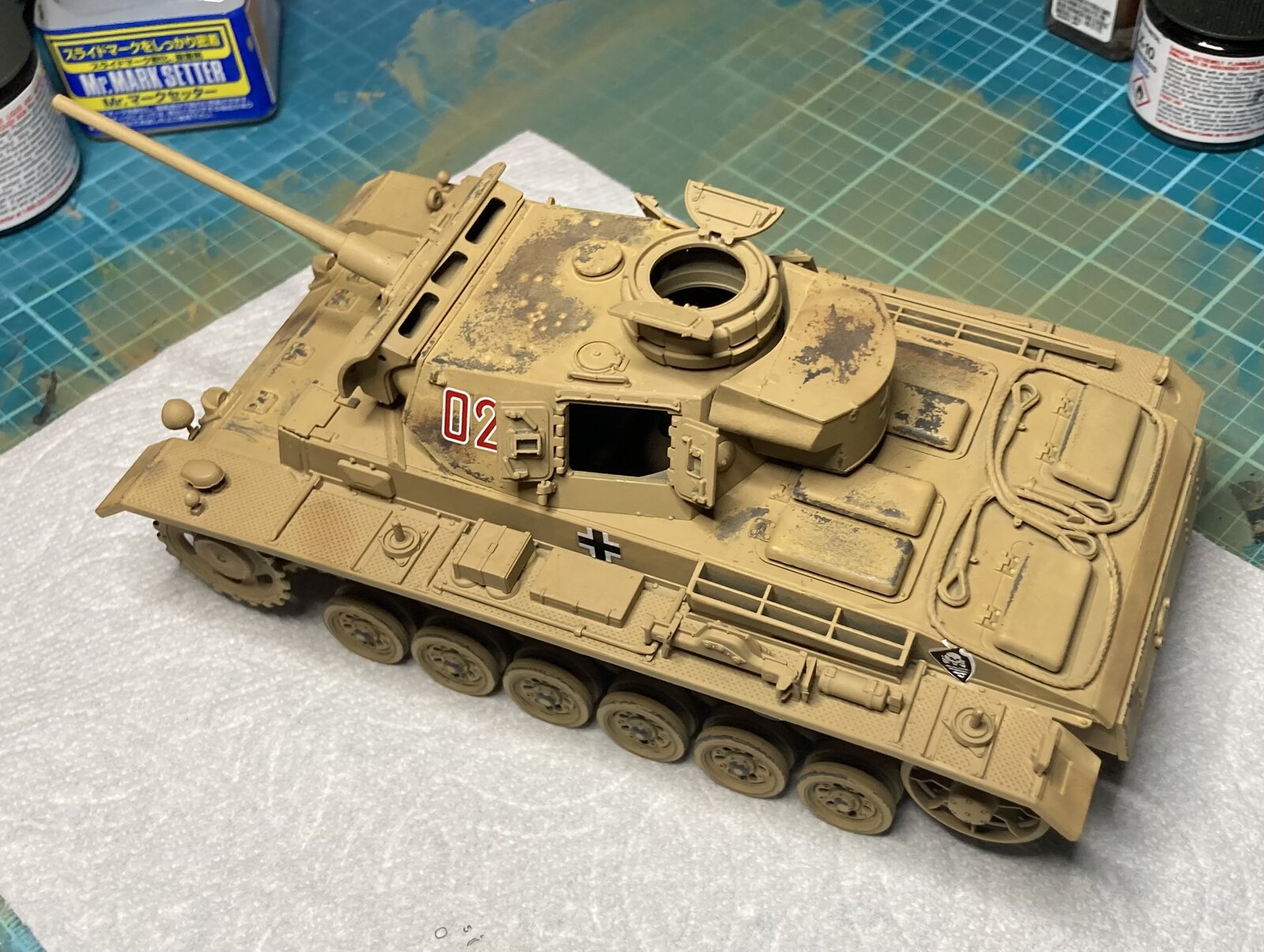
Next on the bench for the DAK Desert Oasis Diorama.

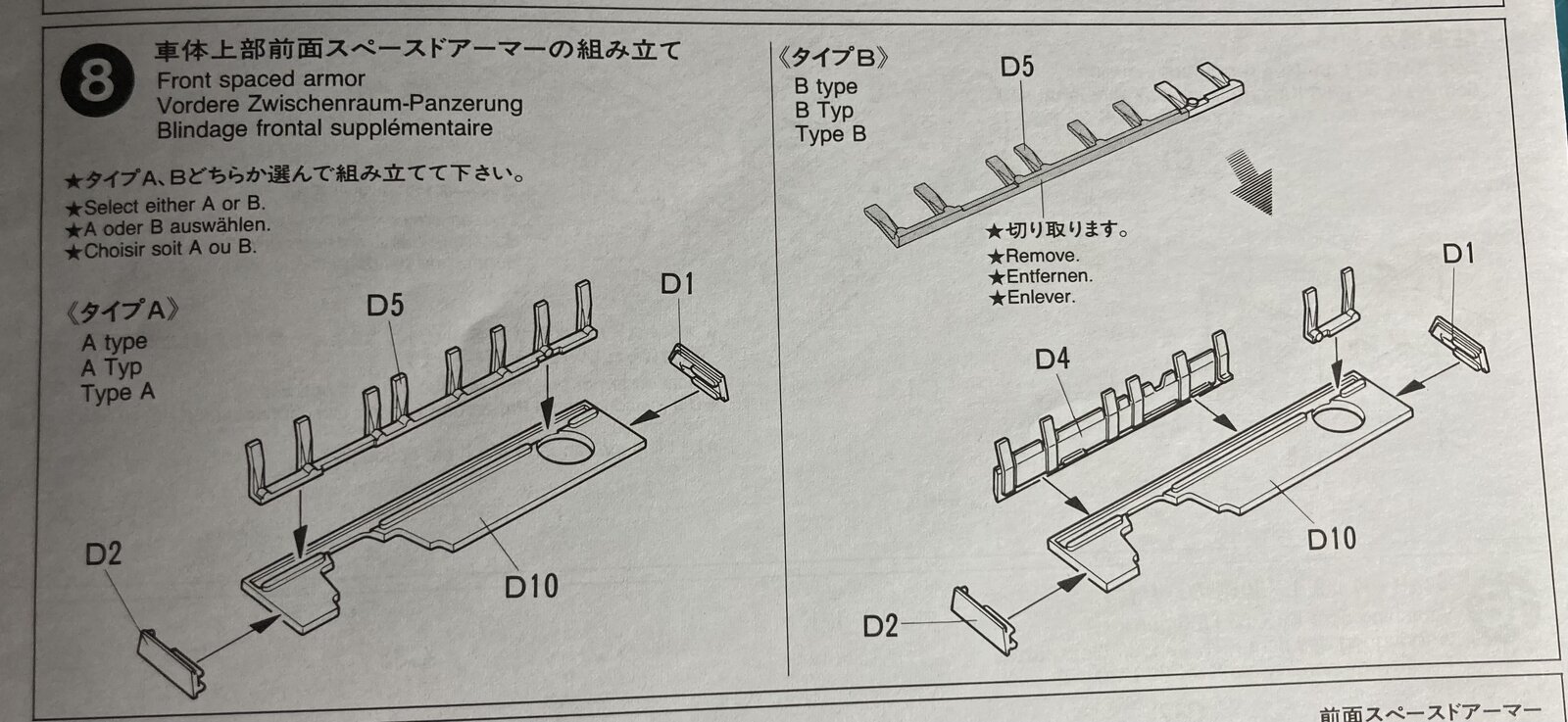
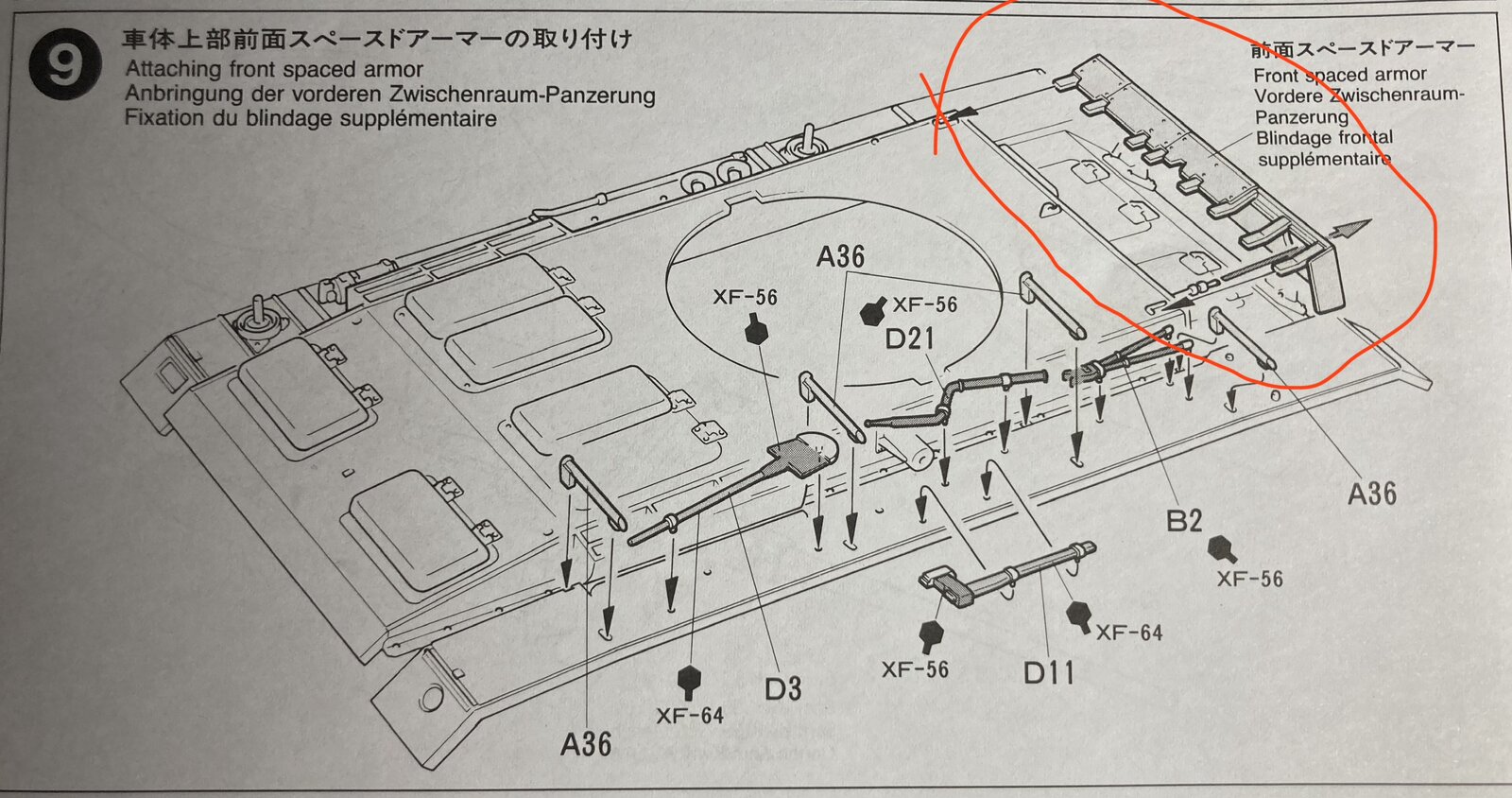

 ) B has some plates over the struts that hold the additional armour away from the main, A doesn't — unless you're building a specific vehicle from a photo and know which it had, I'd say just pick the one you like best.
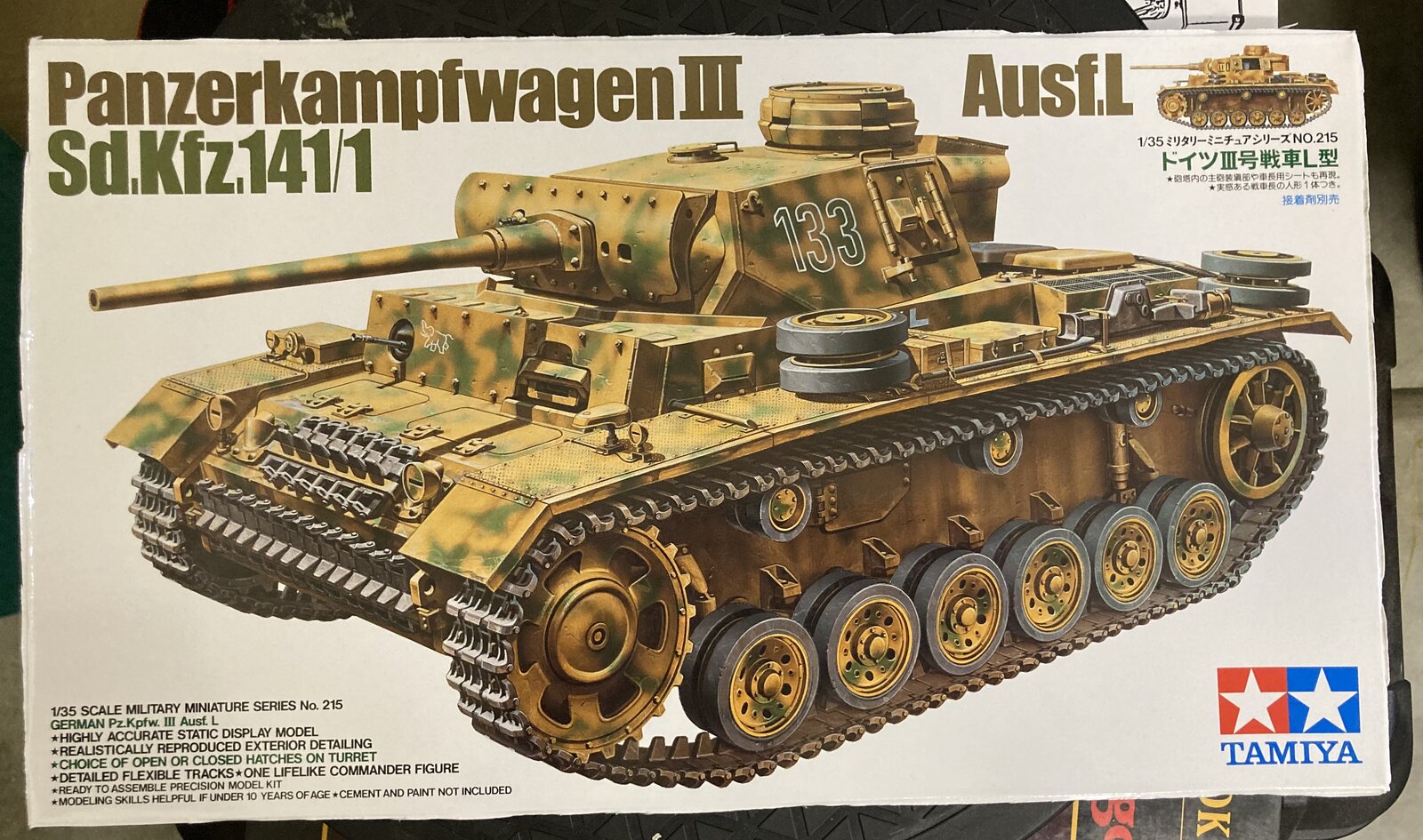
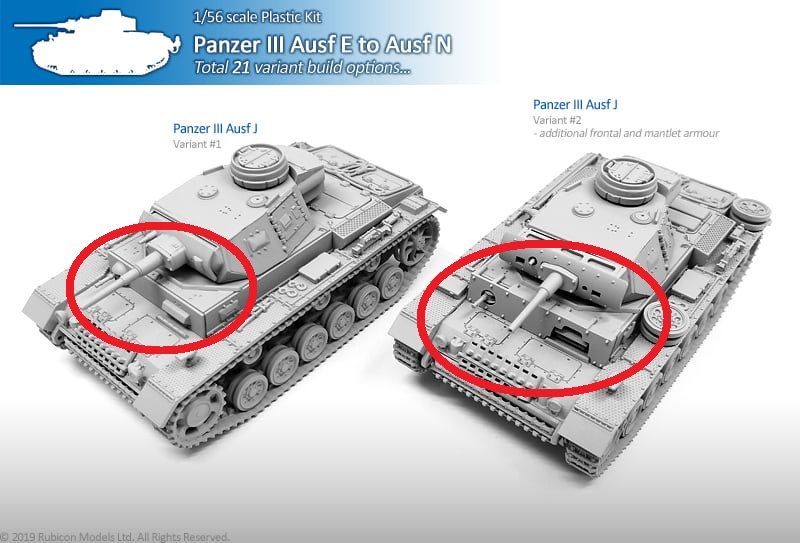 ), which is the one before the L that your kit represents (there was a K as well, but it was apparently only made as a command tank, Panzerbefehlswagen). The Ausf. J left the factory without this armour, but could have it retrofitted. The illustration shows an early J, BTW, with 5 cm L/42 gun and vision flaps in the turret sides, while later Js got an L/60 gun (whose barrel was 90 cm longer than the L/42: 60 − 42 = 18; 18 × 5 cm = 90 cm) and had the vision flaps deleted. The L also had those features.
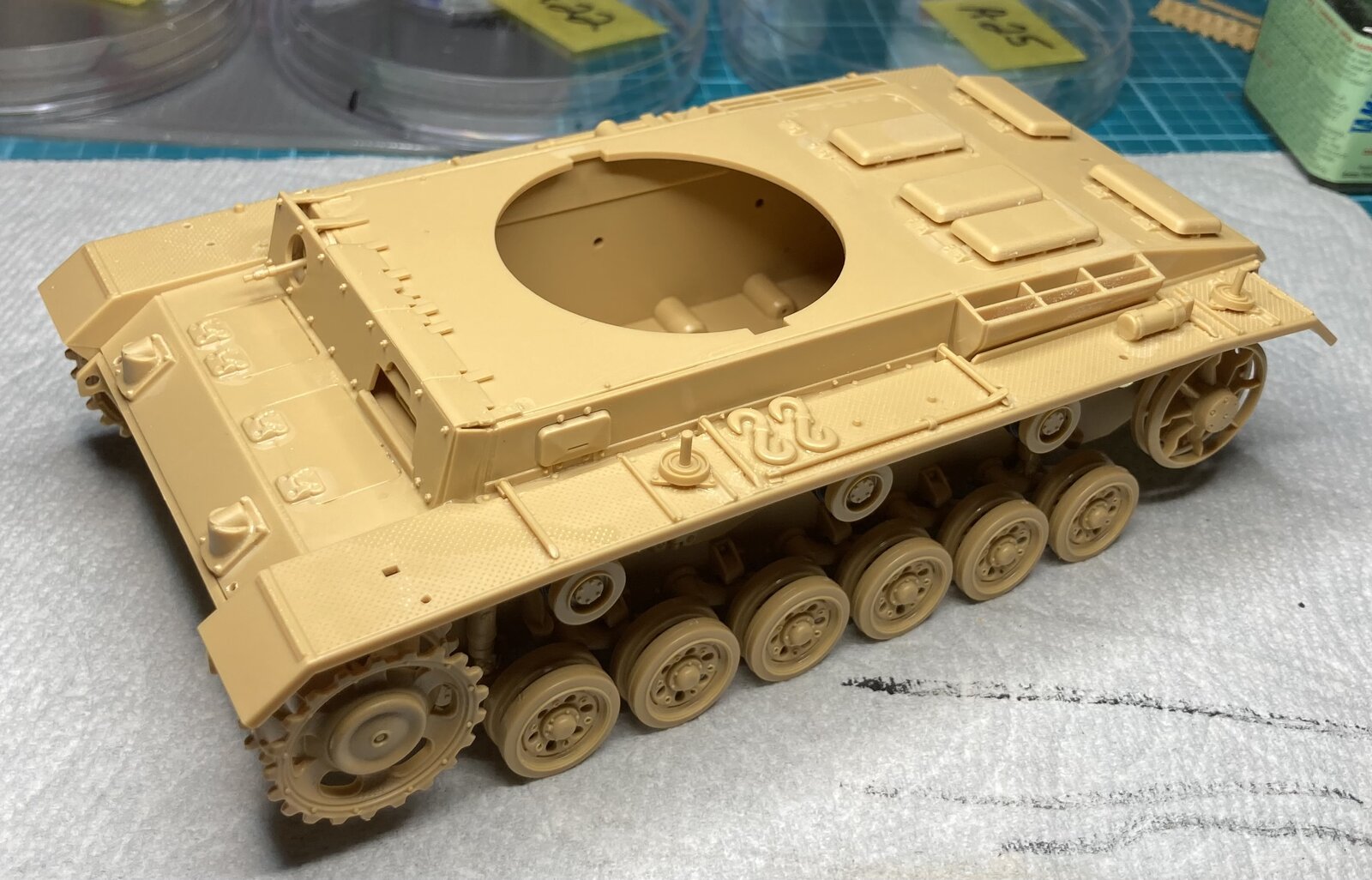
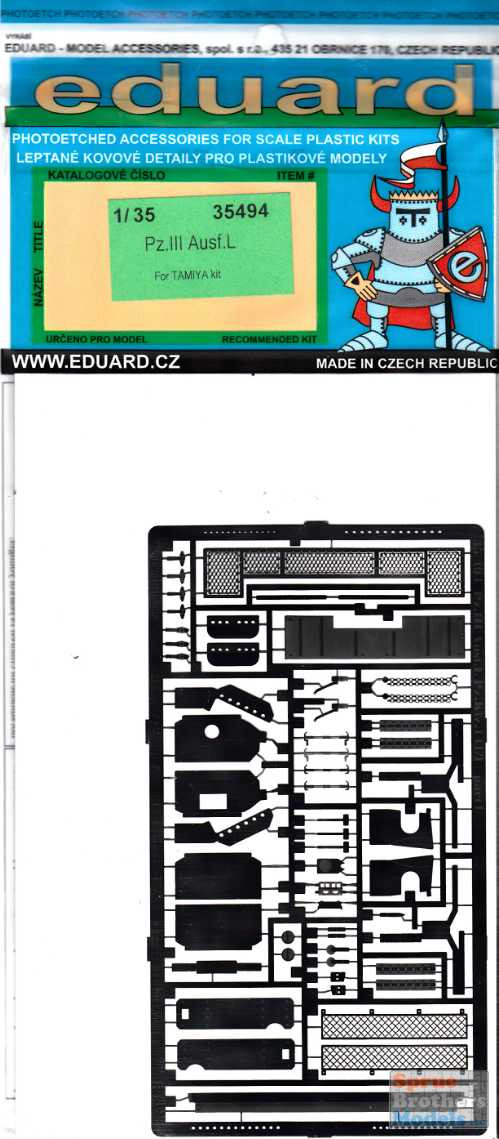
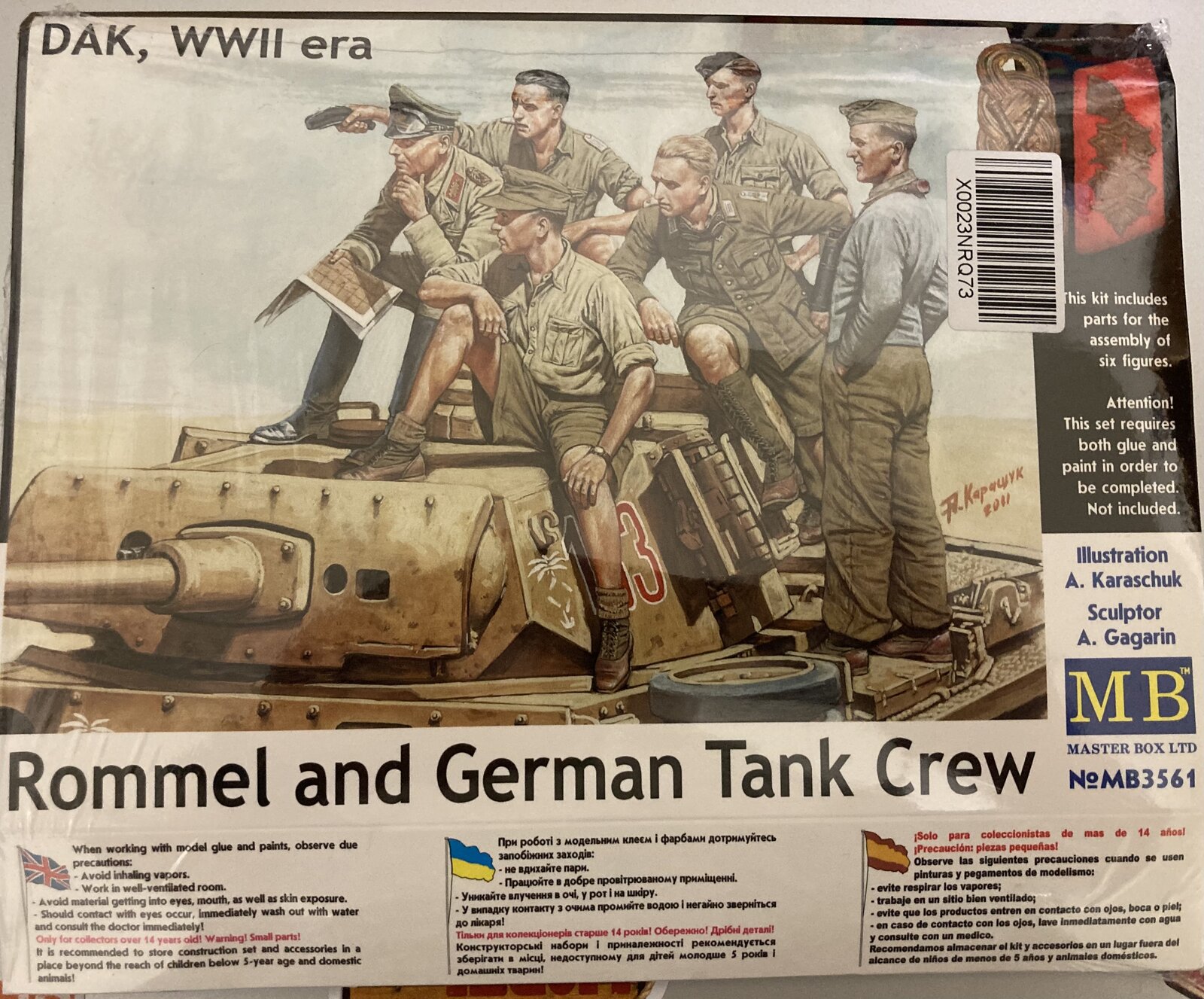
I've not built this tank -looks like it's coming together well!
 Depending on the exact time, they were supposed to be yellow-brown with grey-green patches over one-third of the vehicle, or later, a darker, greenish tan with grey patches. Once the war in North Africa got going for the Gerrmans, vehicles destined for Africa began coming from the factory in those colours (and some of those then ended up in Russia instead).
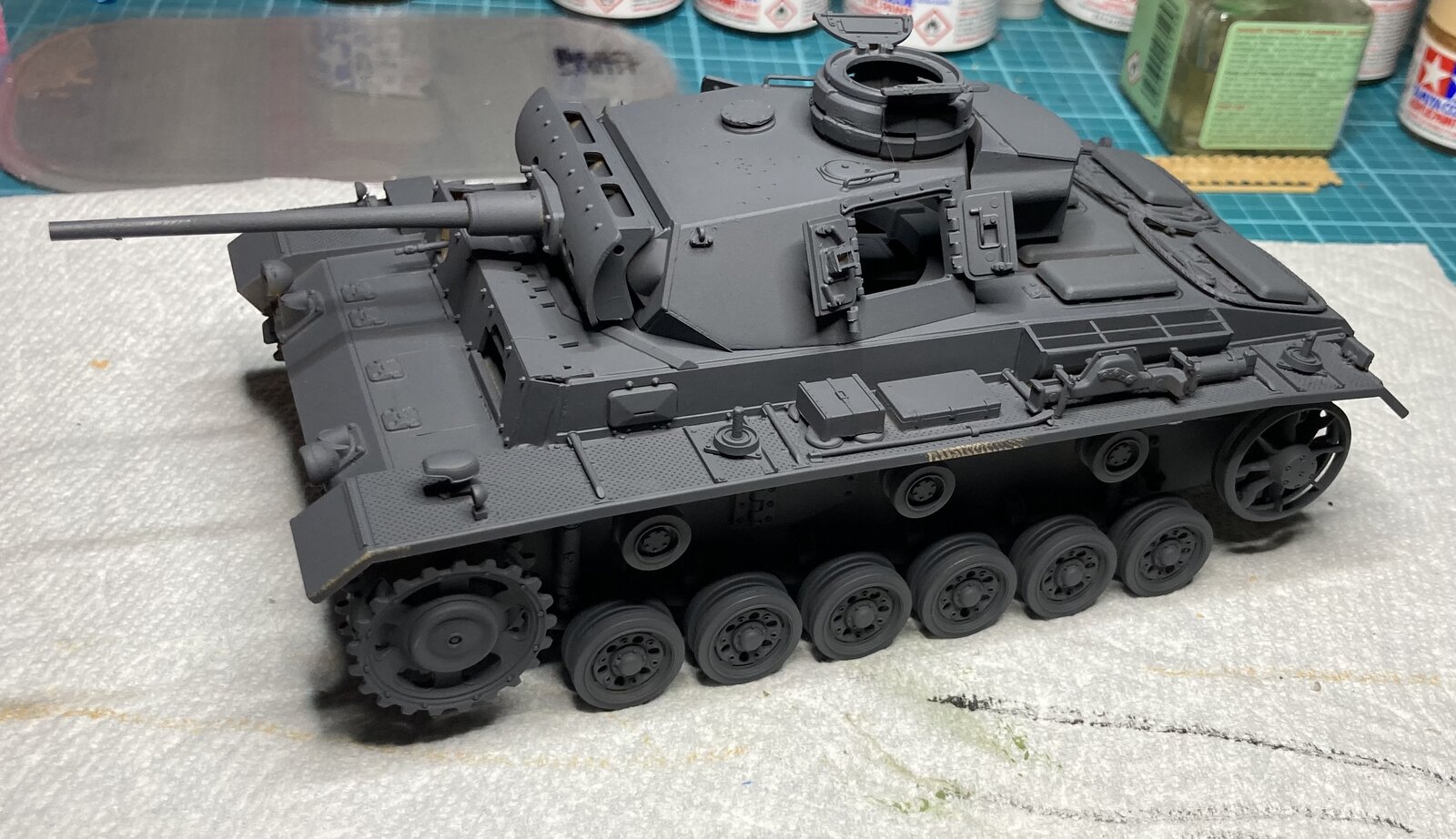
Looks good!I have the German grey base coat done. Next is a flat clear coat, then a couple light coats of hairspray, then the desert yellow.
View attachment 179247

... smart man. At first, I made the newb mistake of thinking I had to use everything... until I realized that an AM etch part wasn't always the best choice for the model.Not sure
Yes, especially evident if you look for photos of vehicles being unloaded, or still on the docks.European dark grey

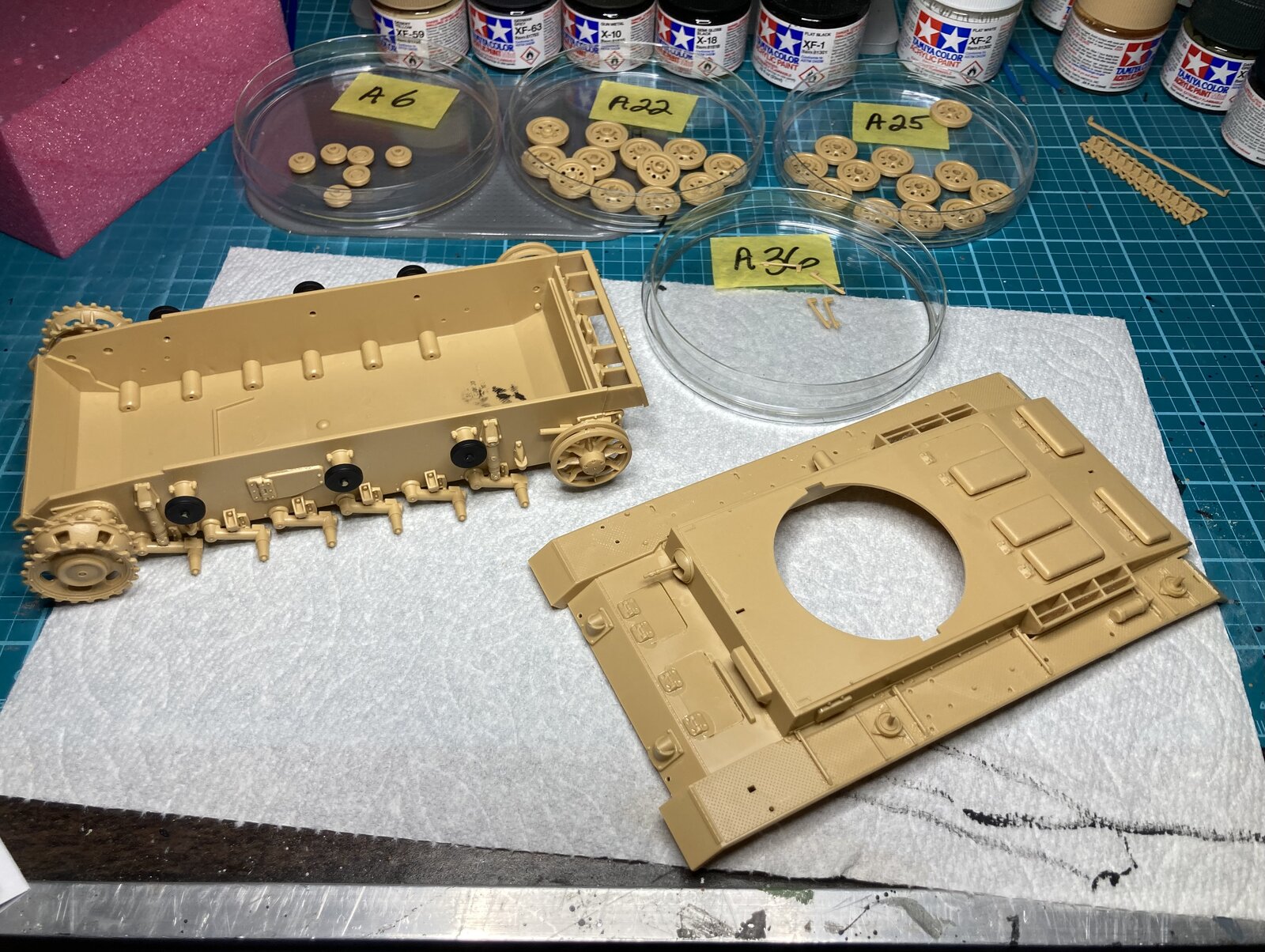
I have it so I can separate the sections. Lower hull, upper hull, and turret. It will be easier to paint details.Looks great! I'm curious about the order of parts painting on armor. I've tended to airbrush running gear (road wheels, sprockets, idlers, etc.) separately before assembly. But I also see a lot of folks complete total assembly then paint. I'm not confident I could paint rubber wheel portions after they're on the tank. I guess there's the practice of un-glued partial assembly too, but that seems fiddly and unpredictable to me... I can just see bits falling off (or blowing off) while I try to paint, making a mess!
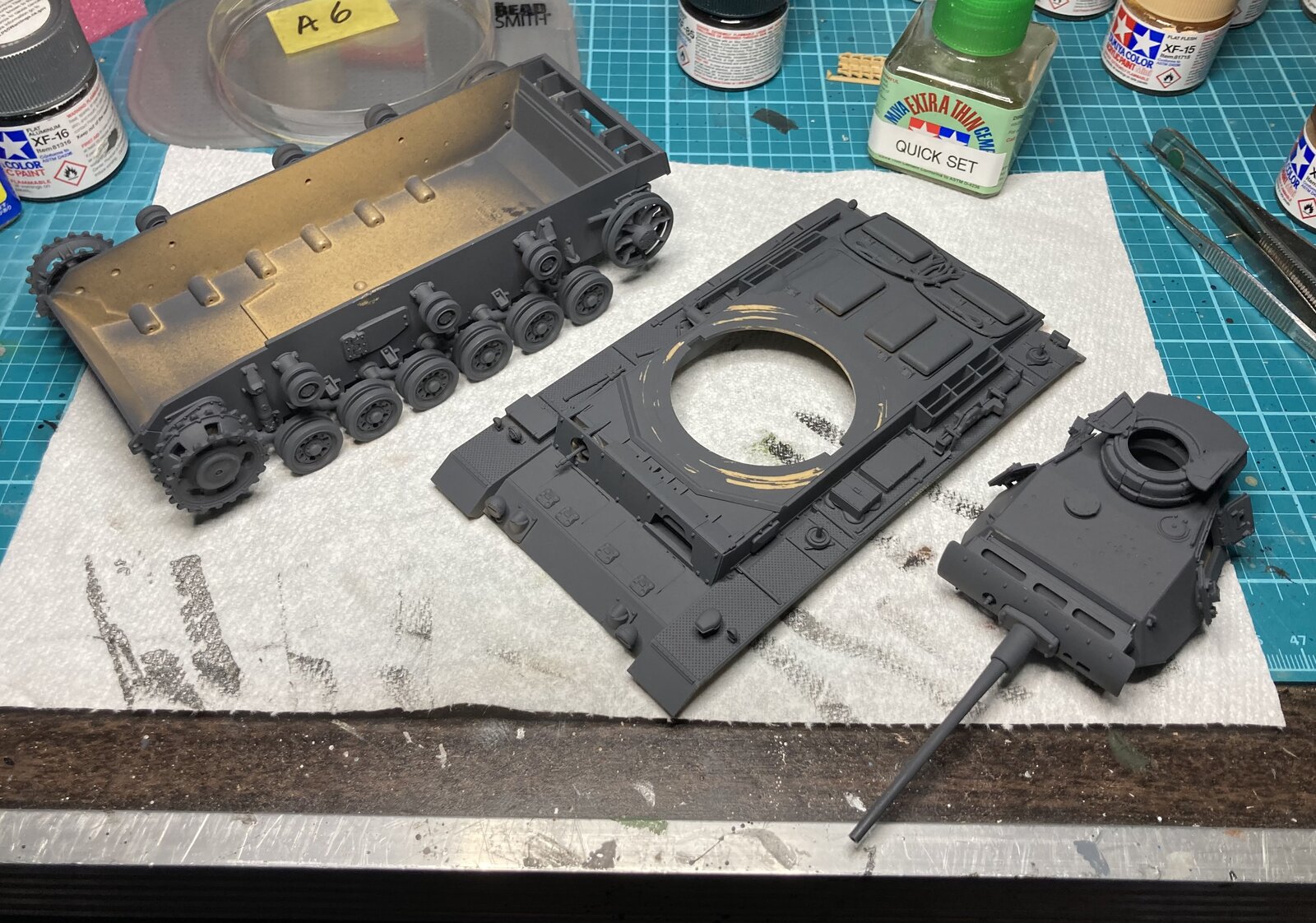
The short answer: Whichever order you find works best for you.I'm curious about the order of parts painting on armor.
I normally build the whole hull (including joining top and bottom) and turret, but minus the running gear and any parts that get in the way of fitting those, like side skirts. I frequently also leave the wheels attached to the sprue for easier spraying — even building double roadwheels on the sprue, by keeping one half on the sprue and glueing the other half to it.I've tended to airbrush running gear (road wheels, sprockets, idlers, etc.) separately before assembly. But I also see a lot of folks complete total assembly then paint.
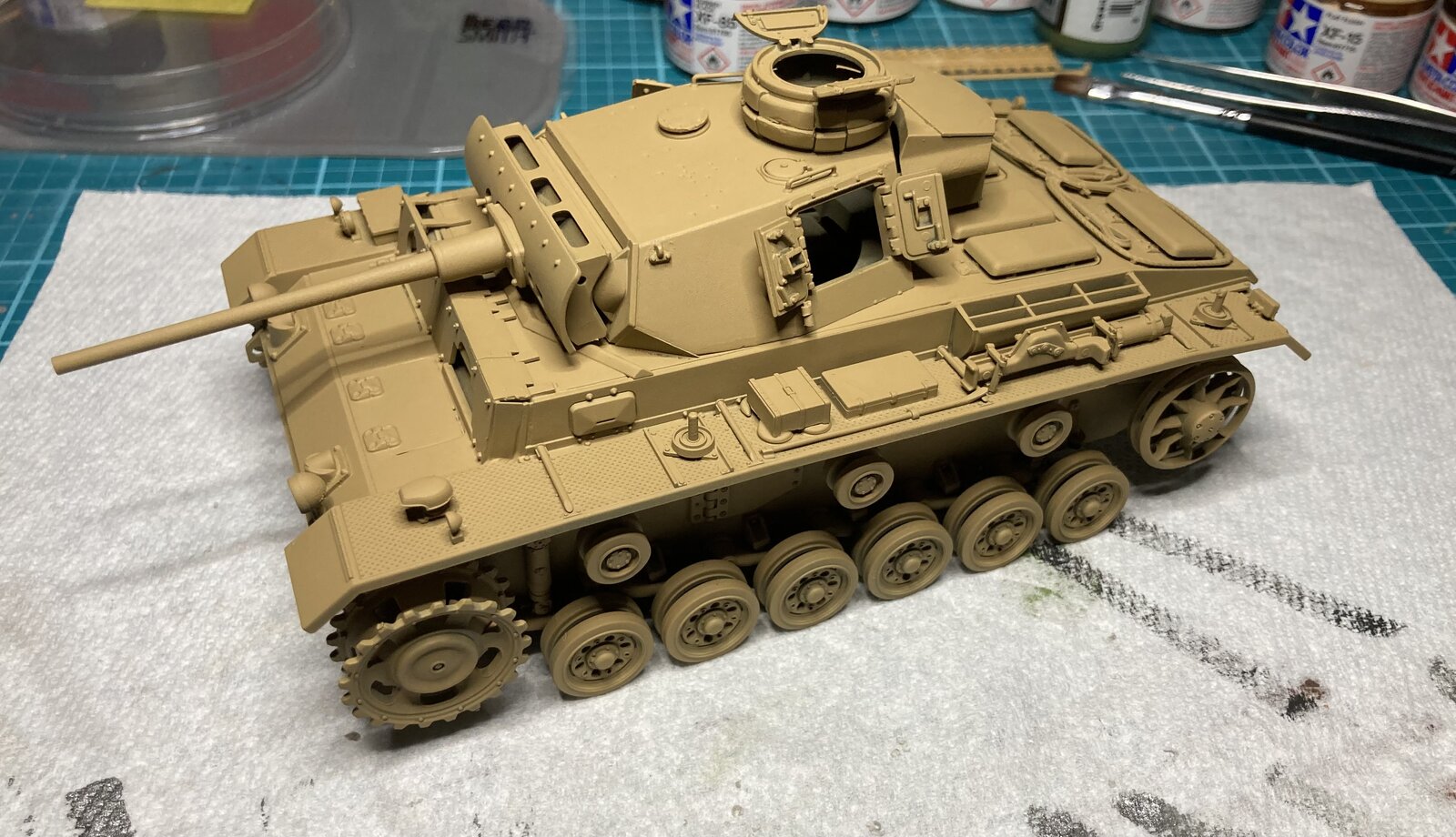

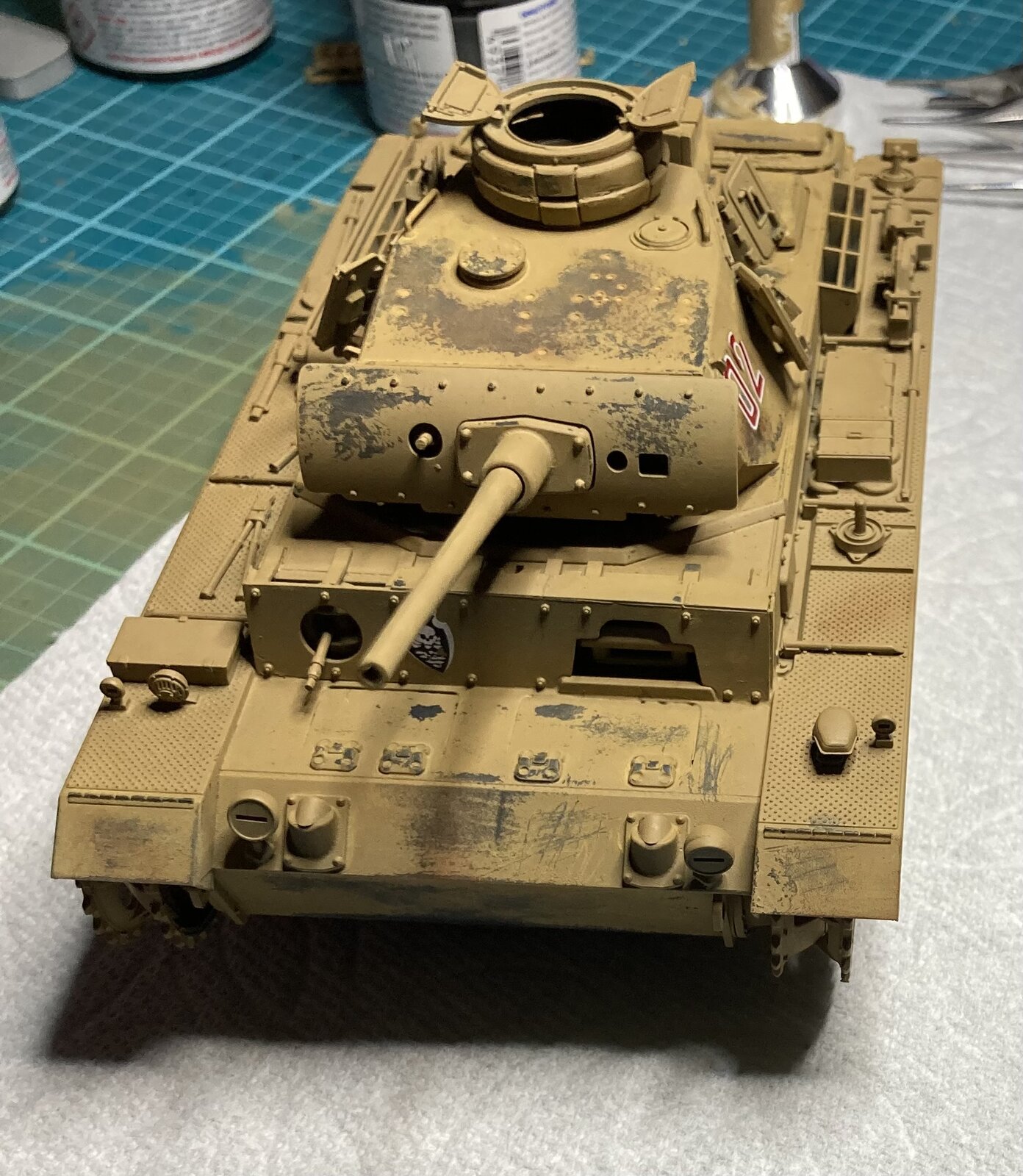

I just saw this. Sand is not accurate?I don't know how much you aim at historical accuracy, but despite popular belief, German vehicles in Africa were generally not sand yellow
In practice, though, schemes and patterns varied. Many vehicles were repainted from the European dark grey with whatever was available, including captured enemy paint and also (especially early on) simply with mud. So desert yellow is not impossible
That's similar to how I do it. Except I don't leave the wheels on the sprues. Well I paint the job on the sprue and then remove.The short answer: Whichever order you find works best for you.
I normally build the whole hull (including joining top and bottom) and turret, but minus the running gear and any parts that get in the way of fitting those, like side skirts. I frequently also leave the wheels attached to the sprue for easier spraying — even building double roadwheels on the sprue, by keeping one half on the sprue and glueing the other half to it.
Only once the model is mostly painted do I put all of this together. The K2 Black Panther I'm building at the moment is a good example: if you click that link, it takes you to a post with a photo of a green-painted K2 without its wheels or side skirts. The point I'm at at the moment is that I finished painting other than some details, so I fit the wheels and tracks. The side skirts will be glued on next, but I'll probably add a little weathering to the lower hull before I do that (because else the skirts will be in the way for that).
I'm not a stickler for accuracy, but the question was asked, and here is a bit more info.Sand
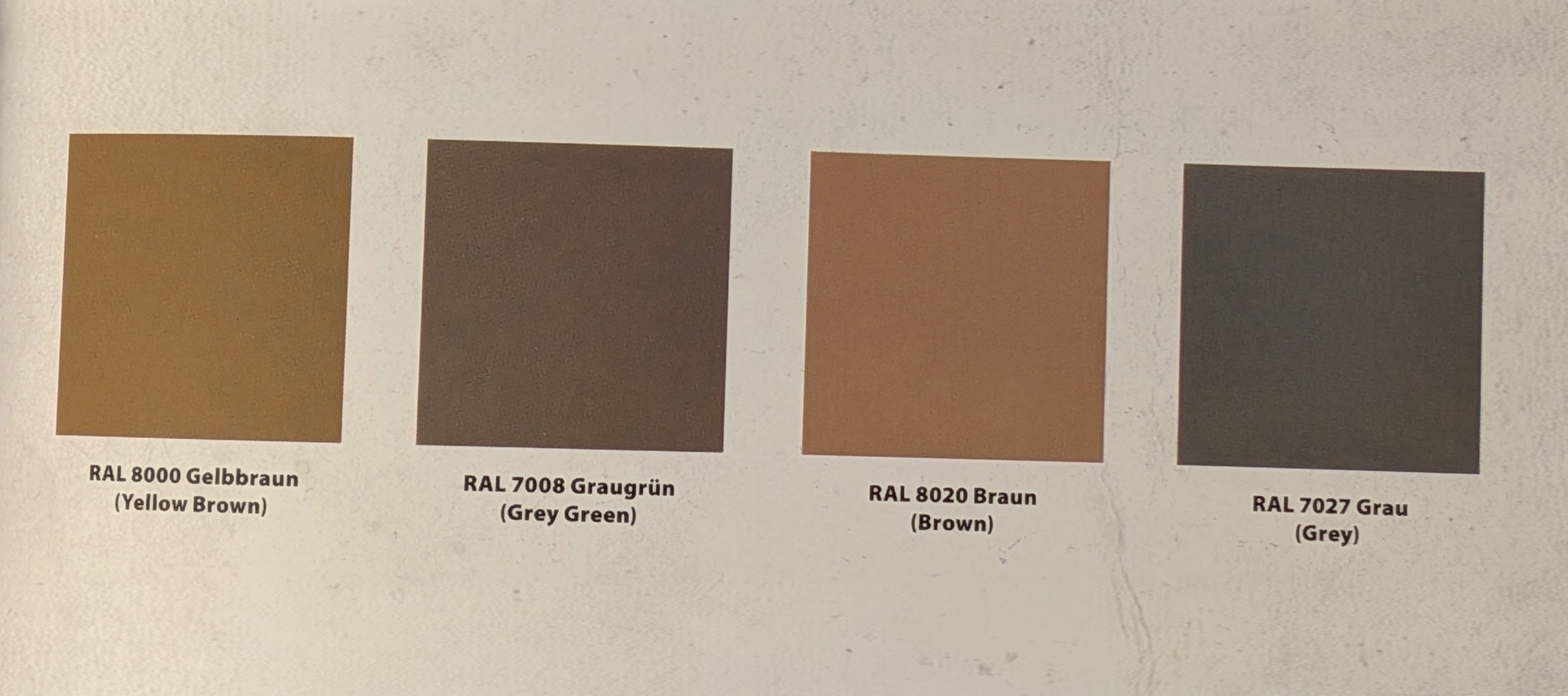
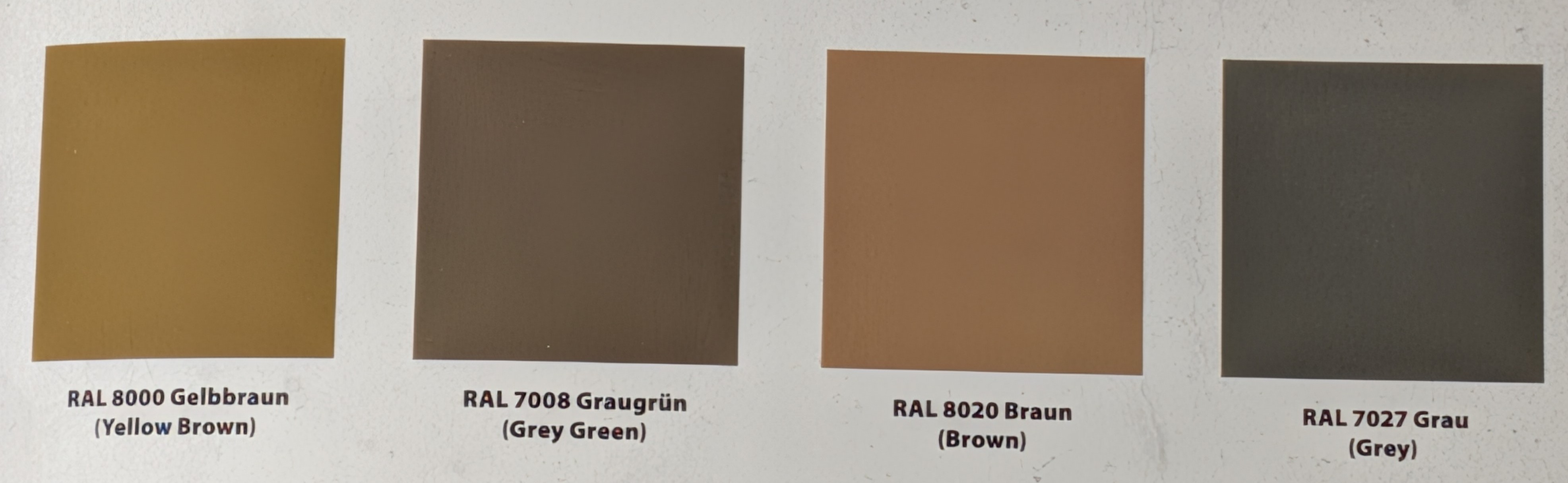
It very much dependsI just saw this. Sand is not accurate?
German vehicles arrived in dark grey and were soon camouflaged with whatever was available — which could be paint, but also mud made from local soil. A good deal of of equipment in North Africa (on both sides) was also painted with things like captured enemy paint, or other paint that happened to be available, such as the Italian ones that @BarleyBop mentions.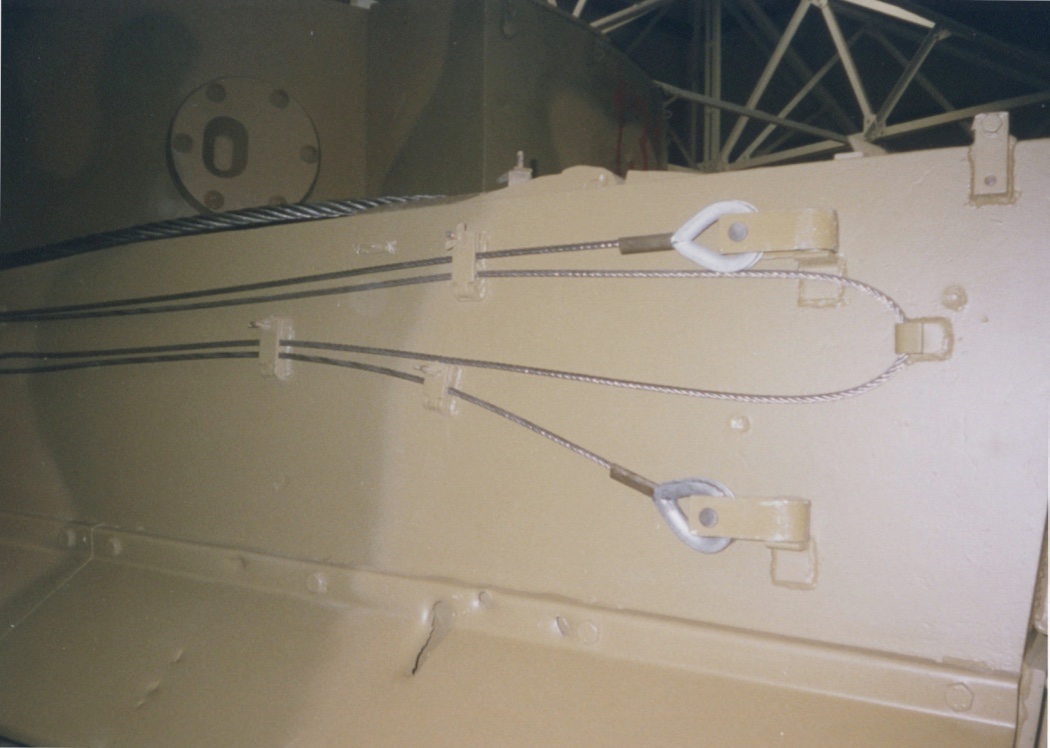

Sorry, but those cables are NOT gonna pull a 60T (not metric...LOL) tank outta the mudIt's not a great photo......on Bovington's Tiger in 2002:


