Stripper advice

Scale Model Addict - Model Tips, Guides, Tools & Tech, Tutorials, and Community

Help Support Scale Model Addict:

Edbert

Well-Known Member
Joined
May 16, 2024
Messages
3,121
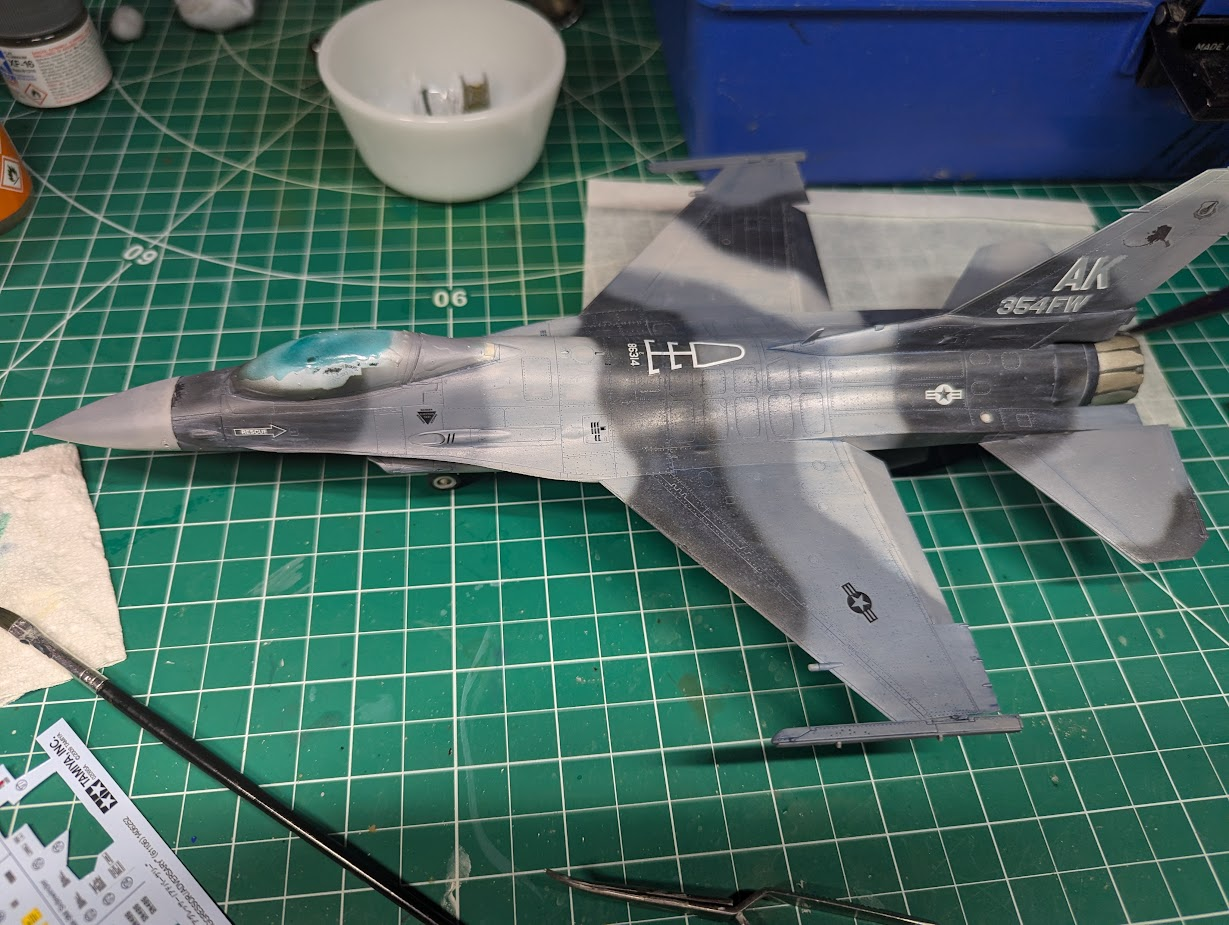
I'm finally feeling the urge to fix the paint job on the F-16 I nearly ruined last summer.

I seem to recall that Easy-Off oven cleaner was safe to use on plastic models to strip the paint. Not sure if that is right, but even if it is true it might not be the best option.

Would a cloth soaked in alcohol be a better or safer proposition? The paints are mixed, Tamiya XF base, AK clearcoat, oil and enamel wash on top. Plus there are some decals. Not that I want to save the decals (impossible I'd think) but I bought a decal sheet to use once I fix my mistake.
 
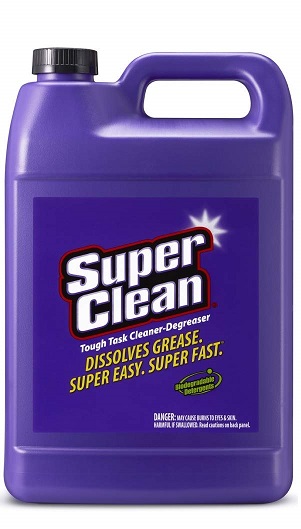
Soak it in Super Clean .
same sodium hydroxide as in oven cleaner but less concentrated and you can reuse the stuff
 
My strategy is to start with the weakest solvent and work up to whatever works, even if it's slow. I've had good results soaking a model overnight in a container or ziplok bag full of isopropyl alcohol (70% works). It even removed Tamiya Fine White Primer.
 
I'm finally feeling the urge to fix the paint job on the F-16 I nearly ruined last summer.

I seem to recall that Easy-Off oven cleaner was safe to use on plastic models to strip the paint. Not sure if that is right, but even if it is true it might not be the best option.

Would a cloth soaked in alcohol be a better or safer proposition? The paints are mixed, Tamiya XF base, AK clearcoat, oil and enamel wash on top. Plus there are some decals. Not that I want to save the decals (impossible I'd think) but I bought a decal sheet to use once I fix my mistake.
Hoping for something different after reading the title........Pantherman
 
I have used Easy Off oven cleaner to strip chrome off of plastic and nylon parts, and it works perfectly. Many times.

But on an already built kit, I don't know.

Wear gloves and a mask.
 
Walmart.

$10.00 a gallon.

Super.jpg


Sink the whole model in a tub of it overnight and tomorrow, it'll be stripped clean. Won't hurt any plastic part even the canopy. You got decals on it already, they'll be gone. Any chrome will be gone in 2 minutes.

Purple Power, right next to this jug in Walmart but cheaper...

AIN'T this.

Rob.
 
As an Amazon Associate we earn from qualifying purchases. Product prices and availability are accurate as of the date/time indicated and are subject to change.
Thanks for all the Super Clean recommendations, from some time spent on youtube it appears to be a standard go-to.

However...
It looks like submersion is a requirement. Most say 24 hours, some say (and show) that it takes 72 hours to get everything out of the panel lines.

That is a problem...
I was needing something I can apply by spray or brush or towel, perhaps I need to explain better.

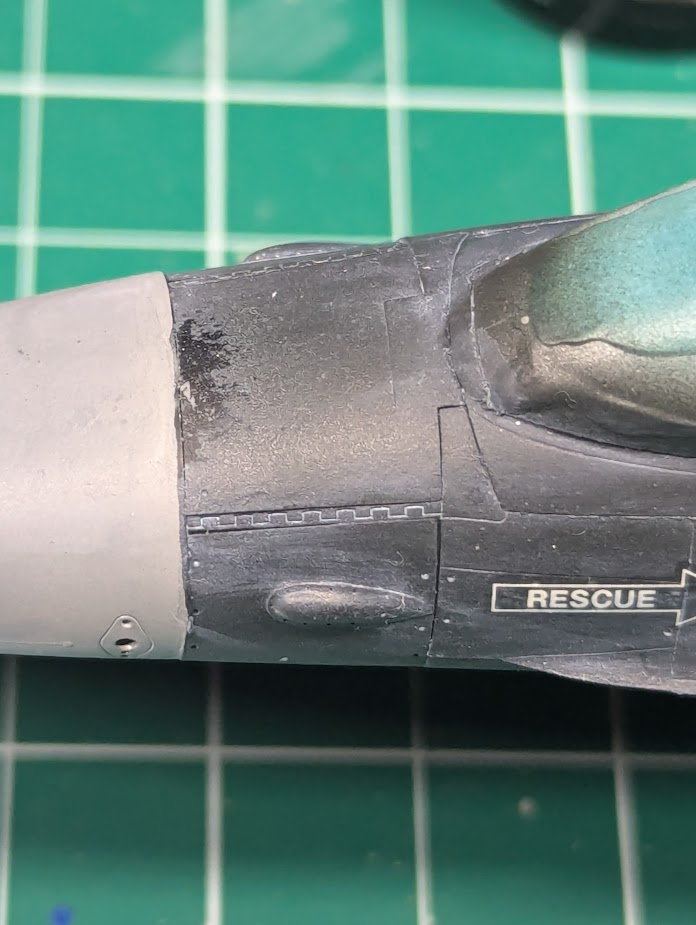
I ruined a paint job several months ago. My wash technique is that of a newbie, and I ate through or dissolved my base layer down to the lacquer-primer layer. I was hoping to remove the paint without harming the cockpit and to a lesser degree the landing gear and bays.

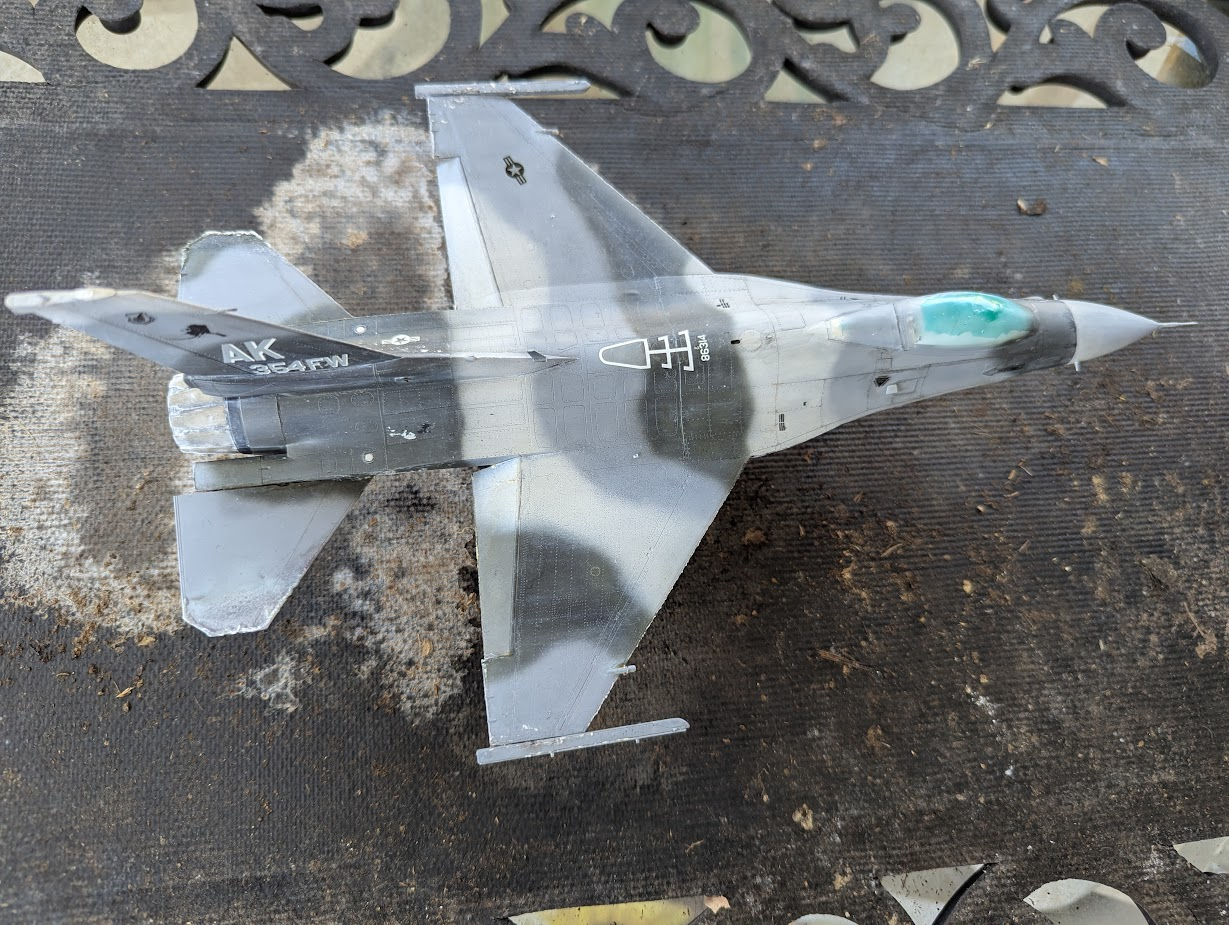
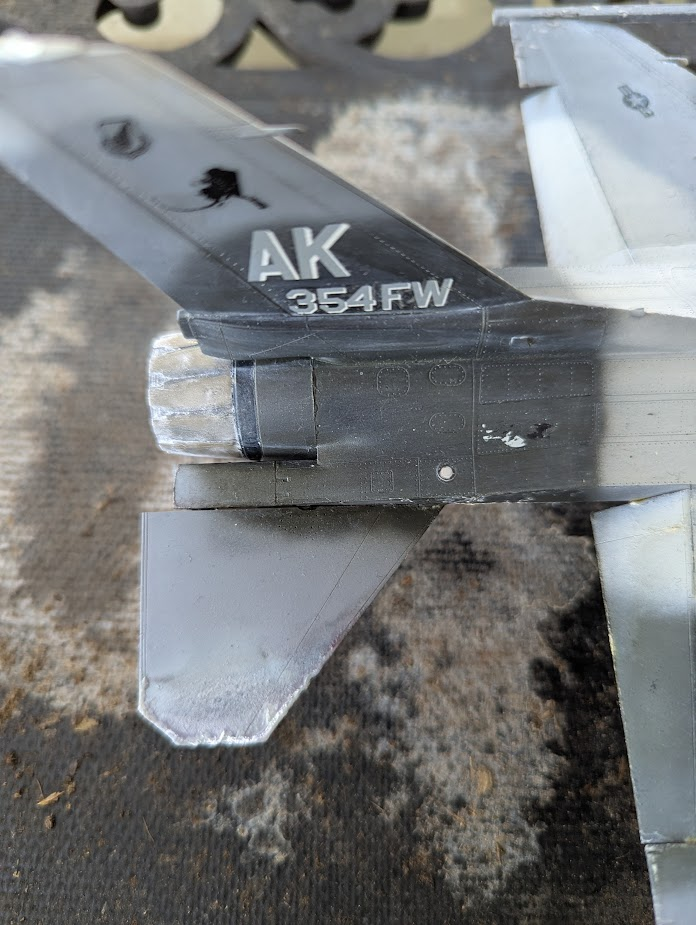
Here's the thread, and since you don't need to read all that, here's some pics showing why I cannot submerge the entire thing.
1735337749899.png
1735337776974.png


The light gray in the 2nd pic is artist-oil. When trying to use thinner to remove the excess I wore down the color-layer as seen near the radome. I'm hoping to spray the thing with the cleaner, and do it daily for however many days it takes to not ruin the cockpit. In fact, I'm considering post-shading and cleanup with an airbrush. It might be the best route. As I mentioned, the decals are done, in fact some are damaged already.
 
Last edited:
Stripper advice?

Hand-to-hand tipping only.

Seriously, though, I use SuperClean, too. I have not found it necessary to soak a piece for day, but the longer a piece soaks, the more paint will dissolve into the solution, and the remnant softens enough to be scrubbed away gently with an old toothbrush. I have never had SC attack styrene. The active ingredient is lye, which is the same active ingredient in oven cleaners. You should work in a well-ventilated area with either oven cleaner or SuperClean, but the fumes from oven cleaner seem to be stronger.

The advantage over oven cleaner is that you can use a batch of SuperClean over and over, while oven cleaner is basically once-and-done. Though some had said they sprayed oven cleaner into a plastic bag, like a ziploc bag. But it's hard to re-use a batch. But you can put SuperClean in glass containers of various sizes and re-use the batch over and over. So ultimately, it's cheaper for the amount than oven cleaner.

I use it primarily to strip paint from white metal figures, but have also used it on styrene pieces and resin. Apart from soaking a piece, you can also use an old paintbrush to apply it to precise areas. I have done this on models, and on figures, where I made a mistake but didn't want to strip the entire piece and start over.
 
I brush it on all the time. Sponge it, dip it, spray it through a spray bottle and use a toothbrush or paint brush, whatever. Get it on there and re-wet it ever few minutes... same thing. It works until you wash it off with water. It's biodegradable, so wash it in your sink. Strain all the grenubbles out of it and re-use it over and over. Soaking/submersion is just an option and shows that it won't do any harm to any plastic. It won't do a thing to clear parts. I left an assembled 1/25 TAMIYA Chieftain Tank in a tub of it for over a year for a write up on it years ago. No damage at all to even the rubber track pad parts on the plastic tracks. I've been using it for at least 25-30 years.

I see your pictures and although submersion is by no means a requirement, I also don't see any reason you can't submerge that whole thing. Submerging just makes it easier. It'll be back to bare plastic and the canopy won't have a blemish (from the SuperClean at least) on it. The decals will be gone though, but everything else will be bare, box, plastic. Don't use it if you don't want to start over from bare plastic. I can't say I've ever tried to just do a section, so milage may vary.

It's caustic, so were gloves. Not nitrile or latex. Use thicker dish washing gloves. Rinse it with copious amounts of water after the paints gone.

It's $10.00 a gallon. Soak the whole thing for 15 minutes and see what happens. Go from there.

Rob.
 
Last edited:
That Super Clean is a pretty weak solution of sodium hydroxide so nothing important will be happening , but you should not store sodium hydroxide in glass containers -- it likes to dance with the silica .
Just a heads up if someone is considering storing a stronger lye solution in a glass container . ;)
But you can put SuperClean in glass containers of various sizes
 
but have also used it on styrene pieces and resin.

Like the Baron just said, I use it for everything too, but be aware of resin, in my experience only. It will start to soften the outer layers of resin. After a day of soaking resin, be very careful with a toothbrush because you can start to dig in a little and leave the brush marks. A couple hours, fine, scrub away, but resin does start to soften over soakage time. It has always stiffened back up after a few hours, but straight out of the cleaner after a day and it'll have a soft skin.

It don't work on you model? Ok, clean your engine or oil spots off your driveway.

A win/win city-ation.

Rob.
 
That Super Clean is a pretty weak solution of sodium hydroxide so nothing important will be happening , but you should not store sodium hydroxide in glass containers -- it likes to dance with the silica .
Just a heads up if someone is considering storing a stronger lye solution in a glass container . ;)
I understood little of that, but having made soap as a lad (once) I have a massive respect for lye.
 
Hmm, all great advice!
... I'm guessing that it doesn't affect the bonds, but to avoid if you are into scratch built add-ons with other materials that may have unpredictable results.
For removal in just one area, I suppose I'd look for a hard edge boundary, raised or indented to work back from.
Thanks for the warning not to use my go-to disaster mitts, nitrile!
 
I see your pictures and although submersion is by no means a requirement, I also don't see any reason you can't submerge that whole thing. Submerging just makes it easier.
I'm happy with, it has been a bit ago but I think very happy with, the cockpit. As well as the exhaust, including the interior chambers I should add. If I were to fully submerge it they would be destroyed, landing gear and the bays are a lesser concern, but all I need to fix is the camo and decals.

Frankly I think if I intend to strip the exterior paint I'll have to give up that nozzle though.

I'm going with the milder approach 1st, the super-clean comes in a spray bottle. So doing this outdoors (it was almost 80 today, two days before new year) and on a surface I can give up, I am making multiple trips to the backyard to hose her down. I'm concerned about the cockpit but not the canopy. However leakage around it is giving me the skeeves.

I think that after a day or two of this, if the paint is not loose enough for a toothbrush I'll have to get stronger stuff.

If that doesn't work I'll scavenge the interior and have a paint mule.
 
You can do spot removal with a swab damp with isopropyl .
It's all acrylic , yeah ?
 
I think I had a revelation today. It is Sunday and my adult bible class is studying prophesy...

But I think that "all acrylic" thing rang true to the core issue.

My base color is acrylic (Tamiya) as is my clear coat (AK extreme), and my "wash" is enamel/turpentine. Common logic/doctrine says that my washes should not impact my varnish. But what dawned on me is that the AK varnishes do not like alcohol, or Tamiya X-20, or Mr Color surfacer (thinner), it likes lacquer, whgch turpentine can attack.

Does that not explain it?
 
Last edited:
I think I had a revelation today. It is Sunday and my adult bible class is studying prophesy...

But I think that "all acrylic" thing rang true to the core issue.

My base color is acrylic (Tamiya) as is my clear coat (AK extreme), and my "wash" is enamel/turpentine. Common logic/doctrine says that my washes should not impact my varnish. But what dawned on me is that the AK varnishes do not like alcohol, ot Tamiya X-20, or Mr Color surfacer (thinner), it likes laquer. Does that not explain the enamels attacking it?
huh ?
the AK " doesn't like alcohol " I assume means it isn't compatible with alcohol during application .
The OH functional group of the alcohol initiates polymerization long before it forms a film on the substrate .

" it likes lacquer "
huh ?
lacquer thinner ?
Which one ?
lacquer thinners are most often heavy with an alcohol .
 
huh ?
the AK " doesn't like alcohol " I assume means it isn't compatible with alcohol during application .
The OH functional group of the alcohol initiates polymerization long before it forms a film on the substrate .

" it likes lacquer "
huh ?
lacquer thinner ?
Which one ?
lacquer thinners are most often heavy with an alcohol .
I tried three thinners, two were major modelling brands for "acrylics", only the lacquer thinner mixed well with AK Acrylic varnish in my cup. Seems simply insane that acrylic paint needs lacquer when even 40-years of enamels did not. But everything is whackadoo in 2025 right?

I never sprayed a mis-matched batch at least. Since then I've purchased "real" as in branded, AK thinner until I use up these varnishes.

At the recent Central Texas Model Show, the "best finish" award was to a dude who used a clearcoat from Autozone!
 
That means it's a solvent acrylic so it's alcohol compatible .
I don't know which other acrylic thinners you used but a generic acrylic thinner is water , propylene glycol and a tiny amount of ammonia as a surfactant . No alcohols or ketones
enamels are thinned with mineral spirits .

Nothing wrong with rattle can clear coat
 
Compatible for spraying , alcohol will still dissolve it after it is cured , so not alcohol resistant in it's film form .
 
I understood little of that, but having made soap as a lad (once) I have a massive respect for lye.
sodium hydroxide solutions dissolve glass .
Figured I should clarify -- there's no explosion sending shards into your eyes .
It most often will break thru the bond between the base and the body of a bottle .
first
then it goes after everything you love
 
I found your caution about using glass jars interesting, Momo. I haven't had any problems, yet. I guess I'm running an experiment to see how long it takes.
I've used an old glass baking dish, too, but didn't store a batch of the liquid in it. Just used it long enough to soak some sprues-removing chrome plating-and then poured out the solution and rinsed the dish when finished. The jars that I used have had the liquid in them for months, but I haven't noticed any effect on them yet. I'll have to look for something else to use, long term.
 
The solution is too weak to worry about .
I was talking about mixing up a strong lye solution .
I saw the aftermath of such an event back in the nineties .
Some people that know nothing had clogged plumbing and had mixed up gawd only knows what strength of a solution and had it in a giant pickle jar .
I have no idea how long it took to destroy the bottle but I entered that danger into my data banks , lol
 
Ah, OK. Yeah, it's just SuperClean out of the jug, with nothing else added.
It makes a good cleaner, too.
 
Approximately 24 hours into this, have applied the solution maybe 10 times. I just spray it completely and walk away. I am starting to see results, and do not mind the slow progress if it means no damage. I figure another day or two of this then I bust out the gloves and toothbrush.

1735589241794.png


1735589296333.png
 
The OH functional group
... just so you know, this one line prompted a 20 minute discussion at the dinner table complete with illustrations on a shopping list memo pad and a refresher talk from my material chemist wife.
She has been writing code for the last 20 years, but enjoyed the flashback.
- So did I, I think?!
 
Back
Top