New to figures?

Scale Model Addict - Model Tips, Guides, Tools & Tech, Tutorials, and Community

Help Support Scale Model Addict:

Jimbot58

Well-Known Member
Joined
Aug 4, 2024
Messages
52
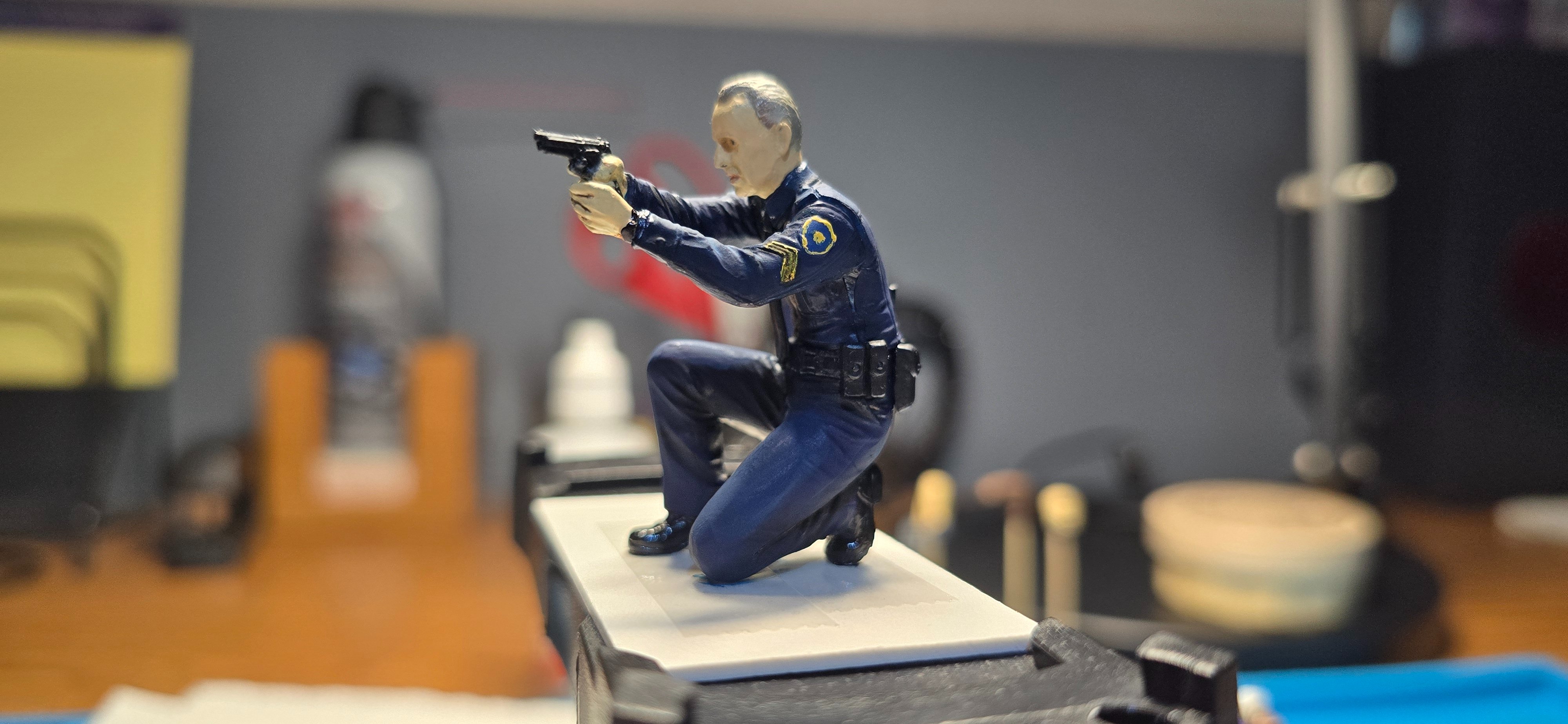
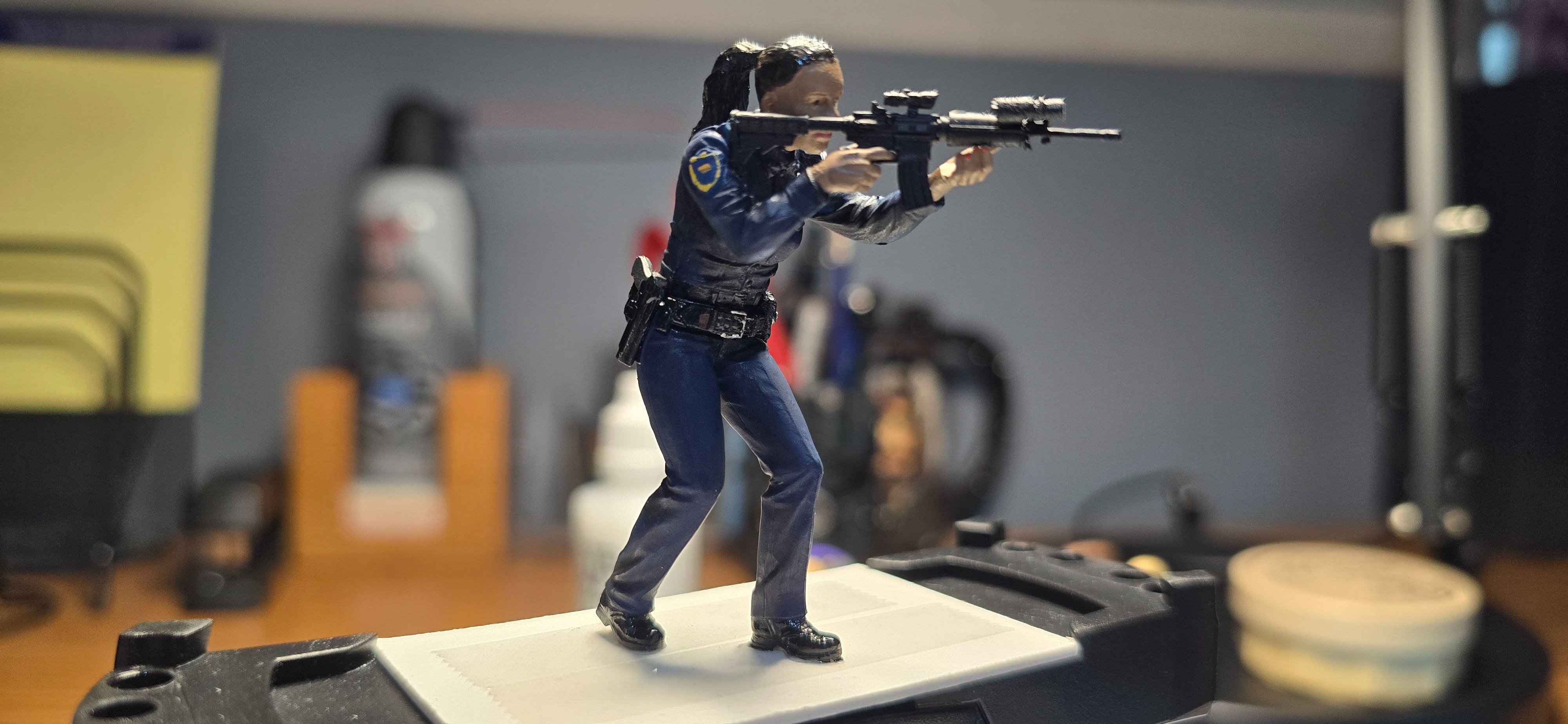
Pretty much I've been a modeler of mostly machines in the form of planes, cars, and armor. I was into N-scale trains for a bit as well. On an impulse, I grabbed a couple of resin figures off the bay. I have never done figures before I don't know where to start. I know a few basics such as they need to be cleaned, use caution when sanding, and primer must be used. Epoxy or CA for assembly. Other than that, I don't know types and brands of paints to use, or even recommended colors. Is there a guide for all of this? I'm afraid of making these little ladies (1/24th scale) look gaudy or cartoonish.
There will be no WIP here on these as they are... Well, let's just say I won't need clothing painting skills for them. I also wouldn't mind doing some sort of fantasy or sifi figures in the future (more clothing and/or armor!!)

Also. I wouldn't mind looking into a Gundam kit as well but know little about them either.

Thanks
 
Pretty much I've been a modeler of mostly machines in the form of planes, cars, and armor. I was into N-scale trains for a bit as well. On an impulse, I grabbed a couple of resin figures off the bay. I have never done figures before I don't know where to start. I know a few basics such as they need to be cleaned, use caution when sanding, and primer must be used. Epoxy or CA for assembly. Other than that, I don't know types and brands of paints to use, or even recommended colors. Is there a guide for all of this? I'm afraid of making these little ladies (1/24th scale) look gaudy or cartoonish.
There will be no WIP here on these as they are... Well, let's just say I won't need clothing painting skills for them. I also wouldn't mind doing some sort of fantasy or sifi figures in the future (more clothing and/or armor!!)

Also. I wouldn't mind looking into a Gundam kit as well but know little about them either.

Thanks
I have done a few resin figures. Be careful when sanding or scraping as some resins are softer than others.

I use CA when fixing parts and it's worked for me. Sometimes need to hold the part in place for a little longer than plastic though.

I use Vallejo for hand painting, starting with a bone coloured primer over all the parts.

Usually start with the face and arms or any flesh on show. Vallejo do a great line in colours for flesh.

Next will be details that are difficult to reach then the main areas.

Always thin the colours down 50/50 as lot's of thin watery coats builds up the colour whilst keeping the details.

Finally a light spray of matt varnish to seal it all. Pantherman

20250911_193012.jpg
20250528_201601.jpg
20230917_211121.jpg
20230904_201523.jpg
 
Man, I am WAY too into figures lately.

I bought a couple 3D-printed items:
  • My first was a "Trumpa-Loompa." The Don as a Willy Wonka character. That is in second time stripped mode right now.
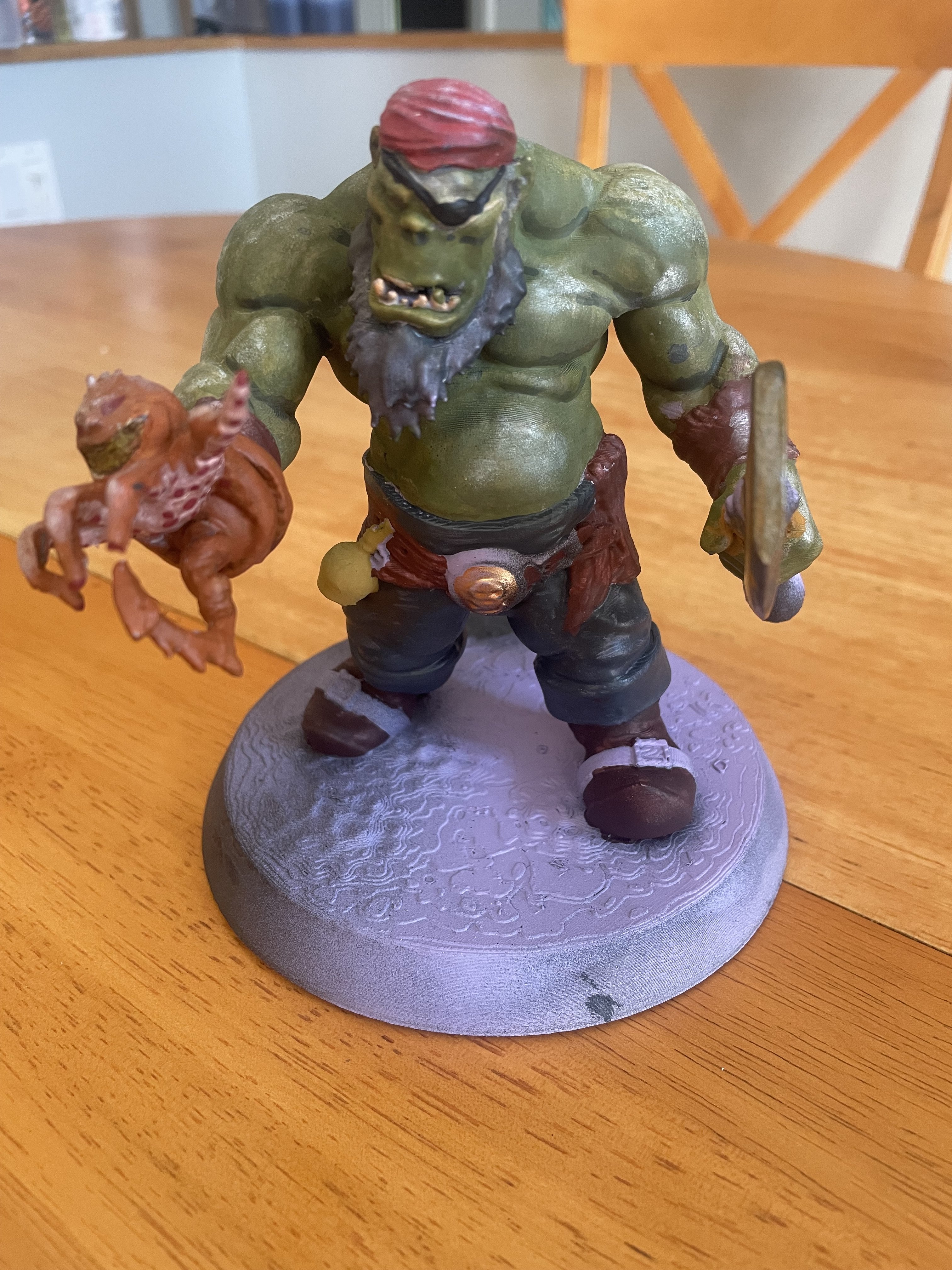
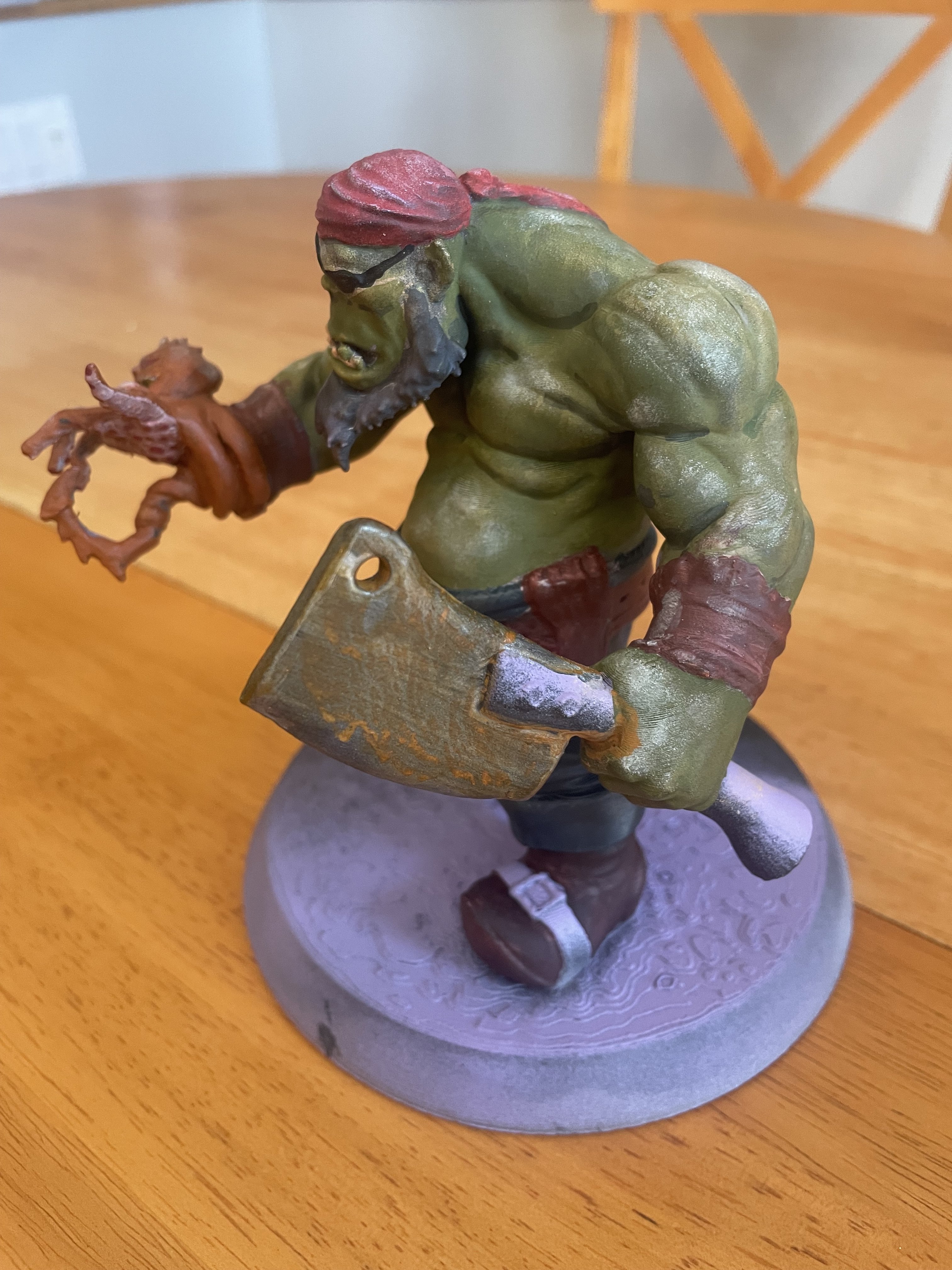
  • Then, I got a six-inch tall ogre, which is done-ish (I'll add a pic after my visiting, lazy kid wakes and gets out of the spare/modeling room).
  • I also have an Incredible Hulk bust kit I can't wait to assemble & paint and a 18" Godzilla styrene kit after that.

I stopped buying Vallejo paints. I use either ProAcryl or, even better (to me), Liquitex artsy acrylics. Liquitex is pigment heavy, so you can thin it to any level of opacity or translucence you want. They are also much more cost effective...a $7 tube will last years. Further, they're thick. Thus, there's no separation of pigment and no shaking required. You do have to thin it, though.

ProAcryl is just great paint.

I stay away from the Hobby Lobby/Walmart craft paints, like DecoArt and others. (Well, I do now, despite the box of the stuff I bought when I was young & stupid [last year]).

I will add that I just bought some oil paints to try. I've seen good results form folks using them.

For practice, I bought a bag of army men like those in Toy Story. They are great for learning some finer detail brush work, and they're throw aways when I disgust myself.

As noted above, YouTube is full of tutorials. Here are links to some I particularly like:
Like everything else, this can get you right to the rabbit hole.

OK. Enough bloviating (second time I've used that word this morning) from me. Have fun with it.
 
I see people get amazing results with oil paints

Acrylics are great for getting base colors down quickly, but can be hard to blend and create smooth transitions

Not too big a deal on smaller scale stuff, but on larger scale stuff like 1/24 and up you really want things blended nicely between shading and highlighting

The best techniques for blending and creating smooth transitions with acrylics are "glazing", "washes" and "wet blending"

Oils on the other hand are great for blending, especially if you will be doing a lot of skin tone

You can start with painting acrylics to get those base colors down, and then do you shading and highlighting with oils

for Caucasian type skin my general go to for shading skin is an olive green/brown and/or a chestnut red as a wash for shading. More olive green for slightly darker skin highlighting back up to basic flesh tone ( think bronzed suntan look), and more red for pinker skin, highlighting up to white

for dark skin I start with dark brown and highlight up to a tannish color
 
I am only just beginning to do figures but so far I feel that oils are the better choice. I agree with blakeh1 that acrylics are good for getting the base painted and dried quickly. Using oils after that just seems better for me.
 
As an Amazon Associate we earn from qualifying purchases. Product prices and availability are accurate as of the date/time indicated and are subject to change.
Like others have said before watch YouTube channels and read articles books mags etc and practice choose a figure you like get some cheaper kits first and enjoy what you do
 
This is the 6" Ogre I'd mentioned. The base is still in primer.

The pants came out as gloss. I must have used a gloss medium by mistake. This will be corrected as I add some highlights to them, then shoot with matte.

The primer and that coming matte clear are the only spraying done/to do. Everything else is brush painting.
 

Attachments

  • IMG_4627.jpeg
    IMG_4627.jpeg
    2.1 MB
  • IMG_4628.jpeg
    IMG_4628.jpeg
    1.9 MB
Considering the subject matter, I would also recommend checking out figure drawing and painting instructional materials from the fine art world.

My experience of that was in art school many years ago, when I could just walk up to the model and compare the colours in my palette to the real person in the room.

Though you don't need to sculpt the physical volumes and shapes, learning to actually see how light and shadows play across them will certainly help you attain a degree of realism that goes beyond the 'flat' cartoony look you are hoping to avoid.

Unfortunately, 3D figures may be too perfect... Virtually no one, no matter their age or 'beauty', is perfectly symmetrical or unblemished. To a large degree, it is the quirky faults that lend personality, humanity and realism.
 
I see people get amazing results with oil paints

Acrylics are great for getting base colors down quickly, but can be hard to blend and create smooth transitions

Not too big a deal on smaller scale stuff, but on larger scale stuff like 1/24 and up you really want things blended nicely between shading and highlighting

The best techniques for blending and creating smooth transitions with acrylics are "glazing", "washes" and "wet blending"

Oils on the other hand are great for blending, especially if you will be doing a lot of skin tone

You can start with painting acrylics to get those base colors down, and then do you shading and highlighting with oils

for Caucasian type skin my general go to for shading skin is an olive green/brown and/or a chestnut red as a wash for shading. More olive green for slightly darker skin highlighting back up to basic flesh tone ( think bronzed suntan look), and more red for pinker skin, highlighting up to white

for dark skin I start with dark brown and highlight up to a tannish color
One of the YT tutorials I used did a red wash as well.
 
I am new to figure painting. Guess I should say New figure painting since I did lots of them in the late 70s and mid 90s.

Lots of people in my club are really into them, seems they are typically called "minis" now, and "speed paints" or "contrast paints" (same thing I am learning) are all the rage.

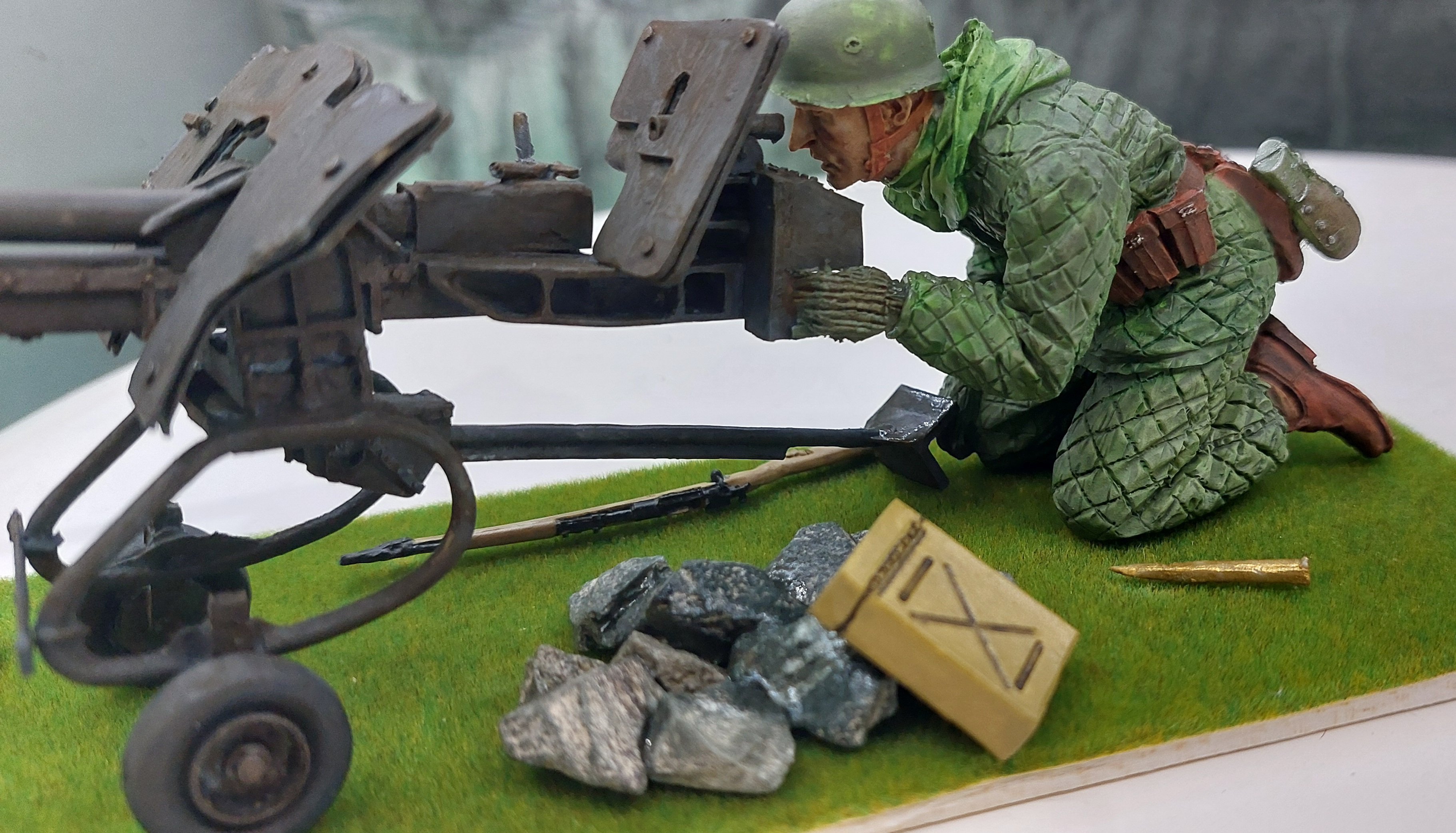
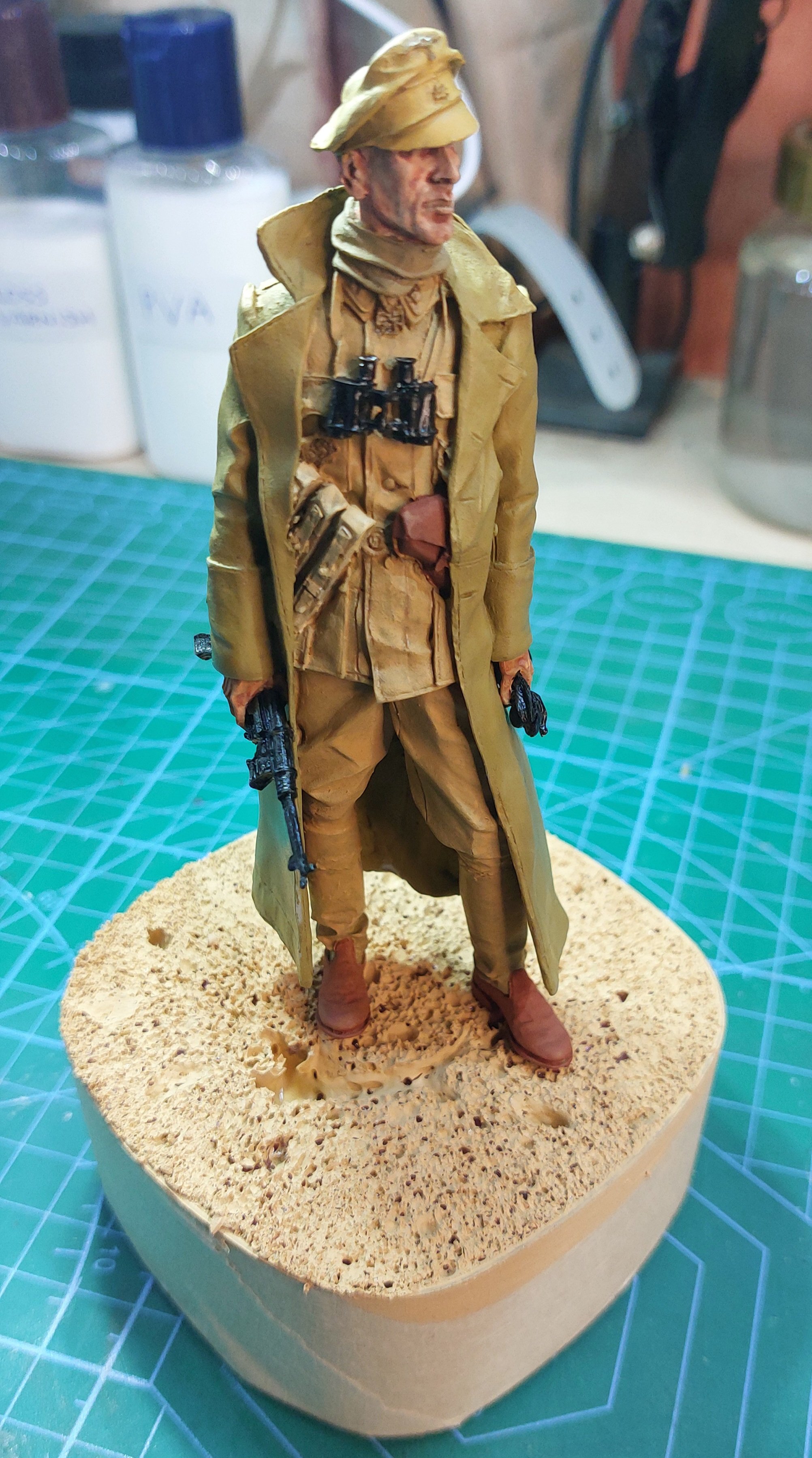
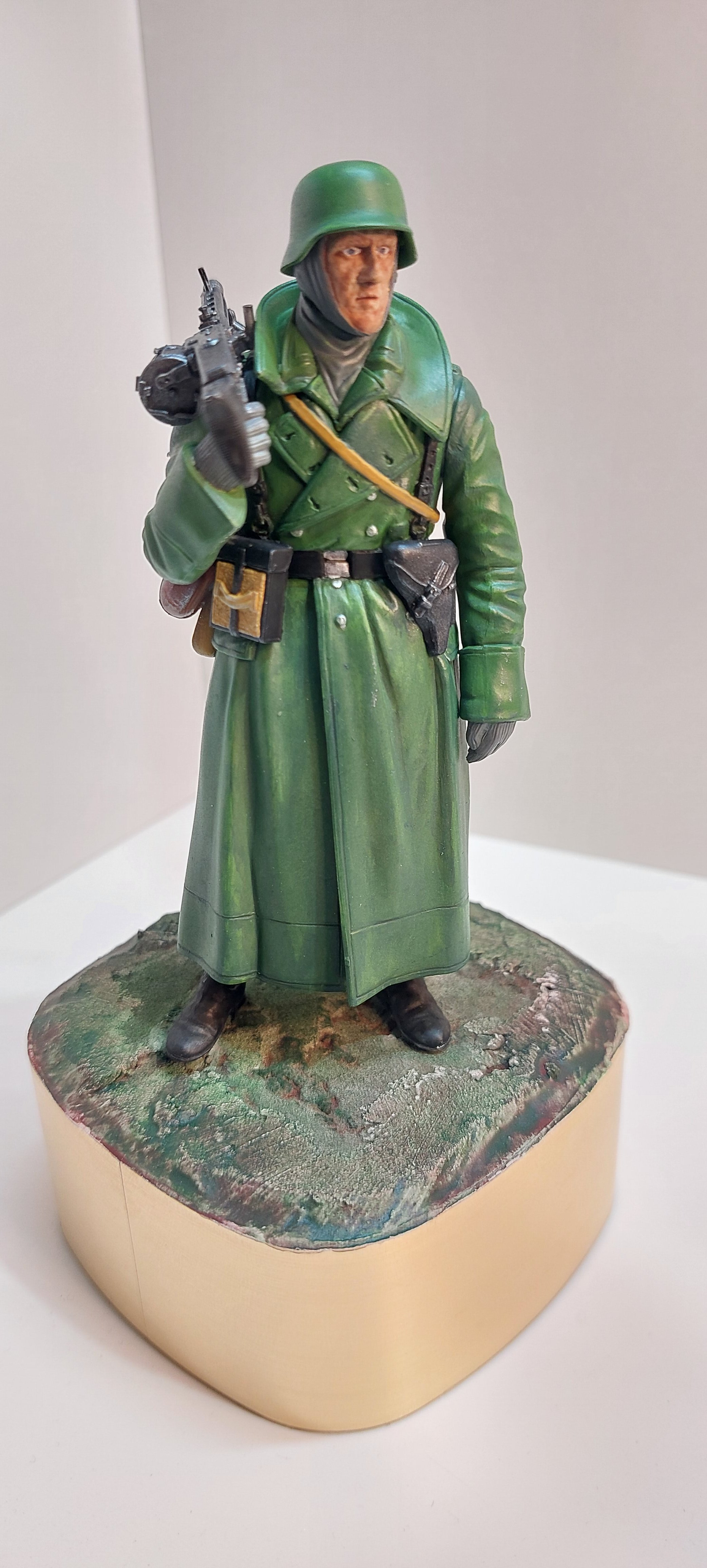
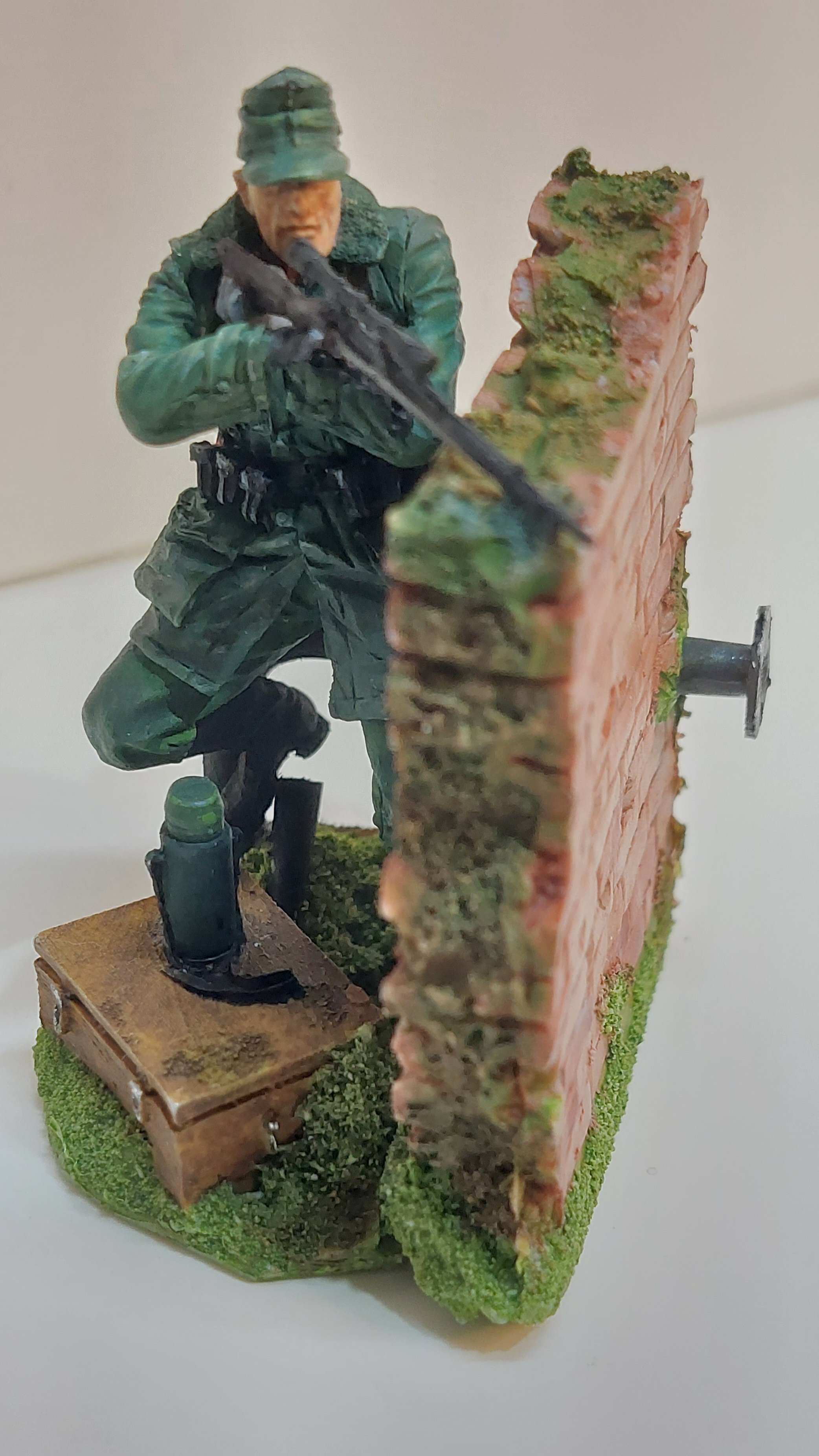
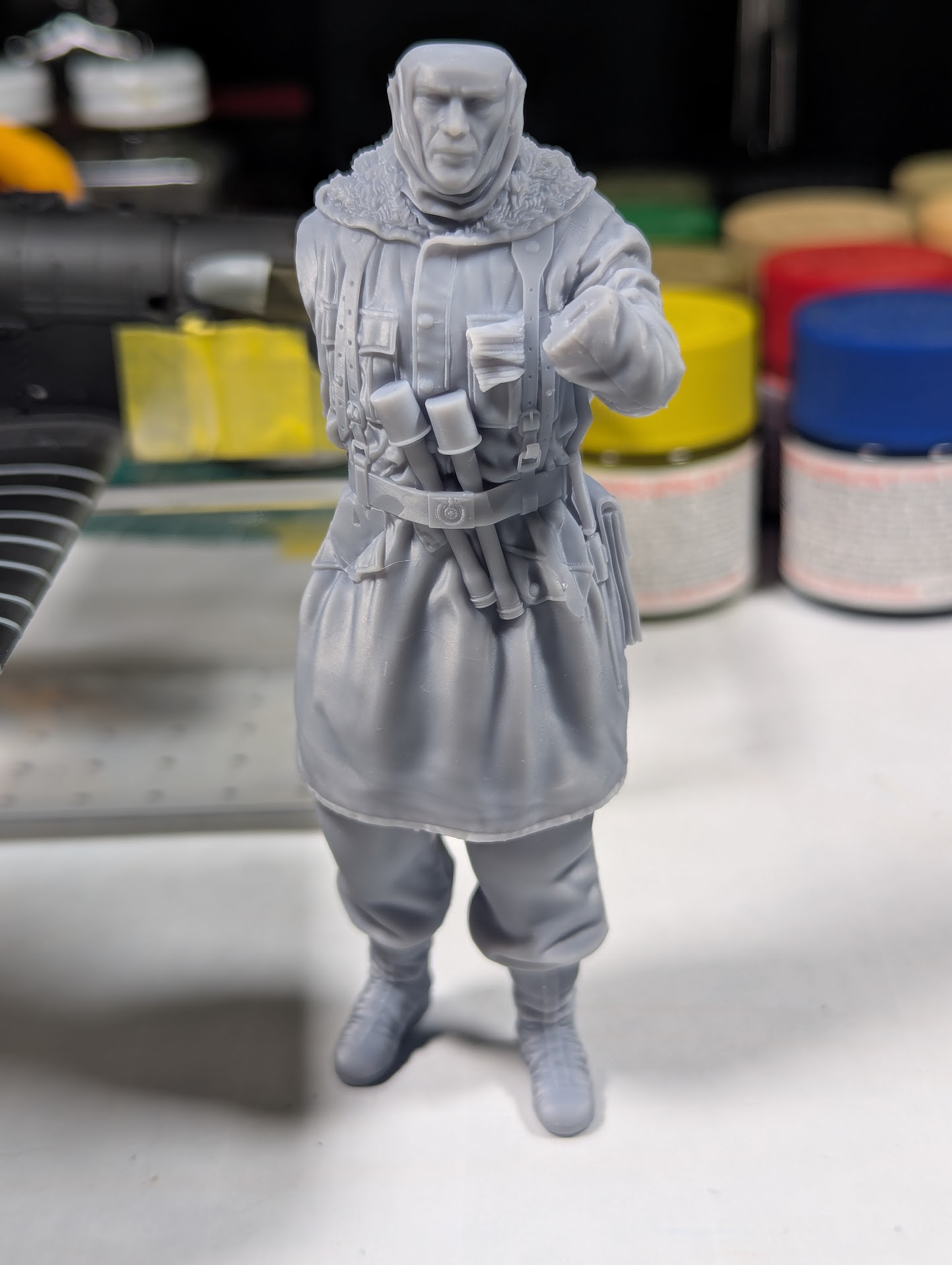
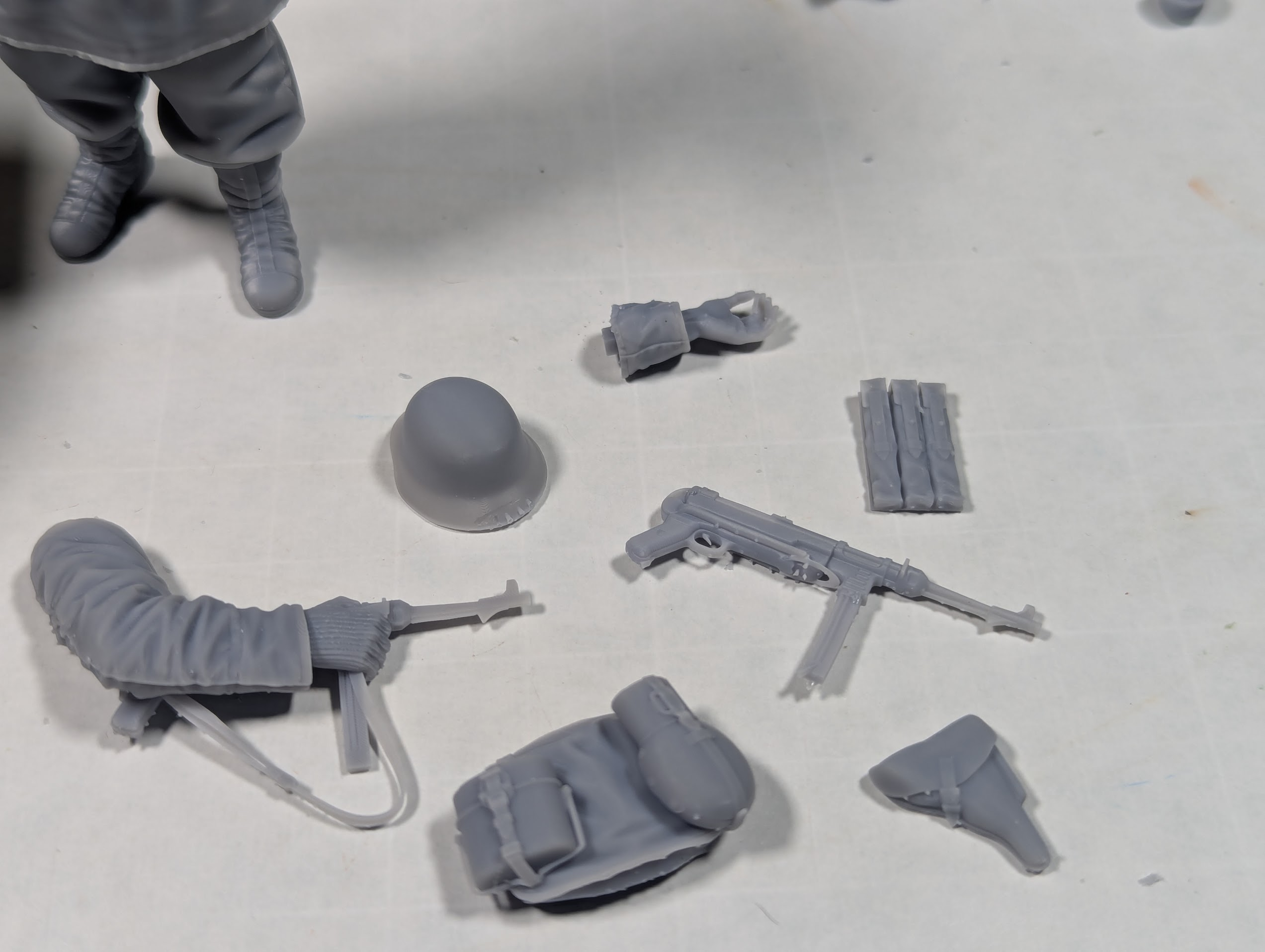
I've been focusing more on getting my figures printed right before I try to do the painting. I think I've made a break through on the resin and exposure tweaking though. This is my latest.

1783648750250.png


1783648796711.png

Even has a cig in the left hand, will have to reprint the MP40 since I broke part of the oval bit on the "stock".
 
...Acrylics are great for getting base colors down quickly, but can be hard to blend and create smooth transitions...
The technique is different between oils and (water-based) acrylics.

With oils, you do truly blend the colors along the border or transition between shades. With acrylics, it's almost a glazing technique, using thinned colors to layer on and create the transition between shades. Since water-based acrylics dry so fast, this can be done relatively quickly.

That's why water-based acrylics became so popular, because of their fast drying times.
 
Looking good!
Well done!

I work exclusively in acrylics, I also used some watercolors for blending and shading. It's pretty amazing what can be done with a little bit of water and adding slight color variations.
I'm certainly no expert figure painter, (having only done a few and posted them here last Summer). I also found the Tamiya weathering powders helpful for additional highlighting/lowlighting.
 

Attachments

  • 20250723_082834.jpg
    20250723_082834.jpg
    918.8 KB
  • 20250723_083247.jpg
    20250723_083247.jpg
    1,004.6 KB
The technique is different between oils and (water-based) acrylics.

With oils, you do truly blend the colors along the border or transition between shades. With acrylics, it's almost a glazing technique, using thinned colors to layer on and create the transition between shades. Since water-based acrylics dry so fast, this can be done relatively quickly.

That's why water-based acrylics became so popular, because of their fast drying times.
I read people stating acrylics dry faster all the time but I feel my lacquers dry faster. Maybe I'm not thinning my acrylics enough? I only use acrylics for figures and sometimes minor detail work. Always for any wood or leather work.
 
I read people stating acrylics dry faster all the time but I feel my lacquers dry faster.
There is a difference between "drying" and "curing." There is also a difference between "paint" and "lacquer." Paints, whether acrylic or traditional solvent soluble "enamel" don't just dry, they also cure. After application, the paint dries—most of the solvent goes away. That is commonly called "dry to touch." At some time during drying, they begin to polymerize—forming molecular bonds to build a continuous film. That process is called "curing." Some paints continue to outgas solvents for quite some time, especially in thick applications, even after curing is essentially complete.

True lacquers do not cure, they only dry. They can be readily re-dissolved by application of their solvent. Many people mistake Tamiya X and XF paint for lacquers because their primary solvent is alcohol, and they can be removed by reapplication of alcohol. They are, however, true paints—or were, last time I checked. Formulations do change, based mainly on economics.

Now, to make things even more interesting: some paints are made with a lacquer component …

So what's a scale modeler to do? If it is sold, labeled as a lacquer, regardless of what another scale modeler calls it, consider it a lacquer. If it is sold, labeled as a paint, consider it as a paint. Lacquers dry. Paints both dry and cure.
 
Many people mistake Tamiya X and XF paint for lacquers because their primary solvent is alcohol
Not doubting that a bit, but many modellers thin the X/XF with lacquer thinner too, so if you use lacquer thinner in Tamniya acrylic is it now a lacquer?

(my head hurts with this stuff, and I do not mean from inhaling fumes, really)
 
So, can you purchase already cast figures? Then you buy the paints and finish them up to your specifications?
 
There is a difference between "drying" and "curing." There is also a difference between "paint" and "lacquer." Paints, whether acrylic or traditional solvent soluble "enamel" don't just dry, they also cure. After application, the paint dries—most of the solvent goes away. That is commonly called "dry to touch." At some time during drying, they begin to polymerize—forming molecular bonds to build a continuous film. That process is called "curing." Some paints continue to outgas solvents for quite some time, especially in thick applications, even after curing is essentially complete.

True lacquers do not cure, they only dry. They can be readily re-dissolved by application of their solvent. Many people mistake Tamiya X and XF paint for lacquers because their primary solvent is alcohol, and they can be removed by reapplication of alcohol. They are, however, true paints—or were, last time I checked. Formulations do change, based mainly on economics.

Now, to make things even more interesting: some paints are made with a lacquer component …

So what's a scale modeler to do? If it is sold, labeled as a lacquer, regardless of what another scale modeler calls it, consider it a lacquer. If it is sold, labeled as a paint, consider it as a paint. Lacquers dry. Paints both dry and cure.
My understanding is that none of these modeling paints are true lacquers. It's only in name.
 
Not doubting that a bit, but many modellers thin the X/XF with lacquer thinner too, so if you use lacquer thinner in Tamniya acrylic is it now a lacquer?

(my head hurts with this stuff, and I do not mean from inhaling fumes, really)
It really depends what day the winter solstice falls on.
 
I am new to figure painting. Guess I should say New figure painting since I did lots of them in the late 70s and mid 90s.

Lots of people in my club are really into them, seems they are typically called "minis" now, and "speed paints" or "contrast paints" (same thing I am learning) are all the rage.

I've been focusing more on getting my figures printed right before I try to do the painting. I think I've made a break through on the resin and exposure tweaking though. This is my latest.

View attachment 195940

View attachment 195941
Even has a cig in the left hand, will have to reprint the MP40 since I broke part of the oval bit on the "stock".
An achievement is printing a figure and priming and painting the same day. It is kind of a mind blowing concept of pouring a bottle of liquid into a vat in the morning and have it in primer in the afternoon and painted in the evening. I have done it a few times now
 
So, can you purchase already cast figures? Then you buy the paints and finish them up to your specifications?
Absolutely. It's just like buying upgrade bits for ships and planes. The two figures I've purchased so far are from these two Ebay sellers:
These can be expensive, but I bought the Ogre to learn. The Hulk I just had to have. I may repaint the Ogre so I don't have two green-skinned creatures on display.

I've since gotten a 3D printer. For this, one can create their own files to print (for me, these would be VERY basic) or can buy files to print from sources like Cults3D.

In addition to the toy soldier set I bought, I've purchased other toys to learn on. I got a plastic dragon from some cartoon show, some horses, and a fairly large alligator (on which I want to test Godzilla colors). Dollar stores can be a real friend for stuff like this.
 
So, can you purchase already cast figures? Then you buy the paints and finish them up to your specifications?
Absolutely! Dozens, probably hundreds of companies and dudes in their garage sell printed or cast figures.

Some can be pricey, one argument for getting a printer, but the good printers are also expensive. But not all figures will break the bank. Not sure what your interests are but this is a nice looking one for under $20.
 
Last edited:
Howdy, Jim.

Sounds like you are ready to take that leap and have some fun! Painting figures is like anything else; it just takes practice and a little more practice. Nobody was born with a brush in their hands, so if someone else can do it, so can you. It just depends on how much you want to learn and how far you want to go. Oils or acrylics, makes no difference, just learn the medium of choice and keep learning it.

As everyone is suggesting, watch numerous YT vids from numerous painters to get a feel for what the process is, and get a hold of some good old Shep Paine books, if still available, or any other printed material on figure painting so you can have it right there as you practice.

Be ready mentally for multiple crash and burn sessions. We all go thru them, and I personally go thru that every season upon start up, never fails. So, when you get going, you'll need a handy can of oven cleaner, or other means of cleaning and starting over. I started with a set of old Tamiya German infantry figures way back in the mid 70's, so use a cheap set, but it should have some decent definition to the figure so you can learn shadows, how they fall, highlights and how much is too much, etc.

Remember, and this is the most important part, have fun! Ya, it might not seem like much fun when you can't get across the divide, or over that hump, on any particular day because nothing is working right, but relax, it'll come, just don't give up. If you can handle all that, Bro, you're set!

I started with Humbrol enamels, then switched to oils in the 90's and never looked back. I am personally not a fan of acrylics other than for base coats or small details. The blending properties of oils make the brush work a pleasure, and sometimes ya gotta step back and say, "Wow, it worked!"

Have fun, Jim, and holler with your questions, we all will help as best as we can when we can.

Cheers, Ski.
 
Absolutely! Dozens, probably hundreds of companies and dudes in their garage sell printed or cast figures.

Some can be pricey, one argument for getting a printer, but the good printers are also expensive. But not all figures will break the bank. Not sure what your interests are but this is a nice looking one for under $20.
Remember to be aware that recasters abound on Ebay. They not only rip off intellectual property, but they also steal money that should have otherwise gone to the sculptor who busted his tail and talent to produce the original.

This example may not be the case, but this is a good time to remind anyone buying figures on Ebay, if you're going to post online, make sure the figure and the vendor are legit, please.
 
...I feel my lacquers dry faster....
Lacquers are a little too hot for most painters to use. Though many Japanese painters use them, using the "heat" to blend one color as it is laid down over a previous color. I learned this as I got into Maschinen Krieger subjects. Using lacquers to blend colors is how many Japanese painters achieve the soft borders they get in their camo patterns. It takes practice, as so many things do. I don't use lacquers for hand-brushing, myself, only for airbrushing.
 

Latest posts

Back
Top