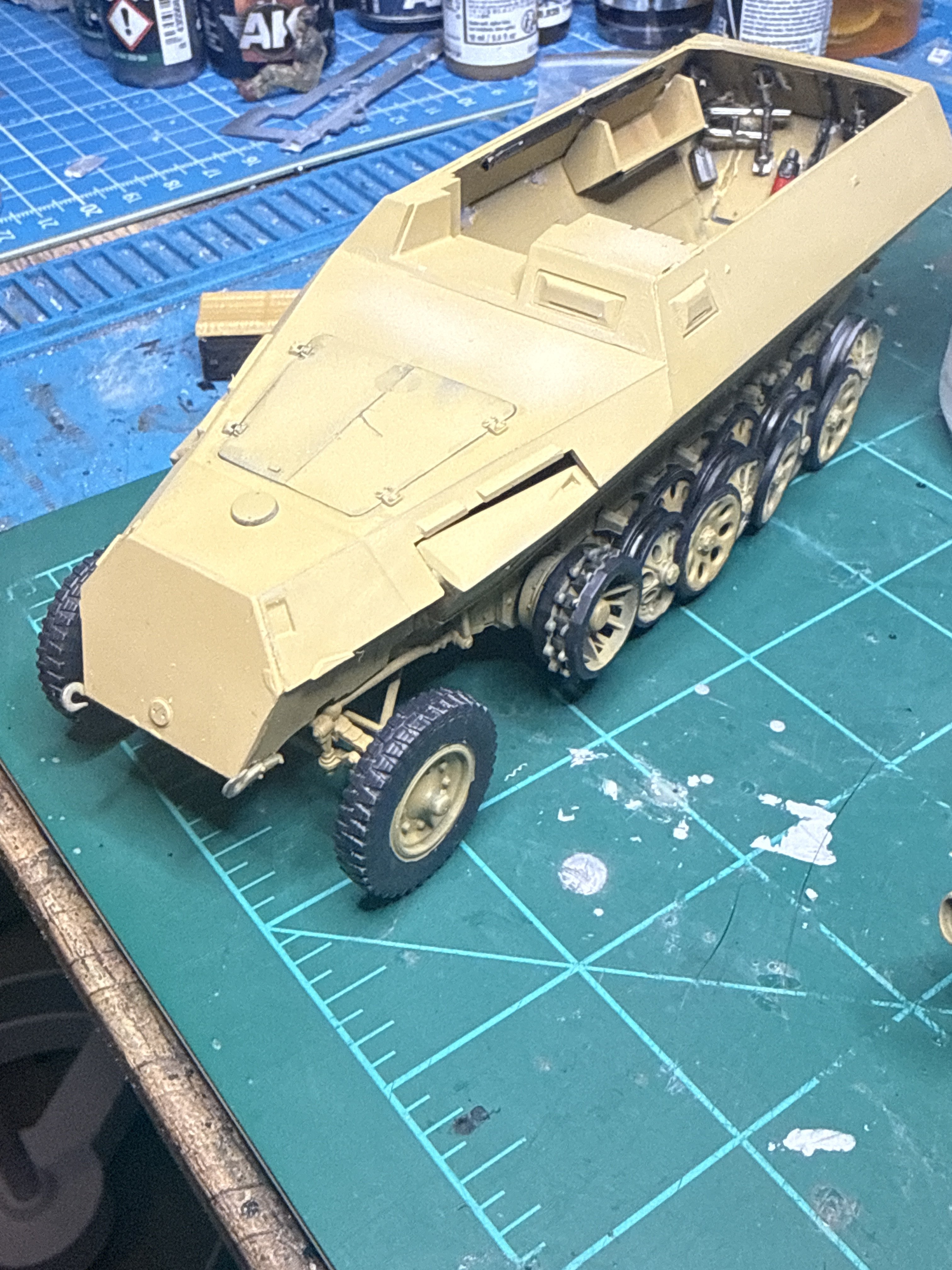
Sd.Kfz. 251/9 Ausf.C (early) half-track AFV Club 1/35

Scale Model Addict - Model Tips, Guides, Tools & Tech, Tutorials, and Community

Help Support Scale Model Addict:

No. The official definition of 1 yd is 3 ft. The official definition of one foot is 12 in.
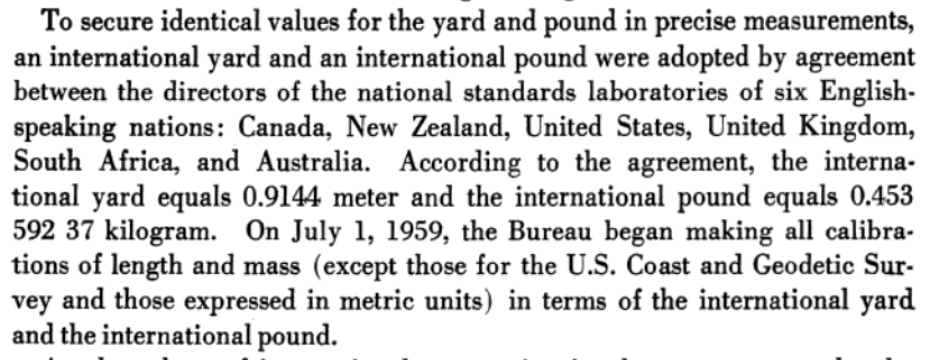
No, it isn't:

International yard and pound.png


But I wonder why, when the busybodies decided to invent a new measuring system out of whole cloth that they did not just say 1 kilogram was 1 pound, or one meter was one yard or one gallon (or quart) was 1 liter.
Which pound, which yard and which gallon? Because everybody had different values for units with nominally the same names. Not just different countries, but different regions, towns and cities within countries had differing values.

I am forced to conclude they made **** up out of nothing whatsoever, just to be obstinate and arrogant.
The original definition of a metre was ¹⁄₁₀ ₀₀₀ ₀₀₀ of the distance between the equator and the North Pole, measured along the meridian that goes through Paris. This is an arbitrary choice, but all units of measurement are arbitrary choices — there is no way to base any on a natural, intrinsic, totally objective property. So they picked the size of the Earth to establish the length of the metre. Everything else in the original metric system derives from that: an are (/ɛəɹ/, not /ɑɹ/) is an area of ten by ten metres; a litre is a volume equal to one-tenth of a metre, cubed; a gramme is the weight of a volume of water equal to ¹⁄₁₀₀ metres, cubed.

Basically, they said to themselves: we need a system in which there's a basic unit that can be derived from measuring something of fixed size, and then everything else will be taken from that. Which means there's really only one arbitrary unit instead of having pretty much everything as arbitrary and impossible to figure out except by looking up how big it is.

This has been refined in various ways since then, to arrive at the present definitions of the seven SI base units, all of which can be determined from basic properties of nature by anyone with the necessary equipment (which, admittedly, is not within reach of you or I).

I admit to the logic of a system based on 10s instead of 12s, it clearly has advantages. But having spent a lifetime using miles and ounces I cannot guess how many kilometers away that next hill is when I can guess fairly accurately how many miles it is, or pick out a spot in that field that is really close to 100 yards away.
This is not an argument in favour of, or against, any system of measurements. Rather, it's your personal experience and knowledge that make one of the two difficult to use for you.

For an example from the other direction: a few years ago, I tried laying out a book in inches in Adobe InDesign, and I don't think I want to try that again. Unlike most people outside the English-speaking world, I am pretty well-versed in Anglo-American units of measurement, but actually using them in practice is a major pain in the backside if you're used to metric.

But the way that most people go wrong in this (and that I tried to avoid, but semi-failed at) is converting to the system they are used to. So they measure 134 cm as the width available for the shelves they want to put up, convert that to 52³⁄₄ inches and then saw planks to that length instead of marking out 134 cm on the plank directly.

why did they refuse to reinvent the clocks which are also based on 12s?
They didn't, and one of the possible systems was adopted in France in the 18th century. This is why Napoleon is usually said to have seized power on 18 Brumaire VIII rather than on 9 November 1799, for example.

It didn't last because society was apparently much more resistant to having its clocks and calendars changed, than its other units of measurement. If I had to guess, that's because everyone already had a standard that was the same everywhere, whereas with weights, lengths, money etc. absolutely everyone used different ones.
 
Last edited:
What is the trick for the thin or extra-thin CA, how to avoid it "going everywhere"?
I normally use a sharpened cocktail stick when I need to put the glue down precisely. Alternatively, I squeeze a little drop out of the end of the nozzle and touch the small part to that, then place the part in position — as opposed to putting a drop of glue on the large part and then setting the small part in that.
 
No, it isn't:

View attachment 186999


Which pound, which yard and which gallon? Because everybody had different values for units with nominally the same names. Not just different countries, but different regions, towns and cities within countries had differing values.


The original definition of a metre was ¹⁄₁₀ ₀₀₀ ₀₀₀ of the distance between the equator and the North Pole, measured along the meridian that goes through Paris. This is an arbitrary choice, but all units of measurement are arbitrary choices — there is no way to base any on a natural, intrinsic, totally objective property. So they picked the size of the Earth to establish the length of the metre. Everything else in the original metric system derives from that: an are (/ɛəɹ/, not /ɑɹ/) is an area of ten by ten metres; a litre is a volume equal to one-tenth of a metre, cubed; a gramme is the weight of a volume of water equal to ¹⁄₁₀₀ metres, cubed.

Basically, they said to themselves: we need a system in which there's a basic unit that can be derived from measuring something of fixed size, and then everything else will be taken from that. Which means there's really only one arbitrary unit instead of having pretty much everything as arbitrary and impossible to figure out except by looking up how big it is.

This has been refined in various ways since then, to arrive at the present definitions of the seven SI base units, all of which can be determined from basic properties of nature by anyone with the necessary equipment (which, admittedly, is not within reach of you or I).


This is not an argument in favour of, or against, any system of measurements. Rather, it's your personal experience and knowledge that make one of the two difficult to use for you.

For an example from the other direction: a few years ago, I tried laying out a book in inches in Adobe InDesign, and I don't think I want to try that again. Unlike most people outside the English-speaking world, I am pretty well-versed in Anglo-American units of measurement, but actually using them in practice is a major pain in the backside if you're used to metric.

But the way that most people go wrong in this (and that I tried to avoid, but semi-failed at) is converting to the system they are used to. So they measure 134 cm as the width available for the shelves they want to put up, convert that to 52³⁄₄ inches and then saw planks to that length instead of marking out 134 cm on the plank directly.


They didn't, and one of the possible systems was adopted in France in the 18th century. This is why Napoleon is usually said to have seized power on 18 Brumaire VIII rather than on 9 November 1799, for example.

It didn't last because society was apparently much more resistant to having its clocks and calendars changed, than its other units of measurement. If I had to guess, that's because everyone already had a standard that was the same everywhere, whereas with weights, lengths, money etc. absolutely everyone used different ones.
This may be true but it's not what was taught in my school growing up. We were taught a yard is 3 feet. So you're both correct.
 
Okay, Mr College. I concede to your Exquisite knowledge of weights and measures. But, like Ron squared just said.. I was taught this growing up that one foot is 12 in blah blah blah and I will stick to that because when that metric s*** was introduced years ago it was gobbledygook then and it's gobbledygook now and it will remain that way until the day I die. Sorry. But I think you metric guys can handle it. After all, I'm not going to live that long. Just maybe another 40 45 years!:-)
 
Okay, Mr College. I concede to your Exquisite knowledge of weights and measures. But, like Ron squared just said.. I was taught this growing up that one foot is 12 in blah blah blah and I will stick to that because when that metric s*** was introduced years ago it was gobbledygook then and it's gobbledygook now and it will remain that way until the day I die. Sorry. But I think you metric guys can handle it. After all, I'm not going to live that long. Just maybe another 40 45 years!:-)
Haha I like that "Ron squared"! So who is the mathematician in this group now?
 
Haha I like that "Ron squared"! So who is the mathematician in this group now? It's certainly not me.:-). But Ron squared came about because I speak into a microphone when I text. I just find it a whole heck of a lot easier rather than Tippy tapping my fingers on a small ass keyboard. Sometimes frustrating because people use aliases and sometimes the phone says what the hell did he just say? And writes down something totally different than what you said.
 
As an Amazon Associate we earn from qualifying purchases. Product prices and availability are accurate as of the date/time indicated and are subject to change.
Do you see? Do you see right there? That right there folks is an old fuddy duddy that doesn't want to go into the 21st century. Doesn't know how to operate a forum. Can't reply to a quote. But, alas, that is my life and I love it. By the way. If you're in a car going 60 miles an hour and you suddenly find yourself skipping like a stone on water. Should you immediately compute in your brain and turn your speed into knots???
 
We were taught a yard is 3 feet. So you're both correct.
I was taught this growing up that one foot is 12 in
Well, yes — I didn't claim they're not :) One yard is three feet in the same way that one metre is ten decimetres. The point is that the official definition of how long one yard is, is by reference to the metre. Which means that the USA actually uses the metric system in daily life, but in a way that makes it seem like it's not :)

Okay, Mr College.
My higher education consists of one year of (our equivalent to your) college, twice :)
 
Well, yes — I didn't claim they're not :) One yard is three feet in the same way that one metre is ten decimetres. The point is that the official definition of how long one yard is, is by reference to the metre. Which means that the USA actually uses the metric system in daily life, but in a way that makes it seem like it's not :)


My higher education consists of one year of (our equivalent to your) college, twice :)
Oh, let's all lighten up. I'm just having some fun. If you can't laugh once in a while? What's the use? Anyways. Where I come from, everyone needs a nickname. Sometimes we get some weird names like Two Dogs Humping, my brother-in-law, so I think I'll name you Joe College.:-)
 
I'm not angry, annoyed or arguing with you — as far as I'm concerned I'm just explaining something in a fairly neutral way :)
 
Was this thread about a model, or did some of Rob's stuff waft this way, I can't remember!
 
Sorry Ron squared. Okay let's see a couple pictures of your half track because for some reason we kind of got off track.
:) but only just a little bit off track like a half-track.😂
 
...and a "ten-gallon hat" will not hold an entire gallon either.
Especially, as Mr. Google's explains...
The name is actually a misunderstanding of Spanish terms:
Galón: Mexican vaqueros wore hats with braided hatbands called galóns. A hat with ten of these braids was called a 10-galón sombrero, referring to the decoration, not the capacity.
Tan Galán: The name may also be a corruption of the Spanish phrase tan galán, meaning "so gallant" or "very handsome," describing the look of the hat.
Go figure!

@Ron2 , who knew your build would uncover such interesting info!?
I "yield back" my time.
 
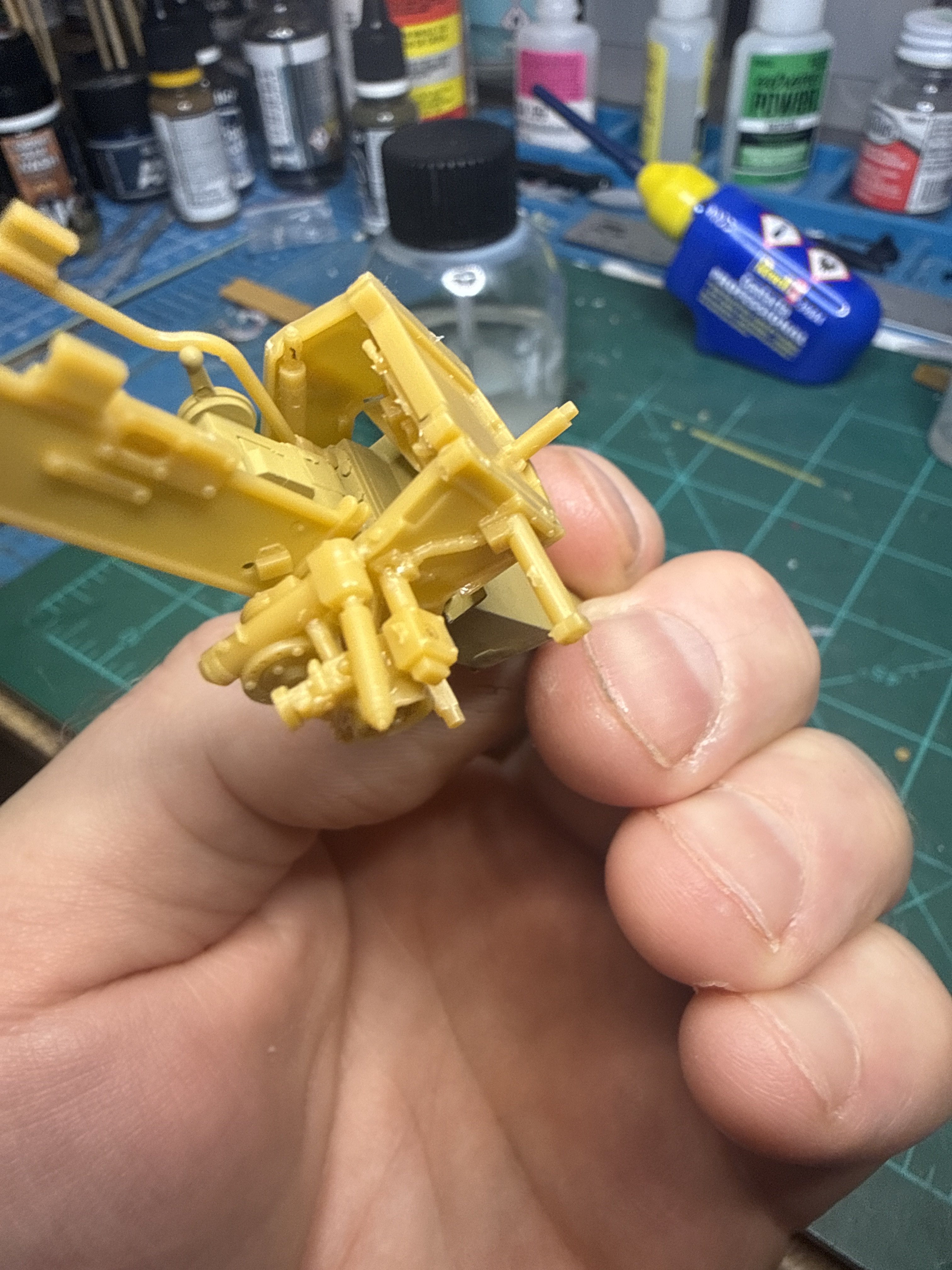
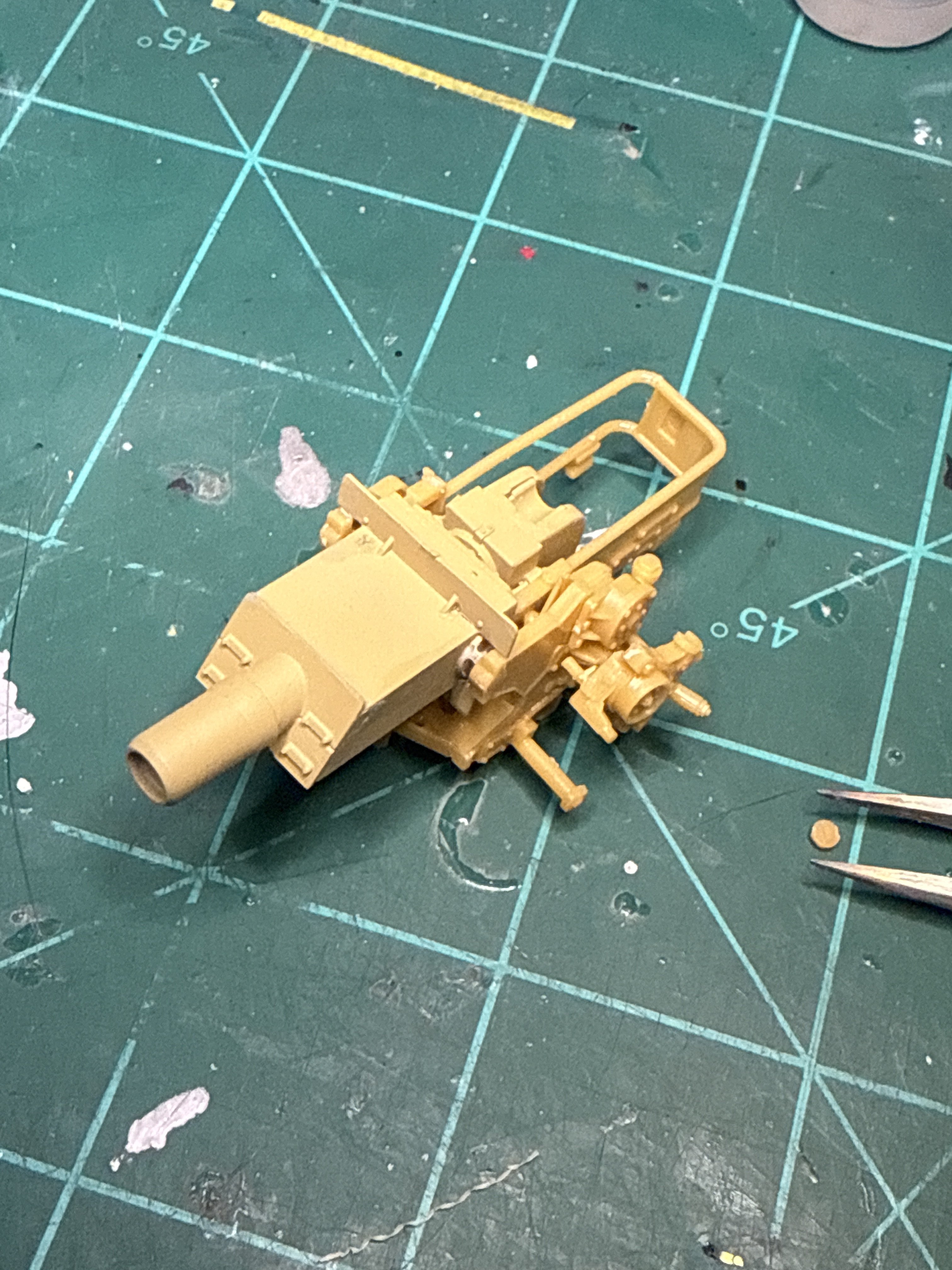
So I almost bought another as kit - and am glad I did not. Holy small parts! Instructions and diagrams leave you to figure out how it goes together which wouldn't be bad but the damn parts are so tiny and so many that I'm having to hold the assembly under the magnifying light in order to figure out how they go together. Knocked off my PE skill wait until I'm ready to paint this-14 more parts, well 15 but for the life of me I have no idea where this one piece goes- the piece by the tweezers. If I sneeze it will end up in the carpet monsters clutches.
 

Attachments

  • image.jpg
    image.jpg
    1.6 MB
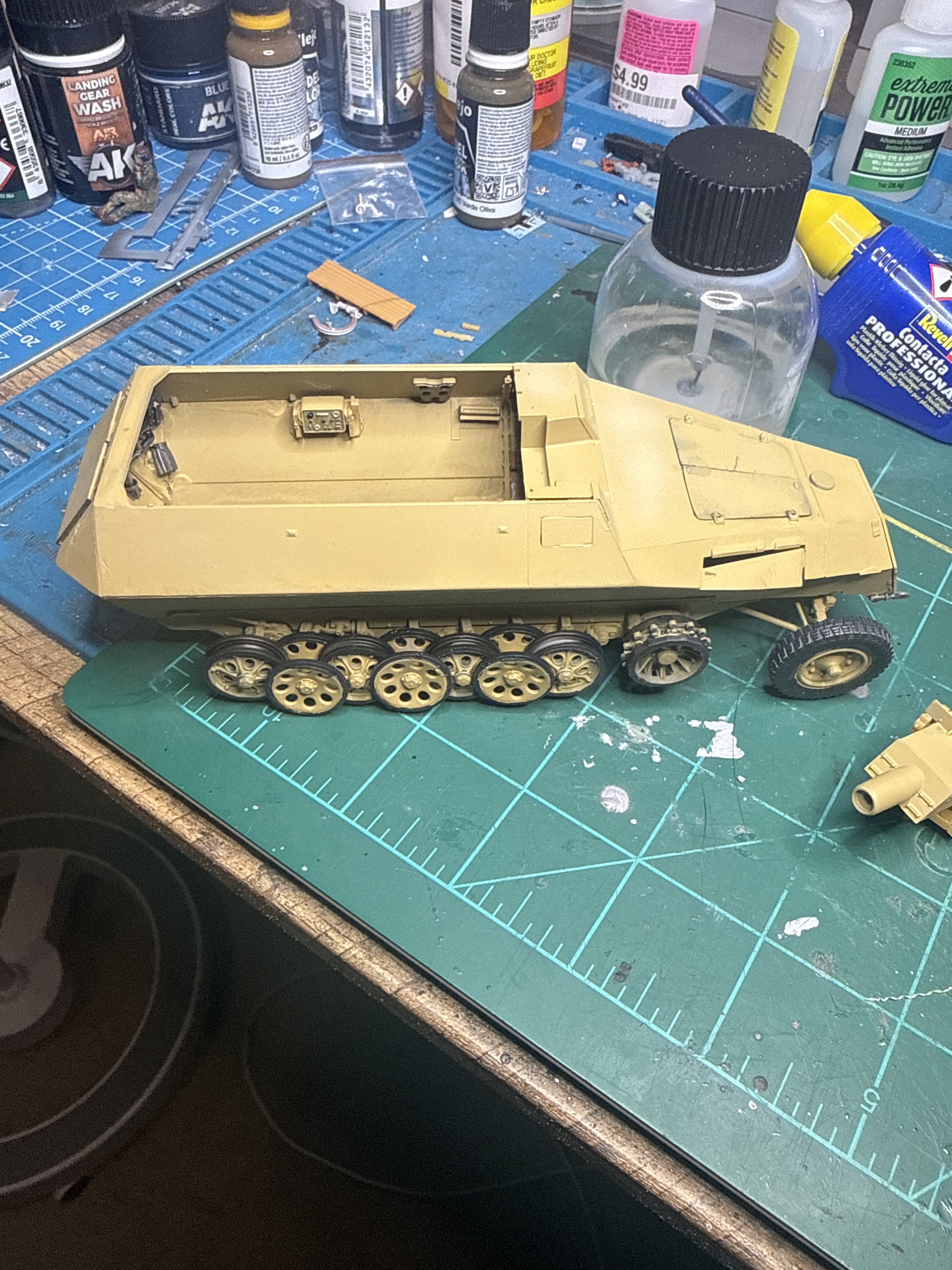
I added the wheels. Which are not perfect but a man on a fast horse won't notice. Some of you will.
 

Attachments

  • image.jpg
    image.jpg
    2.2 MB
And in a bone headed moment I made a mistake on the front that a few and my brother in law will notice. Tried popping the part off and apparently the CA is really super because it's stuck so…
 

Attachments

  • image.jpg
    image.jpg
    1.8 MB
If it is a big concern, have you tried a small amount of CA 'Un-cure' ?
Careful though, it can mess up paint and plastic as it is really runny.
Sometimes just a bit releases just enough to pop the piece off.
I can live with the mistake. Funny thing is I double checked what I was going to do and then did the opposite! I used rubbing alcohol to soften up a ca glued part and was able to fix the angle of landing gear that dried at a weird angle on a different build. Can't really do that with this.
 
You are totally right. Sometimes these small parts? You get the kid and look at the box and you say wow 800 pieces! I love building, so this is going to be great! And then you get home and find out for the one little small part there's 30 pieces that you need to figure out where the heck they go from the illustration they give you. And don't worry about small mistakes on a half track. Mud covers up a multitude of sins
 

Latest posts

Back
Top