
You are using an out of date browser. It may not display this or other websites correctly.
You should upgrade or use an alternative browser.
You should upgrade or use an alternative browser.
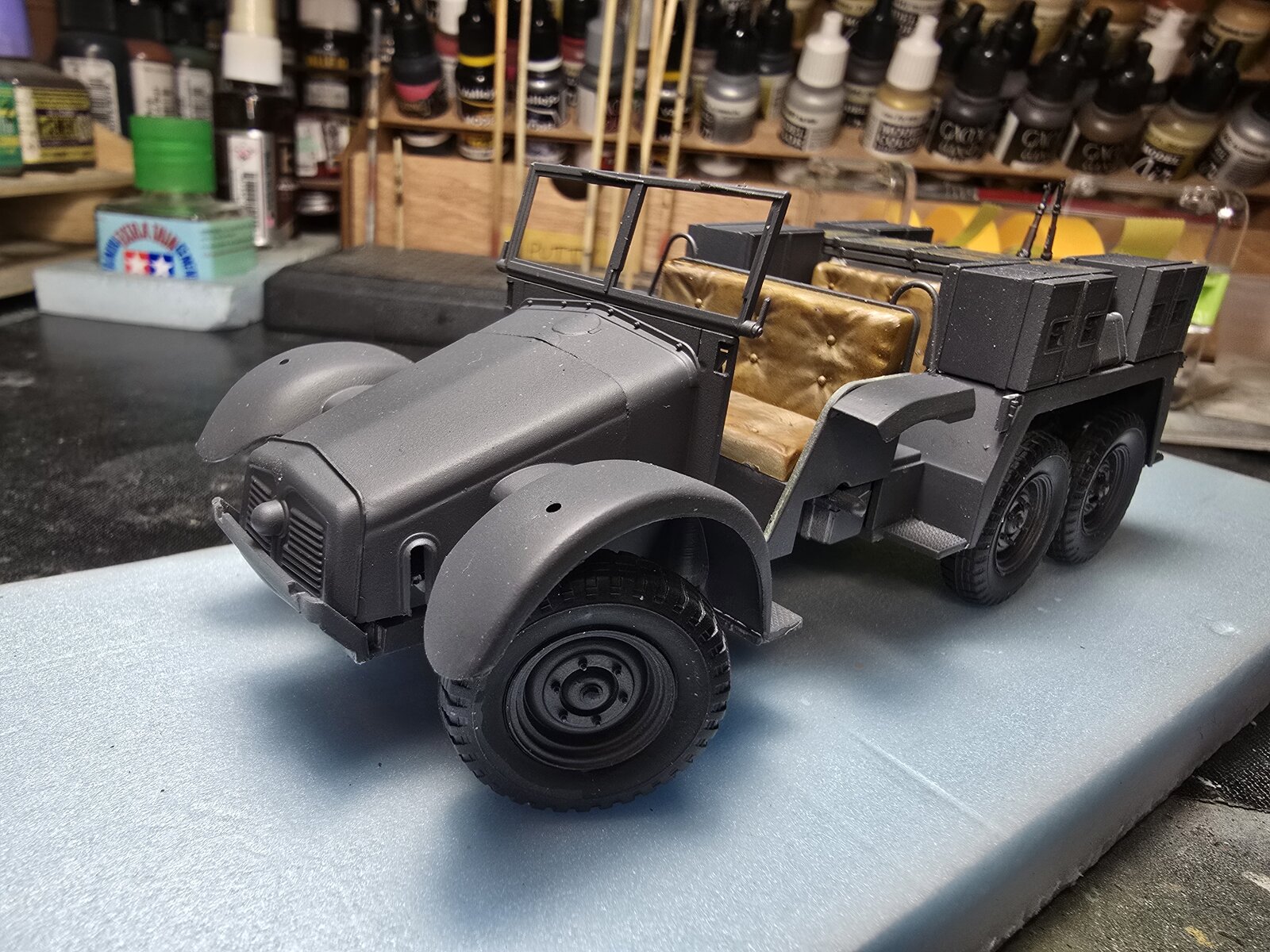
Krupp Protze 1 ton (6x4)Kfz.69 towing truck with 3.7cm Pak.
- Thread starter GaryG64
- Start date


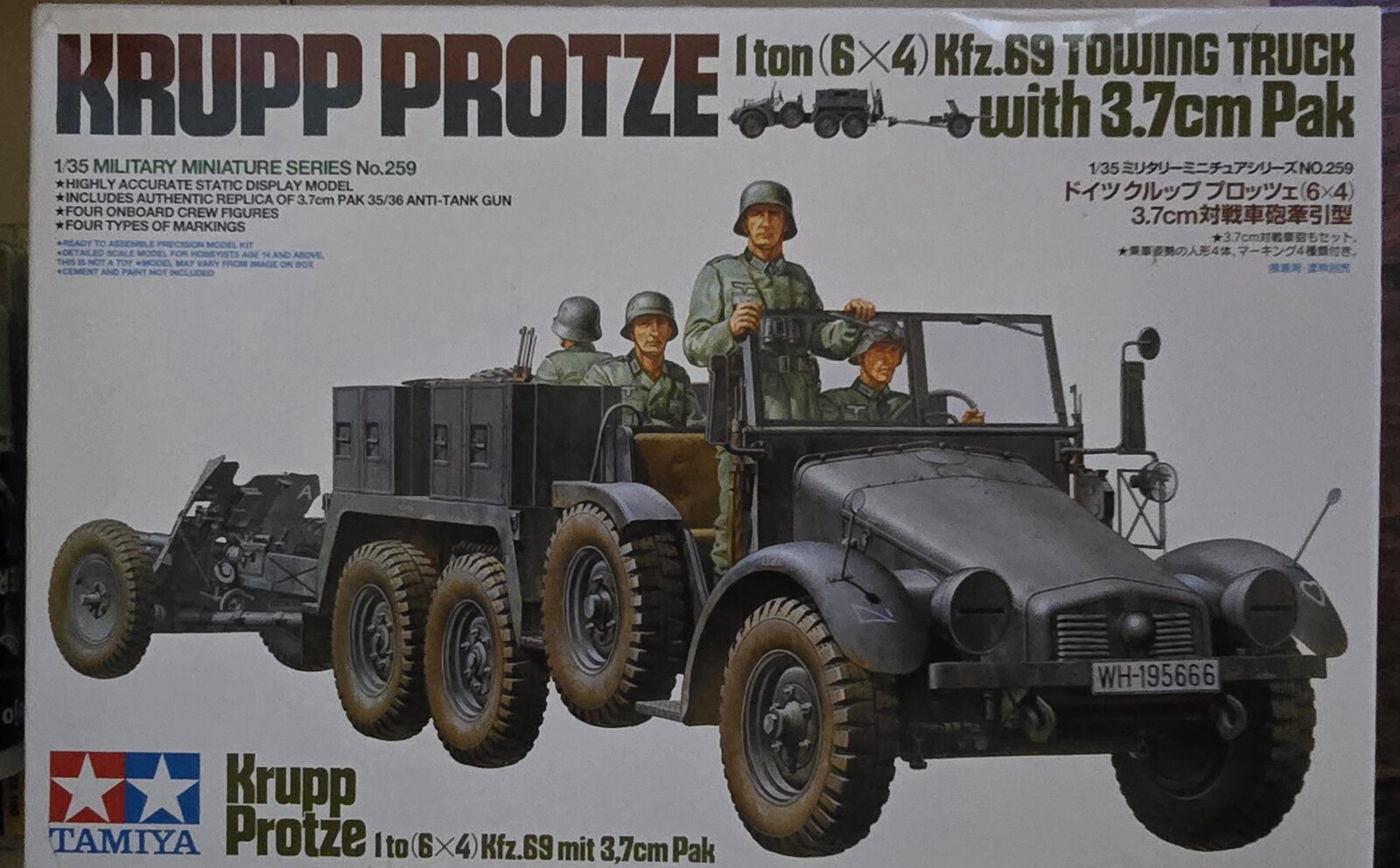
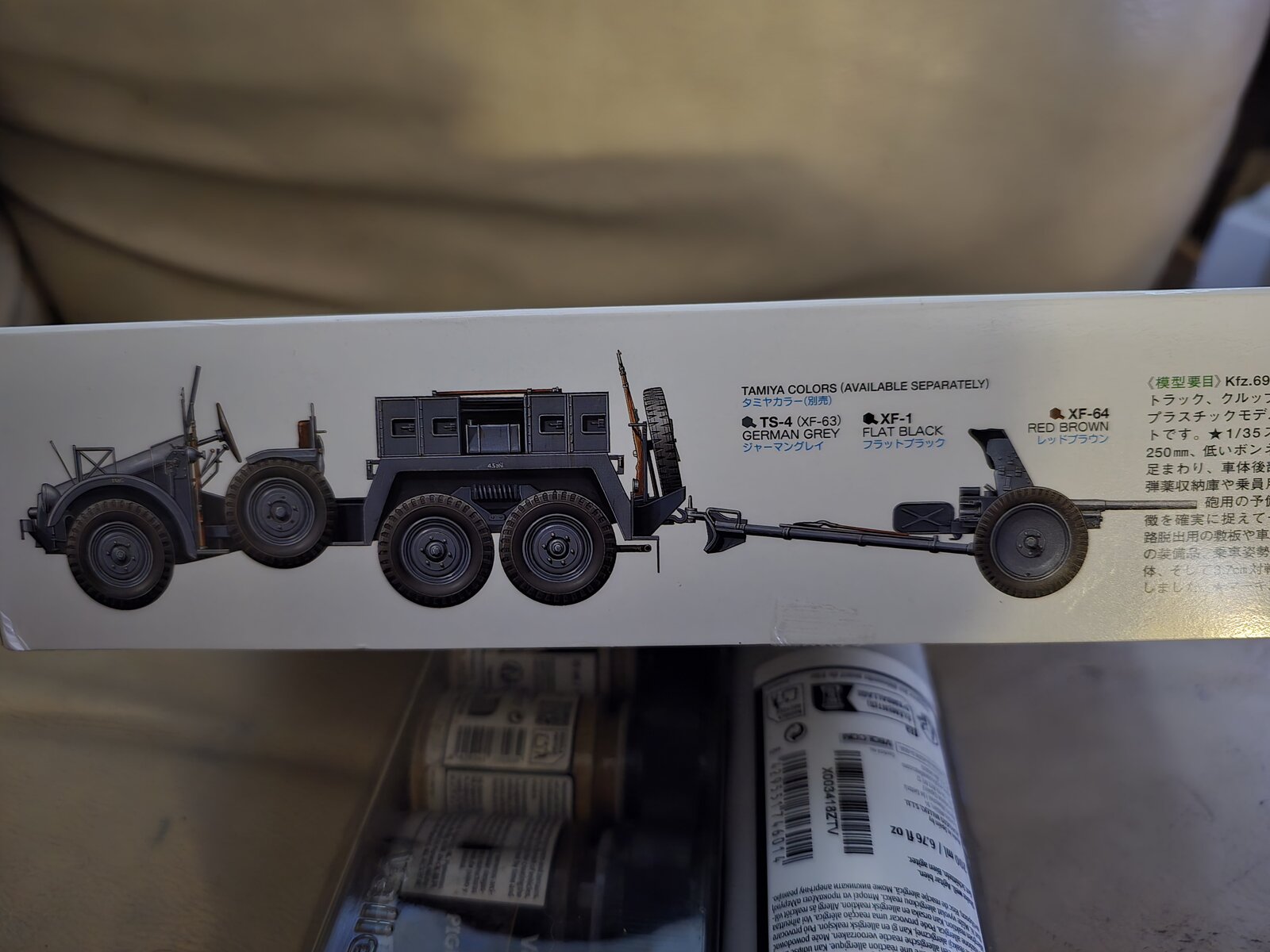

I hope to not to disappoint.Subscribed and looking forward to more pics!


I'm looking forward to it too! Got one in the stash for a rainy day...
It's quite an odd-looking vehicle. Kind of looks like an OpelI'm looking forward to it too! Got one in the stash for a rainy day...
Haha, but check out the driver visibility crossing rough ground!odd-looking


![Pampers Sensitive Baby Wipes, Clinically Proven, Fragrance Free, Unscented, Water Based, Hypoallergenic, Multi-Use, Hand Wipes 336 Wipes Total (6X Flip-Top Packs) [Packaging May Vary]](https://m.media-amazon.com/images/I/41KLBHu9CAL._SL500_.jpg)





As an Amazon Associate we earn from qualifying purchases. Product prices and availability are accurate as of the date/time indicated and are subject to change.
With this kit being nearly 50 years old, there is some flash and pin marks. The flash isn't horrible but there are parts where it is present. There was one part that needed some filler where the two parts meet, again not horrible and was fixable with so Vallejo putty and a blade.
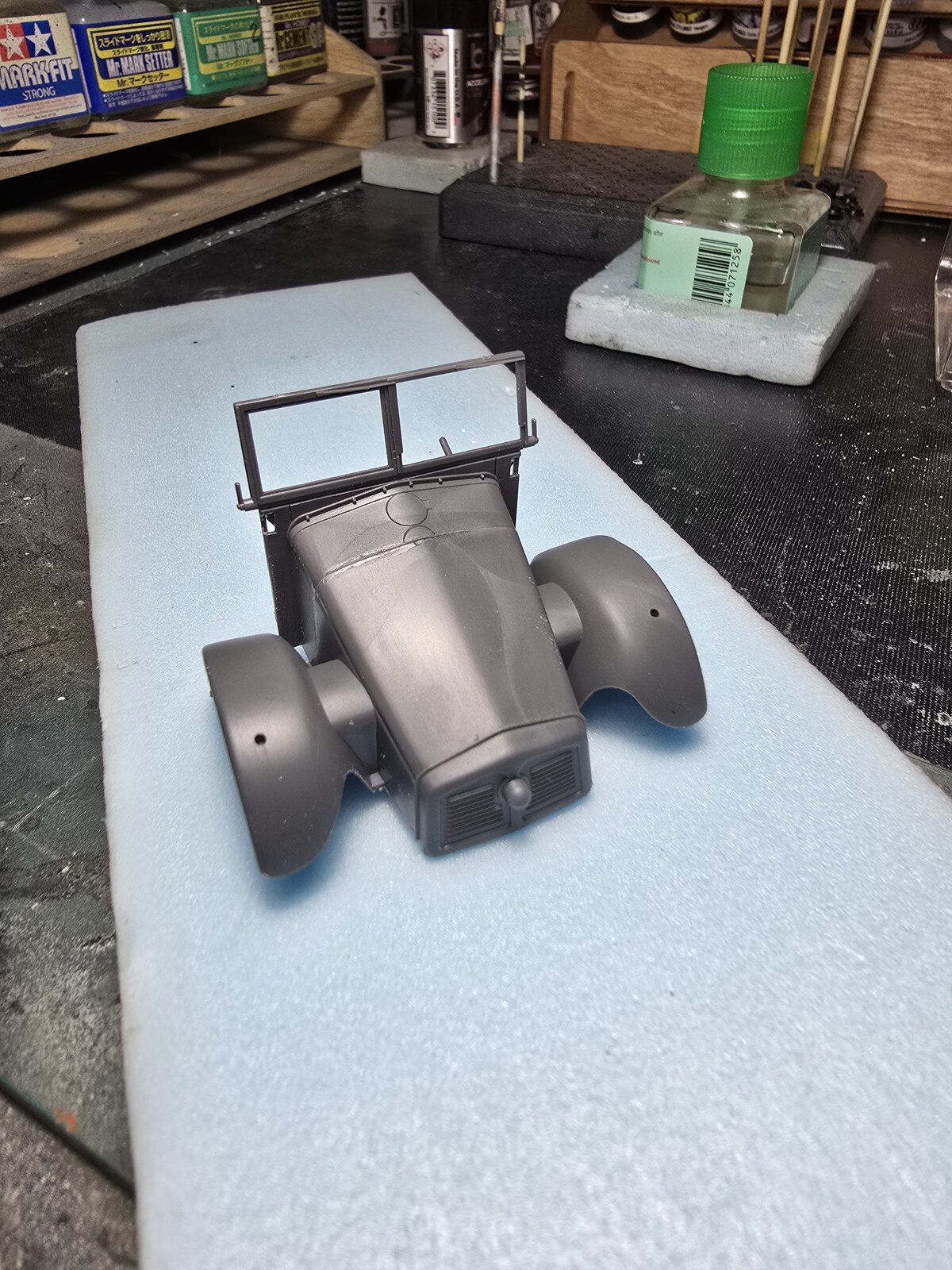
I decided that I would paint this in Black Green RLM70. (It seems to be close to the German color.)
I am not too concerned with the accuracy of this kit, but I do want it to look good, of course.
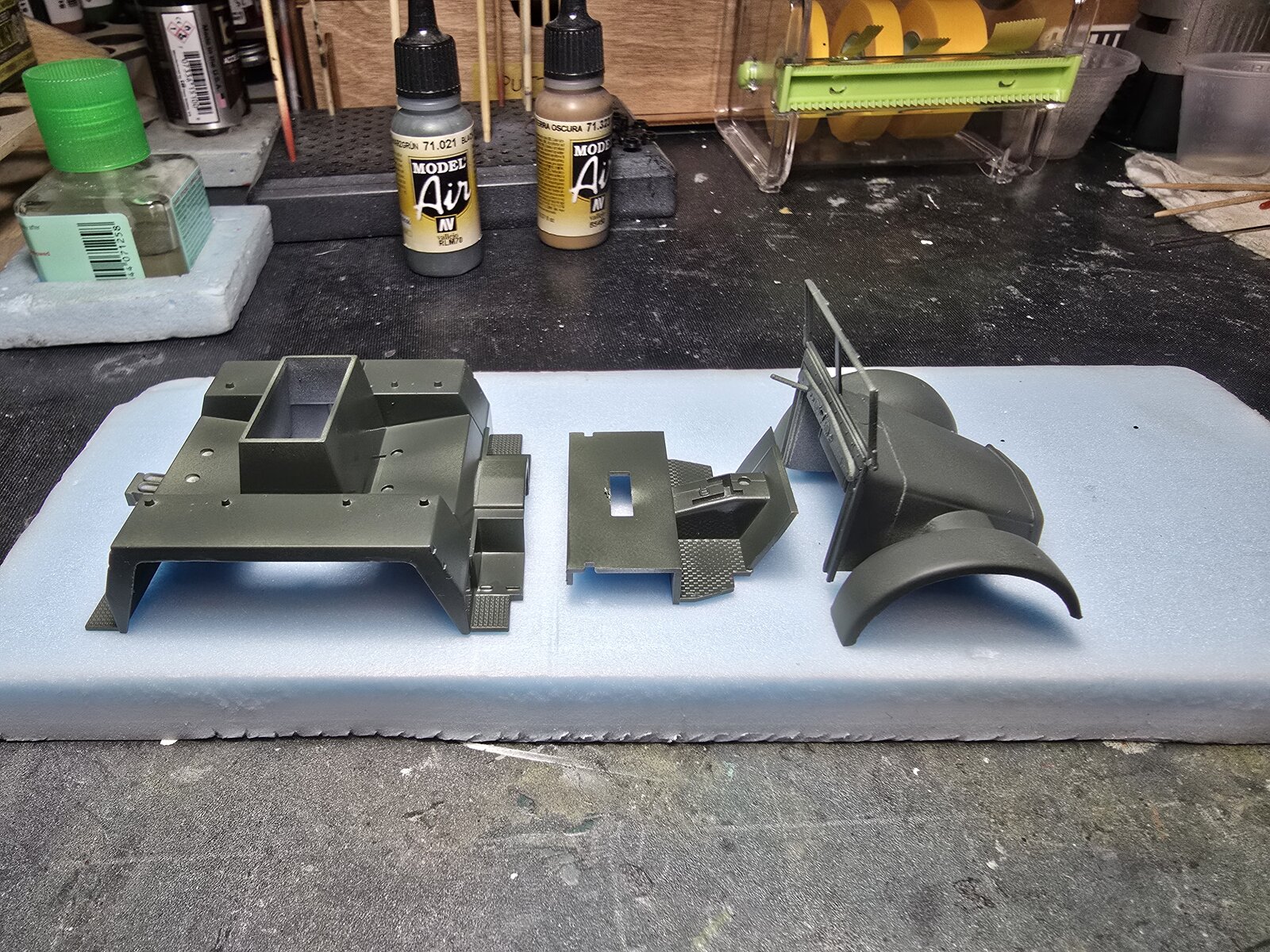
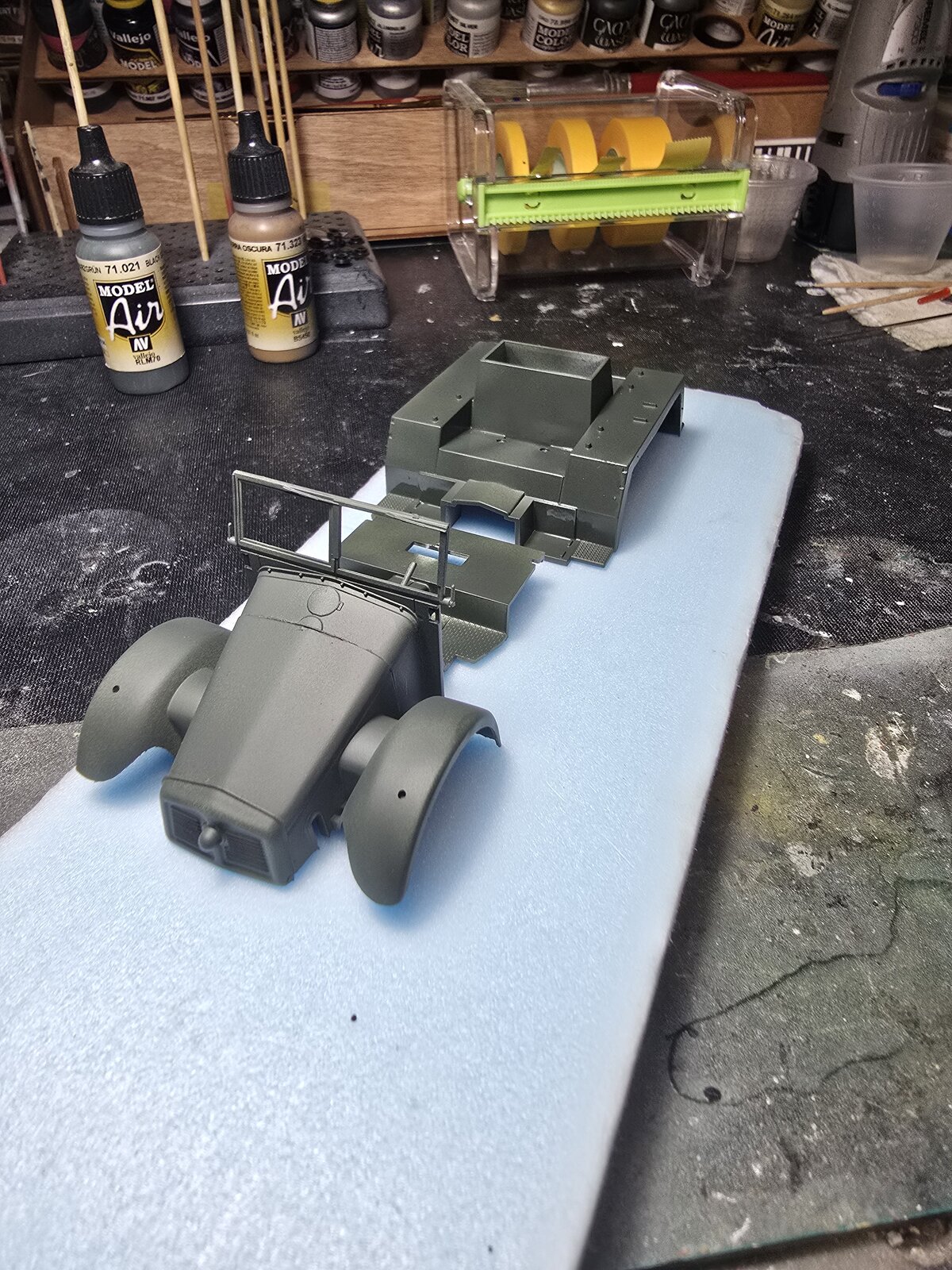
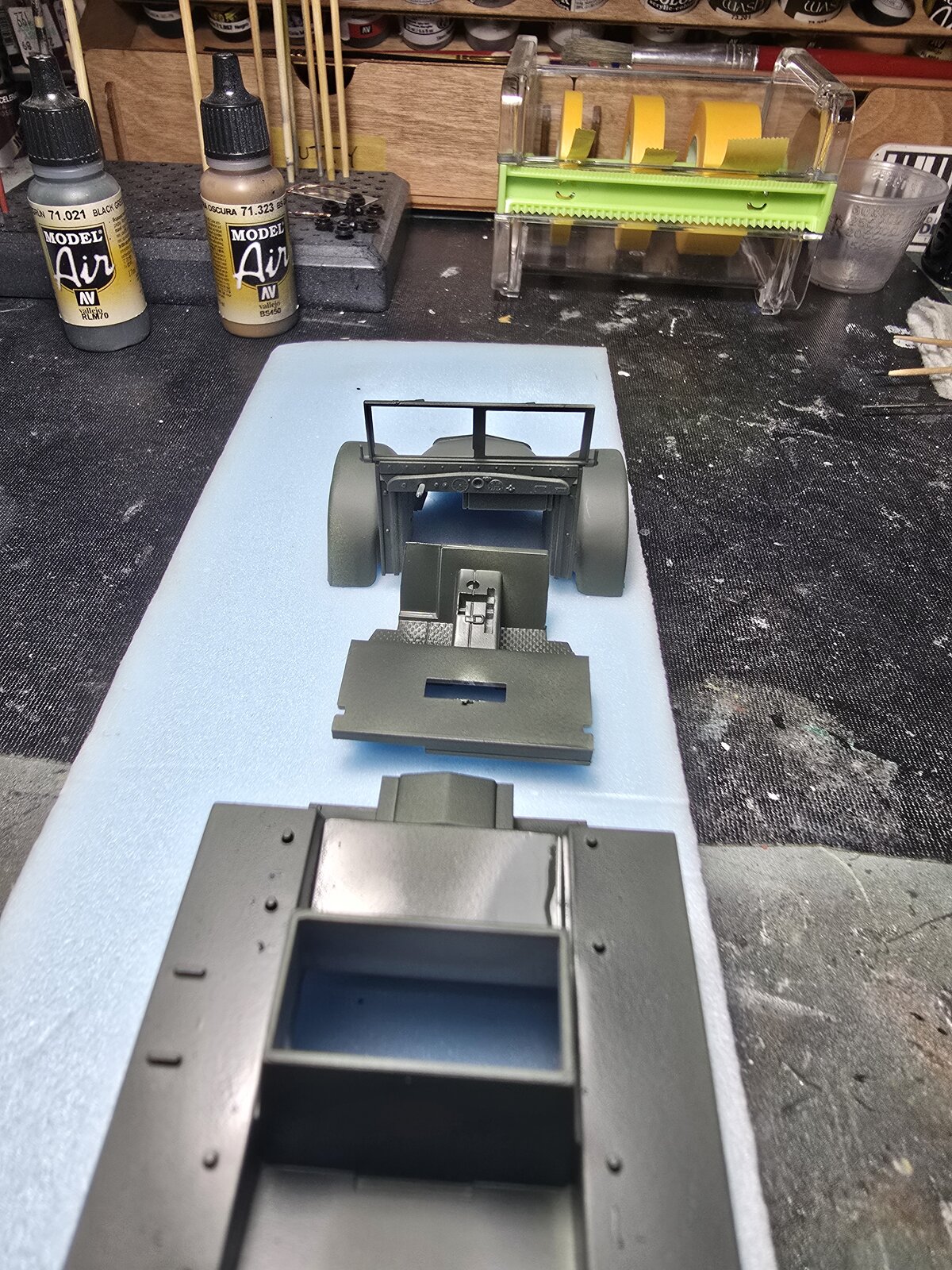
I am not too concerned with the accuracy of this kit, but I do want it to look good, of course.
Last edited:

That's a great color.I decided that I would paint this in Black Green RLM70. (It seems to be close to the German color.)
I am not too concerned with the accuracy of this kit, but I do want it to look good, of course.
View attachment 141060
View attachment 141061
View attachment 141062

Jakko
Well-Known Member
In that it's a dark colour, yes. Other than that … noBlack Green RLM70. (It seems to be close to the German color.)
German vehicles until early 1943 were dark grey, not green, and aside from that, RLM 70 is an aviation colour and so would be very unlikely to be used on an Army vehicle. (RLM = Reichsluftfahrtministerium, "State Ministry of Aviation".)
locomotive
Well-Known Member
- Joined
- Mar 2, 2025
- Messages
- 337
In later years of a struggling and resource starved regime, I doubt anything was really set in stone.
I believe there's always a prototype for everything.
I believe there's always a prototype for everything.
Thanks, but this is therapy for me with the war against my demons in battle each day.In that it's a dark colour, yes. Other than that … no
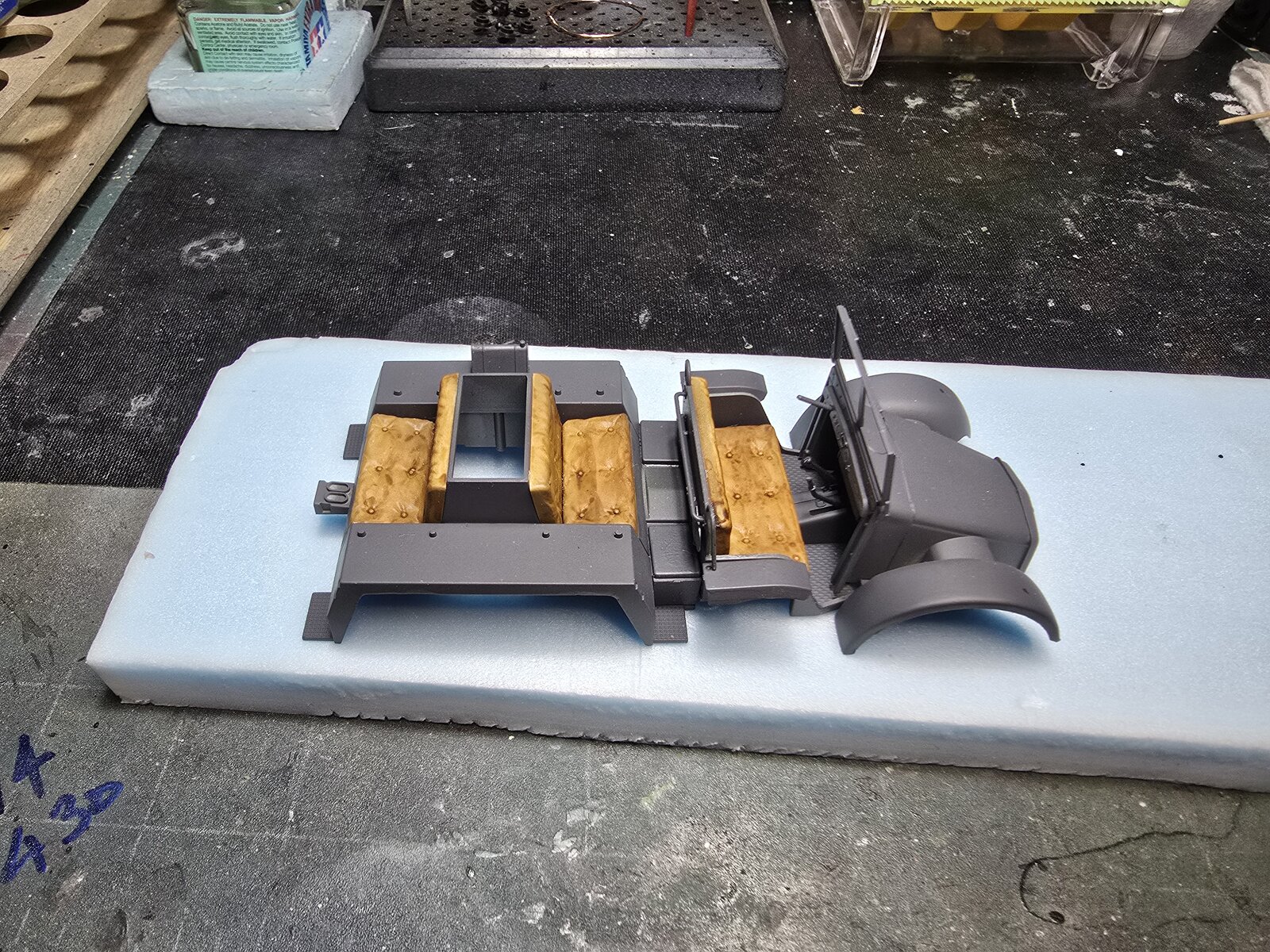
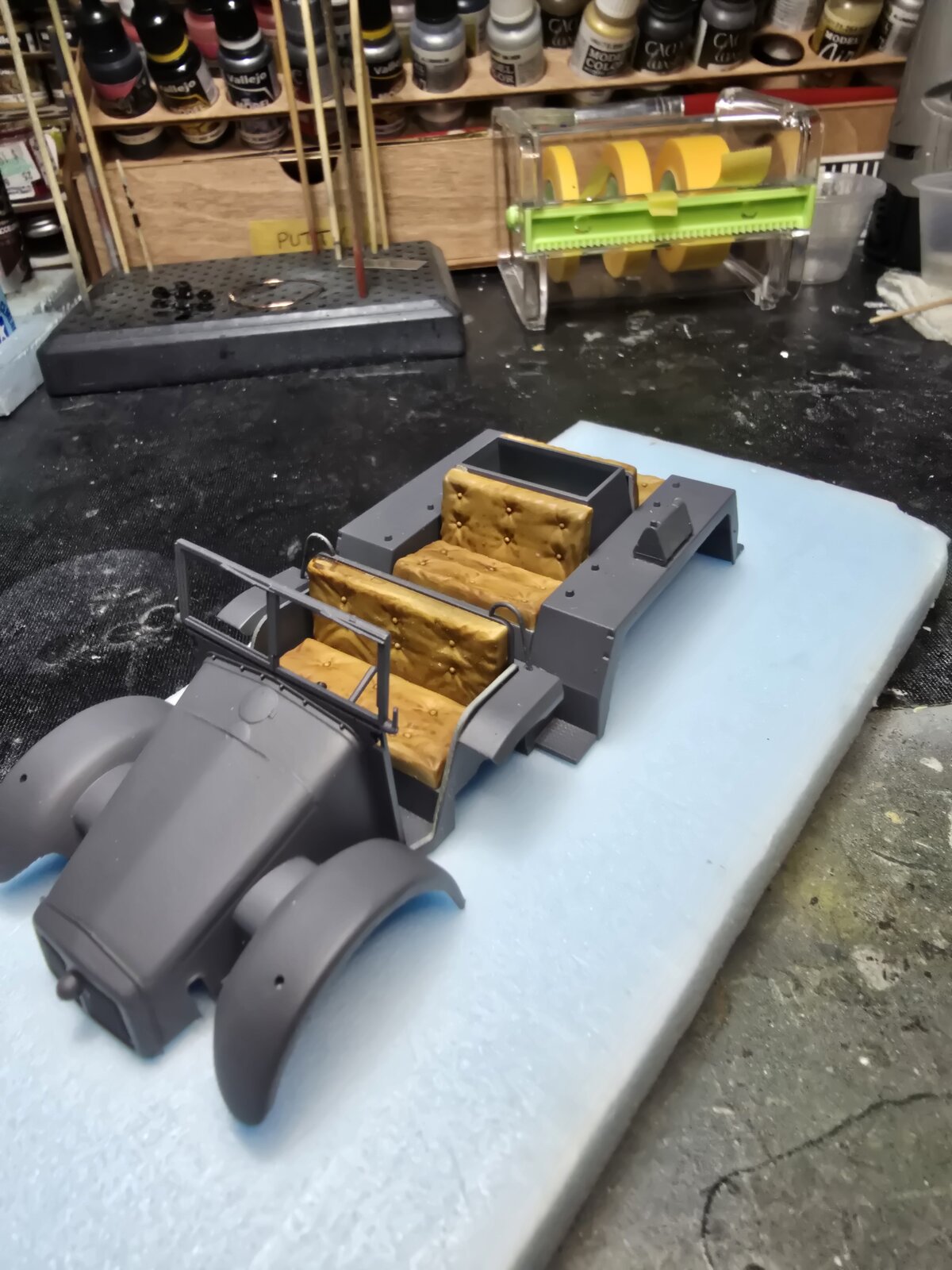
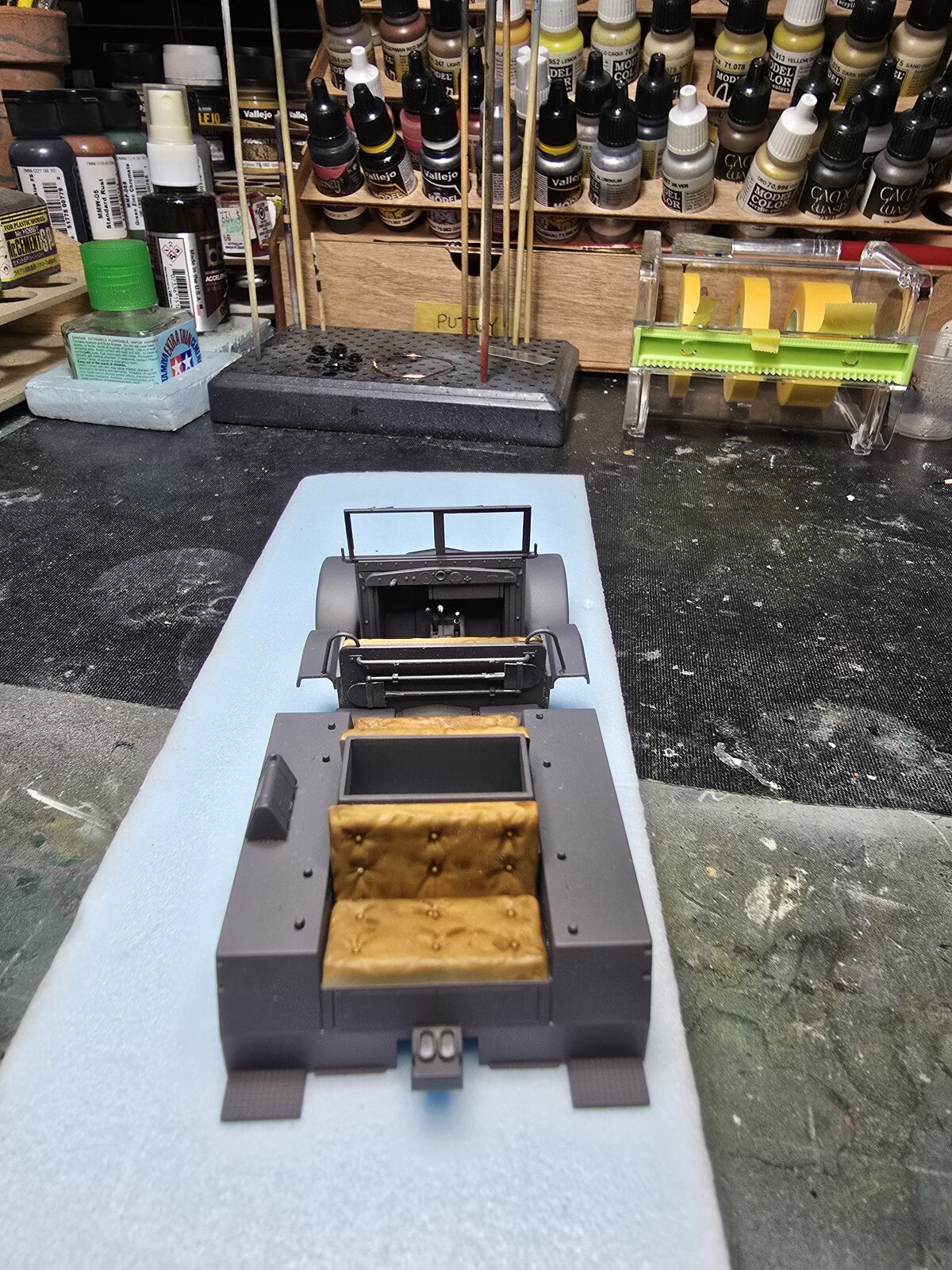
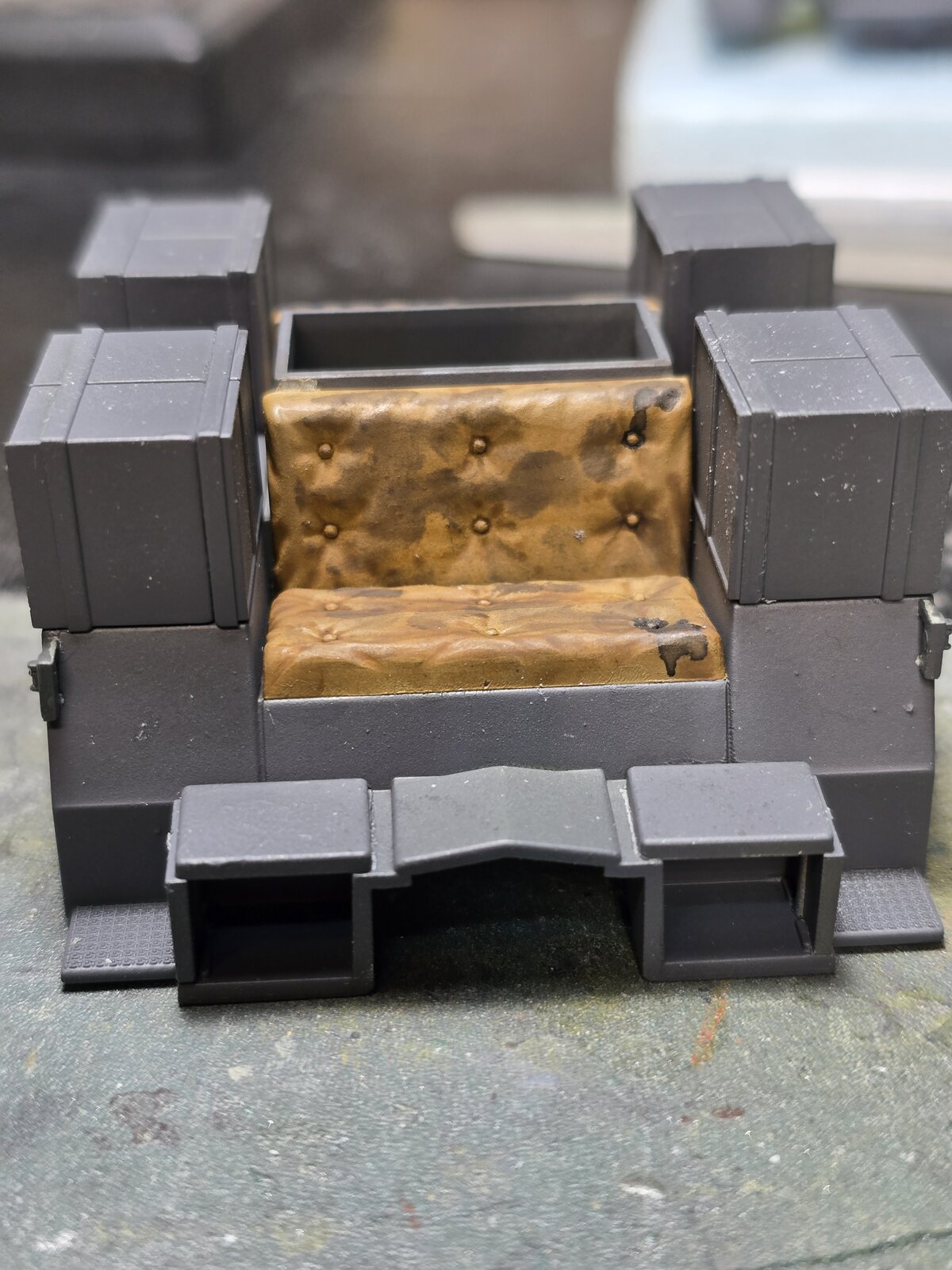
Whoa, they's ridin' in style ! Those aren't bench seats, they's chesterfields!what the vehicle might look like
I only say that (and @Jakko ) can give us the proper reference, I read somewhere that I think it was in early trucks, seats were literally formed metal, and soldiers referred to them with German word for bucket, hence the now popularized but infinitely more comfortable 'bucket seat'.
Those are what come in the kit.Whoa, they's ridin' in style ! Those aren't bench seats, they's chesterfields!
I only say that (and @Jakko ) can give us the proper reference, I read somewhere that I think it was in early trucks, seats were literally formed metal, and soldiers referred to them with German word for bucket, hence the now popularized but infinitely more comfortable 'bucket seat'.
Yes, I think the lighting and wash just made them look extra comfy in the photos!Those are what come in the kit

Keep on, keep on, wanna see what comes next!
Cheers!
Thank you! I'm actually heading upstairs to continue.Yes, I think the lighting and wash just made them look extra comfy in the photos!
Keep on, keep on, wanna see what comes next!
Cheers!
Haha, that's my line!heading upstairs
My bench is in an otherwise cramped corner on the second floor. Even the dog avoids it because he prefers to stretch out on the couch in the TV room!
Mine will curl up right behind my chair, cramping me up against my bench... Brutus MOVE!Haha, that's my line!
My bench is in an otherwise cramped corner on the second floor. Even the dog avoids it because he prefers to stretch out on the couch in the TV room!

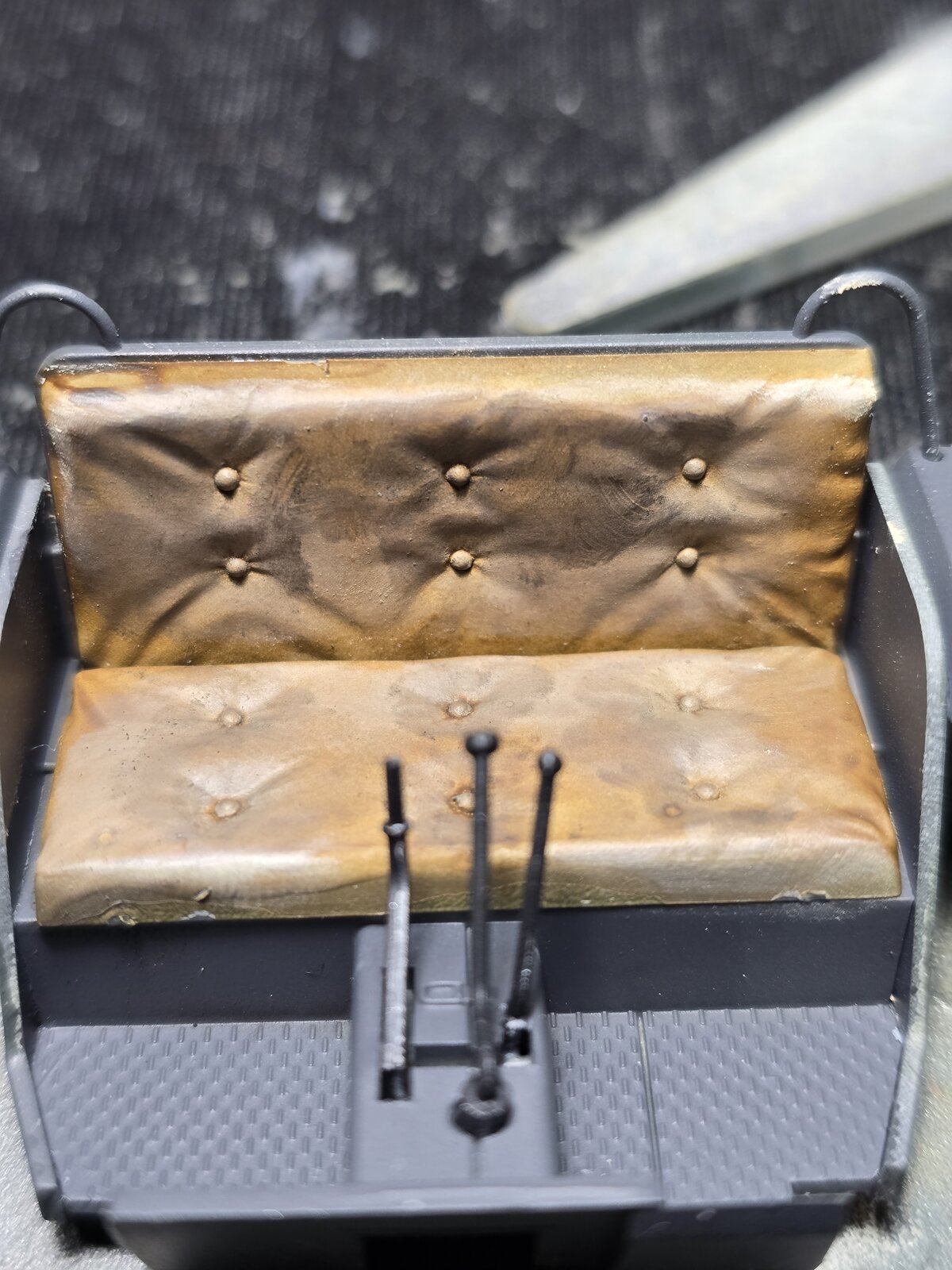
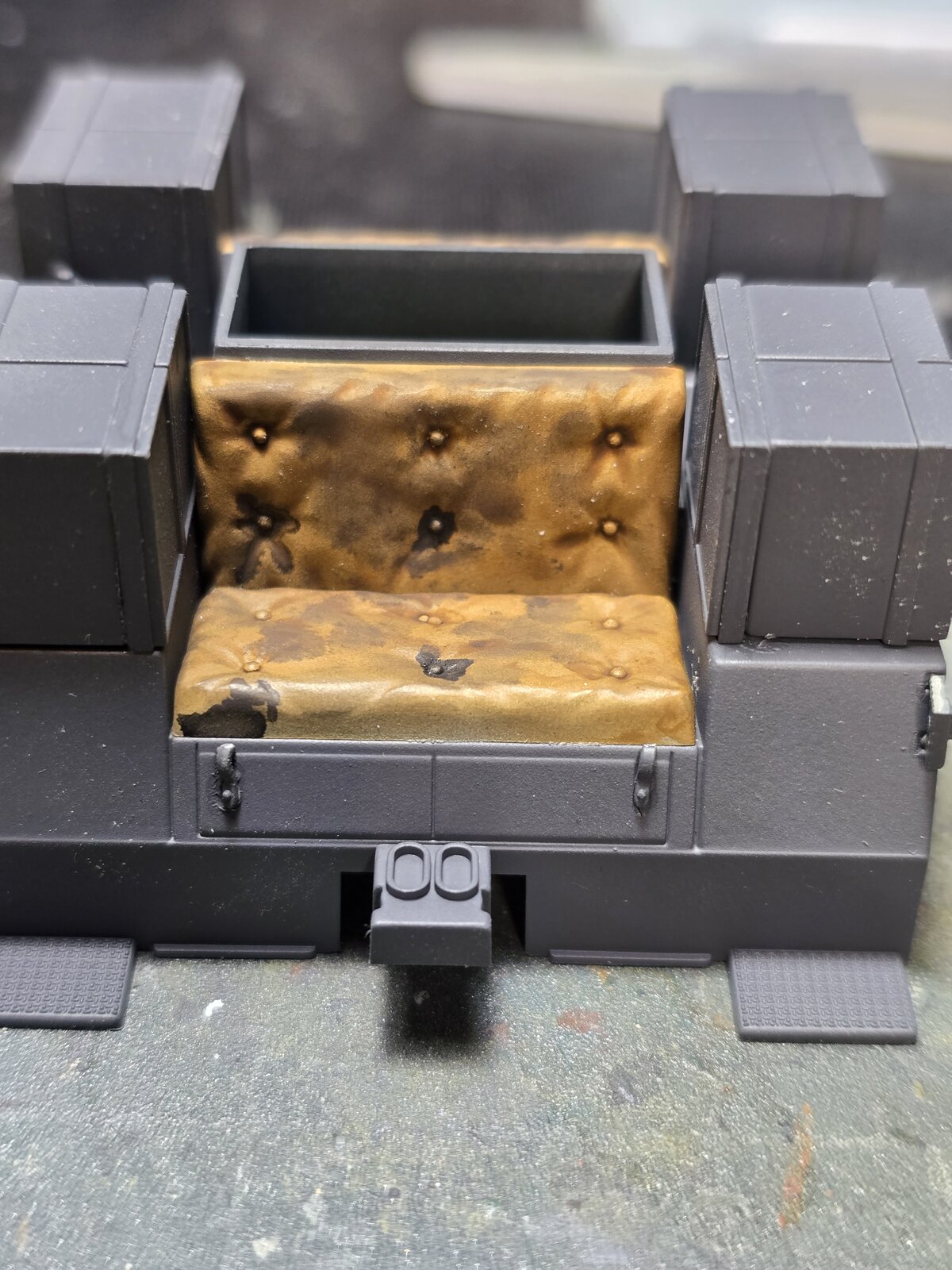
Jakko
Well-Known Member
Kübel in German means "a fairly tall tub or bucket, especially one with two handles on the sides (rather than a pail)" (per English Wiktionary) though it's apparently a regional word, and in historical context also means "in prison cells, a barrel used instead of a toilet" (per German Wiktionary).I read somewhere that I think it was in early trucks, seats were literally formed metal, and soldiers referred to them with German word for bucket
Kübelwagen was originally a nickname for early military motorcars, which (according to Werner Oswald in Kraftfahrzeuge und Panzer der Reichswehr, Wehrmacht und Bundeswehr ab 1900, "Motor Vehicles and Tanks of the Reichswehr, Wehrmacht and Bundeswehr from 1900 onward") consisted of commercial chassis were fitted with a platform onto which seats and other equipment were set; because these vehicles were open-topped and had no doors, the seats were fashioned with high sides and backs (for the time) so that soldiers would not fall out of them.
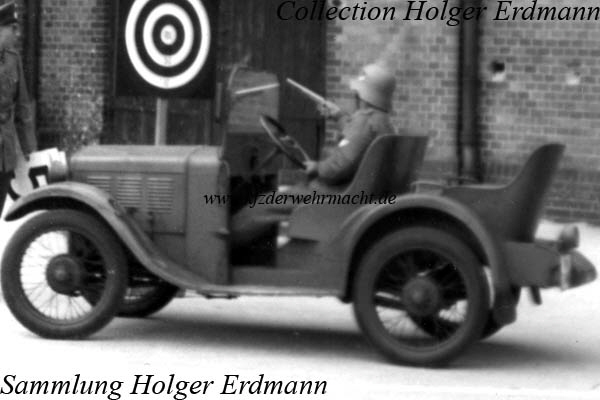
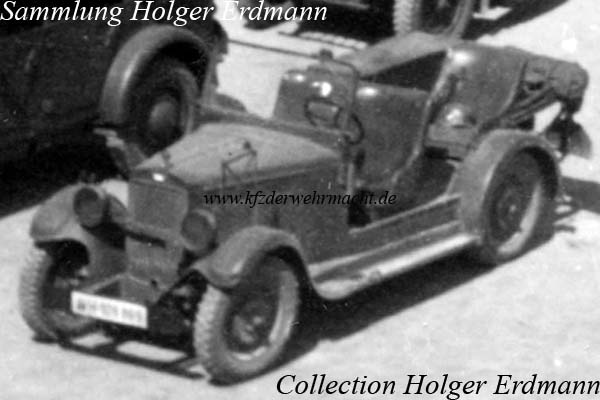
To modern eyes, those don't look particularly high, but most 1920s–30s car seats were much simpler and had no sides at all.
After their shape, those seats became known as Kübel (note that the plural is the same as the singular, so not *Kübels) and from there, the nickname was transferred to the vehicles themselves — Wagen means "car", or rather, "wheeled vehicle" in almost the widest sense. It stuck even when the vehicles in question no longer had a need for such seats.
Awesome! You never fail to deliver!Kübel
Thanks, brother. Fascinating article.Kübel in German means "a fairly tall tub or bucket, especially one with two handles on the sides (rather than a pail)" (per English Wiktionary) though it's apparently a regional word, and in historical context also means "in prison cells, a barrel used instead of a toilet" (per German Wiktionary).
Kübelwagen was originally a nickname for early military motorcars, which (according to Werner Oswald in Kraftfahrzeuge und Panzer der Reichswehr, Wehrmacht und Bundeswehr ab 1900, "Motor Vehicles and Tanks of the Reichswehr, Wehrmacht and Bundeswehr from 1900 onward") consisted of commercial chassis were fitted with a platform onto which seats and other equipment were set; because these vehicles were open-topped and had no doors, the seats were fashioned with high sides and backs (for the time) so that soldiers would not fall out of them.
View attachment 141405View attachment 141406
To modern eyes, those don't look particularly high, but most 1920s–30s car seats were much simpler and had no sides at all.
After their shape, those seats became known as Kübel (note that the plural is the same as the singular, so not *Kübels) and from there, the nickname was transferred to the vehicles themselves — Wagen means "car", or rather, "wheeled vehicle" in almost the widest sense. It stuck even when the vehicles in question no longer had a need for such seats.

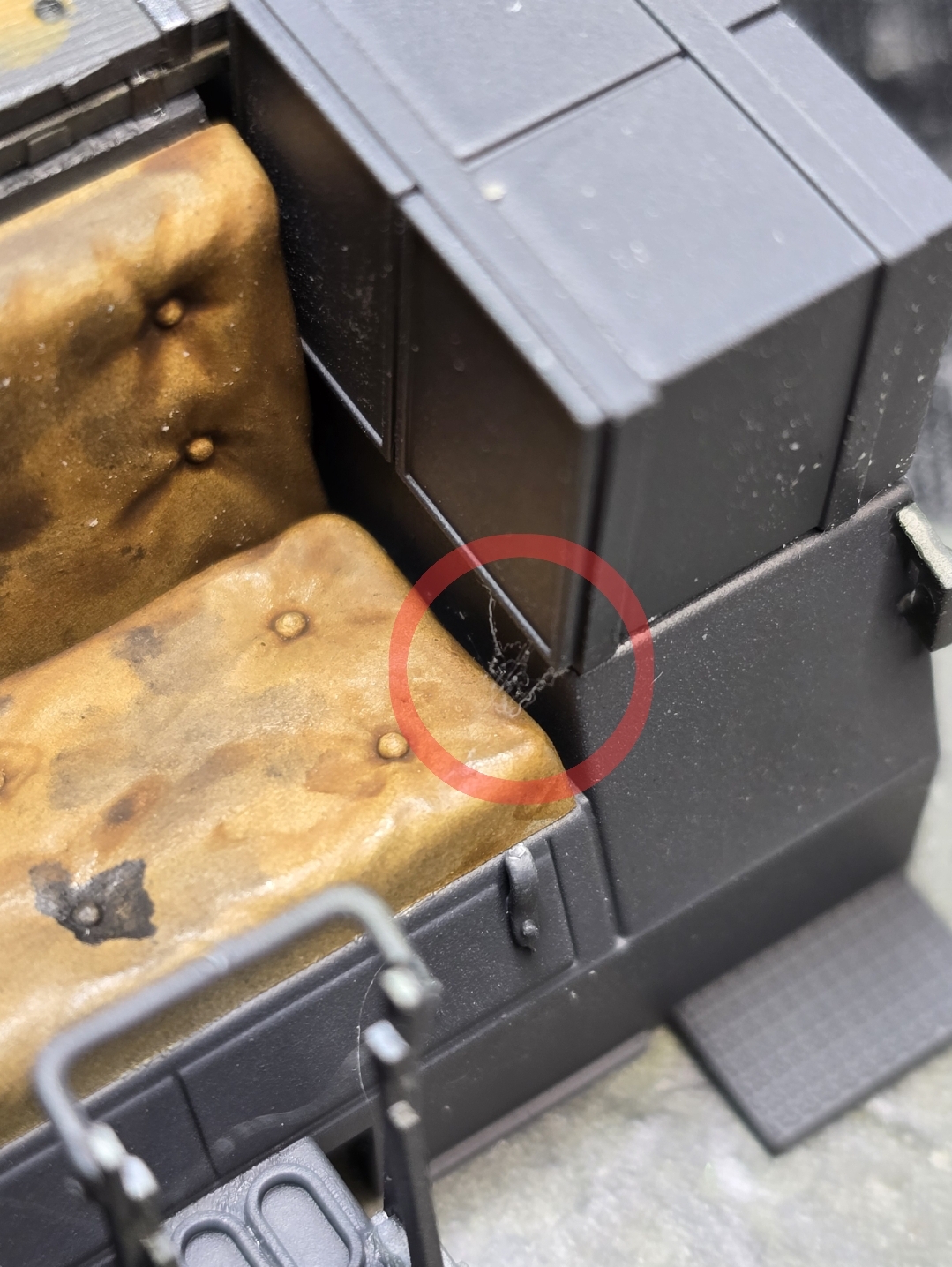
Wow, you are even getting your trained spider to help with the weathering.......PanthermanSo, I have this teeny tiny little spider who comes and visits me on my bench.
Today, I find a tiny web on my kit. Lol.
View attachment 141509
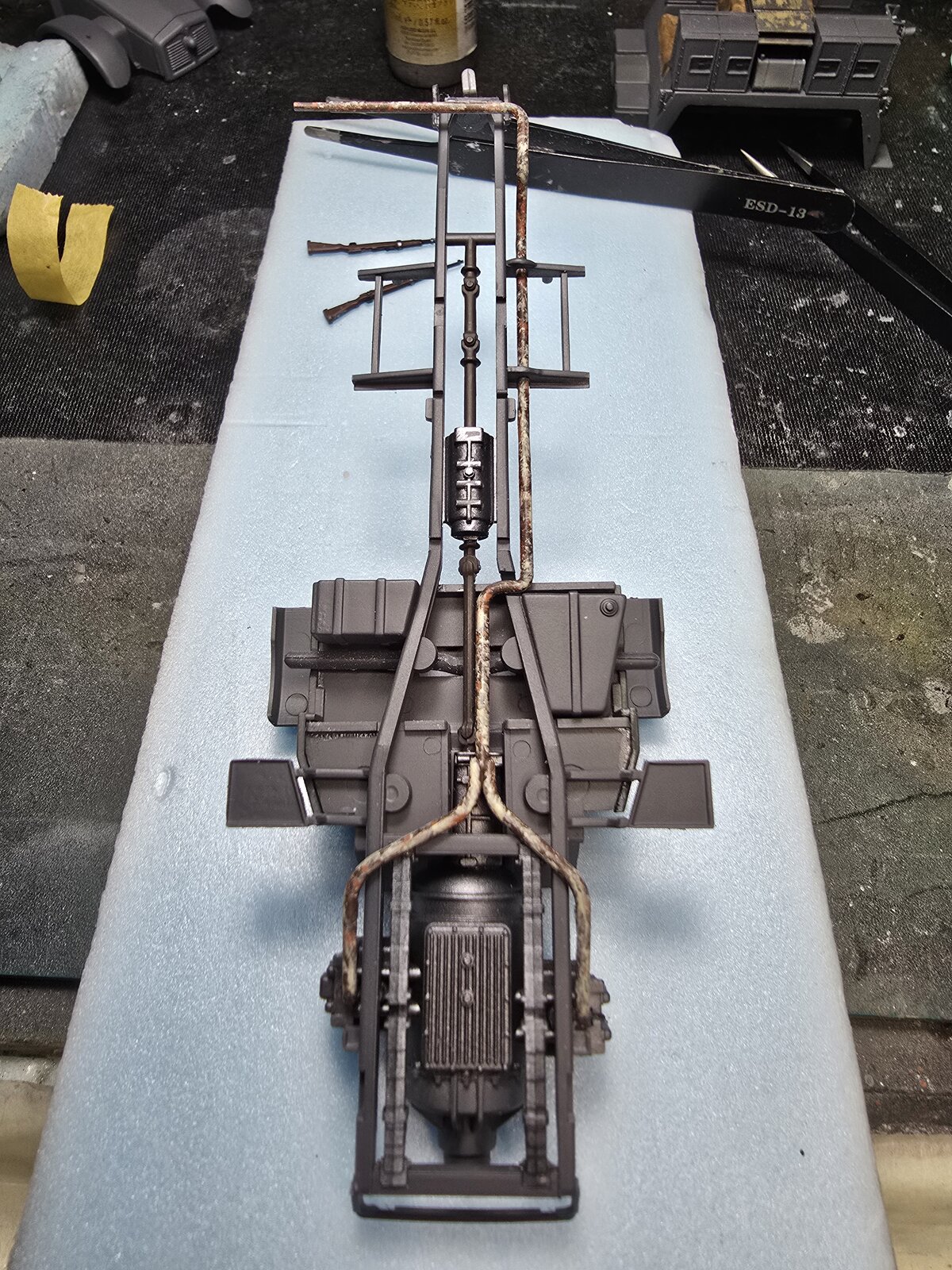
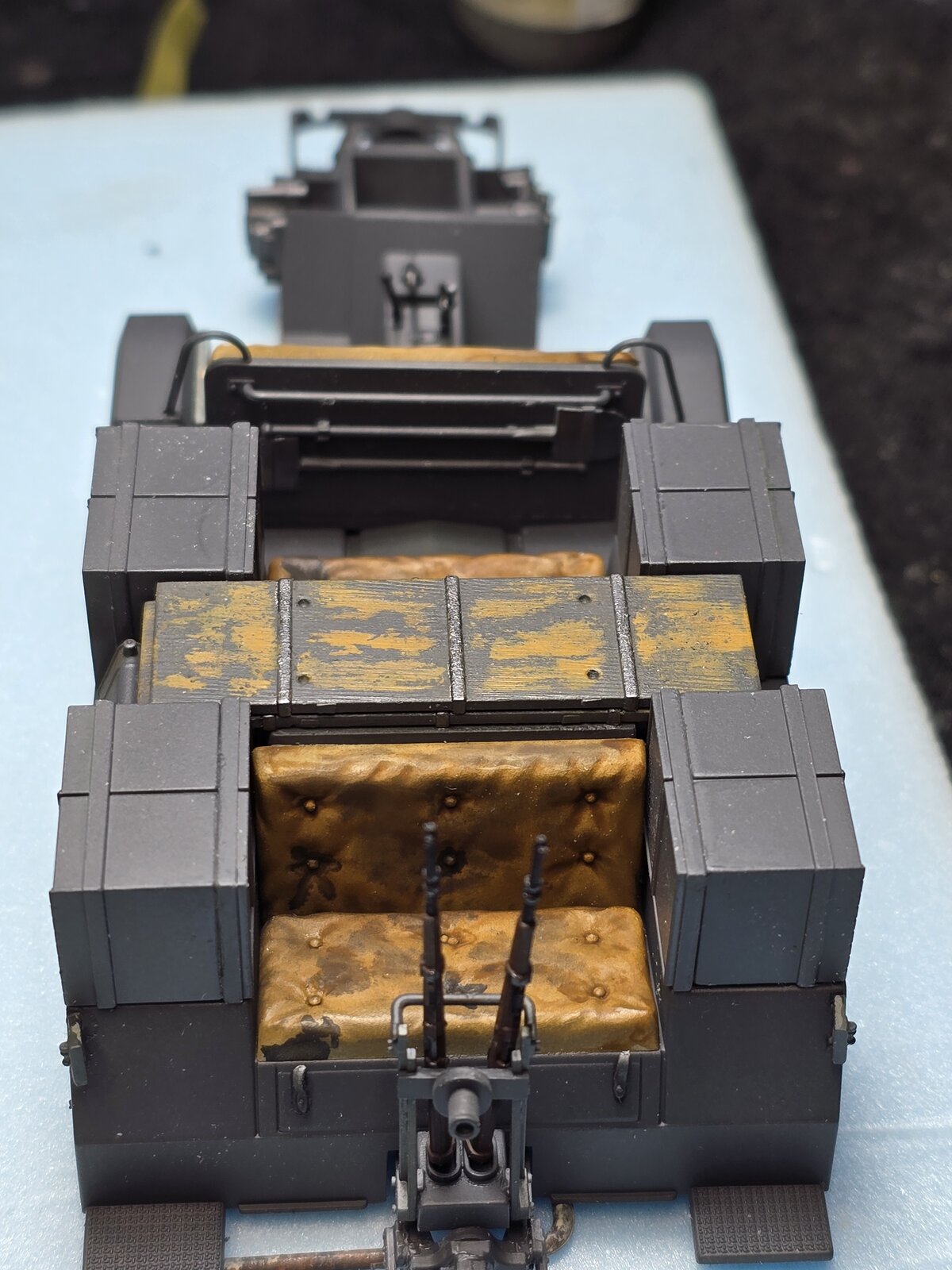
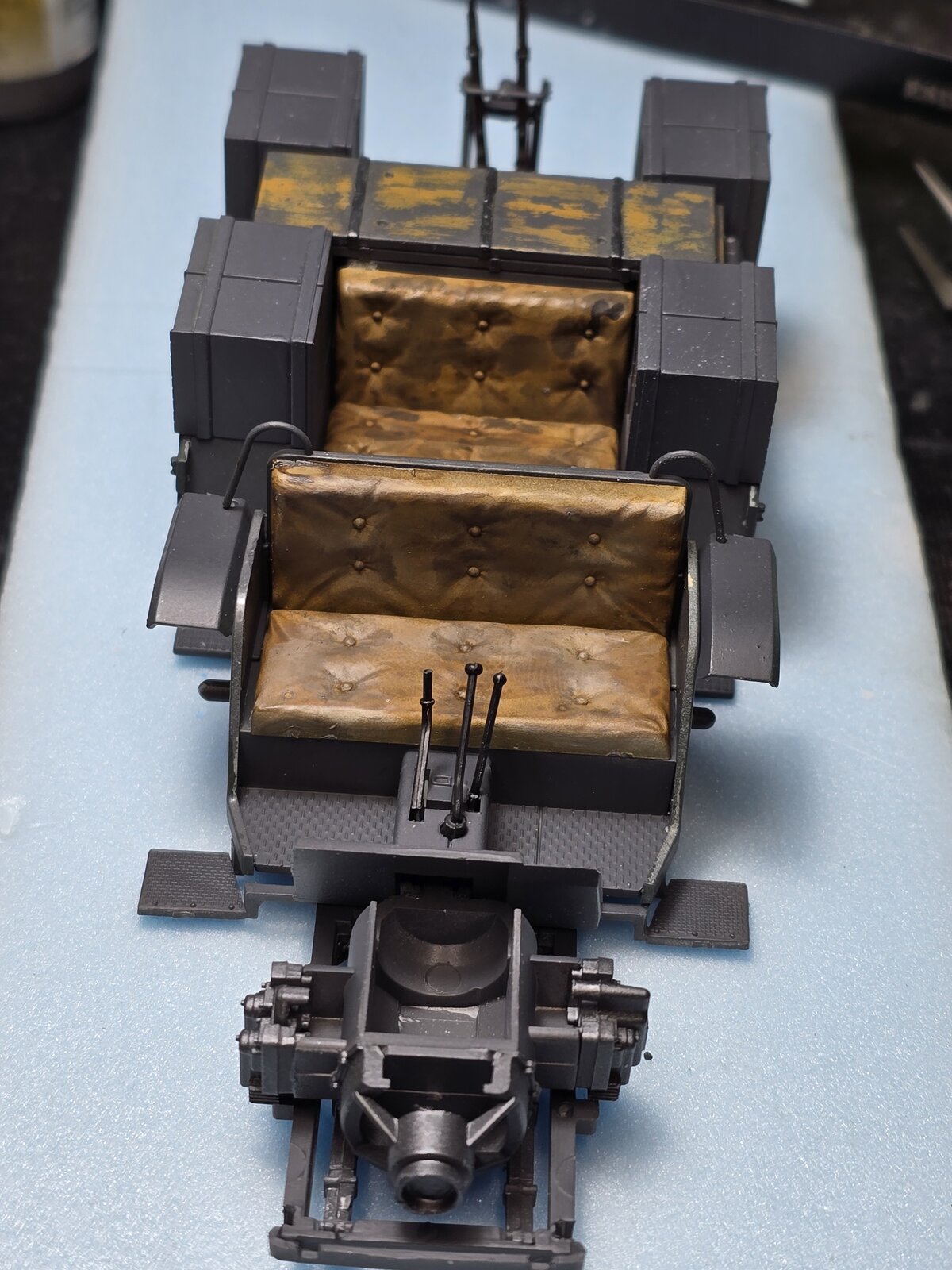
Loving the weathering, especially the seats. PanthermanWorking on the chassis.
I did some weathering on the exhaust.
View attachment 141612
View attachment 141613
View attachment 141614
Thank you, PMLoving the weathering, especially the seats. Pantherman
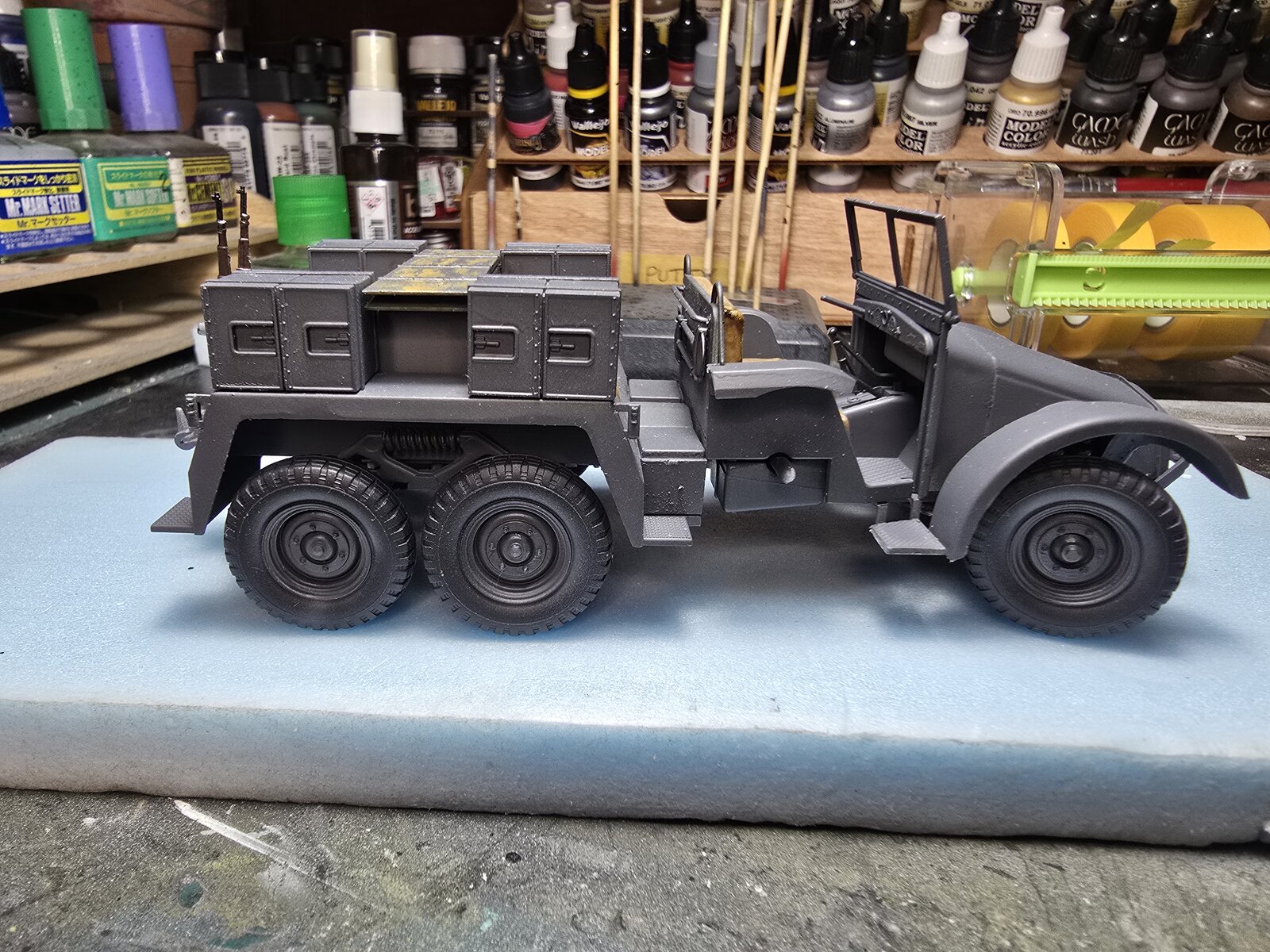
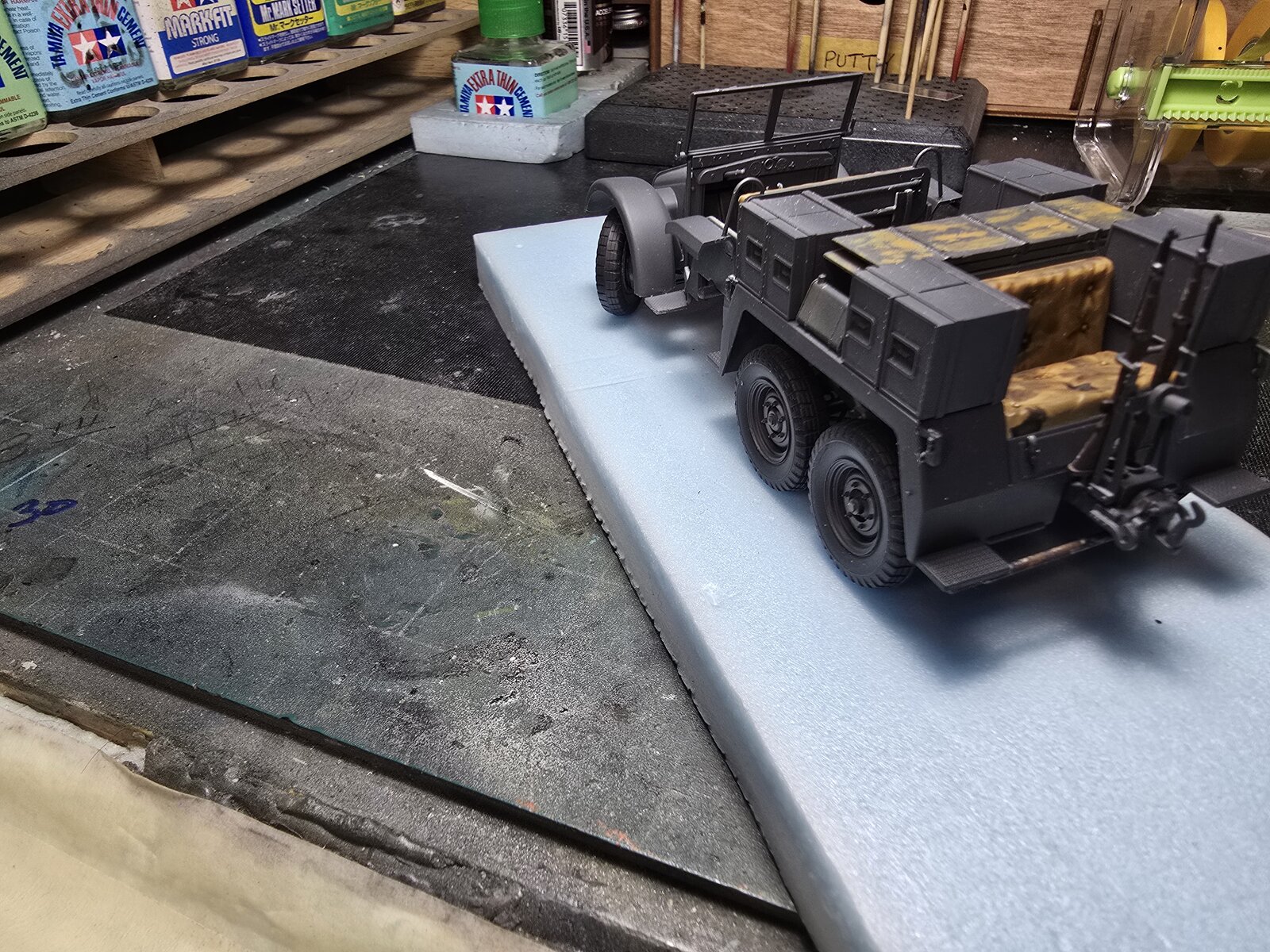
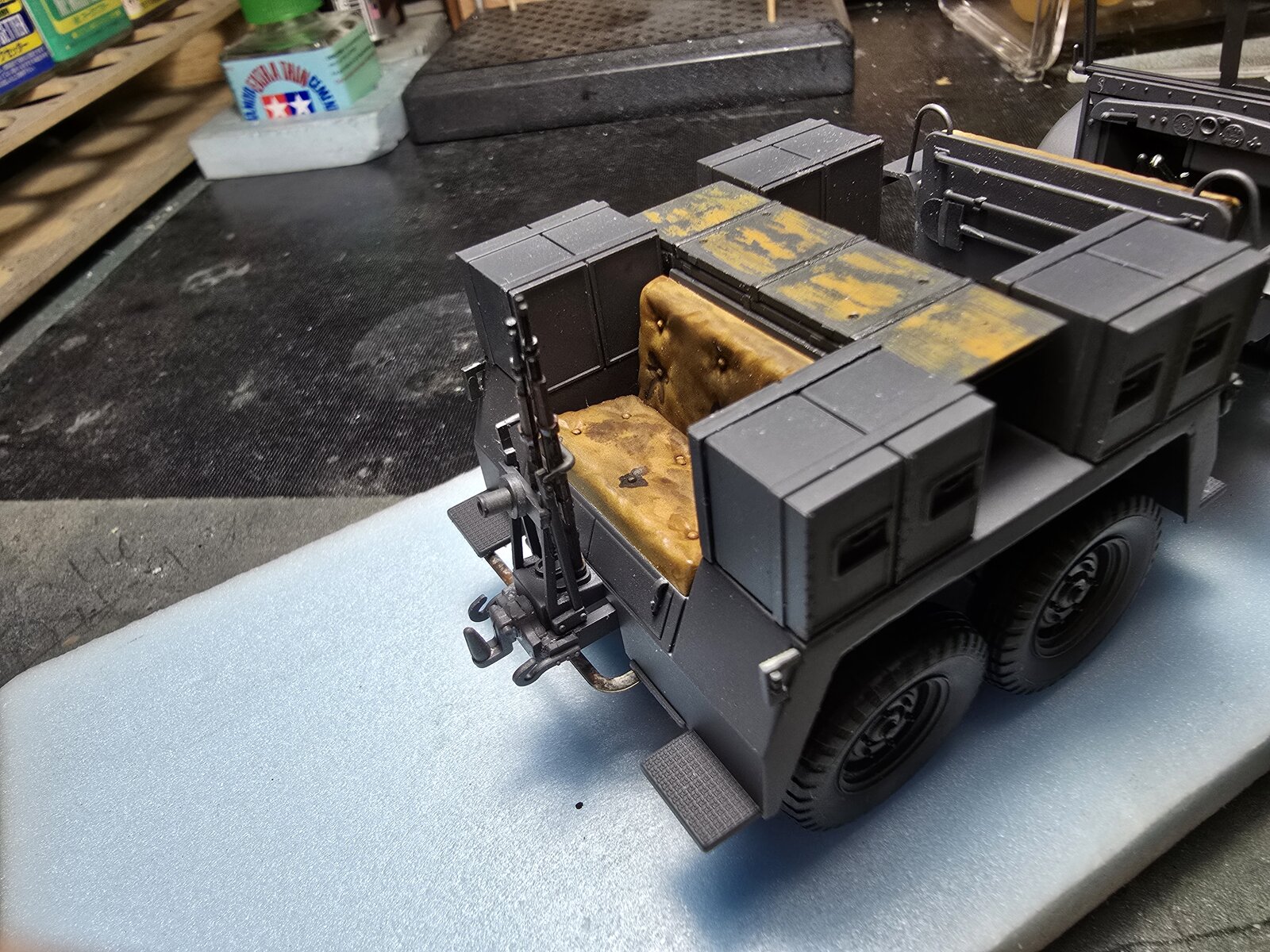
Nice! clean build... haven't lost any of the fine details.
Really does have a distinctive nose!
Will you be using both spares?
Really does have a distinctive nose!
Will you be using both spares?


