HELP! Airbrush just started acting wonky

Scale Model Addict - Model Tips, Guides, Tools & Tech, Tutorials, and Community

Help Support Scale Model Addict:

mjensen939

Well-Known Member
Joined
Sep 22, 2025
Messages
171
The airbrush is a new Iwata eclipse HP-CS That's just a few months old with a No-Name (the brand) air compressor by Spraygunner.
The issue that I'm having is that my air flow seems to be stuttering. Like going...THH...TTH...TTH ..TTH...ETC and there's an issue where, if I push the button down for air only, I'm getting some bubbles blowing back into the cup as well as when I'm pulling the button back. I don't know if that's what should be happening but it doesn't seem like it should be.
Note: I'm not getting any fluid to come out if I'm only pressing for air so I don't think there's any issue with the needle seating at the nozzle.
I have, however, noticed that if the cup is empty I can no longer hear it stuttering nor can I feel any pulsing on my hand when I spray at my palm. The minute though that I try to run anything through the brush, I can then hear it "breathing" again and I can SEE the pulsations in the spray mist. Getting even, consistent coverage at this point is next to impossible.
I'm also getting really quick tip dry even after putting in retarder and thinner to a good consistency. I'm using Vallejo model Air, Tamiya acrylics, and Alclad ll lacquers. They all exhibit the same issues. I've had no issues until the last three or four spray sessions. I've disassembled the brush completely and scrubbed and cleaned it twice with lacquer thinner but it's still doing it. The only thing I didn't take out was the needle valve seat and seal because I didn't want to tear that far into disassembly when I didn't see how that would affect the air flow since the air is entering past the valve.
The compressor is set to about 21 lbs (It was set at about 18 lbs but raised it to see if it would have any impact....it didn't) and I'm using a Grex CMAC valve on the hose right below the air connection to the brush. I don't hear any issues with the compressor. It does not kick on very often when I'm working and when it does it's a steady sound so I'm wondering what might be causing the stuttering. Could it be the CMAC valve?
I'm kind of at a stand-still right now so if anyone can help out with this situation I would be greatly appreciative.
 
Last edited:
If it blows bubbles in the paint cup, there's air flowing back from the nozzle, meaning it's obstructed. Do you have an ultrasonic cleaner? That will get stuff out of an airbrush that's very hard to clean out otherwise.

FWIW, I also get Vallejo Model Air drying on the tip of my HP-A regardless of whether I add retarder to it.
 
If it blows bubbles in the paint cup, there's air flowing back from the nozzle, meaning it's obstructed. Do you have an ultrasonic cleaner? That will get stuff out of an airbrush that's very hard to clean out otherwise.

FWIW, I also get Vallejo Model Air drying on the tip of my HP-A regardless of whether I add retarder to it.
Could it be the air jets themselves that may be obstructed then? I used a nozzle reamer on the nozzle. And no, I don't have an ultrasonic cleaner.
 
I took off the nozzle guard and sure enough, two out of the three air jets were plugged with a film of gloss varnish I'd used a week or two ago! I used the nozzle reamer to clear them out and everything is back to normal. THANK YOU!!
 
Not really anything concrete, sorry. I used to have a small one I bought about 15 years ago, and it worked quite well. Last January, my brother gave me a laboratory-sized one that his employer had given him and all his colleagues for Christmas (them being in the business of selling large batches of stuff from bankrupt companies etc.), as he didn't have a use for it himself. So my recommendation is, if you do want an ultrasonic cleaner, to buy a decent comsumer-grade one that's big enough for your airbrush, but you don't need anything fancy or expensive.
 
As an Amazon Associate we earn from qualifying purchases. Product prices and availability are accurate as of the date/time indicated and are subject to change.
Not really anything concrete, sorry. I used to have a small one I bought about 15 years ago, and it worked quite well. Last January, my brother gave me a laboratory-sized one that his employer had given him and all his colleagues for Christmas (them being in the business of selling large batches of stuff from bankrupt companies etc.), as he didn't have a use for it himself. So my recommendation is, if you do want an ultrasonic cleaner, to buy a decent comsumer-grade one that's big enough for your airbrush, but you don't need anything fancy or expensive.
Thanks, Jakko.
 
What are you cleaning your airbrush with? It sounds like when you are running stuff through it to clean it it's not powerful enough. I use hardware store lacquer thinner. Just be careful of your rubber bushings and the air valve and you should be all right.
 
Cleaning these is a pain but very important..check out the YouTube videos on it..you need a few tools and it has to super clean when done.
 
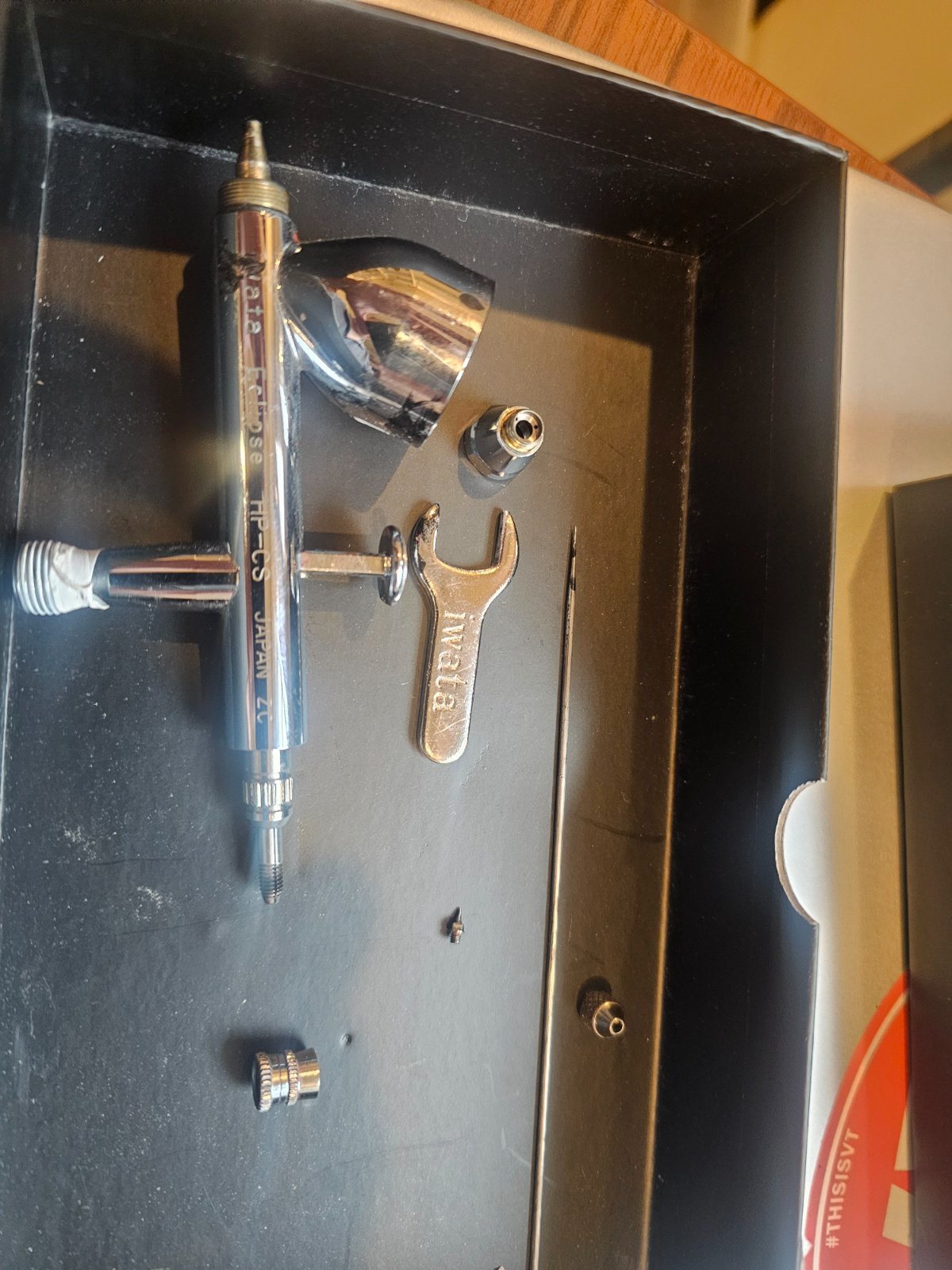
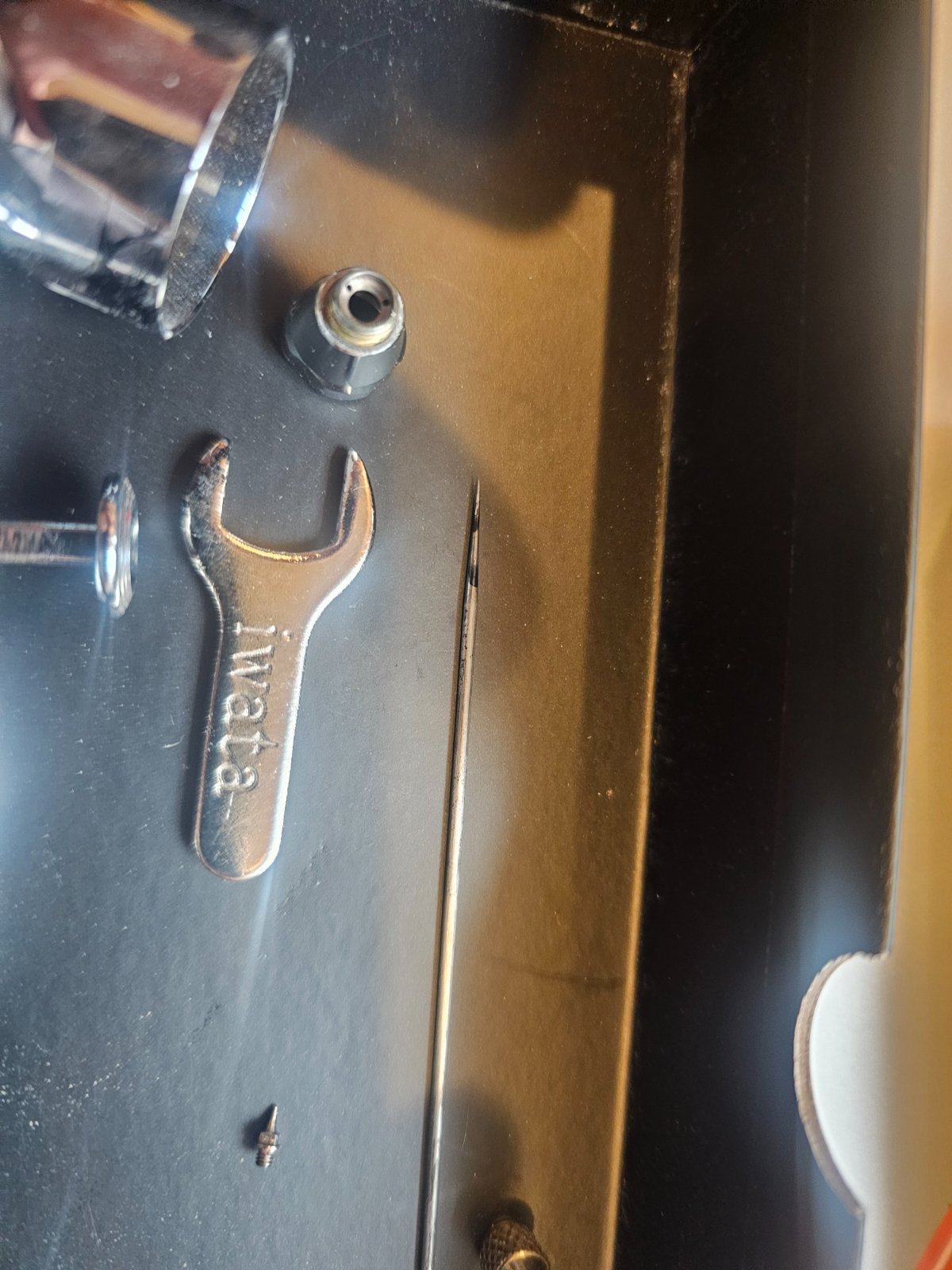
I take mine apart..see the paint on the needle..very important to get that all off
20251123_132046.jpg
20251123_132050.jpg
 
What are you cleaning your airbrush with? It sounds like when you are running stuff through it to clean it it's not powerful enough. I use hardware store lacquer thinner. Just be careful of your rubber bushings and the air valve and you should be all right.
Cleaning these is a pain but very important..check out the YouTube videos on it..you need a few tools and it has to super clean when done.
Rob, I think this may have been my fault
I remember spraying some Vallejo semi-gloss clear coat on a few parts a week or two ago and then I simply cleaned it with Madea airbrush cleaner which is really nothing more than soapy water. I don't think it was sufficient to clean out the semi-gloss film and it ended up curing in the Jets of the nozzle cover.
I should have thought to use lacquer thinner at that time but I didn't and then when I sprayed some clear coat a few days ago that's when I started to see the issue really exacerbate. t's all starting to make sense now.

KINGSLUG, I do take my brush apart for a complete clean up after every session is completed. What I never considered was the three air jets in the nozzle cover. I reamed out the nozzle itself but never thought to check those. Lesson learned there.
 
I should have thought to use lacquer thinner at that time but I didn't and then when I sprayed some clear coat a few days ago that's when I started to see the issue really exacerbate. t's all starting to make sense now.
I've found that the Vallejo Airbrush Cleaner is one of the few proprietary cleaners worth the cost. It cleans out all of their products that I've used, and it takes very little. It's also less obnoxious than lacquer thinner. However, once something has dried and cured in an airbrush, lacquer thinner is the best choice.

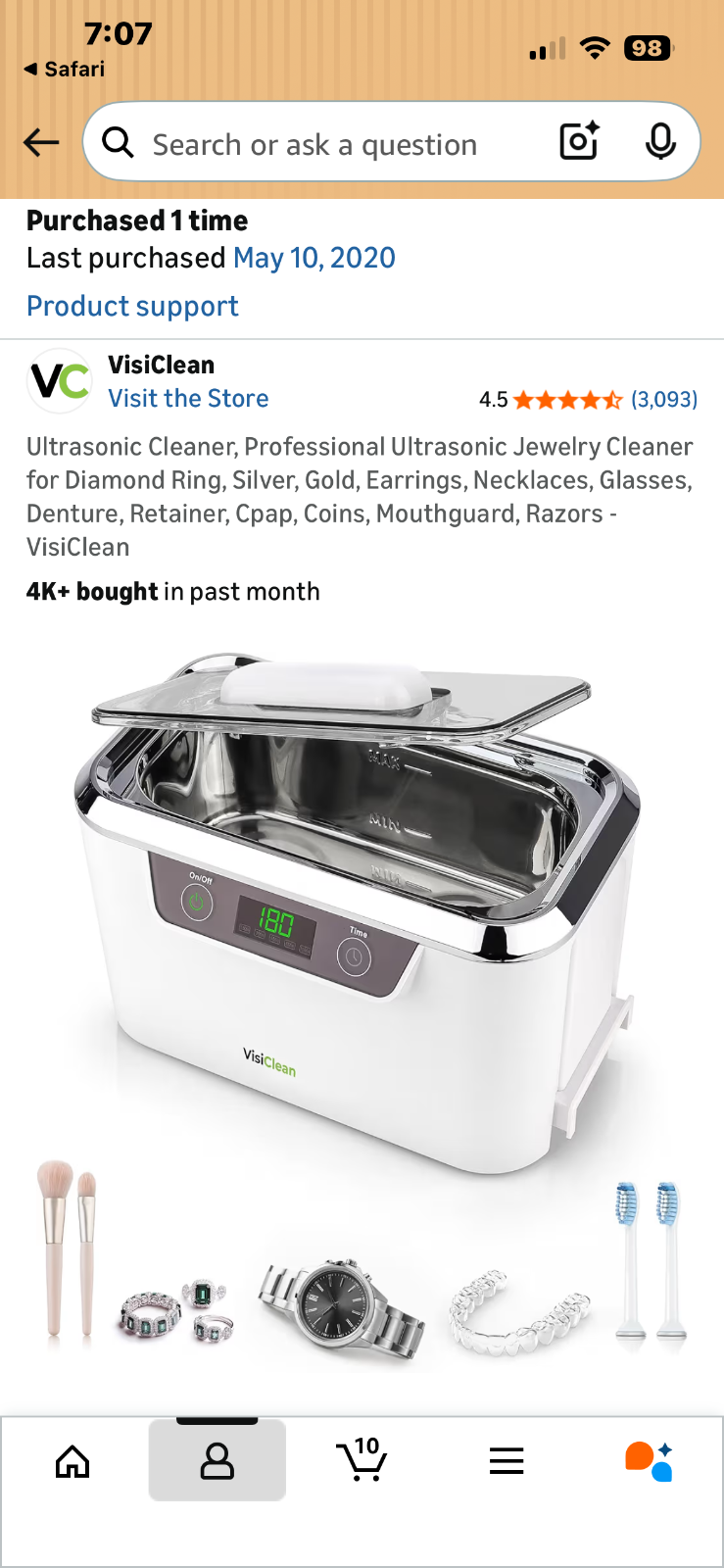
As for ultrasonic cleaners, I can recommend this one
 
I've found that the Vallejo Airbrush Cleaner is one of the few proprietary cleaners worth the cost. It cleans out all of their products that I've used, and it takes very little. It's also less obnoxious than lacquer thinner. However, once something has dried and cured in an airbrush, lacquer thinner is the best choice.

As for ultrasonic cleaners, I can recommend this one
+1 about the Vallejo airbrush cleaner, and Badger's also works well, is my experience.
 
I appreciate the tips on the Vallejo cleaner. It's surprising that I don't already have some because most of what I use is Vallejo products including their flow improver, reducer, retarder, etc but for some reason never got the airbrush cleaner. I think it's because it was so cheap for the Iwata/Medea bottle at the time. I'm definitely going to get some now though.
 
Do you have any recommendations?
I have the same HP-CS and I bought an ultrasonic cleaner years ago that works pretty well, it was 60$ at the time, it's 69$ now as I just looked. Anyways I only take the brush apart and use the ultrasonic maybe once every couple months or if it starts acting up. Here is the Amazon link to the one I have. I'm sure there are better ones out nowadays.
https://a.co/d/bMheQJw
 
I have the same HP-CS and I bought an ultrasonic cleaner years ago that works pretty well, it was 60$ at the time, it's 69$ now as I just looked. Anyways I only take the brush apart and use the ultrasonic maybe once every couple months or if it starts acting up. Here is the Amazon link to the one I have. I'm sure there are better ones out nowadays.
https://a.co/d/bMheQJw
Thanks for the tip and the link
 
A loose air cap will cause bubbles in the cup, also.
BTW ,Spraygunner knows airbrushes; you being a customer is part of his services.

That is how I learned about the bubbles. Another source is the cup to airbrush body fit. New one, 5 months, screws onto the body.
Pep
 
A loose air cap will cause bubbles in the cup, also.
BTW ,Spraygunner knows airbrushes; you being a customer is part of his services.

That is how I learned about the bubbles. Another source is the cup to airbrush body fit. New one, 5 months, screws onto the body.
Pep
Thank you. It's good to know that I wasn't aware.
 
I avoid Vallejo paints because of the tip drying, in fact after much frustration in first year I threw away about $100 worth and mainly use Tamiya alcohol based acrylics now. occasionally "laquer"s (in quotes because I know a lot are not "true laquers" from this forum ;-) I use Iwata Revolution CR and CR3. I went thru and gave up on a paache talon and a couple of cheap master air brushes in my first year. I bought and returned an untrasonic cleaner also. I have a routine where when I am done with a color I wipe out the paint cup, then crank the pressure and run a cup full of Tamiya air brush cleaner, which is super strong stuff but over priced, when close to bottom, I back flow it with my fingertip to blow it out, then I brush off the nozzle and tip with a toothbrush wetted with it while blowing air thru. Then I run a cup or two full of Medea cleaner thru it, back flowing it a few times. Seems to work and only disassemble if I have an issue which is maybe once a month and usually dried something on the needle. I think my biggest problem with my method is using tissue paper to wipe out the cup first. The fibers I think can accumulate in the nozzle. Also why you should never use q tips.
 

Latest posts

Back
Top