Quick shine gloss coat problems.

Scale Model Addict - Model Tips, Guides, Tools & Tech, Tutorials, and Community

Help Support Scale Model Addict:

brannend

Member
Joined
May 29, 2024
Messages
6
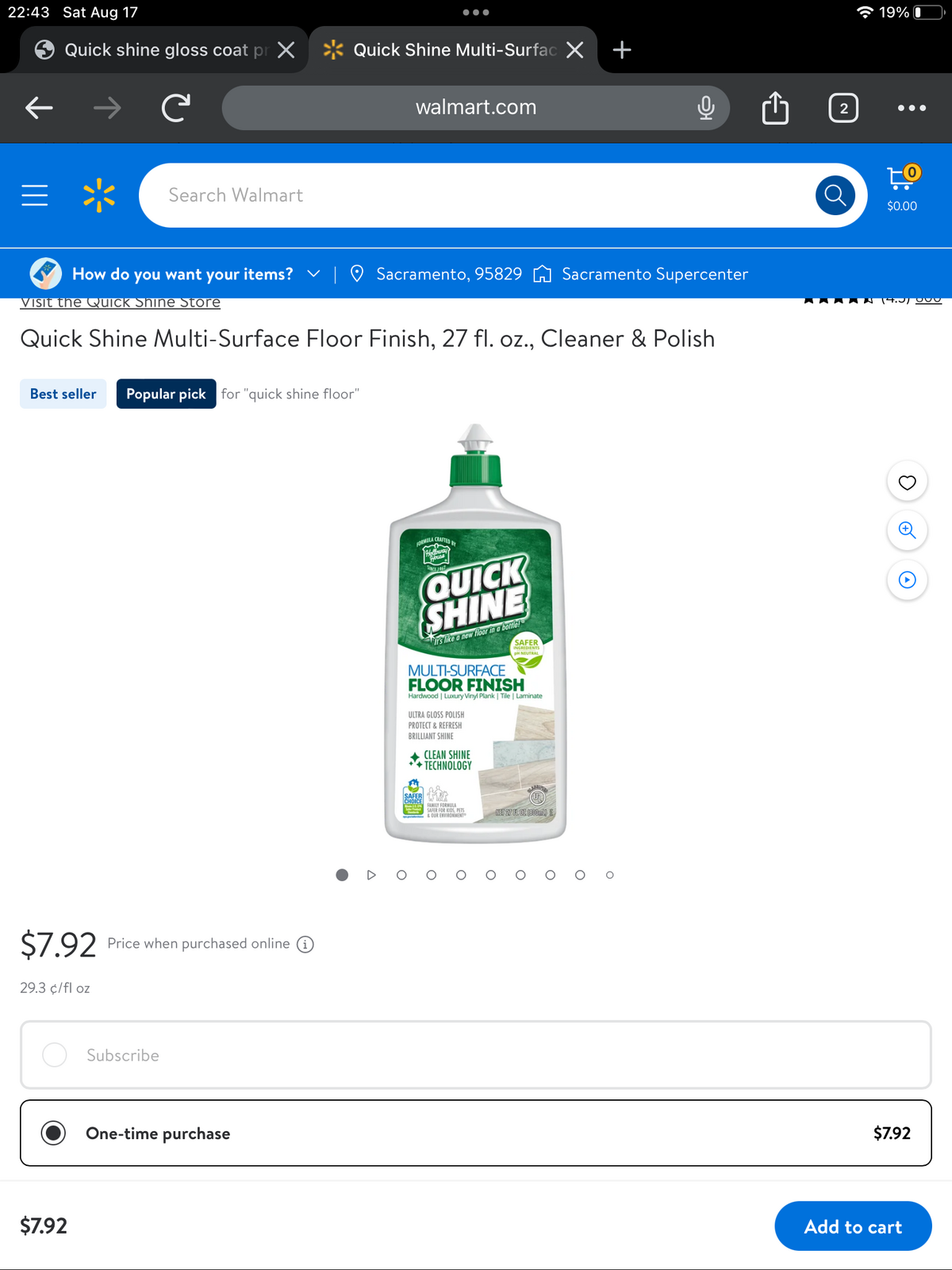
I haven't been building very long so I am still in the honeymoon phase where I am trying different varnishes to find my favorite. I recently used Quick Shine floor polish (the replacement for Pledge I've read). The actual finish was good but holy mackerel, cleaning the airbrush afterwards!!! As I believed that it is a water-based product that was what I used first to clean up but it just gummed up like crazy. I tried everything else I could think of from IPA to mineral spirits and lacquer thinner. Still gunked up. I finally soaked the airbrush parts for a bit in acetone and got the gumminess to break free.

I have to think I am doing something wrong. Below is the stuff I purchased. I would really like to figure this stuff out as it did produce a great gloss and it is obscenely cheap compared to hobby specific products.

Thank you in advance for any and all help!

David
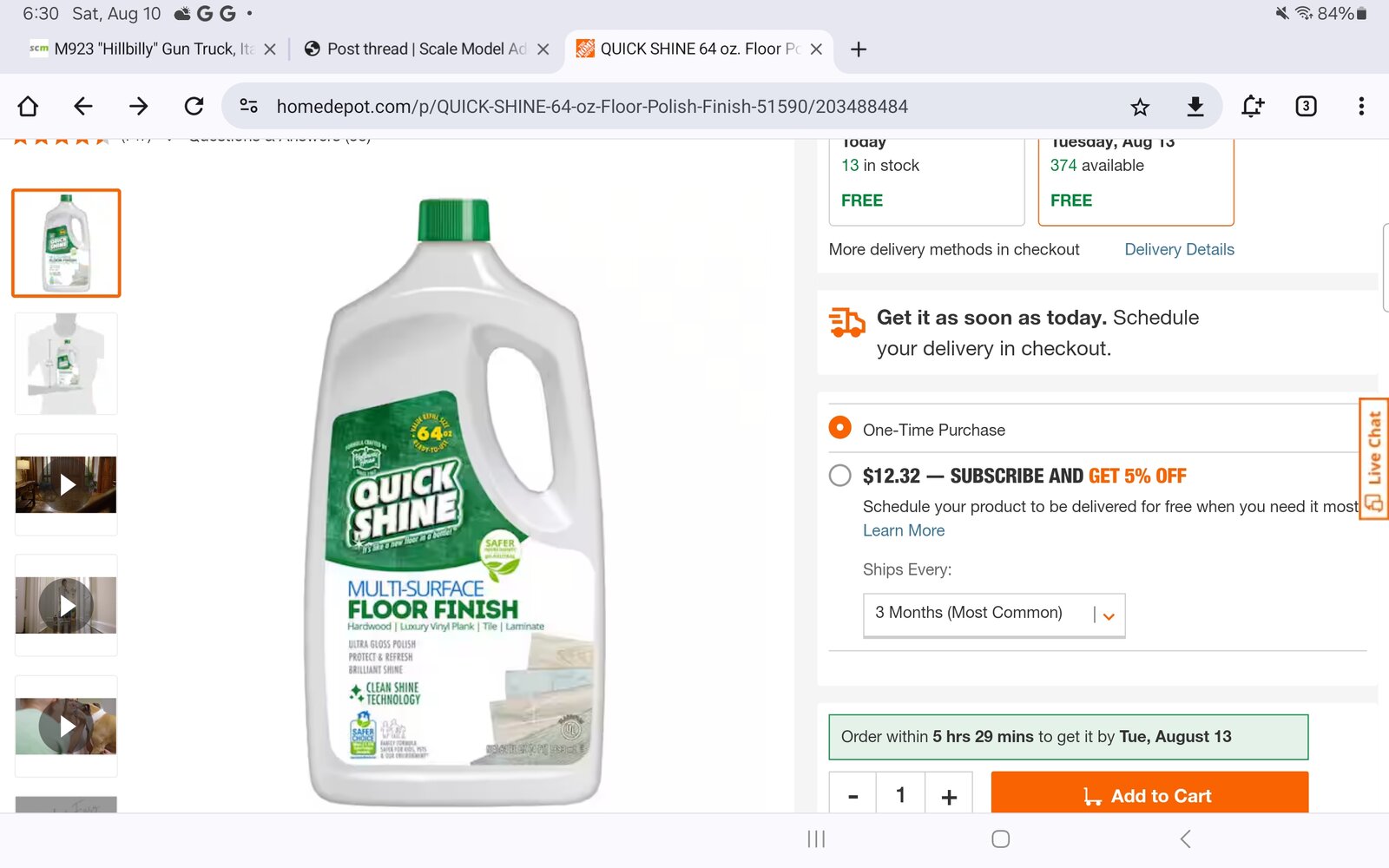

1000003250.jpg
 
Never used that stuff ,
but it's an acrylic for sure via the MSDS : https://media.quickshinecleaners.co...ds-quick-shine-multi-surface-floor-finish.pdf
They are using that propylene glycol as a retarder and the butoxy as a surfactant ---> all for film forming , ,, it IS a floor coating .

I found the Pledge Floor Care to be one of the easiest mediums to airbrush - ever .
I can continuously spray the stuff , just flushing the AB with water .

Alcohols can set off polymerization of many acrylic monomers , the OH functional group acts as a nucleophile .
Don't use any alcohols , or ketones ( acetone , lacquer thinners contain this ) , while spraying that stuff .


BTW , welcome to SMA !
 
Last edited:
I haven't been building very long so I am still in the honeymoon phase where I am trying different varnishes to find my favorite. I recently used Quick Shine floor polish (the replacement for Pledge I've read). The actual finish was good but holy mackerel, cleaning the airbrush afterwards!!! As I believed that it is a water-based product that was what I used first to clean up but it just gummed up like crazy. I tried everything else I could think of from IPA to mineral spirits and lacquer thinner. Still gunked up. I finally soaked the airbrush parts for a bit in acetone and got the gumminess to break free.

I have to think I am doing something wrong. Below is the stuff I purchased. I would really like to figure this stuff out as it did produce a great gloss and it is obscenely cheap compared to hobby specific products.

Thank you in advance for any and all help!

David


View attachment 121689
Hi and welcome to the forum. Pantherman
 
I haven't been building very long so I am still in the honeymoon phase where I am trying different varnishes to find my favorite. I recently used Quick Shine floor polish (the replacement for Pledge I've read). The actual finish was good but holy mackerel, cleaning the airbrush afterwards!!! As I believed that it is a water-based product that was what I used first to clean up but it just gummed up like crazy. I tried everything else I could think of from IPA to mineral spirits and lacquer thinner. Still gunked up. I finally soaked the airbrush parts for a bit in acetone and got the gumminess to break free.

I have to think I am doing something wrong. Below is the stuff I purchased. I would really like to figure this stuff out as it did produce a great gloss and it is obscenely cheap compared to hobby specific products.

Thank you in advance for any and all help!

David


View attachment 121689
Oh boy… what to say? Yup… you used the wrong stuff. Not all floor care products are the same. That's why I rarely use floor products as gloss coats. Consider this a valuable lesson for you.

The only time I use floor care product is for canopy dipping (extreme rarity for me) and it clears up clear parts if I used CA glue. That is even more rare. I do like to use it to achieve glass dials on instrument panels of my aircraft kits.

I, too, use Pledge Floor Care.
 
I haven't been building very long so I am still in the honeymoon phase where I am trying different varnishes to find my favorite. I recently used Quick Shine floor polish (the replacement for Pledge I've read). The actual finish was good but holy mackerel, cleaning the airbrush afterwards!!! As I believed that it is a water-based product that was what I used first to clean up but it just gummed up like crazy. I tried everything else I could think of from IPA to mineral spirits and lacquer thinner. Still gunked up. I finally soaked the airbrush parts for a bit in acetone and got the gumminess to break free.

I have to think I am doing something wrong. Below is the stuff I purchased. I would really like to figure this stuff out as it did produce a great gloss and it is obscenely cheap compared to hobby specific products.

Thank you in advance for any and all help!

David


View attachment 121689
I haven't used that stuff. I use Pledge revive it floor gloss.
Yes cleaning the brush can backfire. I use Windex to clean and it works pretty good for me. I break-down the brush and clean it out as best as I can. I use the brushes and push rods. For the needle I use a bit of a Scothch Brite pad just to knock anything from the needle. After I reassemble I spray a bowl of Windex through to clean any debris out.
That works for me, anyway.

Welcome to our Mad House.
 
Thanks for all of your input. Very helpful and much appreciated. I would try Pledge Revive it but is doesn't seem to be available anywhere.
 
As an Amazon Associate we earn from qualifying purchases. Product prices and availability are accurate as of the date/time indicated and are subject to change.
Alcohols can set off polymerization of many acrylic monomers , the OH functional group acts as a nucleophile .
Can you elaborate on this in laymen's terms? I failed chemistry in HS…and actually tried.
I got the "do not use" part, but I've found that 50% isopropyl alcohol works great for an initial AB wipe down and then i flush with the stuff that is labeled "airbrush cleaner, which seems to do the same thing but doesn't smell like moonshine. My only concern was having it eat through the rubber O-rings but I'm guessing it's the residue that's not good?
 
Acrylic paints utilize a range of acrylic resins , some are solvent compatible and some are not .
The solvents will turn them to snot , some faster than others , and it's easy to test -- out of the airbrush -- to check compatibility .

I was saying that when spraying that floor acrylic , the Pledge Floor Care anyways , I was using only water to flush the airbrush until the final cleaning upon teardown -- then I used isopropyl alcohol and water .

Airbrush O-rings are selected to resist solvents .

What airbrush cleaner are you using ?
The Tamiya AB cleaner is the same composition as their solvent cement , 1/2 butyl acetate and 1/2 acetone , which will dissolve cured acrylics and alkyds ( enamel )


https://coatings.specialchem.com/selection-guide/acrylic-resins
https://www.applerubber.com/chemical-compatibility-guide/
https://www.callapg.com/blog-oring-colors
 
Acrylic paints utilize a range of acrylic resins , some are solvent compatible and some are not .
The solvents will turn them to snot , some faster than others , and it's easy to test -- out of the airbrush -- to check compatibility .

I was saying that when spraying that floor acrylic , the Pledge Floor Care anyways , I was using only water to flush the airbrush until the final cleaning upon teardown -- then I used isopropyl alcohol and water .

Airbrush O-rings are selected to resist solvents .

What airbrush cleaner are you using ?
The Tamiya AB cleaner is the same composition as their solvent cement , 1/2 butyl acetate and 1/2 acetone , which will dissolve cured acrylics and alkyds ( enamel )


https://coatings.specialchem.com/selection-guide/acrylic-resins
https://www.applerubber.com/chemical-compatibility-guide/
https://www.callapg.com/blog-oring-colors
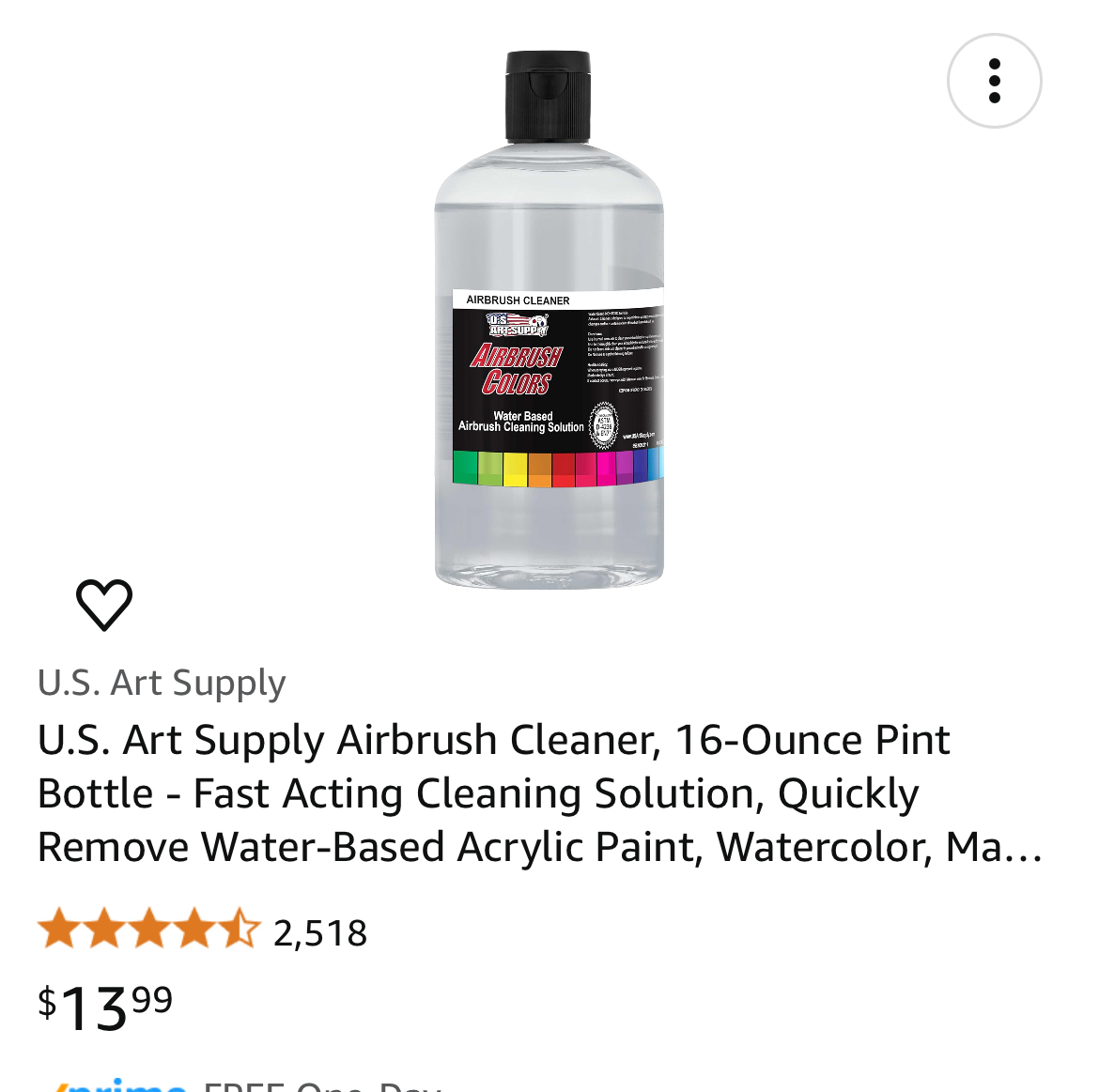
I'm glad I asked. This is all starting to make sense. Here's the stuff I've been using. It seems to work fine and hasn't caused any issues that Im noticeably aware of.
IMG_8278.jpeg

Now, I did experience the "snot" reaction you mention when trying to use Mr Color GX100 for the gloss goat after laying down the paint/camo. I mixed the gx100 with the tamiya X-20 thinner which, from what I'm gathering are not immiscible. Initially I thought it might be the high humidity we were having here in PA, but it seems that was wishful thinking. I ended up using some cheap stuff I had lying around that I'd used before without issue.

Thanks again for sharing your knowledge and not making me feel more ignorant than I already am w/ this stuff. It's nice being able to learn directly from everyone on here vs sifting through the endless amounts of questionable advice that's out there. After a while it just gets more confusing.
 
I'm glad I asked. This is all starting to make sense. Here's the stuff I've been using. It seems to work fine and hasn't caused any issues that Im noticeably aware of.
View attachment 122882

Now, I did experience the "snot" reaction you mention when trying to use Mr Color GX100 for the gloss goat after laying down the paint/camo. I mixed the gx100 with the tamiya X-20 thinner which, from what I'm gathering are not immiscible. Initially I thought it might be the high humidity we were having here in PA, but it seems that was wishful thinking. I ended up using some cheap stuff I had lying around that I'd used before without issue.

Thanks again for sharing your knowledge and not making me feel more ignorant than I already am w/ this stuff. It's nice being able to learn directly from everyone on here vs sifting through the endless amounts of questionable advice that's out there. After a while it just gets more confusing.
It's all a learning game. A font of knowledge here so worth asking any questions. Pantherman
 
I've only airbrushed Future/Pledge, not Quick Shine, but I've used ammonia diluted with a little tap water to clean my airbrush with great results. I've also heard that "Simple Green" spray cleaner will also work to clean Future/Pledge/Quick Shine airbrushes.
 
I've only airbrushed Future/Pledge, not Quick Shine, but I've used ammonia diluted with a little tap water to clean my airbrush with great results. I've also heard that "Simple Green" spray cleaner will also work to clean Future/Pledge/Quick Shine airbrushes.
It all depends on where the future was made. For instance. If you bought it in 2023? The alcoids in the polymer mixture sometimes solidify in the SpaceTime continuum thus making the very sought after, but highly volatile, shine.
 
It all depends on where the future was made. For instance. If you bought it in 2023? The alcoids in the polymer mixture sometimes solidify in the SpaceTime continuum thus making the very sought after, but highly volatile, shine.
Good to know, but this doesn't seem to answer the original question of what to use to clean an airbrush after using. ;)
 
Evidently that stuff sets off fast when exposed to alcohols .
So avoid alcohols when cleaning it out of the AB .

Lacquer thinners contain alcohol . Hardware store lacquer thinner is chiefly methanol and acetone , with the kitchen sink of solvents thrown in as filler .
" lacquer thinner " is like the word " beer " . Doesn't tell you much .
You need the SDS to know exactly what it is .

Mineral spirits aren't compatible with waterborne acrylics .

I would clean it with water , soapy water if you want , then break it down and you can clean the components with acetone or an AB cleaner like Tamiya's ., or even isopropyl by that point .

Like I said , that Pledge " Future " is some of the easiest stuff to run in an AB ever .
Never had any issues just flushing everything with water .
It's for mopping onto floors so water cleanup is kinda paramount .
 
As mentioned before, I use Pledge Revive It in my airbrush. I use windex to clean my brush:

"Some Windex products contain ammonia, while others are ammonia-free. Windex's original glass cleaner contains ammonia-D, which helps it clean fingerprints, dirt, and other messes before you wipe. However, Windex also offers ammonia-free glass cleaners and multi-surface cleaners, including:
Windex Electronics Wipes: Can be used on glass, chrome, stainless steel, plastic, vinyl surfaces, and tinted windows
Windex Disinfectant Cleaner Multi-Surface with Glade Rainshower: Can be used on glass and is safe to use on windows
Windex Ammonia-Free Glass Cleaner: Works best on car windows when the surface is cool and out of direct sunlight
Windex also offers a vinegar glass cleaner that doesn't contain ammonia and is safe to use on all glass surfaces."
 
a bit late to the party, but IIRC if this is the same formula as the other over the years then the Pledge recommends Ammonia to clean/remove possibly even reactivate the dried clear coat of the product.

I think they even have that in the instructions on the back of one of the bottles
 
Reactivate ??
you ain't reactivating chit .

The label on the Pledge does tell you to clean the floor prior to application , and to remove existing product , using their cleaner and ammonia .
 
Chemistry is hard.:rolleyes:

Oh wait…I don't really care about the chemistry properties in hobby paints and thinners. Wing it and learn from your mistakes.

Believe me, I've experimented and learned enough over these last 50 years in this hobby. Once you figure out what works and doesn't work, keep a mental note of it all.

Chemistry properties…. I ain't got time for that…
 
Chemistry is hard.:rolleyes:

Oh wait…I don't really care about the chemistry properties in hobby paints and thinners. Wing it and learn from your mistakes.

Believe me, I've experimented and learned enough over these last 50 years in this hobby. Once you figure out what works and doesn't work, keep a mental note of it all.

Chemistry properties…. I ain't got time for that…
Do you need a Snickers?
 

Latest posts

Back
Top