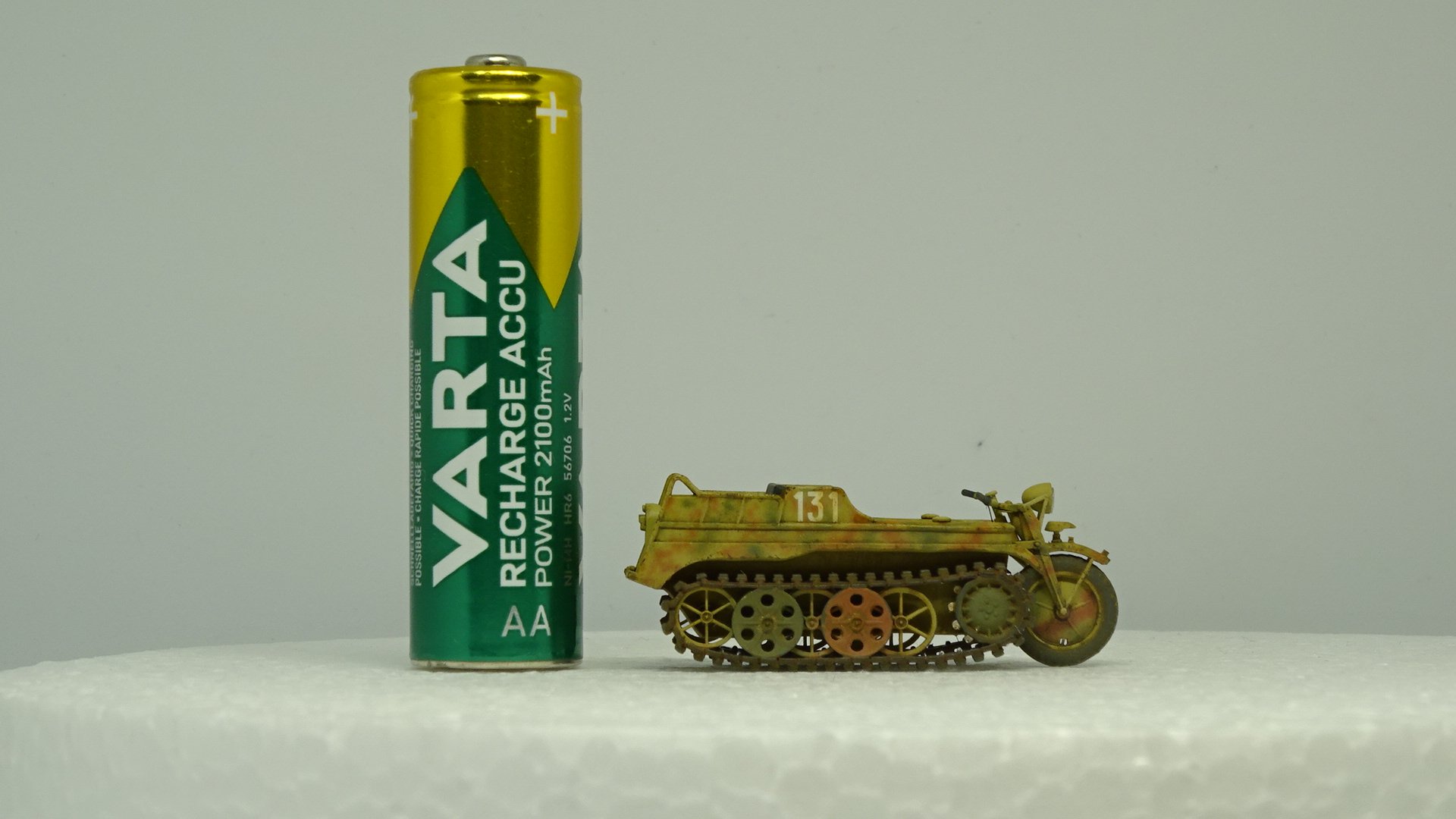
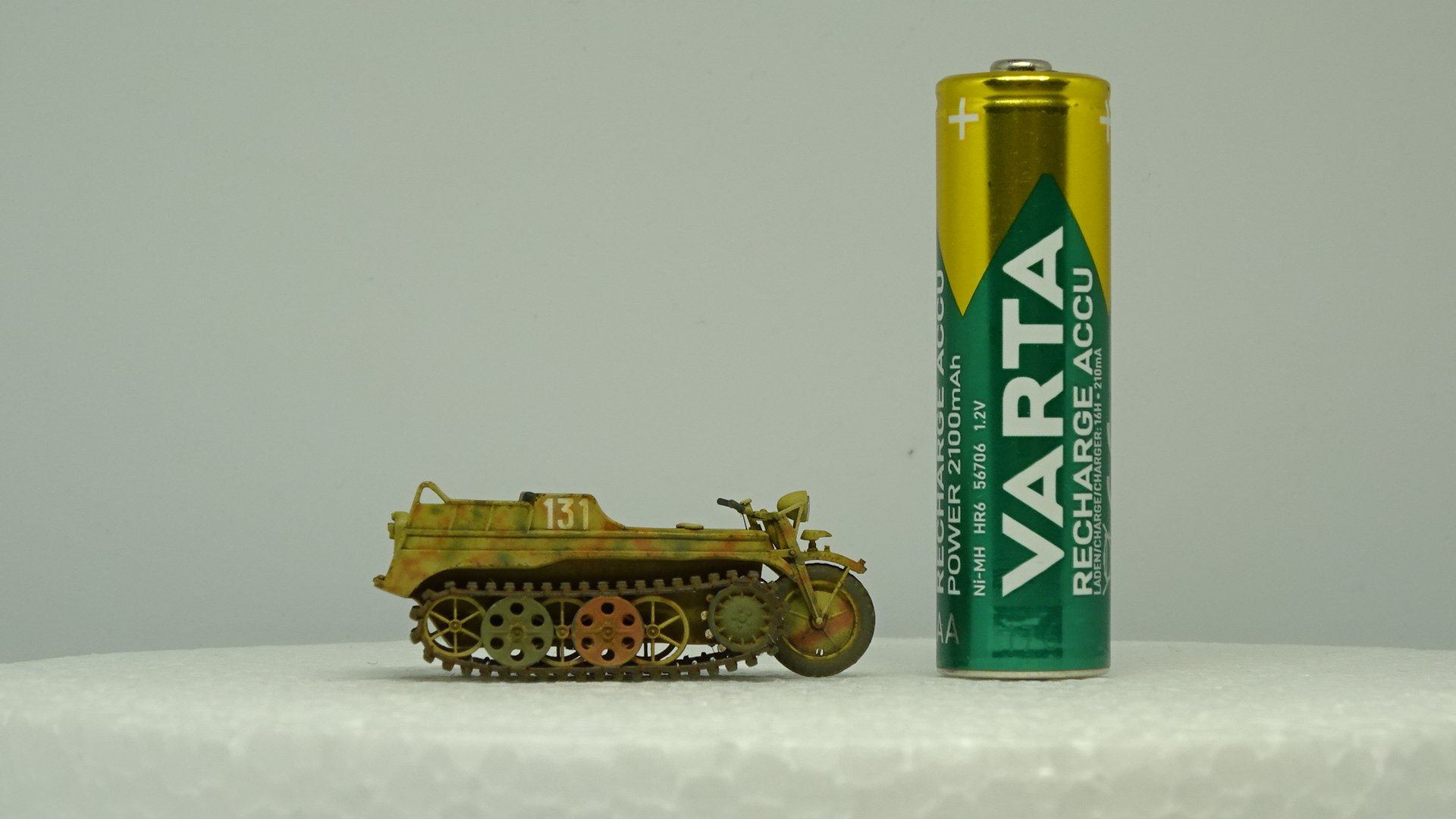
Kettenkrad 1/72

Scale Model Addict - Model Tips, Guides, Tools & Tech, Tutorials, and Community

Help Support Scale Model Addict:

Dr. Armor_72

Well-Known Member
Joined
Aug 2, 2025
Messages
50
Dear fellow modelers,

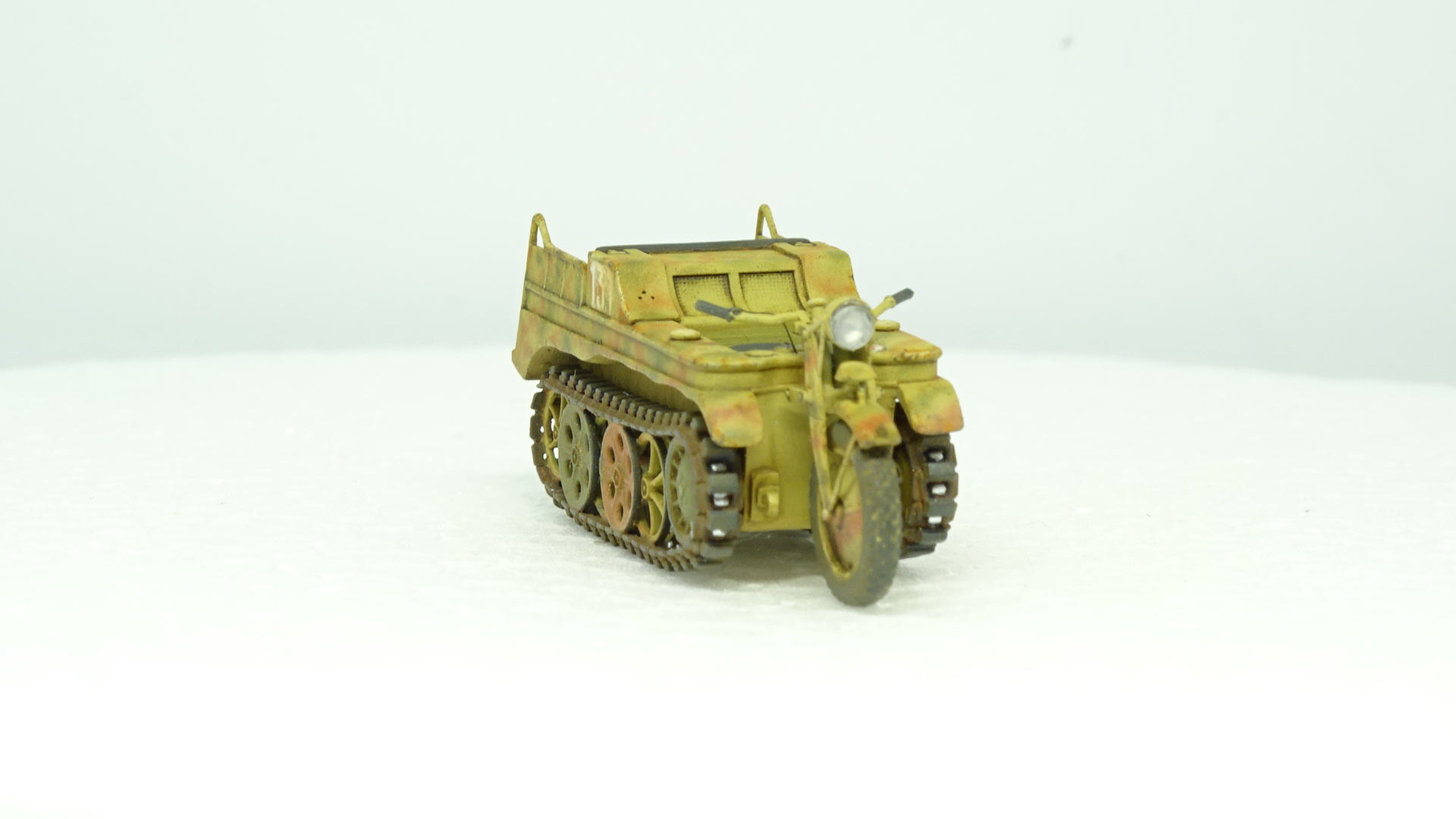
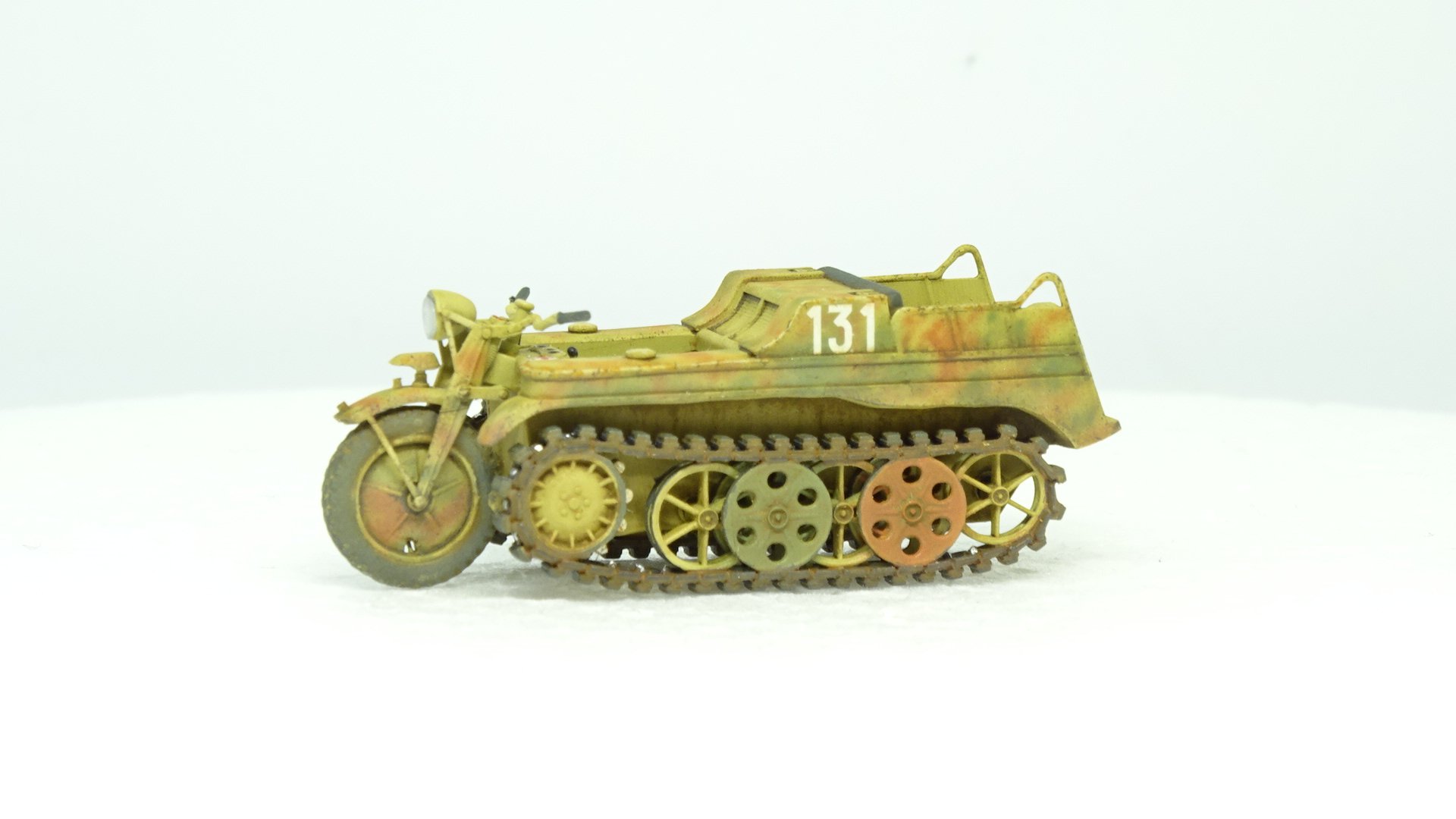
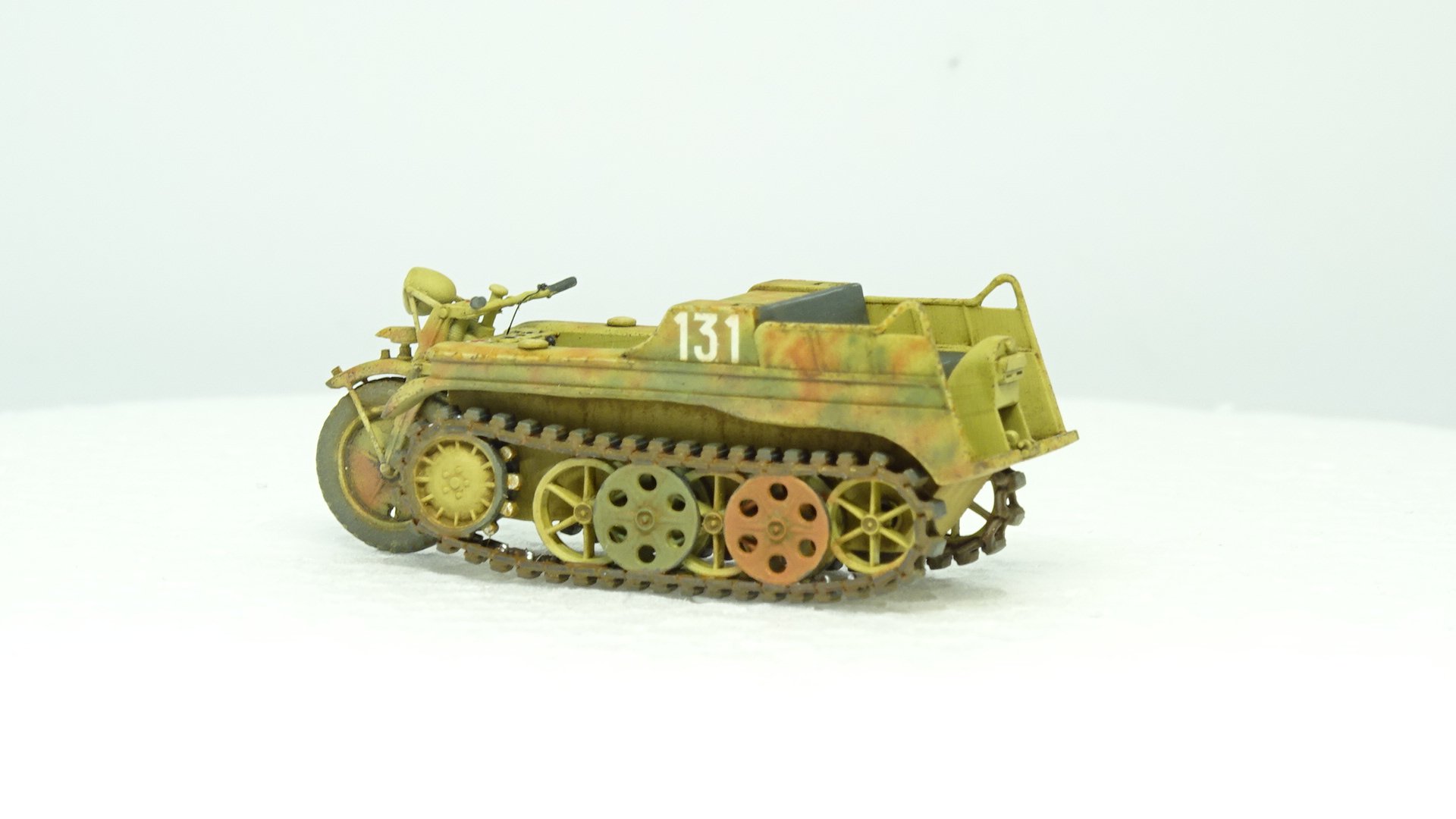
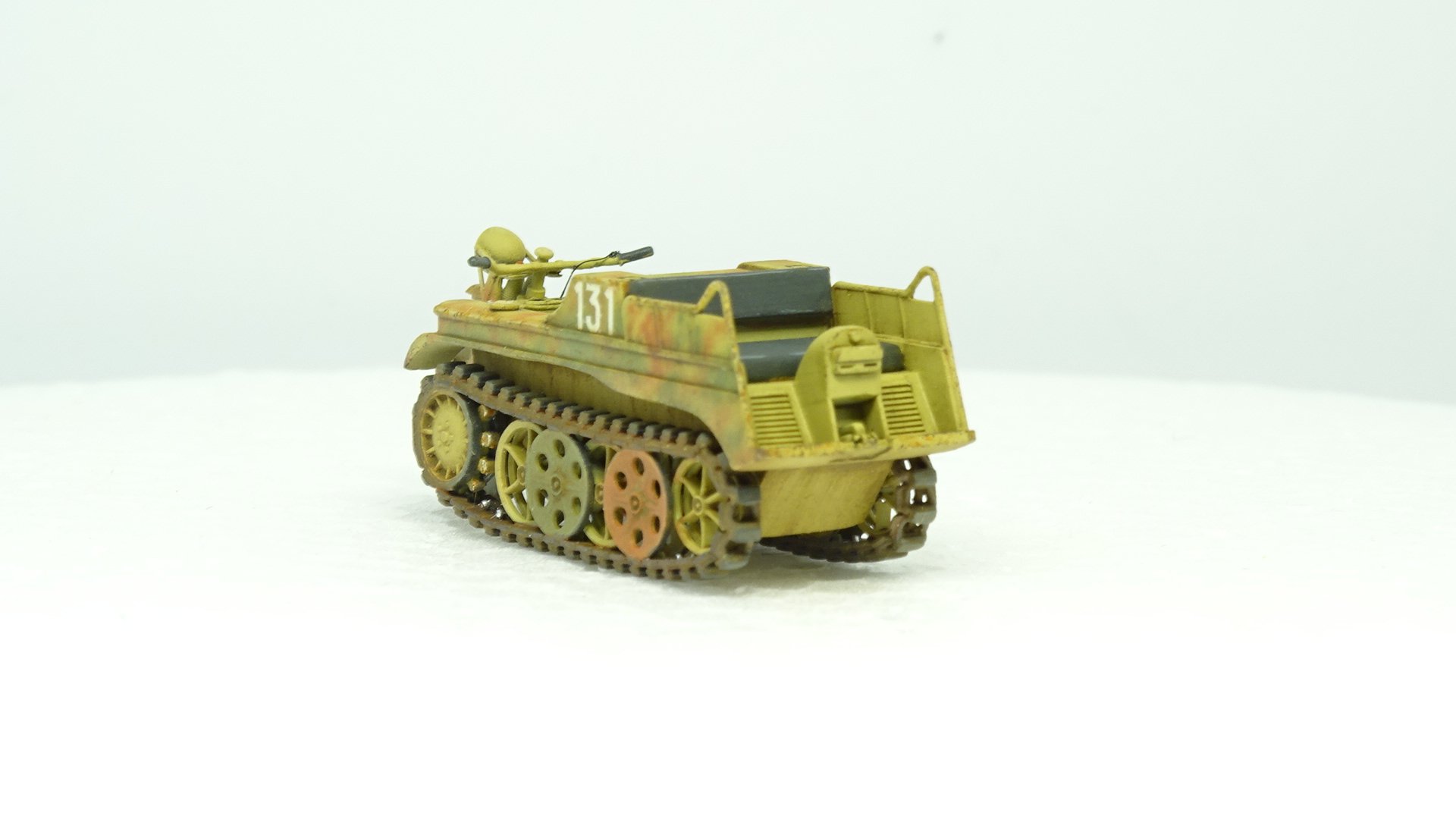
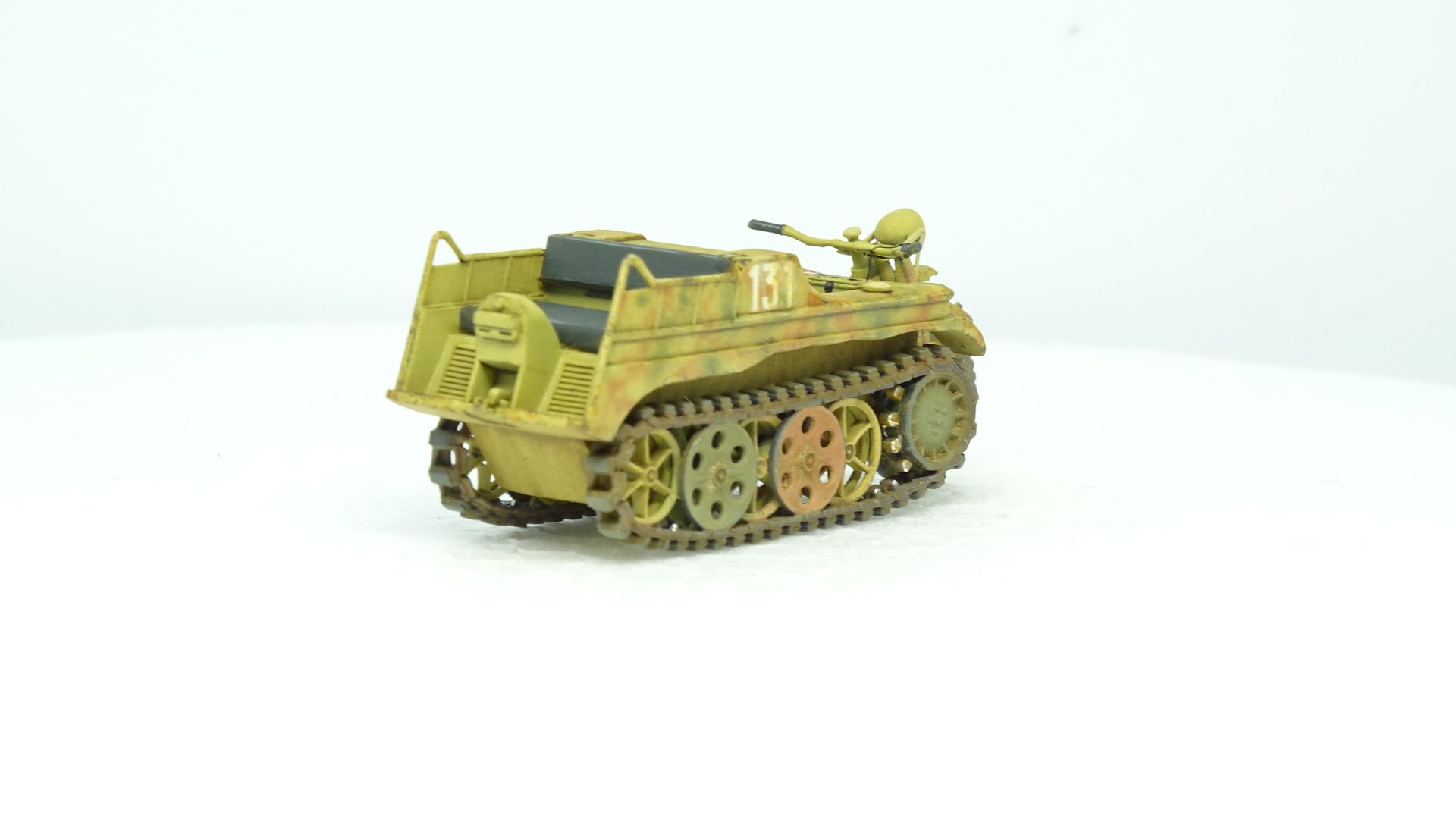
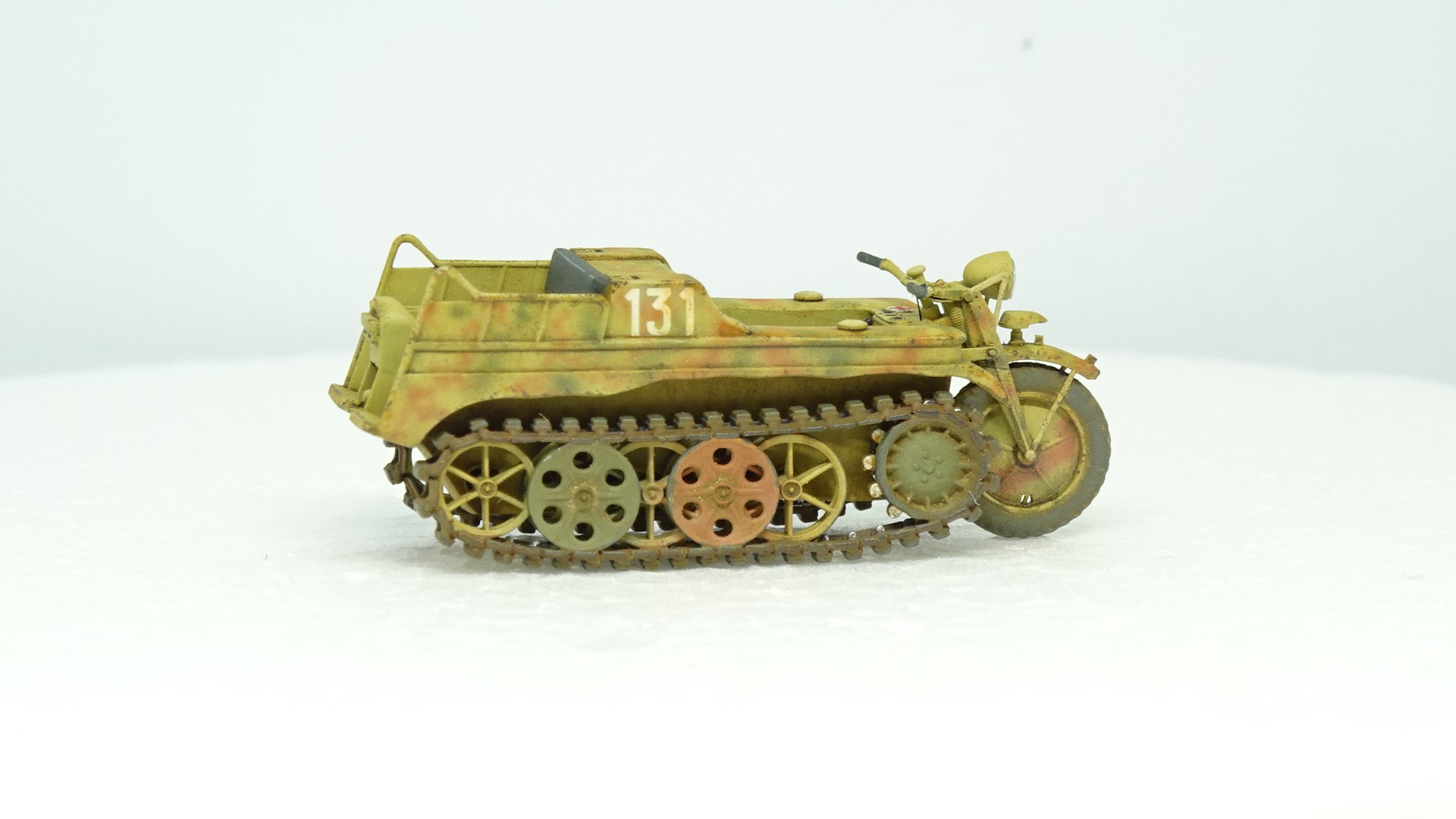
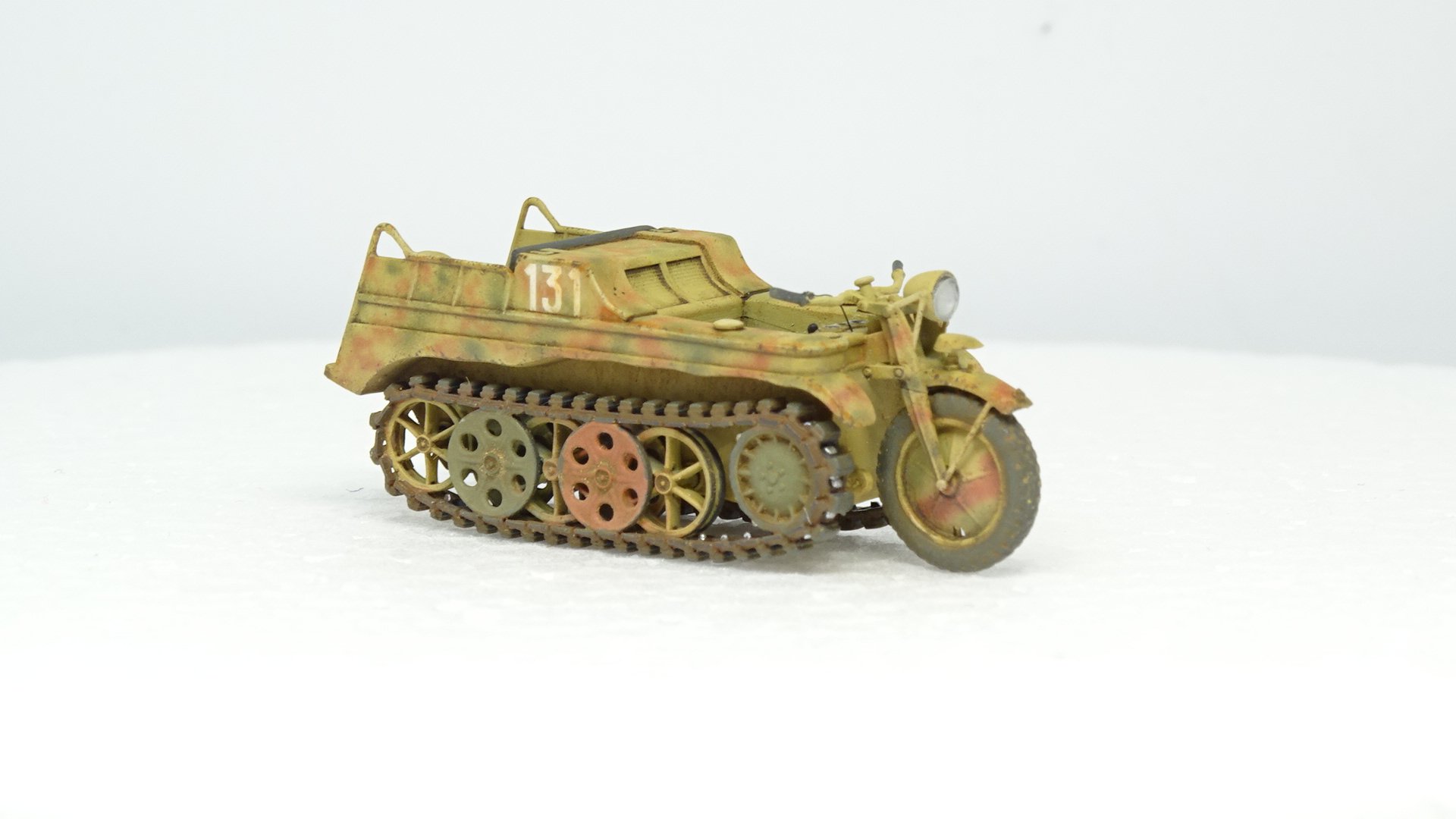
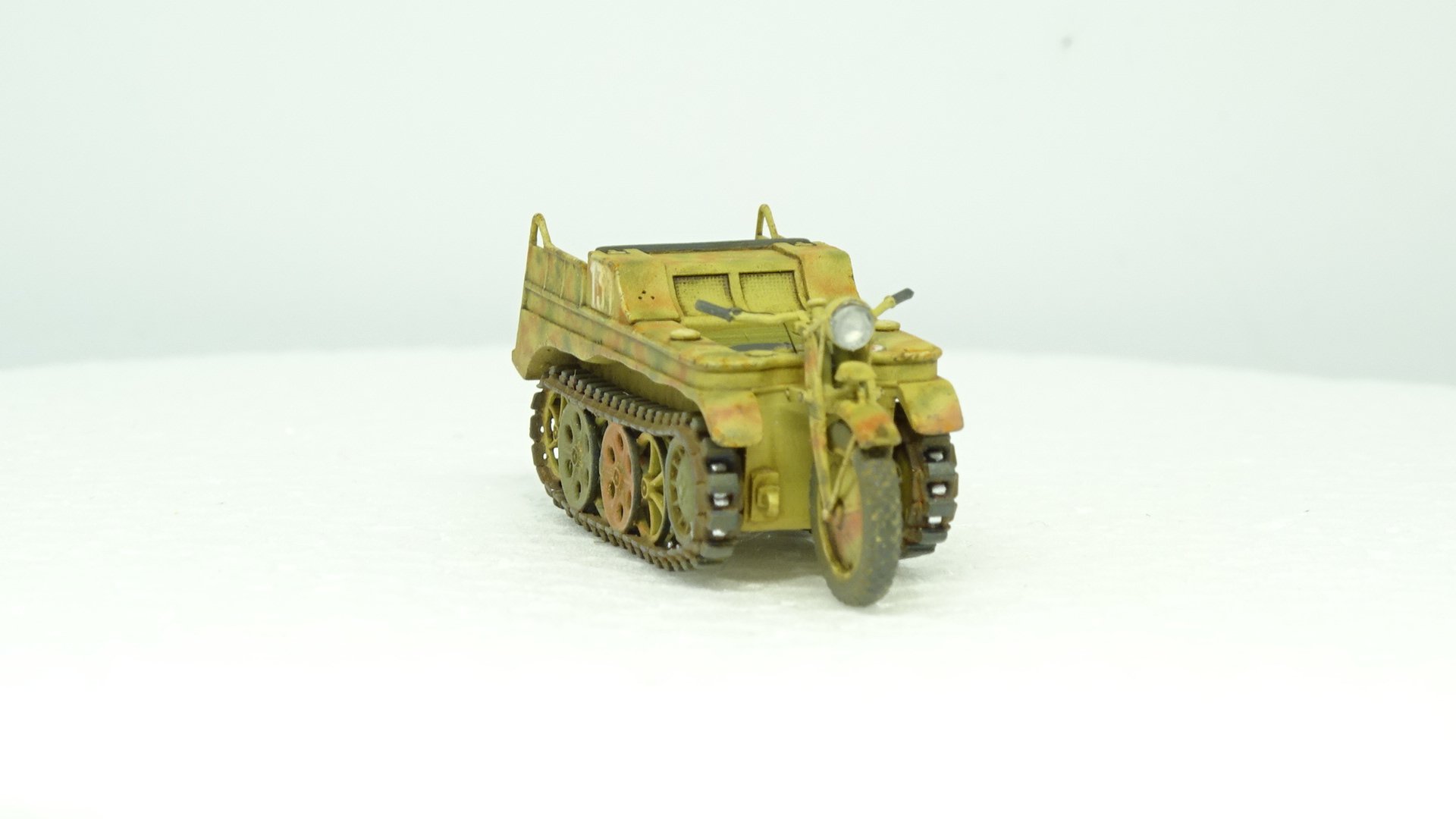
This time, I present a quick build of a small 1/72 Kettenkrad mo
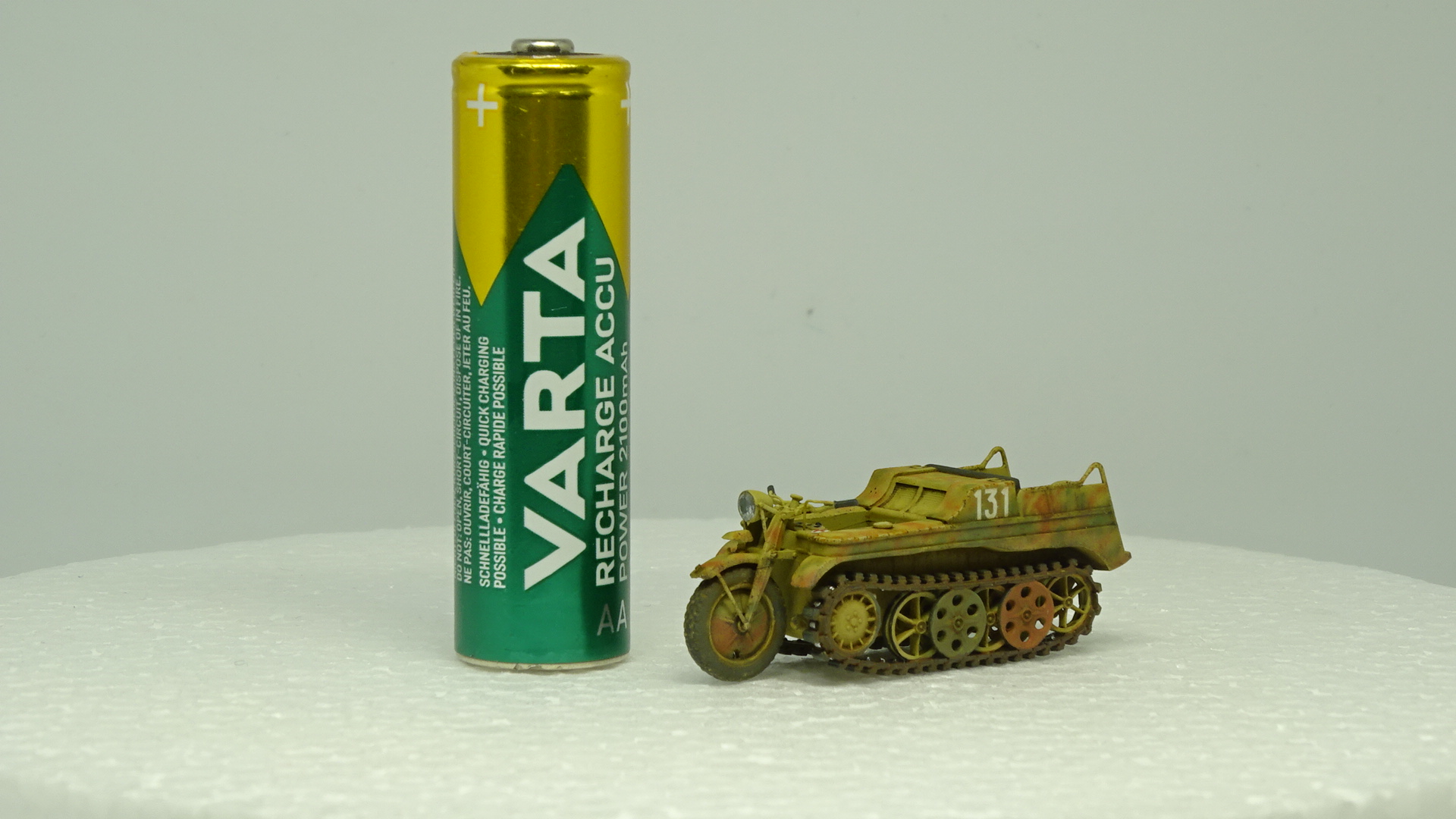
DSC06067.JPG
del. It is a 3D-printed kit with a few minor upgrades. The most interesting part of the build was experimenting with the three-color camouflage paint scheme.
 
Very good paintwork there
Could be better. However, I realised an interesting thing - purely acrylic paints (AK or A.MIG) are more or less OK for painting basic colour like dunkel gelb on this model, while they are not very useful for painting small red and green spots on such a scale. In fact, Tamiya and especially AK RC are very good for tiny camo airbrush painting.
 
Could be better. However, I realised an interesting thing - purely acrylic paints (AK or A.MIG) are more or less OK for painting basic colour like dunkel gelb on this model, while they are not very useful for painting small red and green spots on such a scale. In fact, Tamiya and especially AK RC are very good for tiny camo airbrush painting.
Wait, you airbrush at that scale? What size nozzle?
 
Yes. This was airbrushed camo - 0.2 mm nozzle, Harder and Steenbeck ULTRA at around 20 psi, and A.MIG 7100 set of paints with AK 3G thinner (something like 1 to 1).
That is surprising to me. I use the same set up but I usually lower the pressure when I'm trying to paint smaller details. I'll go as low as 8psi. I've also been airbrushing less than a year tho. At the lower psi I generally thin it about 60/40. For my main spraying I usually keep it around 12-15 psi. Why do you use higher psi?
 
Why do you use higher psi?
It is hard to say. Generally, you are right - smaller details, lower pressure. And I experimented with those purely acrylics at pressures lower than 10 psi and it was no flow at all. Also the needle was clogged in 5 sec.
However, there are hundred of different parameters (type of paint, type of thinner, distance to surface when you paint, amount of thinner, type and condition of airbrush instrument etc.) that affecting paint spraying. And also it is very important how do you measure pressure? Is it static or dynamic pressure?
 
It is hard to say. Generally, you are right - smaller details, lower pressure. And I experimented with those purely acrylics at pressures lower than 10 psi and it was no flow at all. Also the needle was clogged in 5 sec.
However, there are hundred of different parameters (type of paint, type of thinner, distance to surface when you paint, amount of thinner, type and condition of airbrush instrument etc.) that affecting paint spraying. And also it is very important how do you measure pressure? Is it static or dynamic pressure?
I read the pressure when I am pulling the trigger if that's what you mean. I spray Ak laq paints and use Mr color leveling thinner. Recently I have gotten to the point that I have enough control to spray with more accuracy but I'm still developing.
 
Back
Top