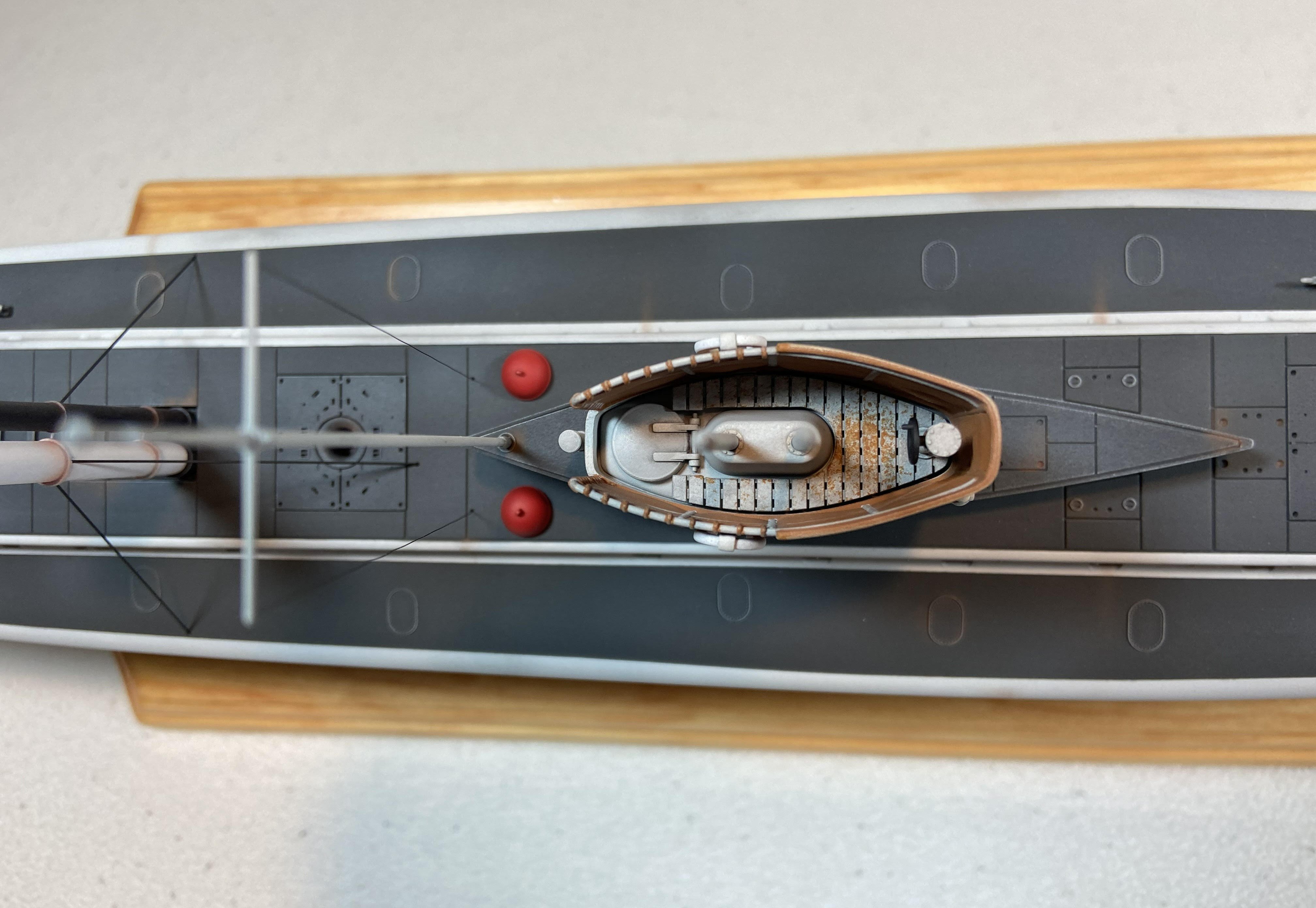
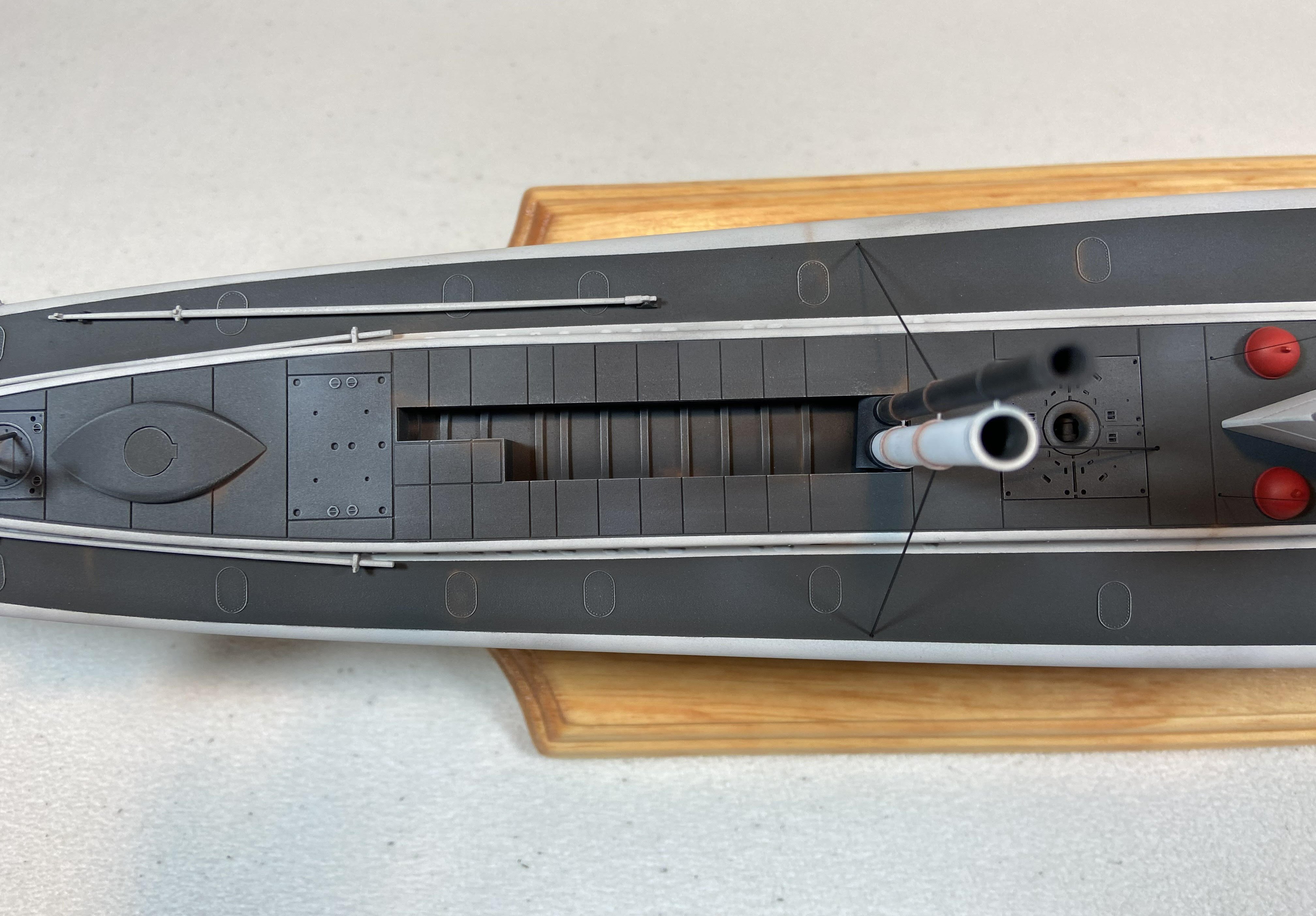
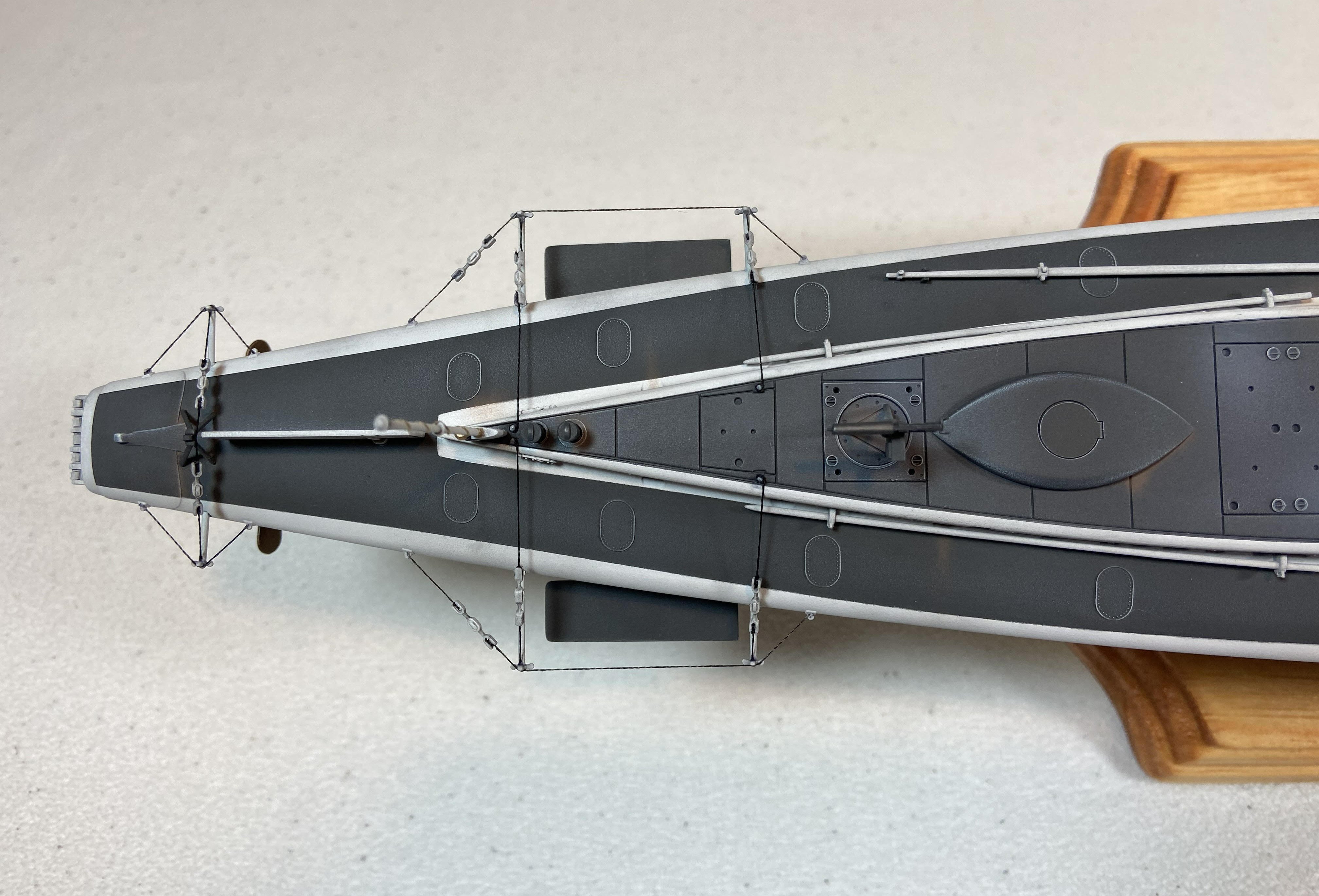
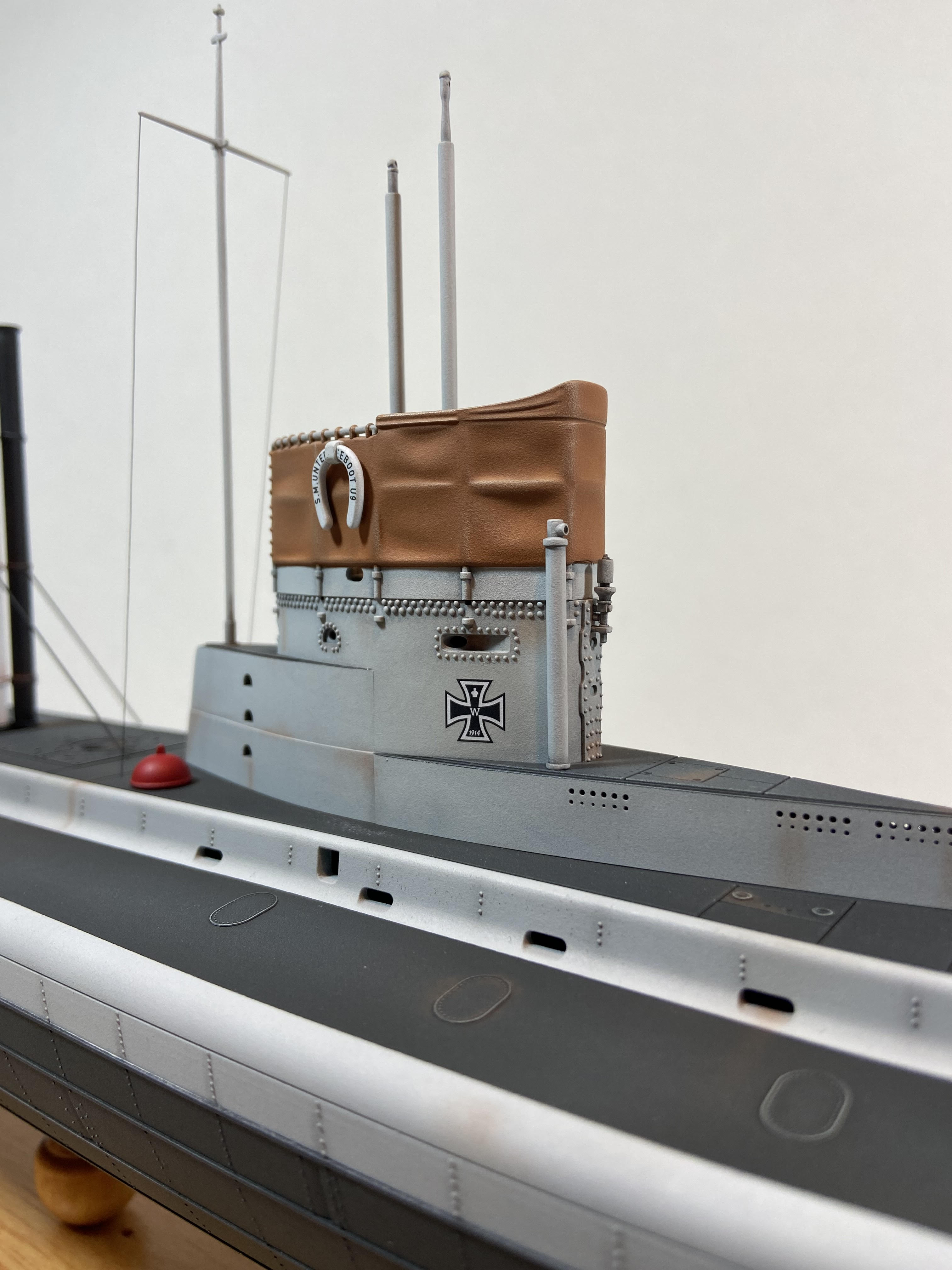
Finished Photos of Das Werk's 1/72 Scale S.M. U-9 (WW1 U-boat)

Scale Model Addict - Model Tips, Guides, Tools & Tech, Tutorials, and Community

Help Support Scale Model Addict:

Phillip1

Well-Known Member
Joined
Nov 1, 2024
Messages
123
Fellow Modelers,

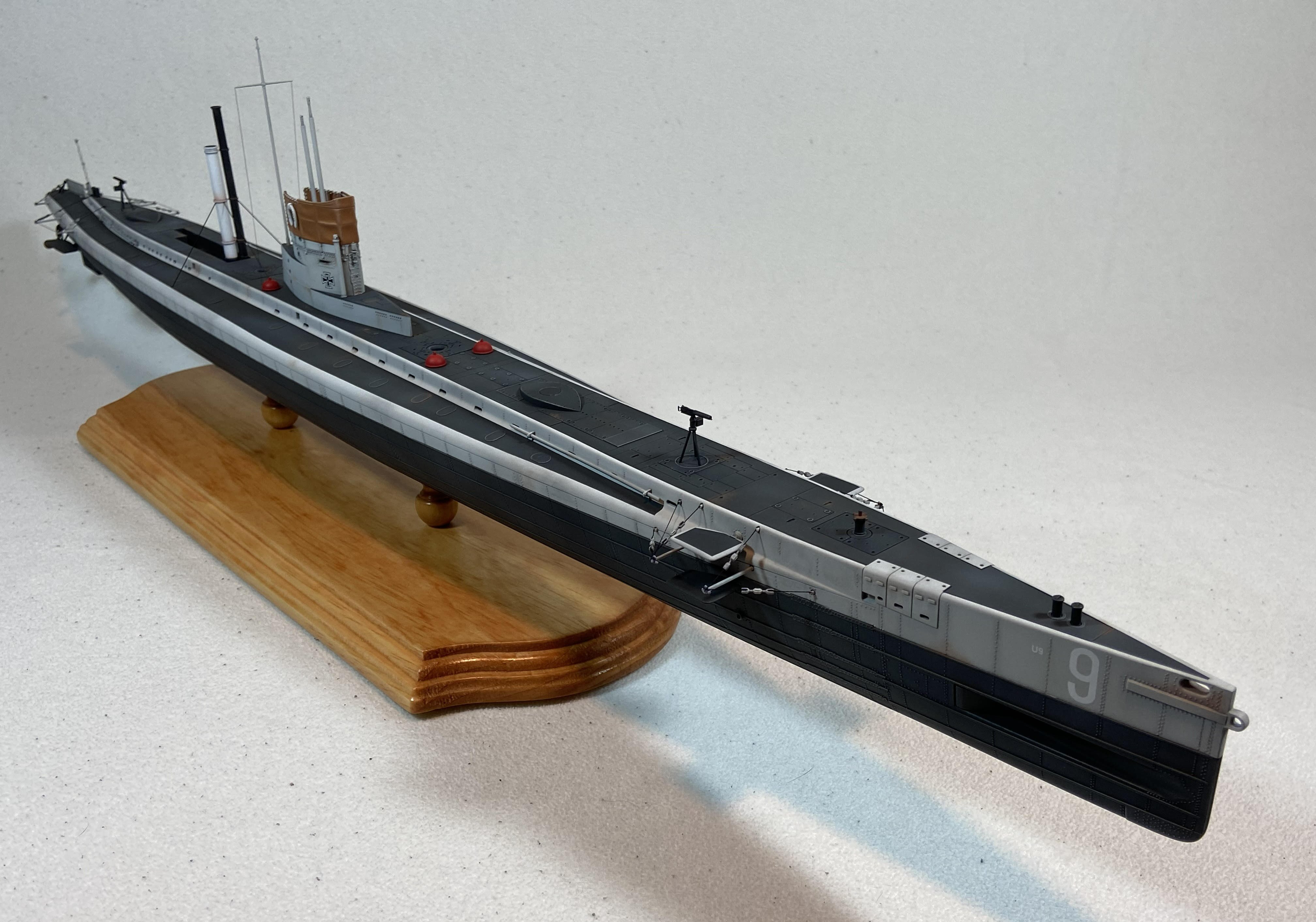
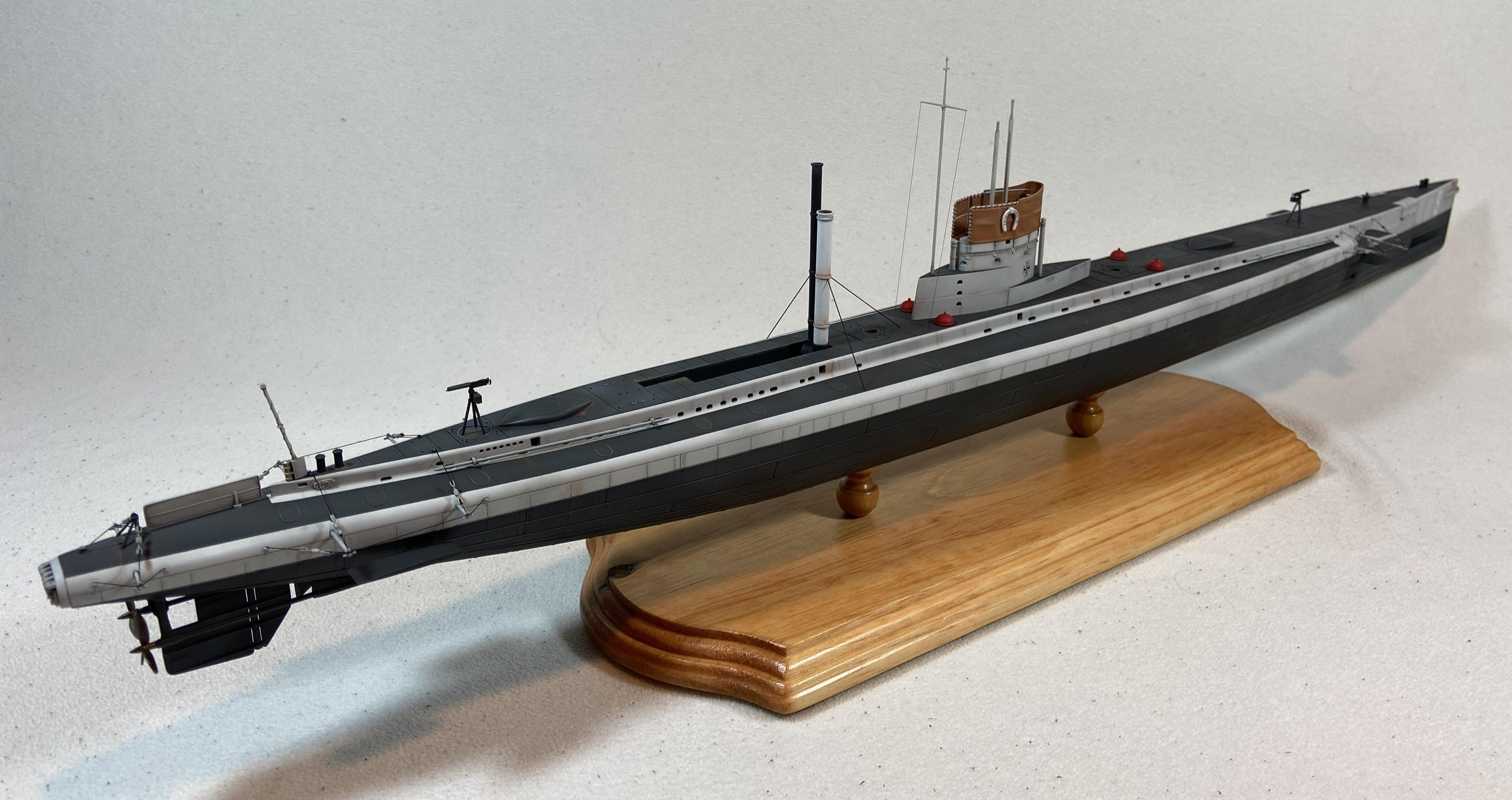
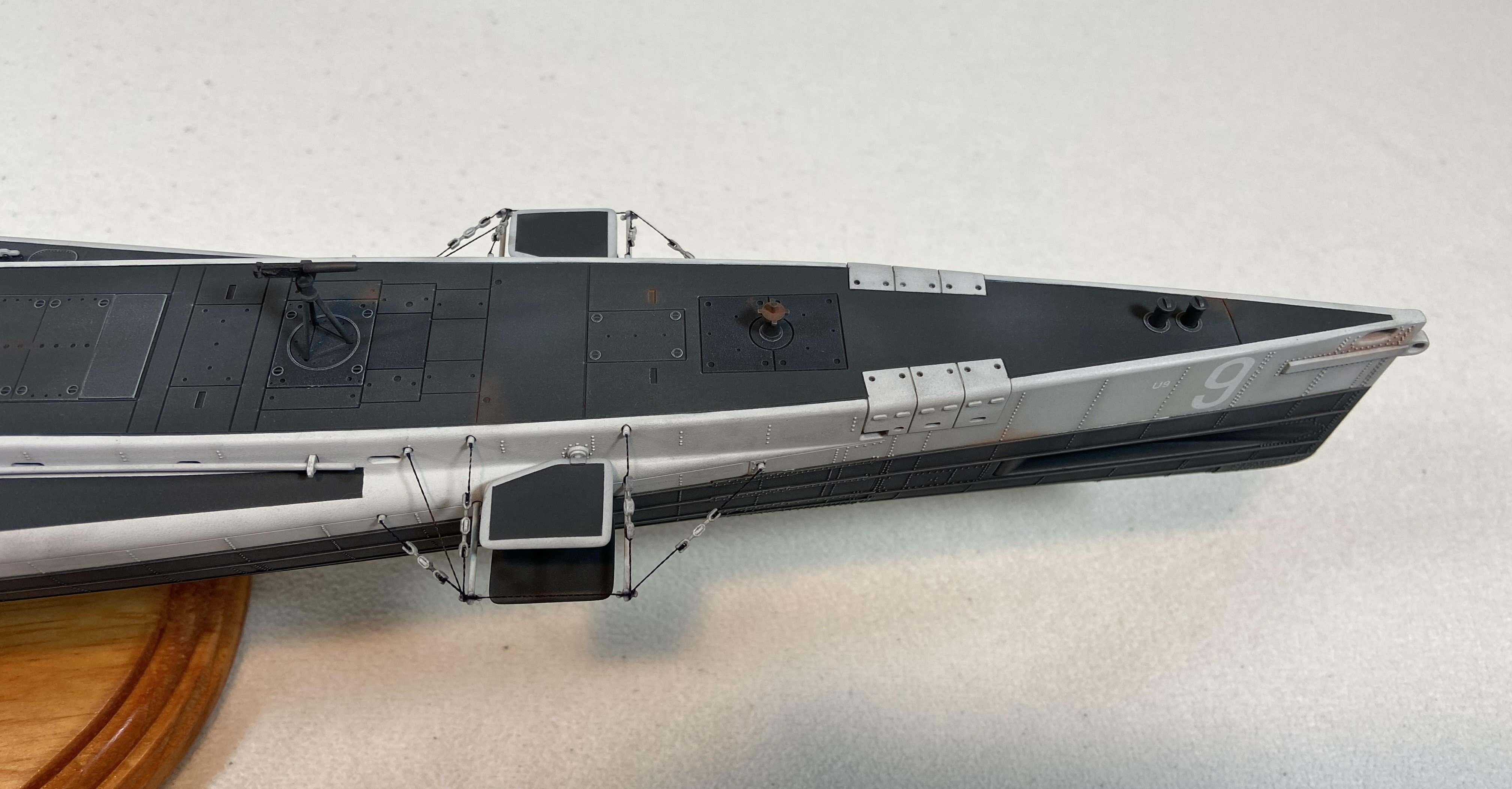
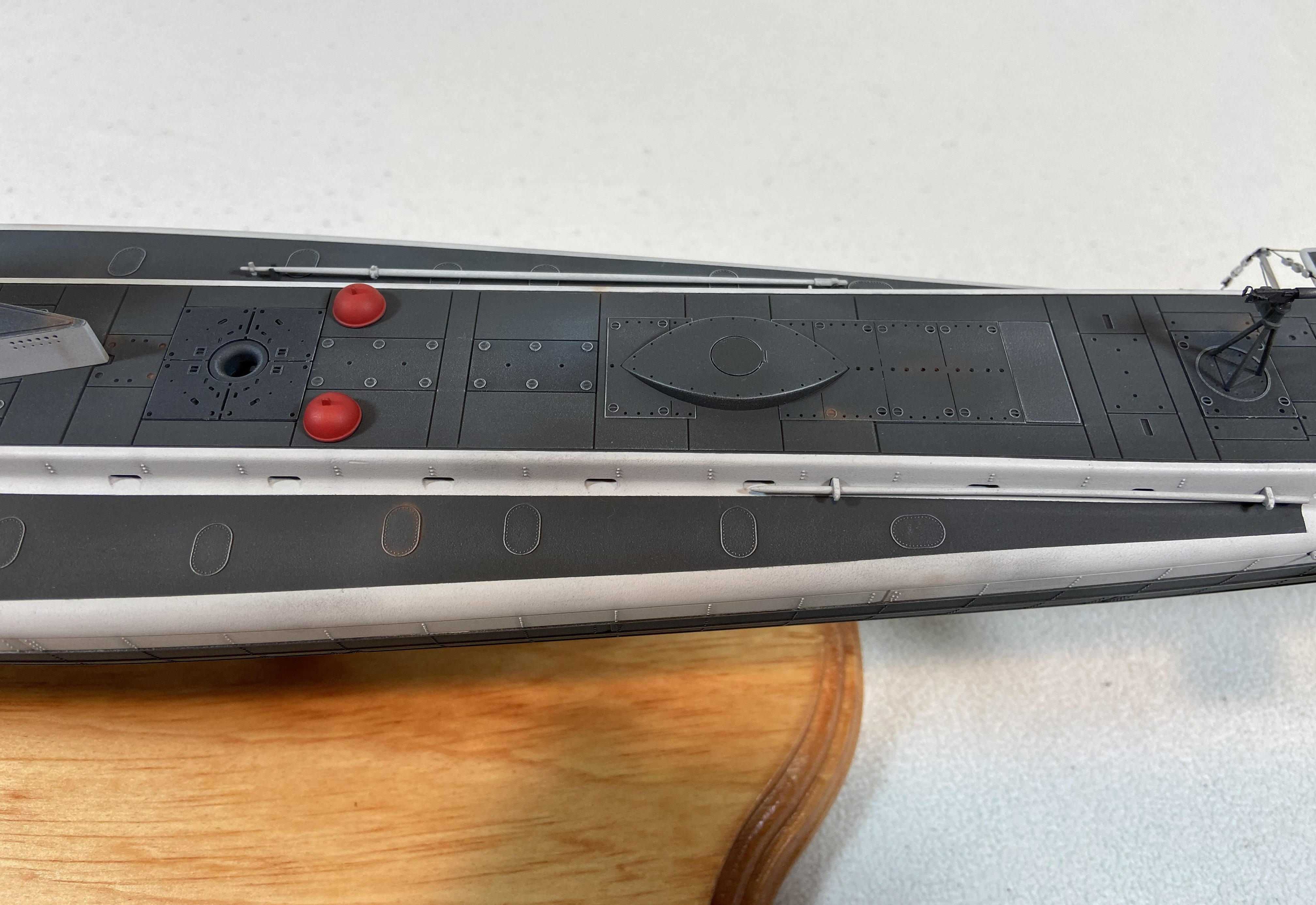
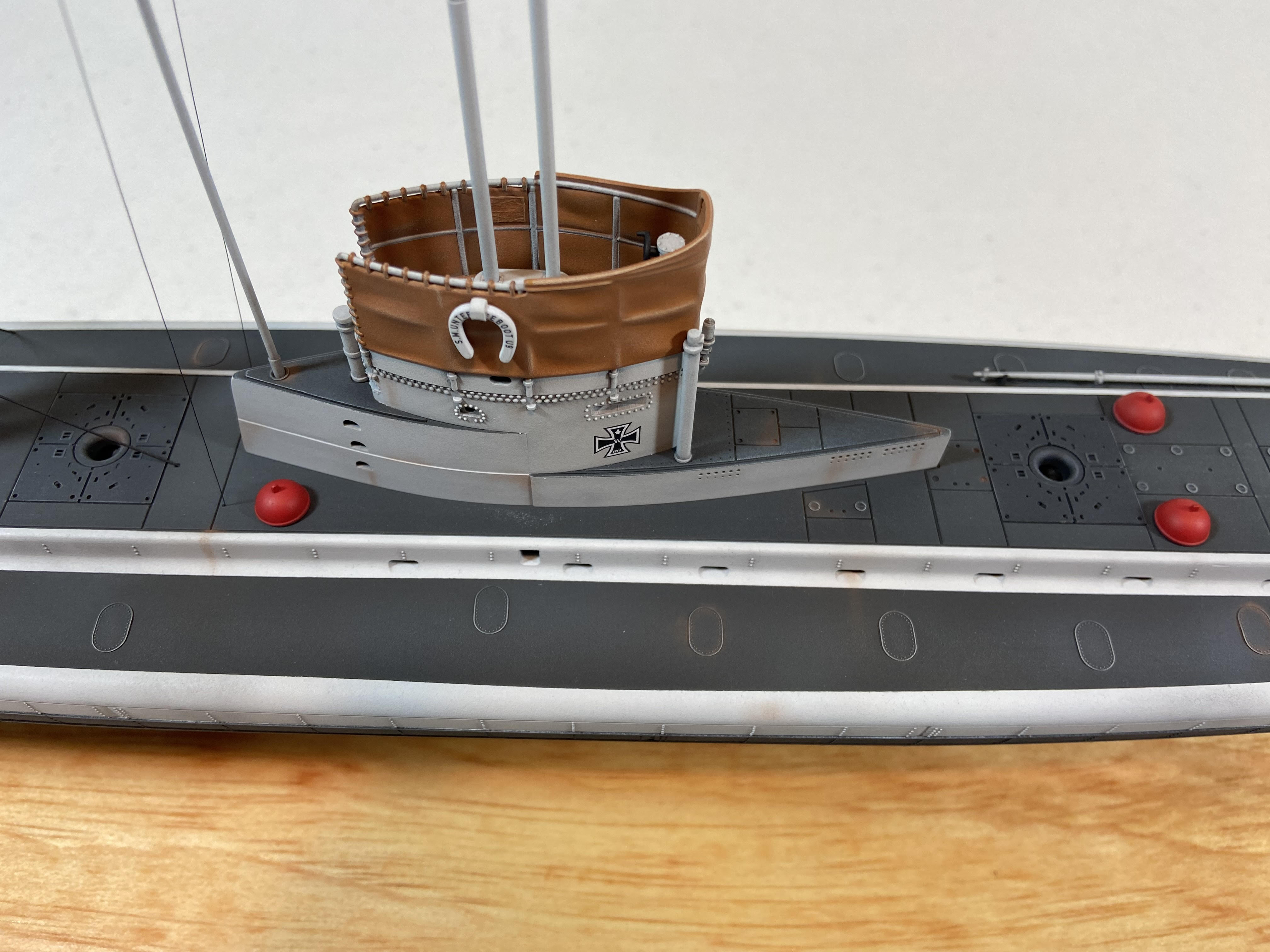
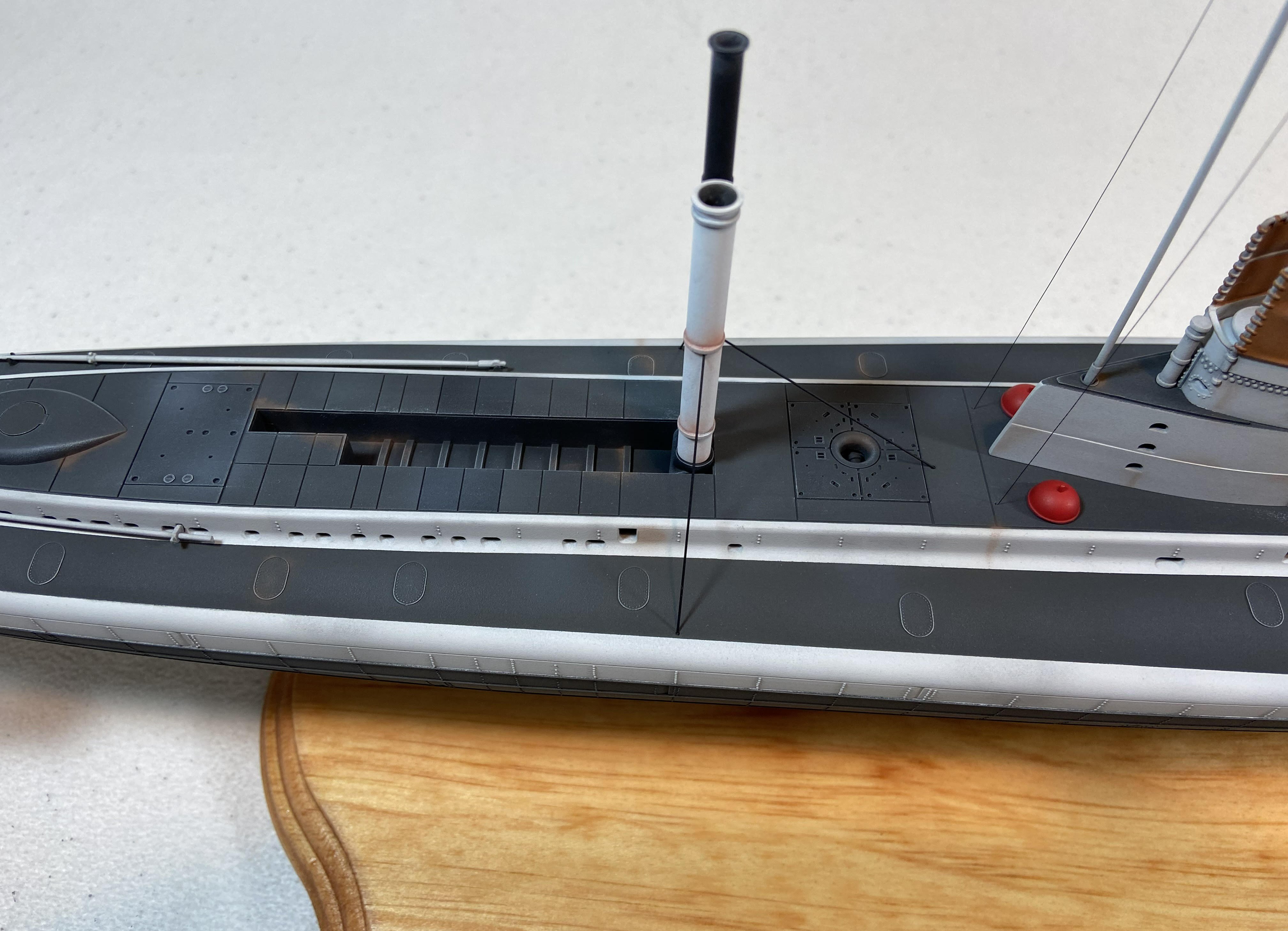
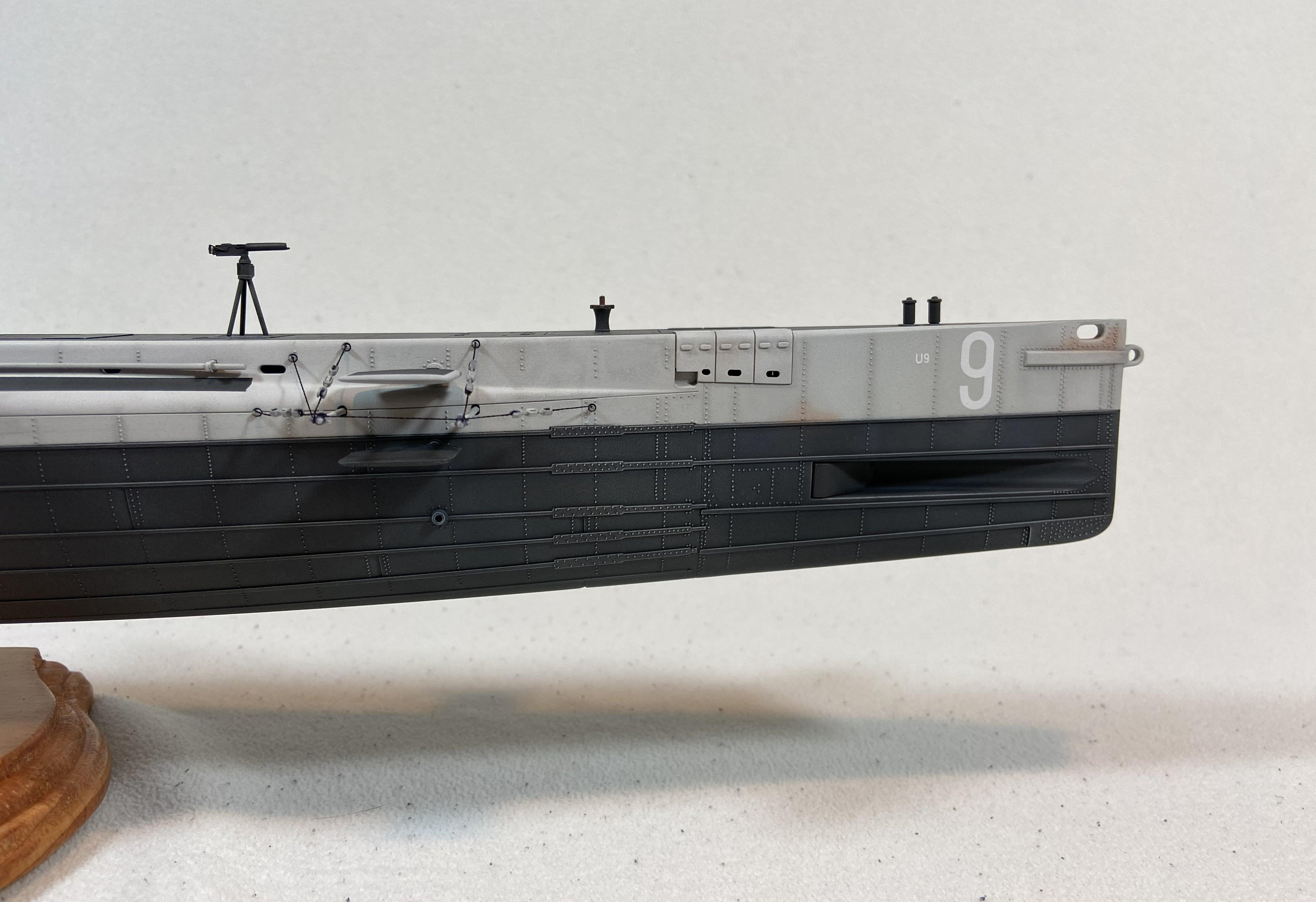
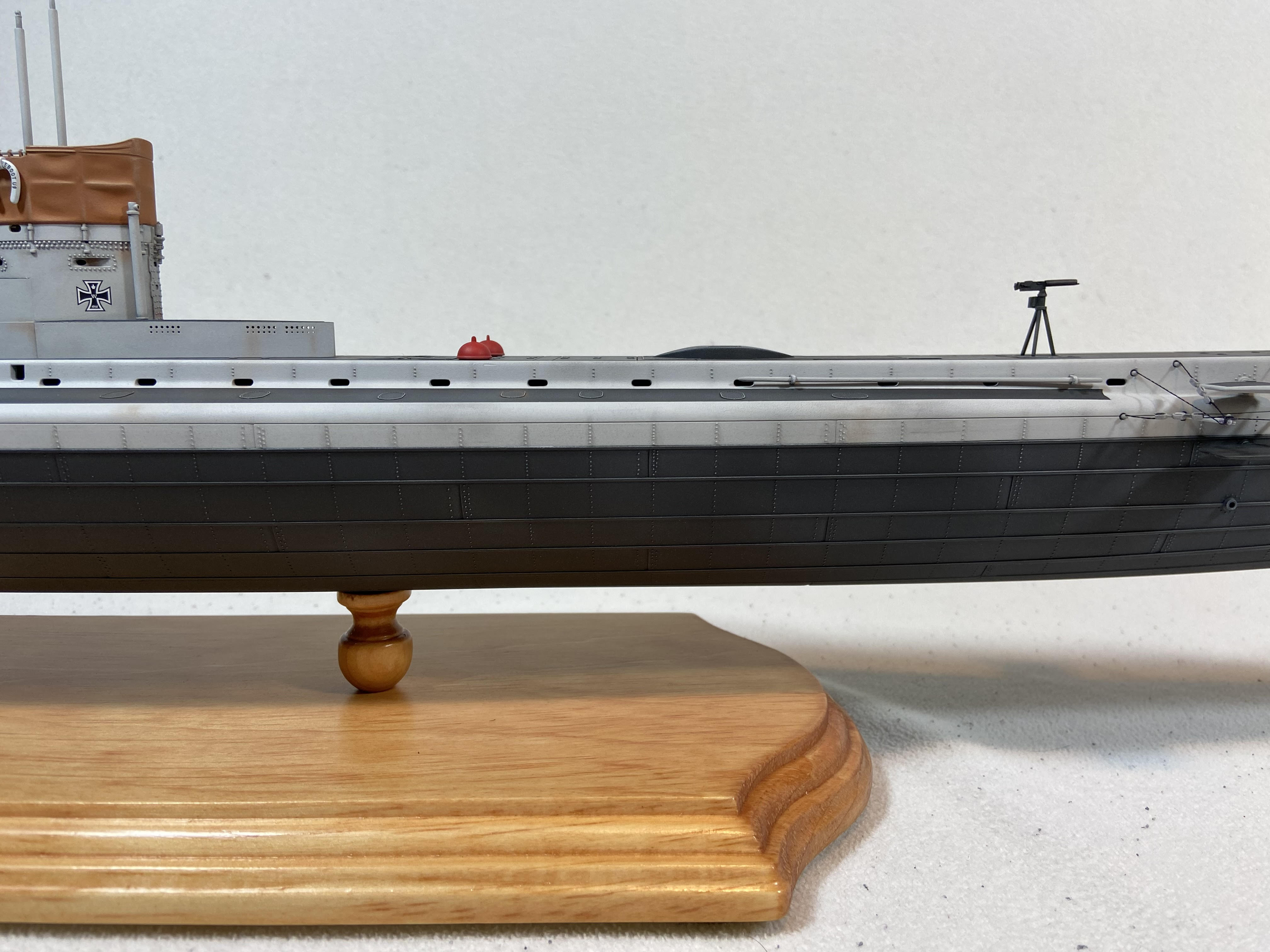
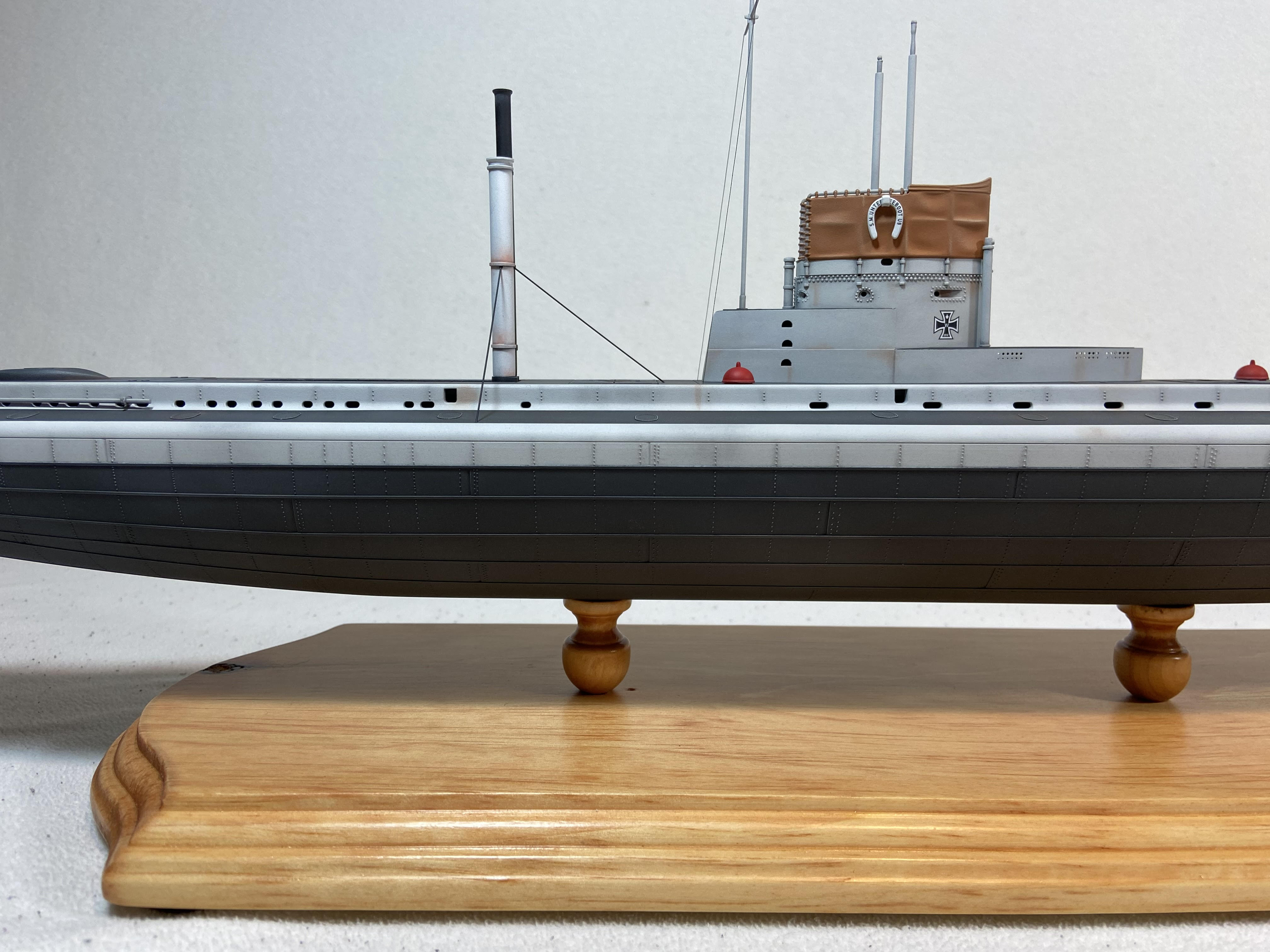
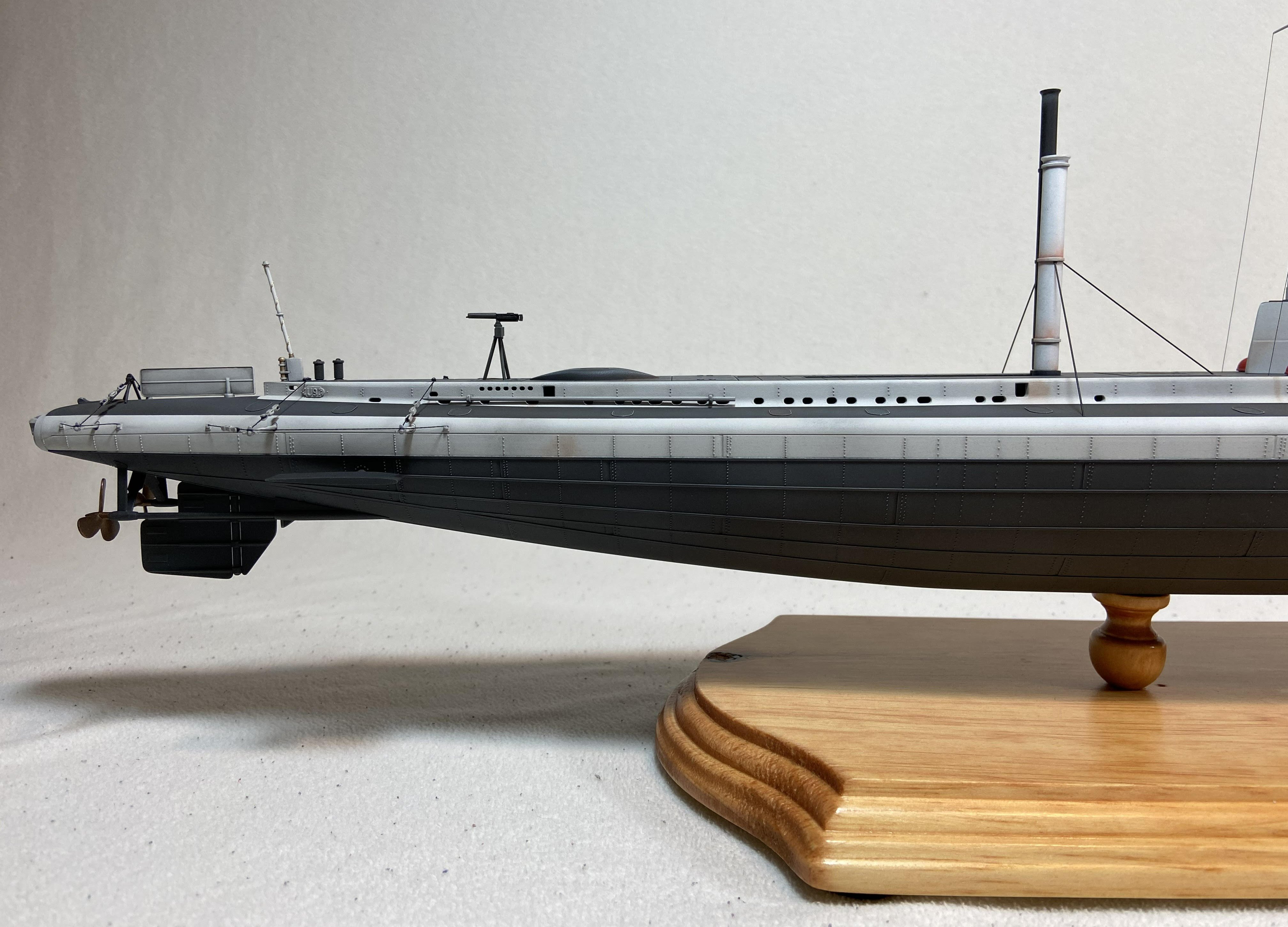
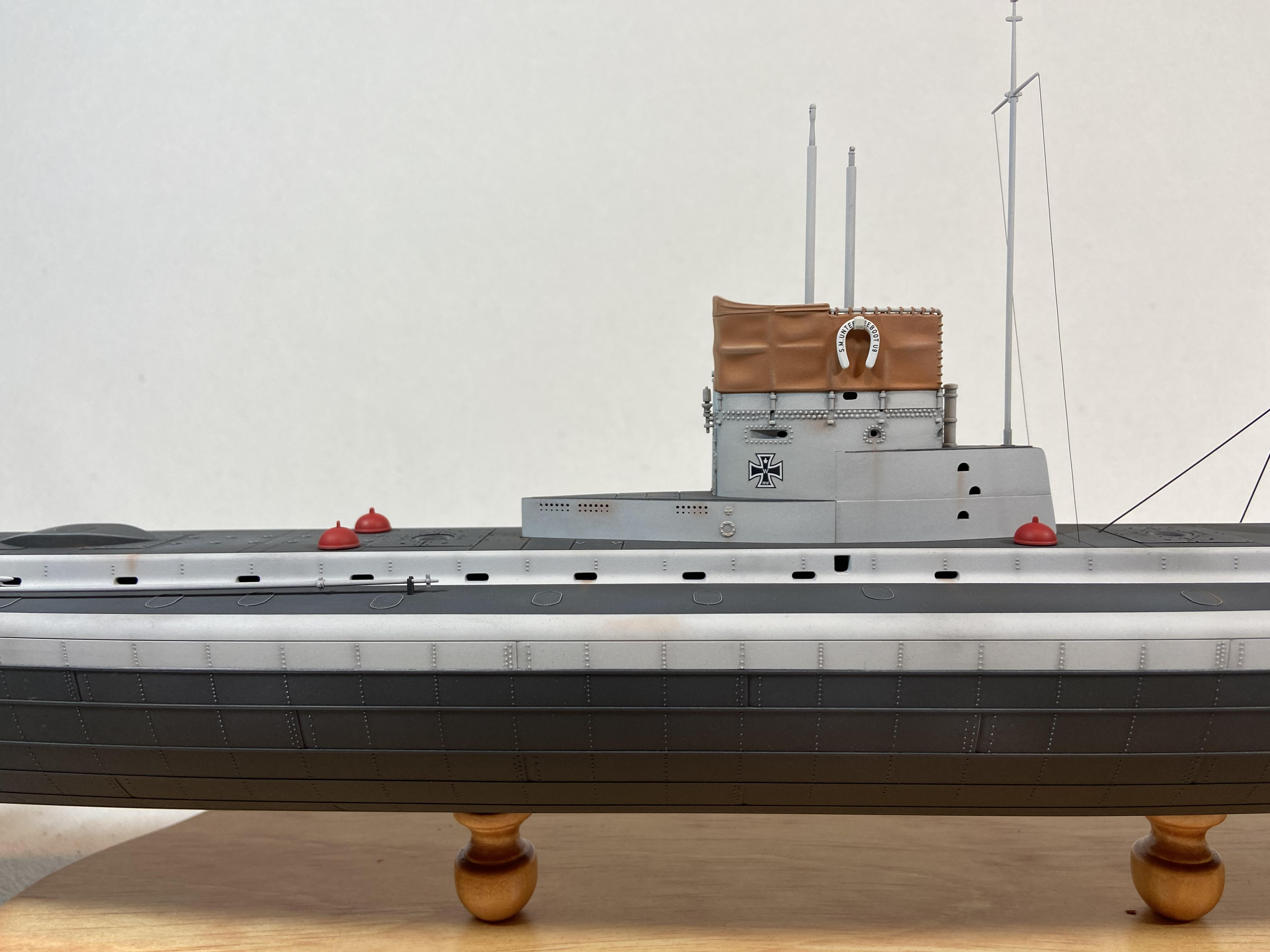
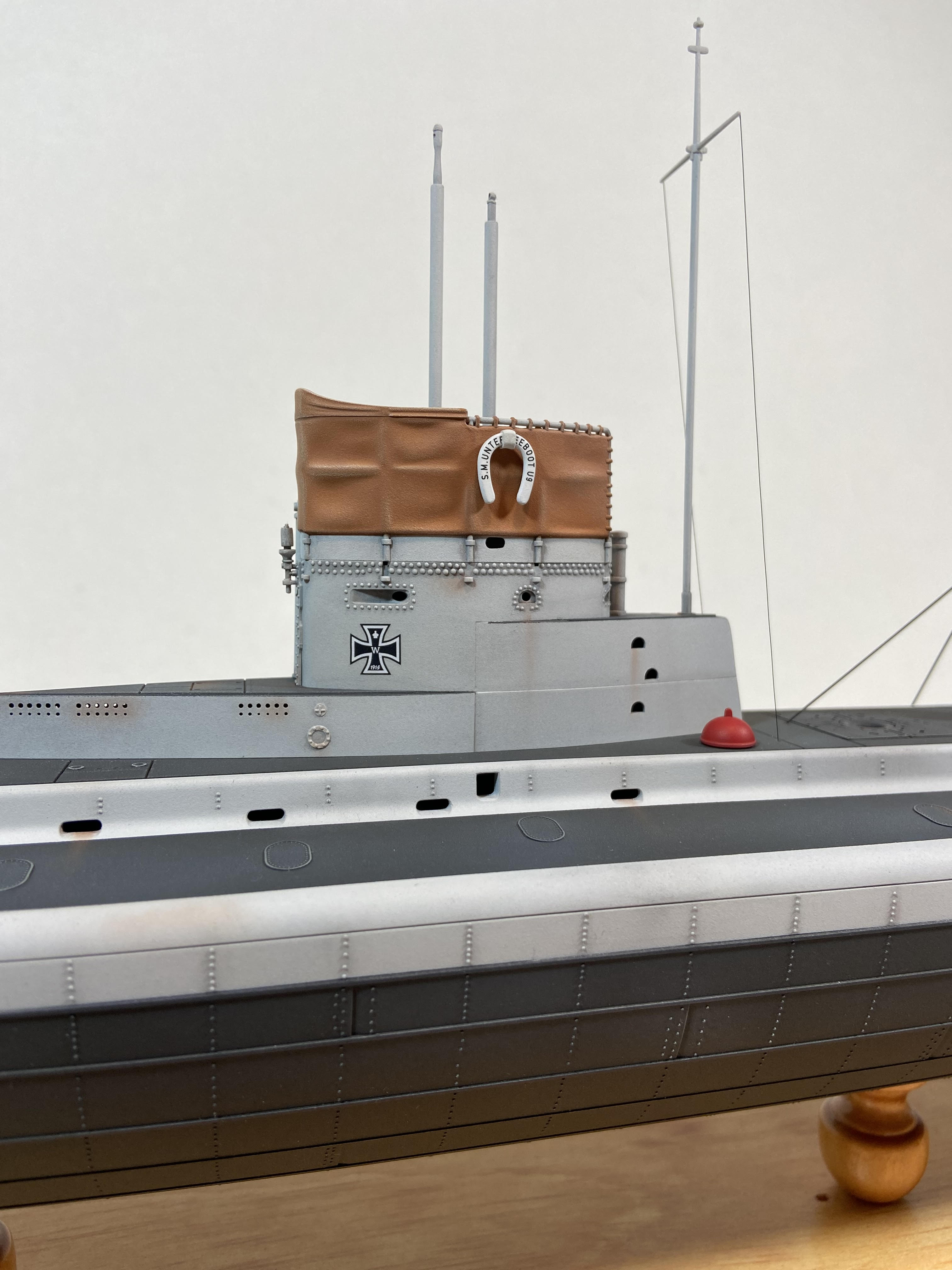
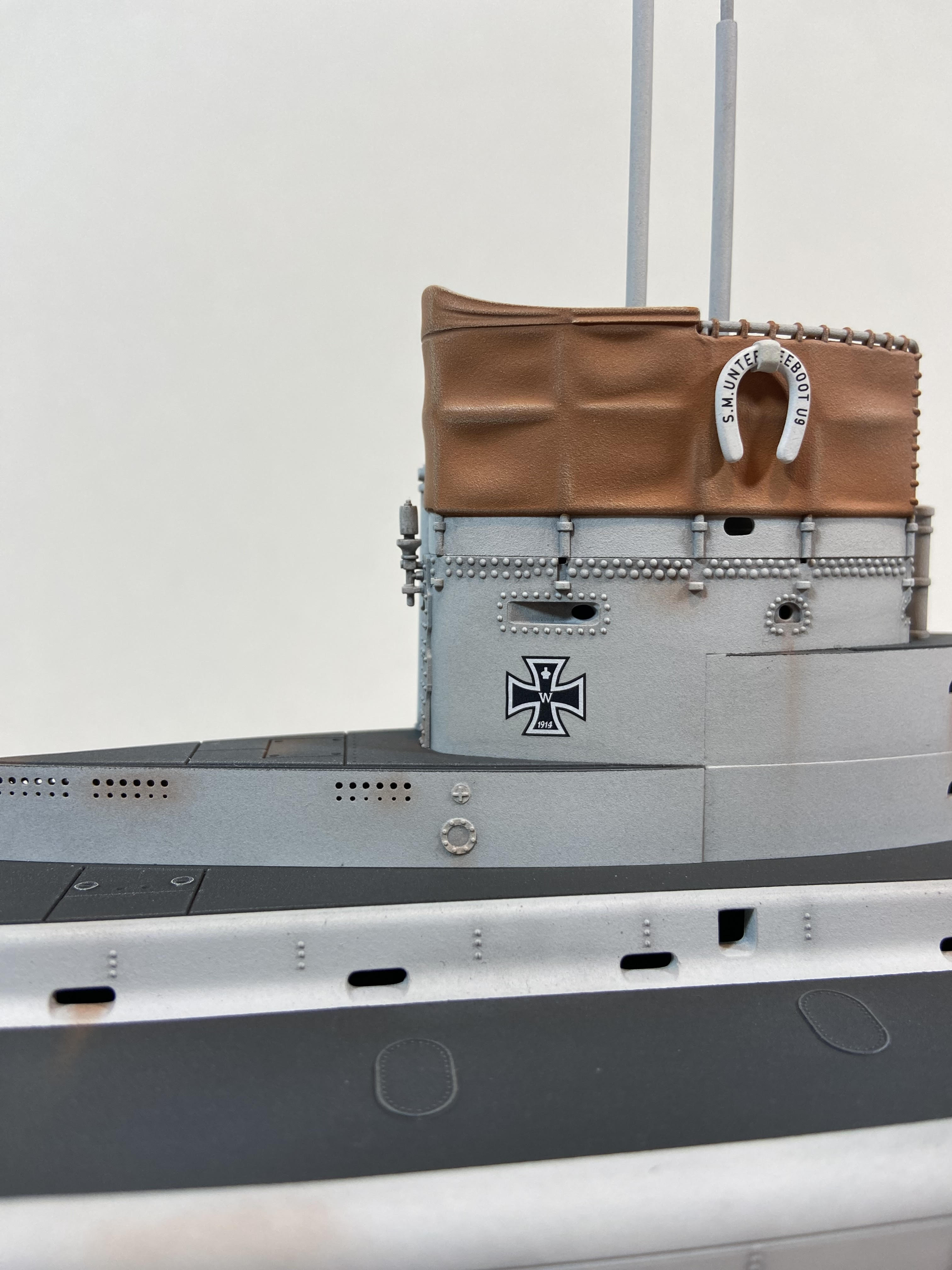
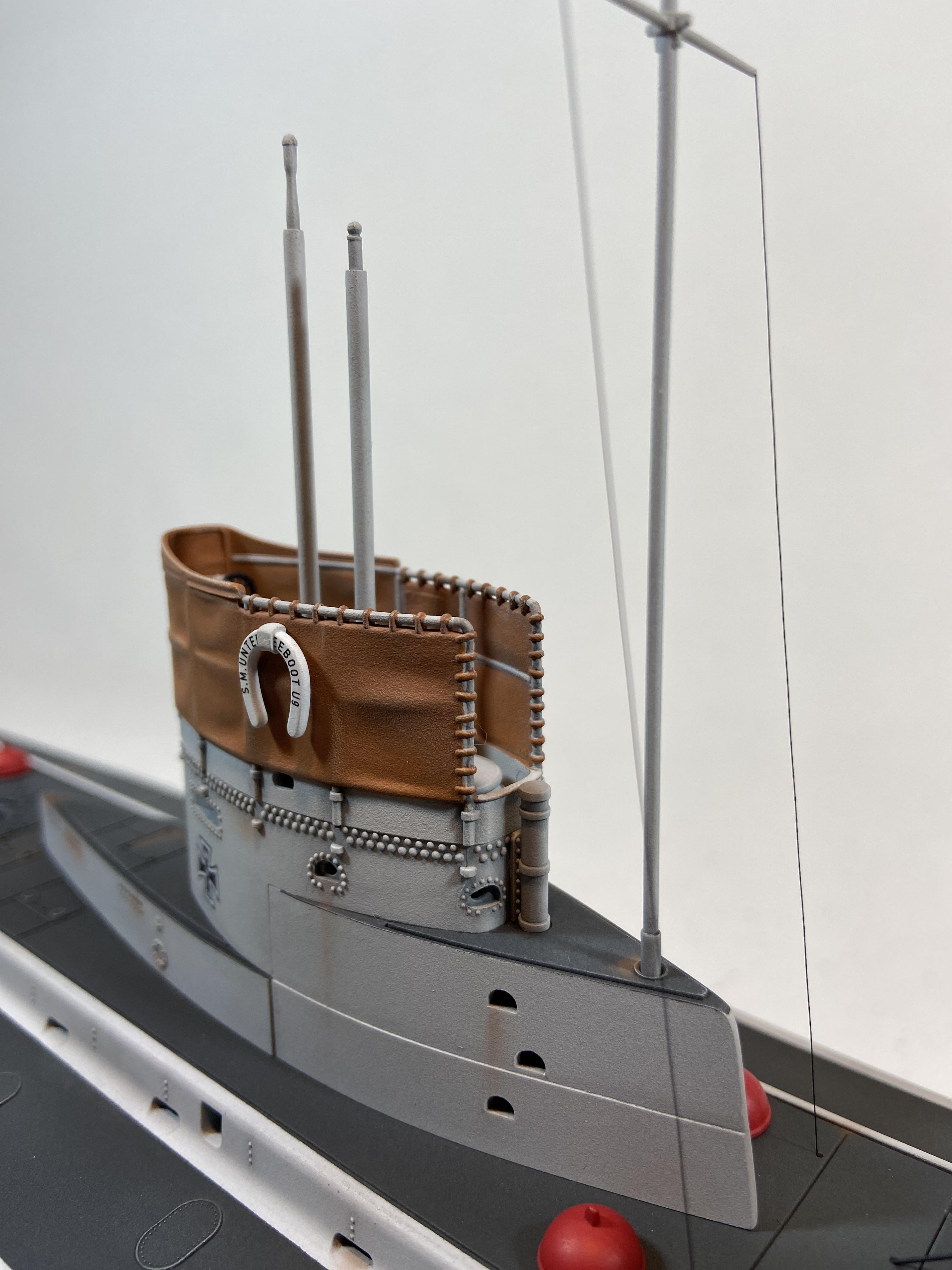
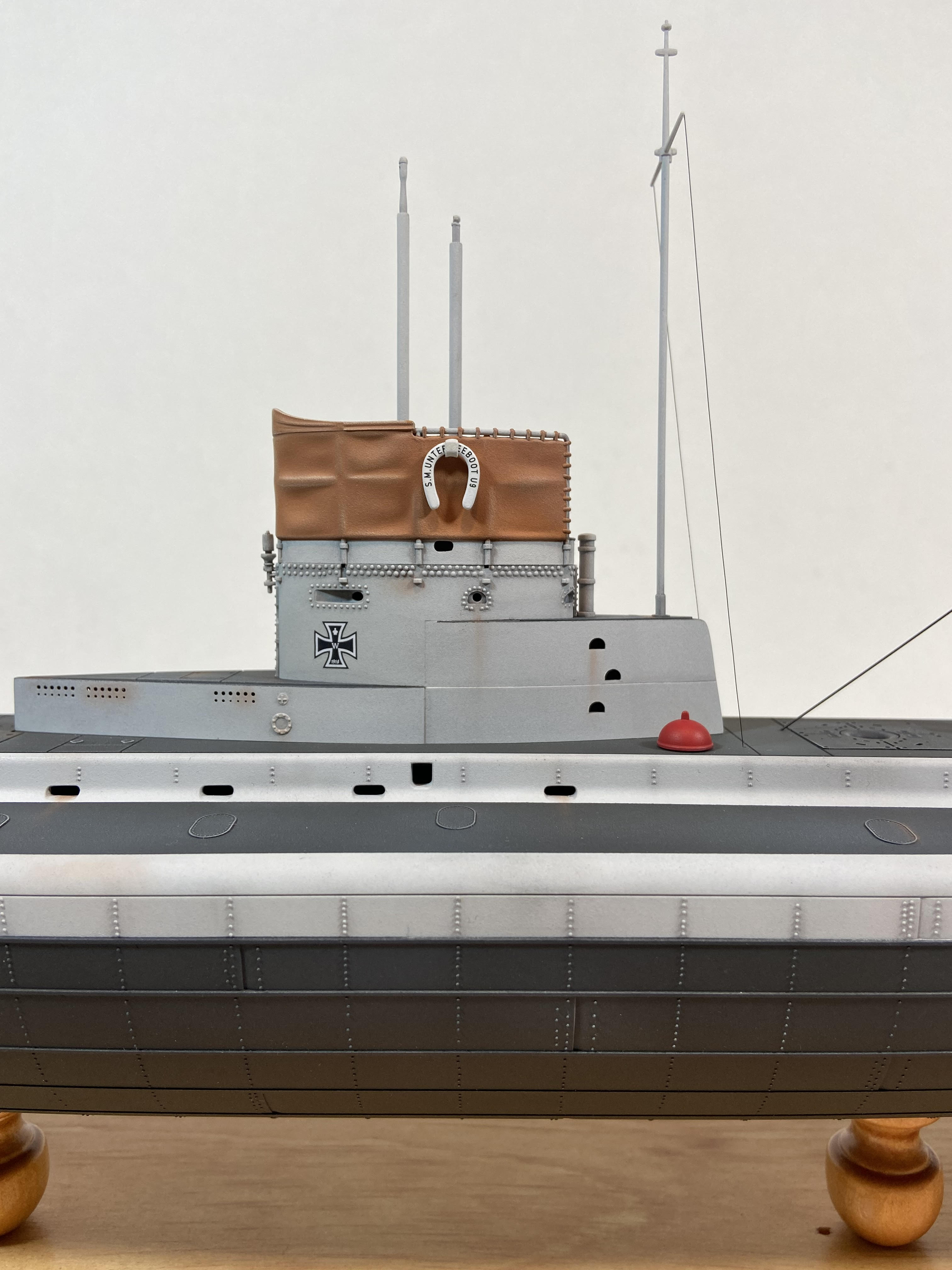
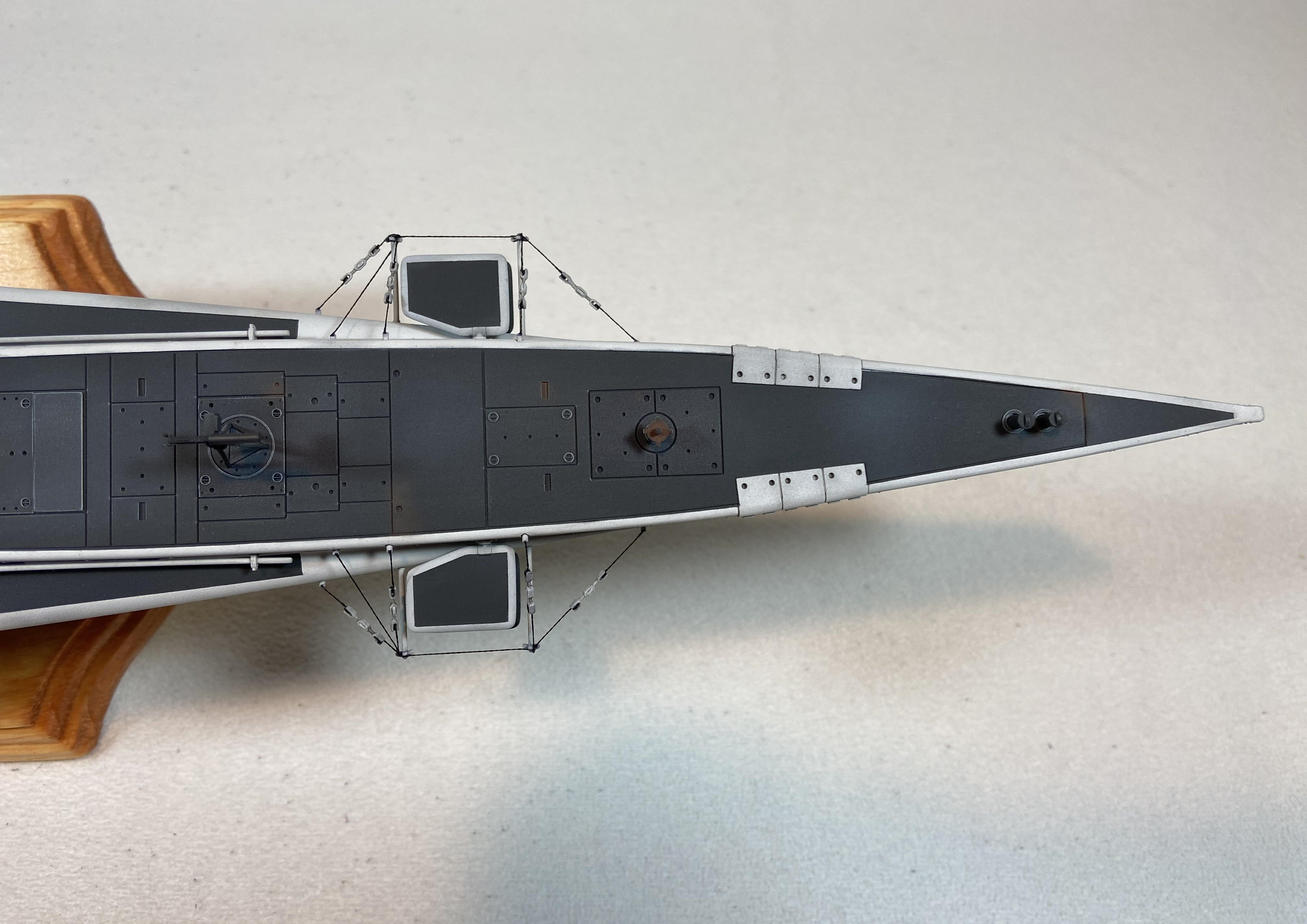
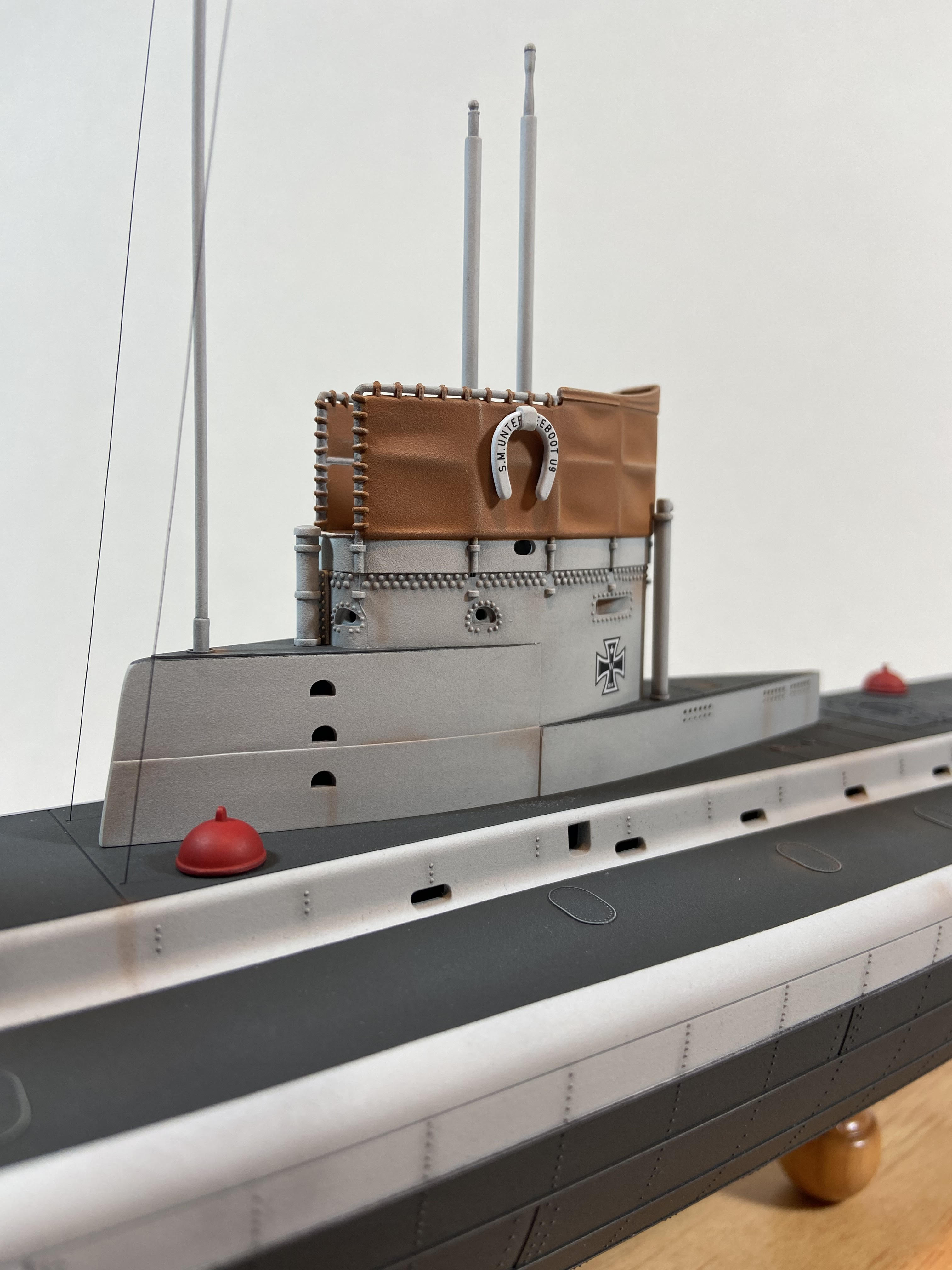
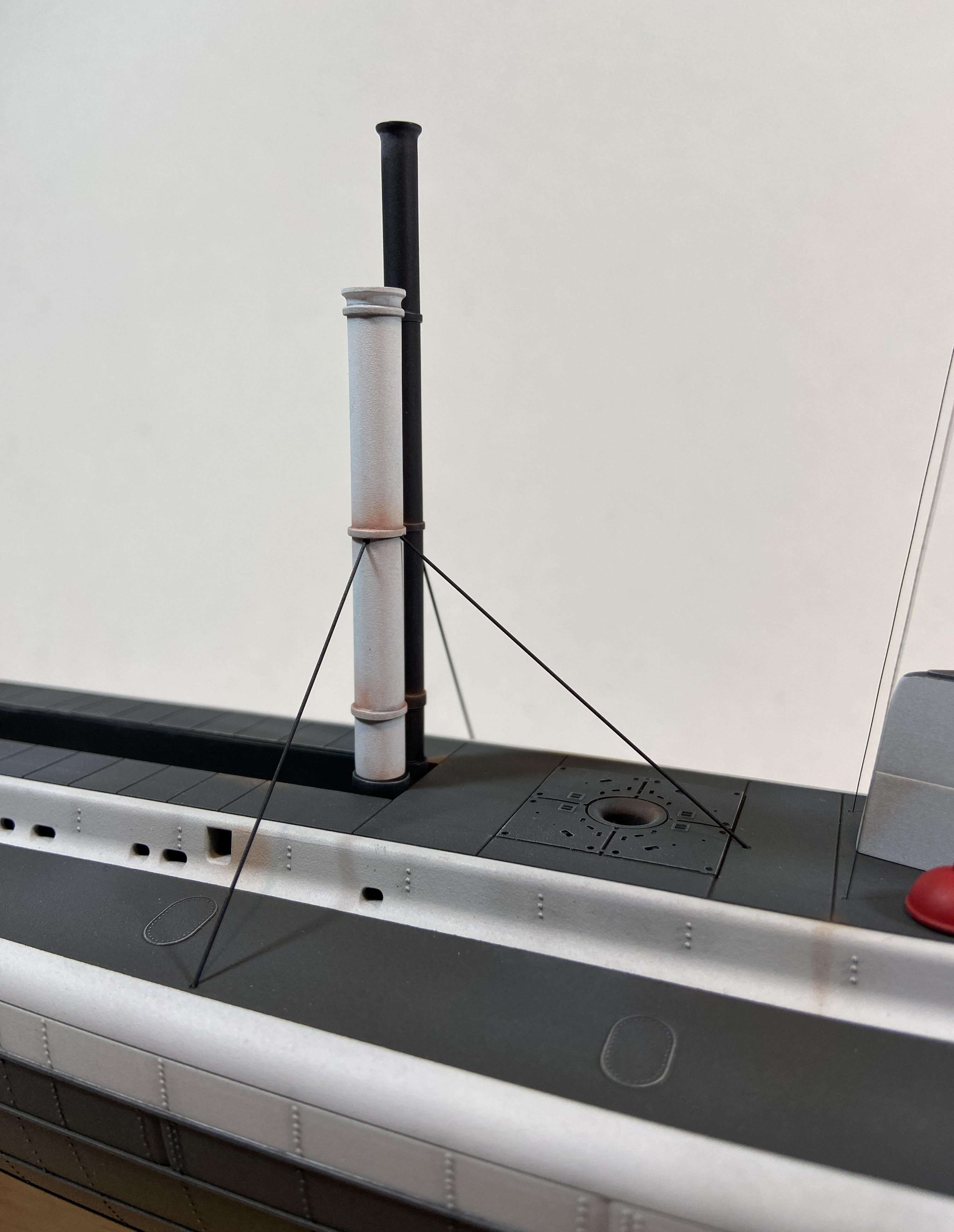
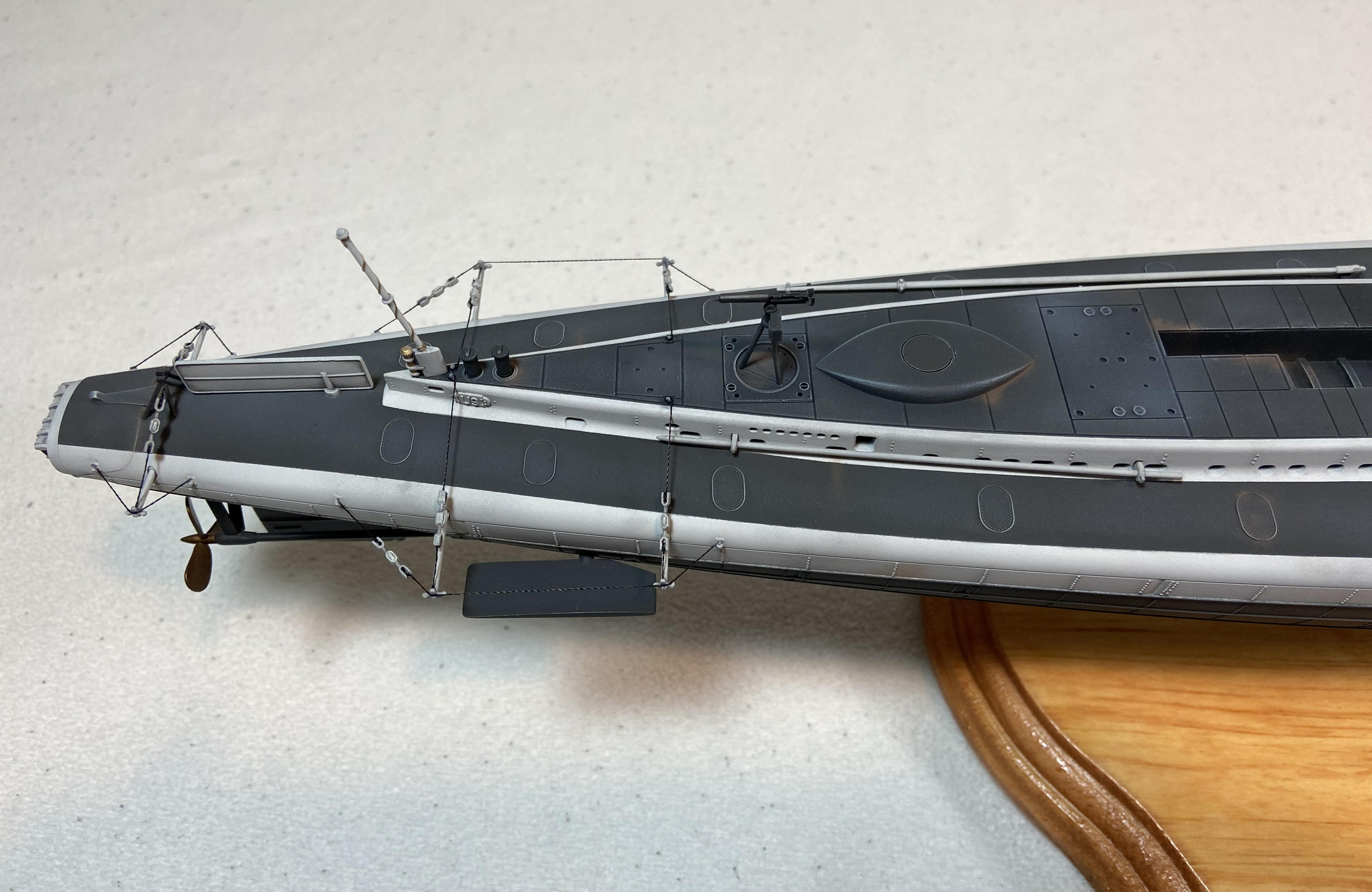
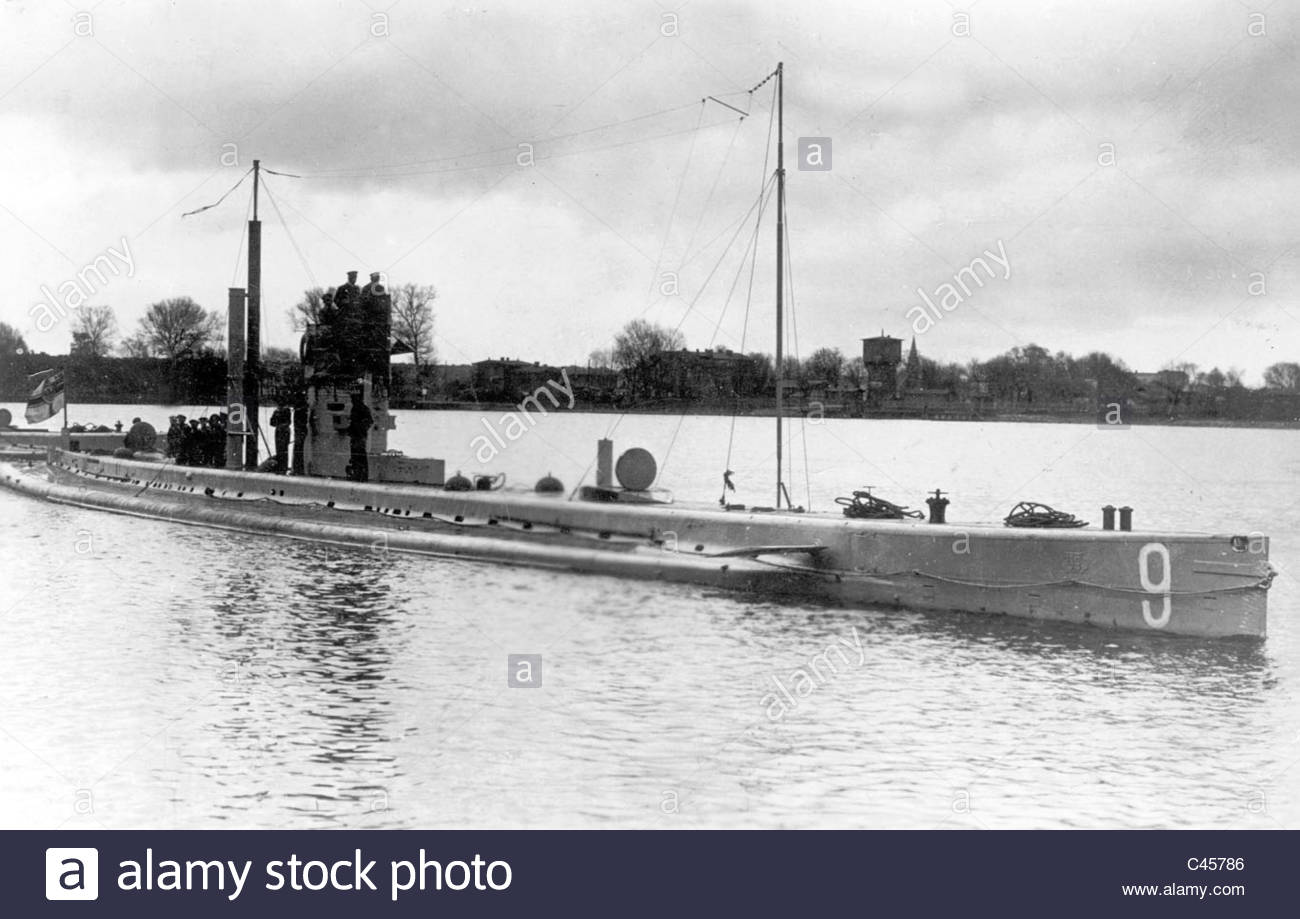
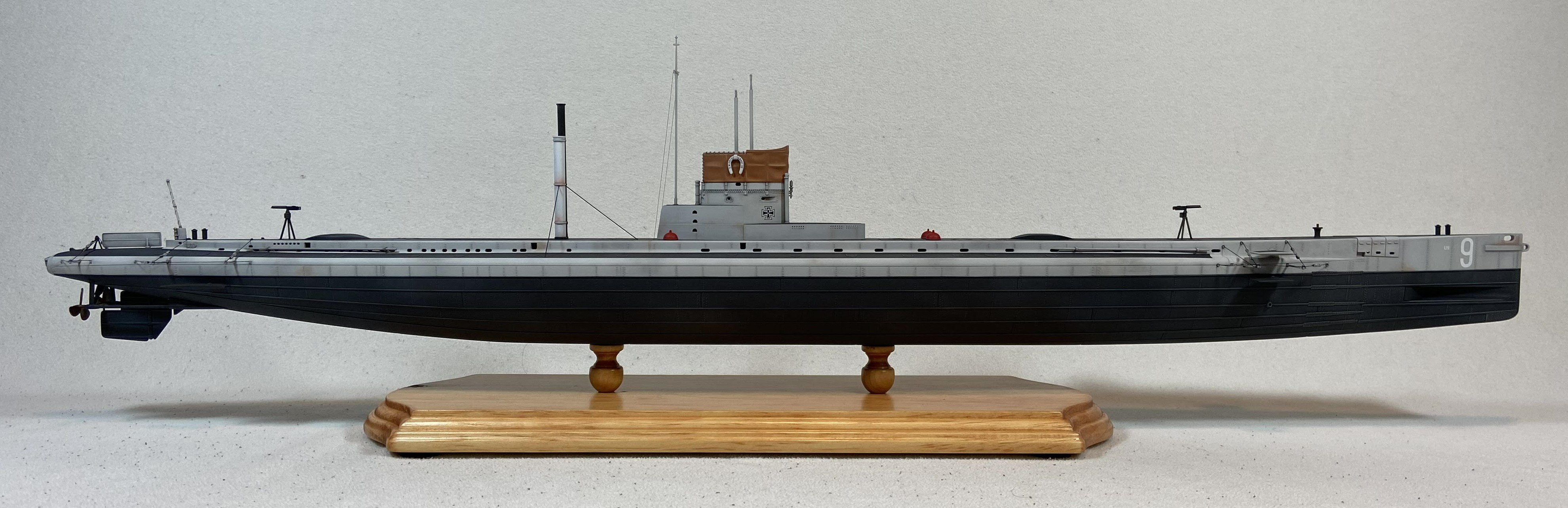
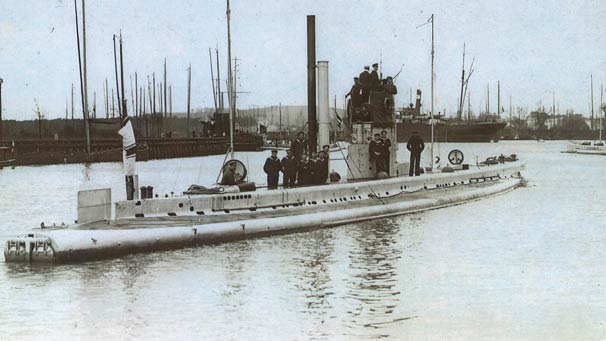
Below are photos of Das Werk's 1/72 scale (31.375" length) S.M. U-9 German WW1 submarine built in 2023. For whatever reason, WWI German U-boats have always been an ignored subject matter by plastic kit manufacturers, which is strange since WWII German U-boat models are so popular. Thank you Das Werk Company for finally giving the modeling world the U-9 submarine, a very high quality, large injection plastic model kit. Das Werk was wise in choosing to reproduce the U-9, as it was one of the most famous U-boats from WW1. For my build I made a few minor kit modifications and used a photo-etch detail set purchased from RC Subs in the Czech Republic.

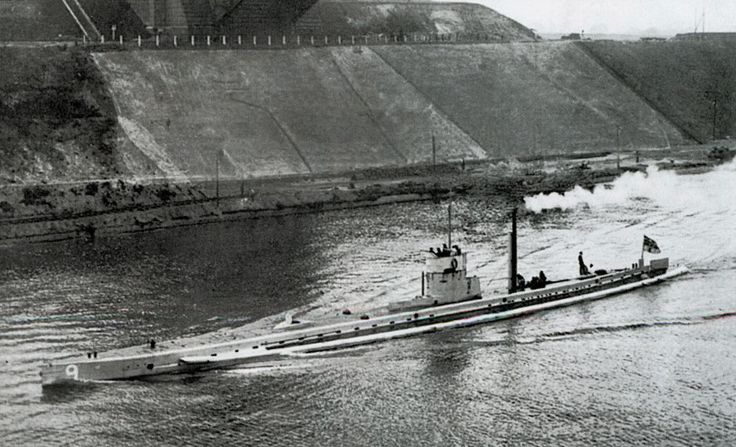
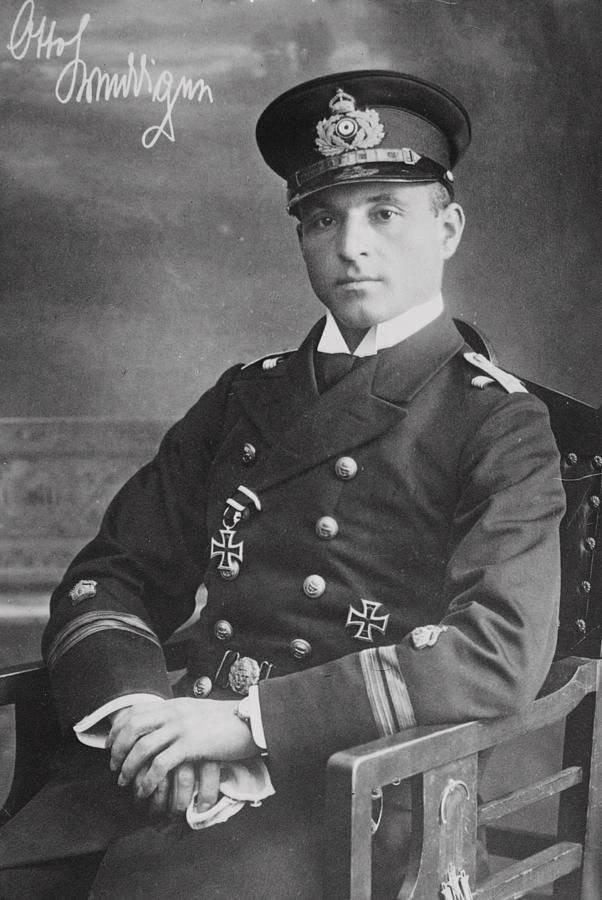
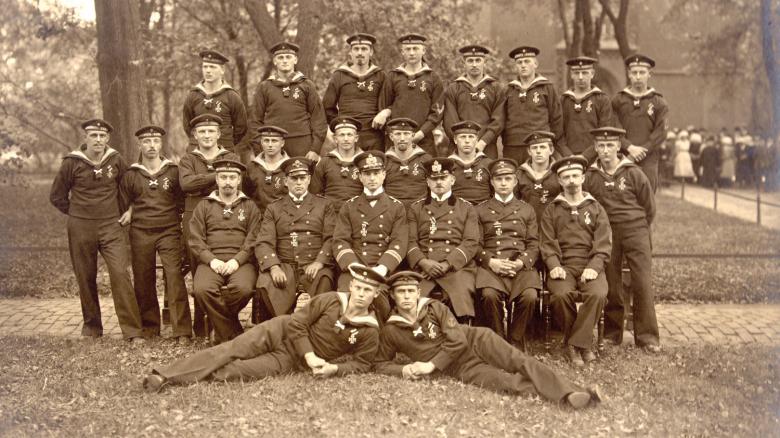
U-9 was ordered for construction in 1908 and commissioned in February 1910. It was the lead ship in a class of four submarines (U-9 to U-12). When U-9 and her sister ships entered service, they were superior in both combat potential and seaworthiness to any submarine in service at the time with any other navy. However, by 1914 this class was considered obsolete. When the "Great War" began in July 1914 the submarine was an unproven weapon, and seen at best as a supporting role player to battleships and heavy-cruisers. The world's opinion of the submarine's potential as an offensive weapon changed on September 22, 1914 when Germany's S.M. (His Majesty's) U-9 under the command of Kapitanleutnant Otto Weddigen, was able to single-handedly sink three British armored cruisers (Aboukir/Hogue/Cressy) in a little over an hour. This feat made U-9 and her crew national heroes overnight with the crew being awarded the Iron Cross Second Class and Weddigen awarded the Iron Cross First and Second Class. After famously sinking three British armored cruisers in September 1914, it went on to sink a British protected cruiser (Hawke) the following month and Weddigen was awarded the Pour le Merite (Blue Max). Between January 1915 and April 1916 (under a new captain) U-9 sank an additional 13 ships consisting of small fishing vessels and British steamers. After April 1916 it was withdrawn from front line duties and used for training. When the war ended in November 1918 all surviving U-boats (including U-9) were turned over to the Allied nations. U-9 was eventually broken up for scrape in Morecambe, England in 1919. Weddigen was given command of a more modern U-boat (U-29) on February 1915. U-29 was lost with all hands-on March 18, 1915 after being rammed and cut in two by a British battleship (Dreadnought) while conducting a surfacing attack. U-9 was the only U-boat during the war to be awarded the Iron Cross by Kaiser Wilhelm II. The last few photos are of the real U-9, the captain and the crew. I hope you enjoy the photos.
Phillip1
 

Attachments
  • 167.jpg
    167.jpg
    790.8 KB
  • 019FSM.jpg
    019FSM.jpg
    1 MB
  • 169.jpg
    169.jpg
    1.1 MB
  • 170.jpg
    170.jpg
    927.4 KB
  • 171.jpg
    171.jpg
    1.3 MB
  • 172.jpg
    172.jpg
    930 KB
  • 173.jpg
    173.jpg
    1 MB
  • 174.jpg
    174.jpg
    1.1 MB
  • 175.jpg
    175.jpg
    997.1 KB
  • 176.jpg
    176.jpg
    1 MB
Last edited:
As an Amazon Associate we earn from qualifying purchases. Product prices and availability are accurate as of the date/time indicated and are subject to change.
I like your paint work on this.

edit.......thanks for the historical pics, very interesting.
Thank you for the compliment. I think adding the historical photos/text makes the build more interesting to look at.

Phillip1
 
Amazing. The historical pics surprised me with the scale... Quite a small and narrow boat all told.
Thanks. You are right, the early WW1 U-boats were pretty small, but the late war U-boats equaled the size and tonnage of what was used in WW2.

Phillip1
 
Fellow Modelers,

Below are photos of Das Werk's 1/72 scale (31.375" length) S.M. U-9 German WW1 submarine built in 2023. For whatever reason, WWI German U-boats have always been an ignored subject matter by plastic kit manufacturers, which is strange since WWII German U-boat models are so popular. Thank you Das Werk Company for finally giving the modeling world the U-9 submarine, a very high quality, large injection plastic model kit. Das Werk was wise in choosing to reproduce the U-9, as it was one of the most famous U-boats from WW1. For my build I made a few minor kit modifications and used a photo-etch detail set purchased from RC Subs in the Czech Republic.

U-9 was ordered for construction in 1908 and commissioned in February 1910. It was the lead ship in a class of four submarines (U-9 to U-12). When U-9 and her sister ships entered service, they were superior in both combat potential and seaworthiness to any submarine in service at the time with any other navy. However, by 1914 this class was considered obsolete. When the "Great War" began in July 1914 the submarine was an unproven weapon, and seen at best as a supporting role player to battleships and heavy-cruisers. The world's opinion of the submarine's potential as an offensive weapon changed on September 22, 1914 when Germany's S.M. (His Majesty's) U-9 under the command of Kapitanleutnant Otto Weddigen, was able to single-handedly sink three British armored cruisers (Aboukir/Hogue/Cressy) in a little over an hour. This feat made U-9 and her crew national heroes overnight with the crew being awarded the Iron Cross Second Class and Weddigen awarded the Iron Cross First and Second Class. After famously sinking three British armored cruisers in September 1914, it went on to sink a British protected cruiser (Hawke) the following month and Weddigen was awarded the Pour le Merite (Blue Max). Between January 1915 and April 1916 (under a new captain) U-9 sank an additional 13 ships consisting of small fishing vessels and British steamers. After April 1916 it was withdrawn from front line duties and used for training. When the war ended in November 1918 all surviving U-boats (including U-9) were turned over to the Allied nations. U-9 was eventually broken up for scrape in Morecambe, England in 1919. Weddigen was given command of a more modern U-boat (U-29) on February 1915. U-29 was lost with all hands-on March 18, 1915 after being rammed and cut in two by a British battleship (Dreadnought) while conducting a surfacing attack. U-9 was the only U-boat during the war to be awarded the Iron Cross by Kaiser Wilhelm II. The last few photos are of the real U-9, the captain and the crew. I hope you enjoy the photos.
Phillip1
Beautiful job on the submarine!
Do you know if they would dive with the canvas still strung up on the conning tower?
 
Beautiful job on the submarine!
Do you know if they would dive with the canvas still strung up on the conning tower?
Glenn S-Thanks for the compliment! I am pretty sure the conning tower canvas stayed on 100% on the time. When it was not up (and the boat was surfaced) the men on deck would have no protection from the waves and get soaked! Note that both stacks (exhaust and intake) did have to be laid taken down before submerging. On these boats submerging was not a quick process.

Phillip1
 
FANTASTIC work my man!

Those who sailed on those vessels had balls of steel, I thought WWII subs were primitive tombs, but this is even worse.
Edbert-Thanks for the great compliment! It is a great kit to work on. Yes, great courage was required for this service and the living conditions were retched!

Phillip1
 

Latest posts

Back
Top