Gunked up my airbrush nozzle

Scale Model Addict - Model Tips, Guides, Tools & Tech, Tutorials, and Community

Help Support Scale Model Addict:

VegasAWACER13

Well-Known Member
Joined
Aug 2, 2025
Messages
435
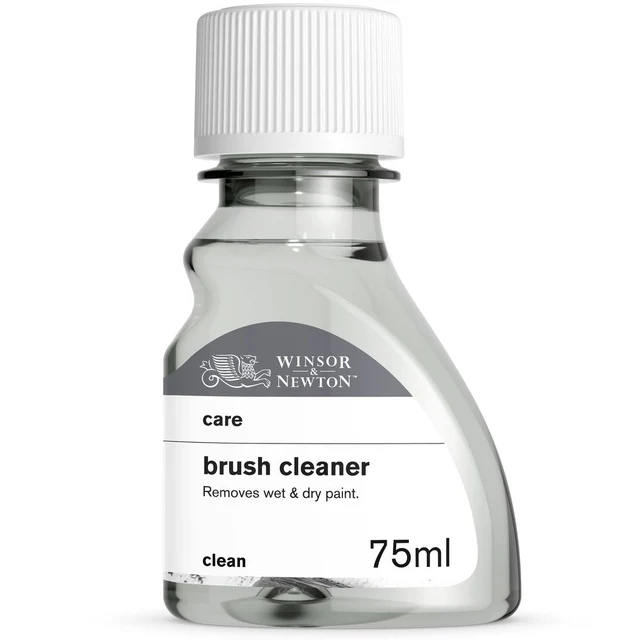
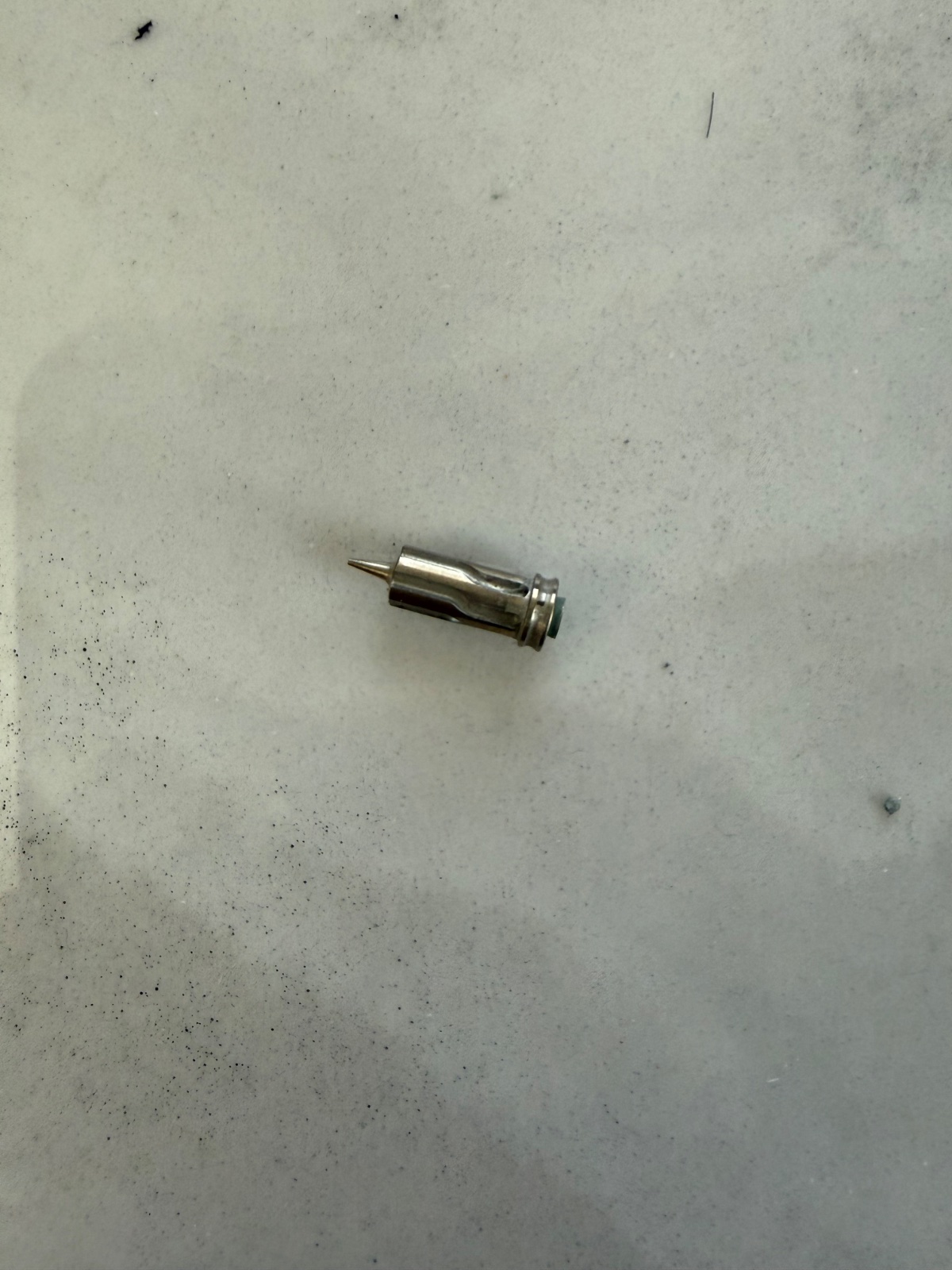
Not sure how it happened, but I seem to have gunked up this part of my airbrush nozzle. I always thoroughly clean the nozzle after using it. I was doing low flow painting for an extended period (about an hour) and then ran plenty of water through the brush in addition to cleaning it with Vallejo cleaner. I was using acrylic paint.

The part won't fit back on the needle so there is clearly a stoppage. Tried soaking it in airbrush cleaner and then thinner. No joy. Any help on how to clear it would be greatly appreciated. Thanks!
 

Attachments

  • IMG_9033.jpeg
    IMG_9033.jpeg
    394.5 KB
Have you tried something like cellulose thinner? Put some in a pot or jar with a lid, put the nozzle in overnight (with the lid closed) and see if that worked tomorrow.
 
Not sure how it happened, but I seem to have gunked up this part of my airbrush nozzle. I always thoroughly clean the nozzle after using it. I was doing low flow painting for an extended period (about an hour) and then ran plenty of water through the brush in addition to cleaning it with Vallejo cleaner. I was using acrylic paint.

The part won't fit back on the needle so there is clearly a stoppage. Tried soaking it in airbrush cleaner and then thinner. No joy. Any help on how to clear it would be greatly appreciated. Thanks!
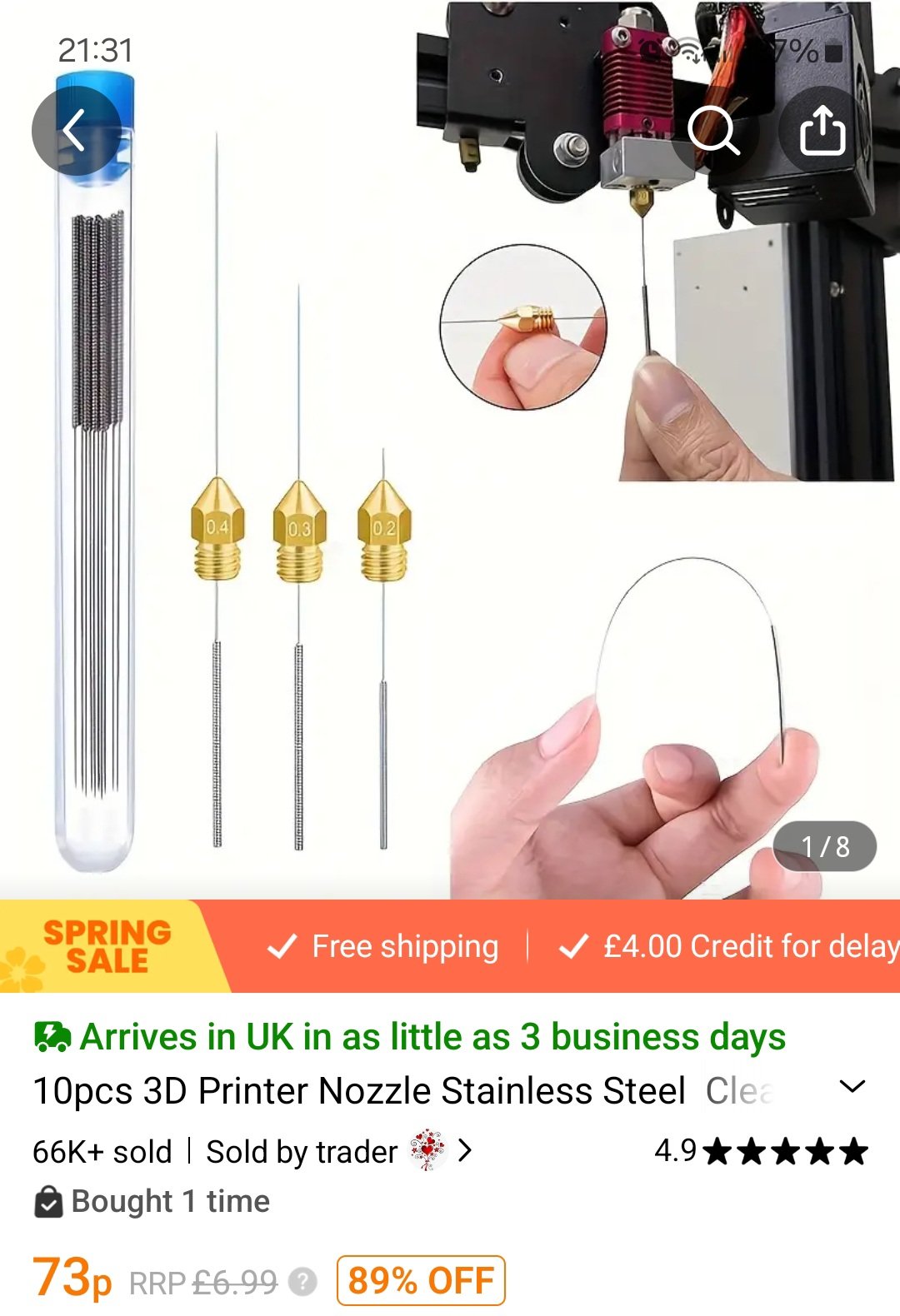
I bought these recently and find them perfect for pushing through the nozzle, different sizes for different nozzles and only 73p, bargain. Pantherman
Screenshot_20260211_213159_Temu.jpg
 
Have you tried something like cellulose thinner?

I do that with acetone, seal it well and let is soak.
Thanks for the suggestions! I don't have either of those handy but I do have isopropyl alcohol. Think that might work?

I bought these recently and find them perfect for pushing through the nozzle, different sizes for different nozzles and only 73p, bargain. Pantherman
Those look extremely useful.
 
As an Amazon Associate we earn from qualifying purchases. Product prices and availability are accurate as of the date/time indicated and are subject to change.
Thanks for the suggestions! I don't have either of those handy but I do have isopropyl alcohol. Think that might work?
If the paint that hardened was soluble in alcohol (Tamiya Acrylics are) it should work slowly (I think), but even 99% Isopropyl is weak compared to hardware store lacquer thinner. And I've found nothing cleans like acetone, that stuff will melt your styrene too, so careful. I cannot imagine it is safe for women to coat their fingers with.
 
And I've found nothing cleans like acetone, that stuff will melt your styrene too, so careful. I cannot imagine it is safe for women to coat their fingers with.
Ah, nail remover. I imagine there's probably some of that about lol.
soak it Tamiya solvent cement , which I'm guessing you have .
it's actually the same formula as their AB cleaner -- 1/2 butyl acetate , 1/2 acetone
Extra thin cement? I do have that. That's pretty brilliant. You're always the man with the knowledge Urumomo.

I remembered I have a bottle of Tamiya lacquer thinner. That has acetone in it. I threw the nozzle in a jar of that to soak overnight. If that doesn't work I'll put it in some cement.

Thanks so much guys! Really appreciate the help.
 
For water-solvent paints ethyl alcohol works better. Get a bottle of Everclear™, which is ~90% alcohol.
I thought Isopropyl was ethanol (the potable kind) with an additive to make it poisonous to humans to prevent them from drinking it.

Is that wrong?
 
I thought Isopropyl was ethanol (the potable kind) with an additive to make it poisonous to humans to prevent them from drinking it.
You're thinking of methanol, AKA "methyl alcohol" or "wood alcohol" in English. Ethanol ("ethyl alcohol" or "grain alcohol") is the alcohol that all others are named after — the kind you get in alcoholic beverages. Isopropanol (which English-speakers tend to call "isopropyl alcohol") is yet another.

You can drink all of them, and get drunk from them. Methanol, though, is poisonous because when your body metabolises it, one of the resulting products is formic acid, which is toxic. This is why dyes are usually added to methanol, both to warn against confusing it with ethanol and so that the "non-food" colour discourages drinking.

Isopropanol is more toxic than ethanol, but nowhere near as badly as methanol.
 
Last edited:
If it was Mr. Aqueous paint, then absolutely (I say from experience). For water-based acrylics, it might and it might not.
It was Ammo Mig acrylic, but thinned with Tamiya X-20A. I know that's adding thinner for an alcohol based paint to a water based acrylic, and everyone says use the thinner produced by the same brand of paint. But all these products get expensive and it seems to do the job just fine.

Having said that, I do plan to pick up some Vallejo acrylic thinner. I'm moving away from Tamiya paints and trying to go to all Vallejo/Ammo for airbrushing. I just find them easier to work with on all levels. Plus they're less toxic.
 
go to all Vallejo/Ammo for airbrushing.
Definitely use Vallejo thinner and flow aid with their paints. One of the things I like about that brand is that for Vallejo Air, the thinning ratio is 5 to 1 parts paint to thinner, and flow aid. Same for their primers, although they recommend a higher dilution for the first coat. This means a bottle of their thinner lasts a long time. For the thicker Vallejo paints like Model Color and Panzer Aces, you need more thinner because those paints are formulated for brushing.
 
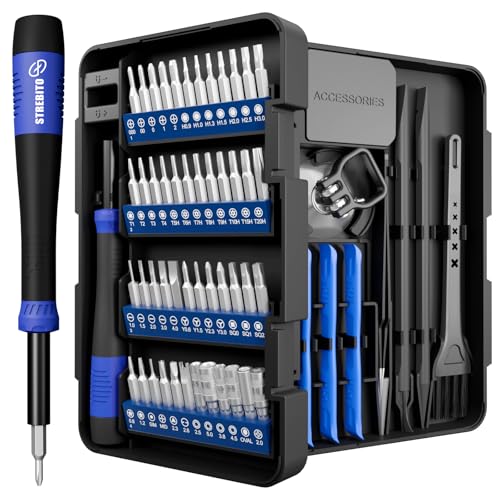
One thing you might try to mechanically scrub the inside of the tip is a "Proxabrush". These are very small dental brushes used to clean particles from between teeth. I found that they are great for cleaning the tips of my airbrushes after spraying. Combined with a thinner/cleaner, they are very effective at scrubbing off the paint inside of the airbrush tip. You can get these brushes at supermarkets, drug stores and places like Target and they are very inexpensive. G.U.M is the primary brand but stores like Target also sell their own "Up & Up" in-house brand for less.
These brushes are an essential part of my airbrush cleaning kit.
https://www.sunstargum.com/us-en/products/interdental-cleaners/gum-proxabrush.html

Another tool I use to clean out the inside of airbrush tips is an airbrush tip reamer. this is a small needle that is inserted into the tip then gently rotated around to scrape off any stuck-on paint. I have the Harder & Steenbeck reamer and I am very pleased with how it works. This is also an indispensable tool in my airbrush maintenance kit.
https://www.midwestairbrush.com/collections/aiclbr/products/noclre
https://www.midwestairbrush.com/collections/aiclbr/products/noclne
 
Last edited:
Well I think they go down to 0.2 and if you're using a 0.18 tip you should know what you're doing completely. Ain't no need to go down to .18 unless you know exactly what you're doing and how to operate and clean and airbrush
 
Well I think they go down to 0.2 and if you're using a 0.18 tip you should know what you're doing completely. Ain't no need to go down to .18 unless you know exactly what you're doing and how to operate and clean and airbrush
I have used the needle to (carefully) push gunk out before, once it is softened to a thin-syrup/heavy-cream consistency the needle works well, just keep flushing with acetone till it runs clean.

I am surprised to be honest that they go to 0.2 as well, I have one of those too. The printer-nozzle cleaners that PP posted go to 0.15, I might try those since mashing the needle into the tip over and over is risky.
 
I got it cleaned! The lacquer thinner helped some but not enough. The extra thin cement did the trick. I also think I figured out how the blockage happened. After I disassembled the brush, I discovered that the base plate inside the feed line attachment stem had somehow worked itself loose. It just fell out when I was taking it apart. Because I was using the brush with such low paint flow I didn't notice the problem. By the time I realized an issue I thought it was just due to paint blockage (because the nozzle was definitely blocked). Anyway, got the nozzle cleaned and everything properly reassembled and now it's good to go. No idea how that little base plate worked its way out though…
 
Definitely use Vallejo thinner and flow aid with their paints. One of the things I like about that brand is that for Vallejo Air, the thinning ratio is 5 to 1 parts paint to thinner, and flow aid. Same for their primers, although they recommend a higher dilution for the first coat.
I live in such a humid area I generally find most Vallejo/Ammo paints are fine straight out of the bottle. If I add more than a tiny bit of thinner I get a watery mess. It's only over the last two months—as we've gotten some stiff winter weather with very low humidity—that I've had to add thinner.
Why don't you just buy a tip reamer?
I didn't know that was a thing…

Thanks everyone for all the great tips/info. Much appreciated!
 

Latest posts

Back
Top